


News & Updates


A proposal to let people install solar panels and other green technology using low-interest loans from their council needs to go ahead "as soon as possible", its proponents say. The government asked Local Government New Zealand to present its business case for the proposed Ratepayer Assistance Scheme (RAS) in late 2025. However, ministers still had not made any decisions about whether to go ahead with the scheme - which would let councils provide long-term loans to any homeowner who wanted to access them. That's despite growing political support from parties across the spectrum.
.jpg)
Queenstown, New Zealand (18 May 2026) Leading politicians debated New Zealand's energy future on the second day of Electrify Queenstown 2026 today. The sold-out session, moderated by journalist Paddy Gower, opened with speeches from Deputy Prime Minister and ACT Party Leader Hon. David Seymour, Labour Leader Rt Hon. Chris Hipkins, Energy Minister Hon. Simeon Brown, New Zealand First Co-Leader and Associate Energy Minister Hon. Shane Jones, Green Party Co-Leader Chlöe Swarbrick, and The Opportunities Party Leader Qiulae Wong.

Diesel generators, you're cooked! We’ve seen a few of our electric communities plug in to their EVs at small events and that's great to see, but Hamish Roberge from Tom Tom Productions in Queenstown has developed a solution that can be rolled out for bigger gigs. Roberge is currently on the job delivering the third Electrify Queenstown conference and it was during last year's conference that he was inspired to create NRG Event Batteries.
.jpg)
Queenstown, New Zealand (17 May 2026): Electrify Queenstown 2026 opened today with a sell-out 400-strong crowd, amped to explore Aotearoa’s electric future.

Phoenix Recycling looks to extend its battery life with a new agreement; Toyota gets set to bring in the 'Electrolux', but is it a 'masterclass in doing EV utes wrong?'; a new electric hearse hits the streets, while electric cremation is an option in Canterbury for those who want to continue the trend at the end; how China is saving lives by electrifying; the digital museum of plugs and sockets; and the Fossilvision song contest sets the world on fire.
Dom talks with Mike Casey, software developer, cherry orchardist, electrification advocate and CEO of Rewiring Aotearoa, about the government's review into NZ's solar installation rules, his role in advising Regulation Minister David Seymour about the difficulty facing Kiwis wanting to adopt to solar power and why he's received some negative online attention about the initiative.
.jpg)
High fuel prices are hurting different demographics in different ways. We've seen stories of low-income households having to choose between food and transport; businesses reliant on diesel that are on the brink as margins shrink; and now, those in rural districts spending "as much as five times more of their household budgets on fuel than city dwellers".
Paul Spain heads to Central Otago to meet Mike Casey at Electric Cherries, exploring what happens when tech thinking meets hands‑on farming. Mike shares his journey from scaling tech startups in Sydney to creating New Zealand’s first fully electric cherry orchard, powered by onsite solar to reduce energy costs and build long‑term resilience. The conversation dives into the real economics of electrification, smart infrastructure choices, and how practical technology decisions can unlock productivity, sustainability, and future growth for New Zealand businesses.
.png)
The OECD has just released its 2026 report on New Zealand's economy. And when it comes to energy, it basically gave us a 'must try harder' grade. On the proposed LNG terminal - which, remarkably, is still not dead yet despite all evidence suggesting it should be - the OECD said, as we have said, that it would not serve its intended function of lowering prices.
We're all for getting schools off the diesel and onto electrons - and we're also big fans of solar on schools. In Christchurch, Hornby High School has done just that and its system currently ranks as the biggest of any school in New Zealand.

"In its annual economic survey of New Zealand released last week, the Organisation for Economic Co-operation and Development (OECD) warned many of the Government’s energy policies were unlikely to achieve their desired effect. While the criticism of the planned liquefied natural gas (LNG) import terminal garnered headlines, the analysts urged for a far greater rethink of the electricity system, saying any reliance on long-term fossil fuel use was imprudent."
Last week we had an off-grid MP as part of our Political Power series. That was pretty rare, but this week we've got something even rarer: an MP who's flown an electric airplane. Before he became the National MP for Ōtaki, Tim Costley MP was a helicopter pilot and spent 23 years in the Air Force. He flew in an electric aircraft a couple of years ago as it was travelling around New Zealand and "it was phenomenal".

Minister for Regulation David Seymour has launched a review into New Zealand’s solar installation rules during a visit to Central Otago’s fully electric cherry orchard, saying it is "far too difficult" for Kiwis to adopt solar power.
.png)
Getting the government off our roof and in favour of plug-in solar; new research from ChargeNet shows EV interest rising rapidly and Rewiring modelling shows a potential $75 a week saving with a new EV; OECD lays out the issues for New Zealand's energy system and compares our electricity prices; BYD rolls out its flash charging network outside of China and looks to launch in New Zealand, while Tesla finally launches its semi truck; Nat Bullard's energy analysis; and a video of a world-first in the Rotorua forest.

Carys Trotter covers the Ministry of Regulation's announcement at Mike Casey's all-electric orchard yesterday. And as Casey told her: ‘‘This is the first time I’ve seen Wellington people move fast for something that’s actually going to benefit the people of New Zealand.’’

RNZ covers the Government announcement about solar installs and talks to solar installer Tim Dudek, who talks about how long it currently takes, massive growth in demand, the potential for plug-in solar and the need for low-interest finance. "I would say an installation takes between a month and two months from whoa to go. There are a couple of tickboxes that need to be done with the various lines companies and retailers, electricians and inspectors, but it's just part of any electrical job, no different to a switchboard or a heat pump installation." That's what this review could improve.
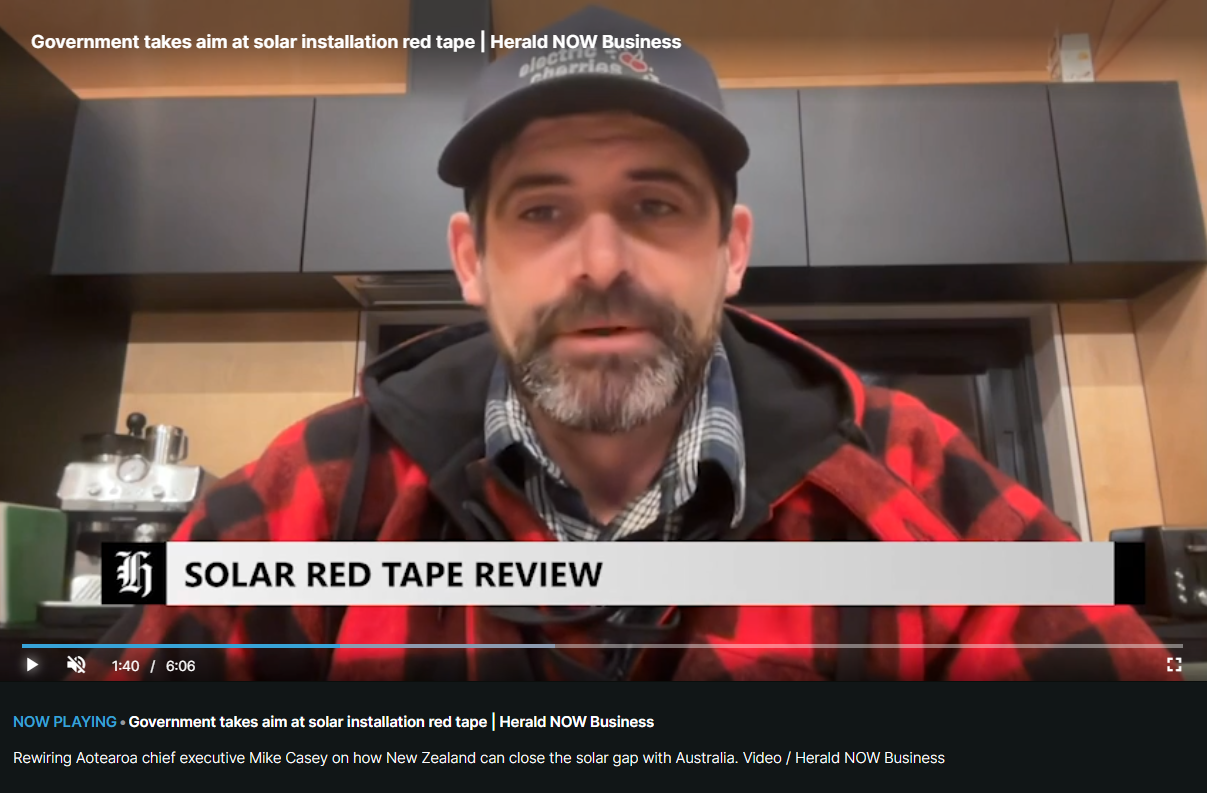
Following the Government's announcement of a 'red tape rampage', Rewiring Aotearoa chief executive Mike Casey joins Garth Bray to discuss how New Zealand can close the solar gap with Australia, why finance is key to get more New Zealanders past the upfront cost barrier, and why plug-in solar is a good option for renters and apartment dwellers.

Consumer interest in electric vehicles is rising rapidly in New Zealand, with new data from ChargeNet pointing to growing demand alongside increased real-world usage.

Farms could find it easier to install solar if the Ministry of Regulation review creates a standardised process across councils, something Rewiring Aotearoa CEO Mike Casey is fielding calls about. “Casey, a Cromwell cherry grower, said the Central Otago District Council does not require a consent for solar panels, but the neighbouring Queenstown Lakes District Council does, and it can cost thousands of dollars." As Minister David Seymour said: "Common sense says that if something is low risk, the rules should reflect that. Every unnecessary requirement pushes up costs and puts people off doing sensible things like generating their own power.”

As the Government announces a review into solar installations, some whose installs have gone smoothly question the need for it. But, as Rewiring Aotearoa CEO Mike Casey says: "Solar already stacks up economically in New Zealand and installations generally go smoothly for customers, but customers don't see the red tape. The industry has to deal with that and the inefficiency in the system is built into the price. If you don't mind paying twice as much as the Australians do for the same thing, it's not a problem, but solar should be cheaper here and this review will help that."

"David Seymour is ordering a review of the installation process, saying he wants to make New Zealand the easiest place in the world to switch to solar. He said just three to four percent of New Zealand households used solar, despite average power savings of about $1000 a year." Mike Casey, chief executive of Rewiring Aotearoa, said regulations needed to keep pace with technology and he was pleased to see the government looking at ways to help. "In Australia, virtual inspections allow the installs to be approved remotely and much more rapidly and other countries have centralised systems that don't require a physical visit and use an auditing process to ensure standards are being met," he said. Rewiring Aotearoa wanted to see national standards across lines companies for solar and legalisation for plug-in solar set-ups which were becoming popular overseas.
Rewiring Aotearoa supports the Energy Efficiency and Conservation Authority’s (EECA) levy funding proposal for 2026/27, as we see significant benefits for electricity consumers and New Zealand’s productivity from EECA’s workstreams. This is evidenced through EECA’s performance where it has met or exceeded targeted measures, which include cost and energy savings, efficiency investment and other metrics that demonstrate the value EECA’s programmes provide.
Read moreShareable linkDownloadRewiring generally supports the improvements proposed in the Bill, and seek that the scope of these improvements be expanded to include the legislative changes required to enable the Ratepayer Assistance RAS due to the significant infrastructure and cost of living improvements this innovative financing RAS unlocks.
Read moreShareable linkDownloadWe believe the Multiple Trading Relationships proposal will benefit consumers by providing customers with more choice over how they buy and receive fair payment for exported solar.
Read moreShareable linkDownloadRewiring Aotearoa is very supportive of the Electricity Authority’s introduction of requirements for distributors to provide payments for exports at peak based on the avoided long run marginal cost of peak demand. This will fairly support consumers to invest in batteries and encourage people to supply surplus energy to the network when it is needed, benefiting all customers through lower electricity costs that we all pay through our power bills. To unlock the full extent of these benefits it is important that the intended group of customers have access to these payments. This intended group is the small businesses who do not have the bargaining power to negotiate fair benefits. It excludes large customers who are already more likely to be rewarded for the benefits their injection (exports) provides. Unfortunately the preferred proposal the Electricity Authority (the Authority) has set out in this consultation will not achieve this, and will reduce benefits to customers and does not align with the Authority's statutory objectives.
Read moreShareable linkDownloadWe strongly support the Electricity Authority’s aim of removing unnecessary barriers to more efficient investment in distributed generation and maximise the benefits it brings for all New Zealanders. It is great to see the progress the EA is making in its Networks connection workstreams which will translate in real benefits for consumers. We agree with the Electricity Authority's description of benefits from distributed generation and support the proposals set out in this consultation although propose some additional measures and modifications.
Read moreShareable linkDownloadSolar and batteries - in homes and EVs - offer signicant resilience benefits during times of crisis and the Ratepayer Assistance Scheme can help unlock private investment.
Read moreShareable linkDownloadElectrification is the single biggest opportunity to improve fuel security in New Zealand and that's why we think we need a bold national energy independence plan, not just more incremental changes to our current fuel security plan.
Read moreShareable linkDownloadUnmanaged EV charging that occurs at network and system peaks could add unnecessary electricity infrastructure investment, increasing bills for all customers. Investment in our networks is scaled to meet peak demands and has the potential to significantly increase electricity bills over the coming decades. It is important we take action to shift demand, where it makes sense, to avoid peak demand increases. Rewiring Aotearoa is very supportive of the efforts the Ministry of Business Innovation and Employment is taking to consider options to deliver a more flexible electricity system that will lower system costs for all consumers. Uptake of smart EV chargers is one way to manage peak EV demand and support a lower system cost. However we do not think there is a strong enough case to mandate that all fixed EV charging units sold in New Zealand must be smart.
Read moreShareable linkDownloadRewiring Aotearoa supports the proposed changes to Multiple Trading Relationships (MTR) (allowing two traders – distributed generation and consumption), which will increase consumer choice and introduce more competition to retail tariffs. For example, it will disincentivise tariffs that offer competitive export tariffs, but also ramp up consumption tariffs. The Electricity Authority should also implement changes at this time that require retailers to allow large sites to share solar across multiple co-located installation control points (ICPs, i.e. ICP aggregation), and facilitate peer to peer trading for small scale renewable generators with local sites. Rewiring Aotearoa disagrees that delaying these steps via a staged approach is in consumers best interest. Consumers should not have to wait until demand increases to unlock the benefits of their solar and battery systems or access more competitive options from retailers. This should be supported now, to help consumers make investment and retail tariff decisions that reduce their overall energy bills.
Read moreShareable linkDownloadWe appreciate that broader resource management reform is underway that will ultimately provide a more consistent national framework. However, we cannot afford to wait for the perfect system while workable solutions are delayed. In the meantime, inconsistent and unnecessary consenting requirements for small-scale ground-mounted solar are slowing down projects that could deliver immediate benefits - lowering energy costs, strengthening resilience, and supporting the grid. While long-term reform is important, immediate adjustments will ensure small-scale solar isn’t held back by outdated or inconsistent rules.
Read moreShareable linkDownload"Investing in natural gas in homes doesn’t make economic sense anymore for New Zealanders ... Rewiring Aotearoa’s view is that the Government should support a managed transition away from natural gas for the homes and non-industrial businesses connected to reticulated natural gas distribution networks. This would help address inequity for households on low incomes and renters, and provide greater certainty over how quickly customers will disconnect, when networks would likely retire and cost recovery timelines."
Read moreShareable linkDownloadRewiring Aotearoa's submission highlights that successful digitalisation should allow customers to maximise benefits from their provision of demand flexibility and solar and battery exports, without third parties (aggregators or VPPs) routinely taking a cut of the value. Retail offerings that include time of use prices and fair export tariffs will be key enablers of successful digitalisation of the electricity system. Customers need a fair deal through their electricity prices and export tariffs. This means the customers need to have the option to choose from a range of retail tariffs that include time of use prices, fair export tariffs (that reflect the value in the wholesale market) and symmetrical export tariffs from distributors.
Read moreShareable linkDownloadRewiring Aotearoa is extremely supportive of the focus the Electricity Authority is putting into exploring opportunities and seeking views on a more ‘decentralised’ electricity system. It’s great to see the release of the Green Paper seeking views from New Zealanders on the role they can play in the future electricity system and how a more decentralised electricity system should evolve. As the Green Paper explains New Zealanders will benefit from a more decentralised, community-centric energy system through lower energy bills, greater energy resilience, fuel security and lower emissions. However there are some assumptions and emphasis in the Green Paper that we think needs to change
Read moreShareable linkDownloadRewiring Aotearoa is supportive of the Innovation and non-traditional solutions allowance (INTSA) and the development of Guidance for submissions. Read our full submission by downloading the document.
Read moreShareable linkDownloadWhile the potential implications of the Bill are wide-ranging, our submission has focused on the potential implications for the electrification of Aotearoa NZ if the Bill is enacted as proposed. This is pertinent to Rewiring’s work, because one of our core aims is to help reduce energy bills for customers - NZ’s households, farms, and businesses. Significant changes are needed to fix the status quo, and we are concerned that the Bill may inadvertently bake in the existing rules governing the sector.
Read moreShareable linkDownloadRewiring Aotearoa is supportive of the development of Publicly Available Specification for Residential solar photovoltaic (PV) and battery storage systems guidelines. These guidelines can provide a consolidated and trusted source of information to help households navigate the process of choosing and installing solar PV and batteries. There is some messaging and information in the PAS that we think needs to be changed or added to provide households with the best advice to support them to maximise benefits from solar PV and batteries. This includes removing the focus on pay back periods and informing households about cost savings from day one from solar PV and batteries financed over the life of the system. Households also need information about the potential risks of some existing lease to own sales models which provide little real benefit to households with the bulk of the savings captured in suppliers profits. Download the document to read our full submission.
Read moreShareable linkDownloadIn a cross-submission, Rewiring Aotearoa has responded to a range of concerns raised by other submitters in the Energy Competition Task Force's consulation.
Read moreShareable linkDownloadWe support the role that government procurement can play in benefitting every community across the motu. We agree that simplifying and streamlining the procurement process is important, and reducing rules is a logical starting point. However, this should not undermine key considerations and past efforts in ensuring government spending supports long-term positive outcomes. Government procurement can support us to go for growth by increasing productivity of energy, which is a fundamental economic input
Read moreShareable linkDownloadOverall, Rewiring Aotearoa welcomes the objectives of this package of proposals. from the Energy Competition Task Force. We view the package as a critical step in improving energy system outcomes for all consumers. We consider retailers paying consumers fairly as a critical step, and we are mostly satisfied with the Task Force’s approach to this (initiative 2C) and think it will create better outcomes for New Zealand consumers and the energy system as a whole. In contrast, the Task Force’s preferred option around how distributors are required to reward peak input from consumers (initiative 2A) will not in our view meet the Task Force’s (or the Electricity Authority’s) stated objectives.
Read moreShareable linkDownloadFocusing on the emissions reductions at home through electrification is a major opportunity (and challenge) for Aotearoa NZ. Homes, farms, and businesses must play a role in driving emissions reductions through electrification and the potential must be recognised and addressed to our 2035 international climate change target.
Read moreShareable linkDownloadRewiring Aotearoa believes we need to make better use of our existing infrastrucuture, see customers as an essential part of a 21st Century energy system and that electrification will lead to much greater energy security and resilience.
Read moreShareable linkDownloadRewiring Aotearoa's submission to the Electricity Authority on its Network Connections Project - Stage One is in and it is good to see the Authority practicing its statutory objective of protecting the interests of consumers.
Read moreShareable linkDownloadThe Ministry for Business, Innovation and Employment opened consultation on a discussion document about amendments to the Electricity Safety Regulations to expand the permitted voltage range for electricity supply. Rewiring Aotearoa's submission believes changes are needed to prepare for the rapid adoption of customer energy resources, and electricity distribution companies need to be compelled to allow export limits to be increased.
Read moreShareable linkDownloadThe Department for Prime Minister and Cabinet and the Ministry for the Environment proposed a topic for a Long Term Insights Briefing entitled 'Everyone plays a part: building New Zealand’s resilience in the context of global trends and our unique natural environment'. Rewiring Aotearoa's submission says energy security and resilience, critical infrastructure failing and commodity/energy price shocks are especially important for Aotearoa NZ’s resilience to future challenges, and farms can also play an important role.
Read moreShareable linkDownloadOur ERP2 submission outlines what we think needs to be done to improve the Government's plan to reach our climate targets, electrify the Aotearoa New Zealand economy and build a fairer future energy system for New Zealanders that saves people money and does not leave anyone behind.
Read moreShareable linkDownloadThere is a relevant saying: ‘Information wants to be free’. While the proposed Consumer and Data Product Bill takes a step in that direction, it does not offer the level of freedom that could be technically accomplished, nor the level of freedom that is likely to unlock the maximum level of innovation.
Read moreShareable linkDownloadRakiura / Stewart Island faces the highest electricity prices in New Zealand. Successive governments have funded report after report and numerous fly-in visits by Ministers have failed to change this situation for the local community. Rewiring Aotearoa believes the opportunity is to harness existing solar and battery technology to deliver significant cost-of-living savings and reduced emissions at scale via electrification on Stewart Island right now. With financed solar and batteries, electricity usage costs for residents could be halved without delay. Rewiring Aotearoa has been engaging with the local community, who have been sending us their power bills. On Saturday 27th April some of the Rewiring team visited Stewart Island (including Mike Rewi who has strong whakapapa to Stewart Island). What we are hearing from this community is many locals fear the proposals and the likely “preferred option” will be focused on replacing current diesel generators, not on reducing the cost of energy for consumers. Our proposal outlines Rewiring Aotearoa’s pitch for an alternative approach to develop a community-led energy solution for the Island.
Read moreShareable linkDownloadOverall, we encourage the Commission to think beyond competition merely as a driver for innovation, to consider the outcomes from innovation for the long term benefit for New Zealanders. Rewiring Aotearoa believes one such outcome from market innovation is supporting the electrification opportunity for Aotearoa New Zealand. The Commission has the opportunity to play an active role in driving this not just through the energy market, but also through the personal banking market. It is important that these functions are not seen in isolation, but as a system, to better realise the Commission's role in delivering on NZ’s emissions reduction plan, and 2050 Nationally Determined Contribution.
Read moreShareable linkDownload18 March 2024: New Zealand is one of the first places in the world where electric appliances and vehicles are now more affordable than their fossil fuel equivalents. A new report has shown that, on average, homes currently using gas appliances and petrol vehicles could save thousands every year if they went electric and got their electricity from a combination of rooftop solar, home battery and New Zealand’s already highly renewable grid.
Read moreShareable linkDownload
In this future, consumer infrastructure needs to compete on a level playing field with traditional infrastructure – if a $10,000 battery on a consumer’s premises can provide the same service as a $20,000 supply-side asset (a network or generation investment), the consumer’s asset should be selected for the service. However, today there is a systemic bias towards traditional infrastructure largely because it is seen as significantly more ‘dependable’. There are a variety of historical reasons for this. Our primary context to this submission is that many of the assumptions and rationale for this bias are quickly falling away, and DPP4 provides a significant opportunity for the Commerce Commission (the Commission) to reset the assumptions and correct some of this bias.
Read moreShareable linkDownload
The EA has the ability to take a leadership role in the energy transition on behalf of electricity consumers. Far more than the Commerce Commission’s oversight of EDBs investment plans, the EA’s network pricing workplan gives consumers agency in the development of the electricity system. When consumer agency is stifled, they will likely have significantly worse financial outcomes on their bills. Much of the necessary changes have been demonstrated already locally or overseas, and the remaining question is not if the changes are possible but if we as a nation will have the courage to implement them on the timeline required to drive better energy transition outcomes for consumers.
Read moreShareable linkDownloadThe biggest barrier to unlocking the household savings that electric technology offers - as well as the many other public benefits - is the upfront cost. Long-term, low-interest energy loans are the ladder we need to get more people over that.
Read moreWe need gas in the short term to generate electricity and for certain industries to keep operating, but gas is expensive, it is likely to get more expensive, and it is running out faster than expected. So how do we use it now? How are shortages and price rises impacting homes and businesses? And what can we replace it with?
Read moreWe need great urban design that encourages electric public and active transport for safe neighbourhoods and healthy lifestyles, but we also need electric cars for rapid decarbonisation and to address all the vehicle travel we realistically aren’t going to shift or avoid. These two things can be complementary.
Read moreWhen it comes to our energy system, we could do the bare minimum and pay the price, or we could think ahead and reap the rewards. Here's what both of those options could look like in 2030.
Read moreYou will always have to pay for an energy subscription. Using renewable electricity in electric machines (and ideally running on the sun) is the cheapest energy subscription you can get. Here's how the numbers stack up.
Read morePlenty of people need cars (and plenty of people still want them), and other vehicles are literal engines of prosperity. We don't have to give them up to reach our climate goals. We just need them to be electric.
Read moreSolar on our rooftops, farms and businesses can displace the emissions generated by burning fossil fuels in our homes and especially our cars, provide the extra electricity we need to run our electric machines, help bring the cost of electricity down for everyone on the network, and improve our energy security by keeping water in our hydro lakes for when we need it most.
Read moreWe often hear from people who aren’t sure if switching to an electric alternative is the right move. One of the most common questions we get asked is ‘will switching to an electric machine actually reduce my carbon footprint if creating the new machine or materials produces emissions?’It’s a fair question, and we completely agree it’s important to think about the full life cycle of the products we buy and use. Electric alternatives, including vehicles, often produce more emissions than fossil fuel equivalents during manufacturing. But, over the lifetime of the machine, they create much less carbon pollution because they don't burn any fuel.
Read moreFossil fuels for homes, transport and industrial processes make up the vast majority of the country’s total energy consumption. Electrifying the machines that use these fossil fuels means we will use more electricity but much less energy overall.
Read moreAn electrified energy system is actually full of opportunities for redesign, reuse, recovery and recycling. There are opportunities for innovators and entrepreneurs to generate value across the lifespan of every energy asset, not least the return of its components to the manufacturing cycle. To explore this further, Rewiring Aotearoa has partnered with Circularity, local experts in circular design and strategy, to explain what the circular economy is, how to integrate circularity into the design of energy systems, and the role of policy strategy to make it happen.
Read moreThere are no free lunches in energy. But some lunches are far, far cheaper than others. Electrifying everything will massively reduce the overall material and energy requirements of the global energy system. This can be said with high confidence. To be sure, renewable energy systems take materials and energy to build. But this is dwarfed by the mind-boggling scale of extraction, consumption and wastefulness of fossil energy.
Read morePeople sometimes talk about ‘carbon tunnel vision’ – that is, the single-minded pursuit of emission reductions at the sake of everything else. But this is the wrong way to think about electrification. It isn’t only about emissions (even though preventing the world from dangerous overheating is quite the co-benefit). It isn’t only about the tech or the kit: the rooftop solar panels, the batteries, the electrified appliances and vehicles. These are just the means to an end. Electrification is about people and it is a fundamentally better way to power our lives and livelihoods.
Read morePhoenix Recycling looks to extend its battery life with a new agreement; Toyota gets set to bring in the 'Electrolux', but is it a 'masterclass in doing EV utes wrong?'; a new electric hearse hits the streets, while electric cremation is an option in Canterbury for those who want to continue the trend at the end; how China is saving lives by electrifying; the digital museum of plugs and sockets; and the Fossilvision song contest sets the world on fire.
Read moreGetting the government off our roof and in favour of plug-in solar; new research from ChargeNet shows EV interest rising rapidly and Rewiring modelling shows a potential $75 a week saving with a new EV; OECD lays out the issues for New Zealand's energy system and compares our electricity prices; BYD rolls out its flash charging network outside of China and looks to launch in New Zealand, while Tesla finally launches its semi truck; Nat Bullard's energy analysis; and a video of a world-first in the Rotorua forest.
Read more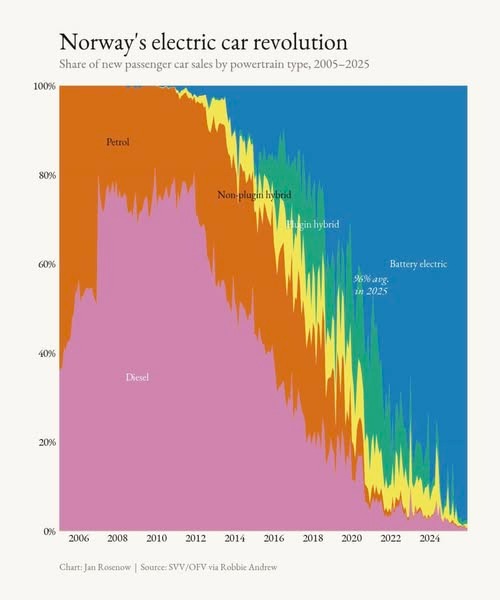
A collection of savvy businesses flipping their fleets and flagging the fuel; countries more reliant on gas for electricity are dealing with higher prices and LNG-loving Japan is looking at a $US3 billion subsidy to help people deal with high costs, which is exactly why we shouldn't get stuck in the gas trap; Australia shows what a solar and batteries strategy can do to change the system, Norway shows what an EV strategy can do to transport and New Zealand shows ... uh, not much, unfortunately; despite gas stoves becoming a culture war prop, lots of Americans will soon experience the joys of induction; and the cruise industry charts some electric waters.
Read more
More evidence that we are in 'the age of electricity'; Dr Saul Griffith lays out his thoughts on a new electric world order (and offers a cautionary tale to New Zealand when it comes to LNG); Vessev keeps expanding, new electric ferries keep proving themselves, and EV Maritime boss says the maritime motivations keep changing; rural solar and batteries are going gangbusters right now and salt of the earth farmers are sharing the love; there's a Cambrian DIY solar explosion happening around the world and it's on its way to New Zealand; and a popular podcast unearths a little known electric first for New Zealand.
Read more
A very cool 'floatovoltaics' project makes use of unproductive pond space and also helps those struggling with their energy bills; renewables push down the price of electricity to nothing (or less than nothing) in Scandinavia and South Australia and New Zealand has an opportunity to follow suit; France goes hard on electrification, while the UK builds better; Aussie truckies reckon electrification will take decades but much bigger electric machines are here now, including some from Volvo; hydrogen generators are an innovation we do not need; the Speight's brewery gets off the gas with a $7.2 million electric boiler; and a bit of 'solarcasm' demonstrates how going off-grid is now an option for some.
Read more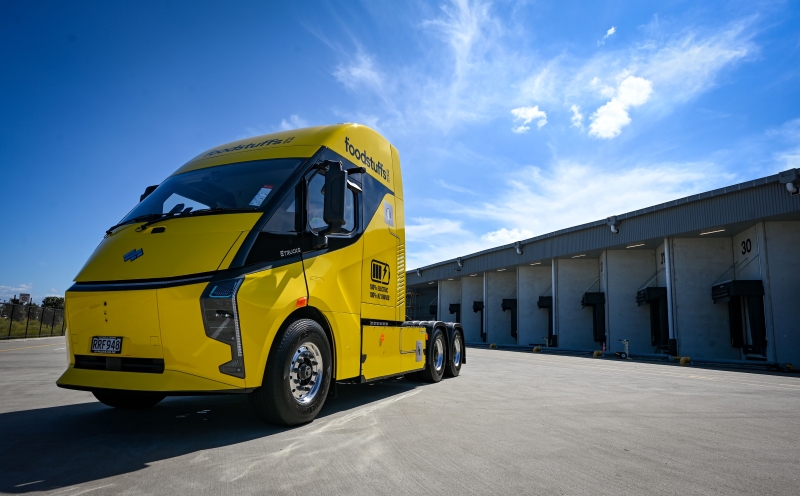
We're really trucking along this week as Foodstuffs goes electric; Etrucks' Ross Linton crunches the numbers with the current prices and says there's never been a better time to get an electric truck; the New Zealand Trucking Association says we should be running on New Zealand-made energy; Australia - the world's biggest importer of diesel - sees demand for electric trucks rise as price parity is reached and shows that electric long-distance freight is possible; legacy automakers are seeing this fuel crisis as existential (and Mike Casey picked the petrol car hot potato scenario last year); dirty ol' diesel generators might be on the outer as battery solutions for festivals and conferences come into play; a potential cultural tipping point as Daniel Craig backs luxury Chinese EV brand Denza; and you've heard of Ranger Anxiety but how about Ramxiety?
Read more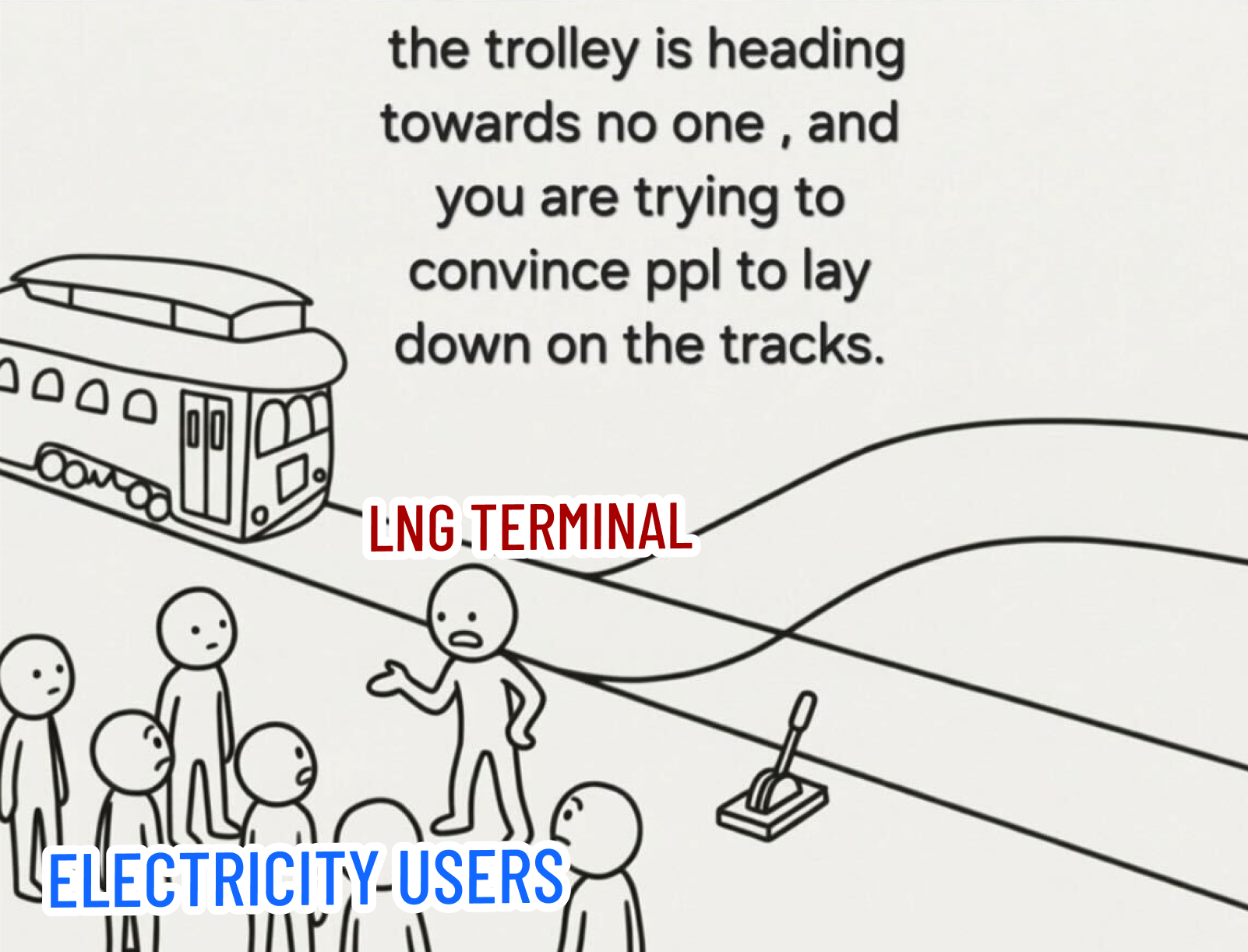
Financial commentator Frances Cook uses her own story to show that that an investment in solar and an EV significantly outperforms the stock market and fellow number cruncher Nadine Higgins says that if you do it right, EVs are cheaper to run and own; EV sales have climbed to their highest level since 2022 and are closing in on 2023's numbers and Go Rentals has just invested $2.3 million in some new Tesla Model Y Premiums; the gap between energy costs of diesel vans and utes and electric vans and utes is absolutely massive; solar is also going off right now, with one installer in Otago 448% above their sales target in March; Lightforce has gone back to the Barretts with a new TV ad; Wellington mayor Andrew Little explains its electrification strategy and Hutt City Council shares data showing how its fleet has gone from dirty Toyotas to cleaner EVs; Shenzen in China has electrified its public transport and taxis and that's come with big benefits - and some challenges; and a very simple illustration of the LNG terminal.
Read more.png)
Some self-inflicted corporate welfare as two big companies put solar on their roof; the trends are revealing and EVs are on the ascendancy right now as people worry about fuel prices and availability; new report shows potential for businesses to save 64% on operational costs by electrifying the fleet, while Ikea shows how to do it in Australia; the Lightship offers a smooth, powerful road trip; when you buy a petrol car you're basically taking out a $20,000 petrol loan; and Robbie Nichol attempts to explain the strange world of New Zealand's electricity market.
Read more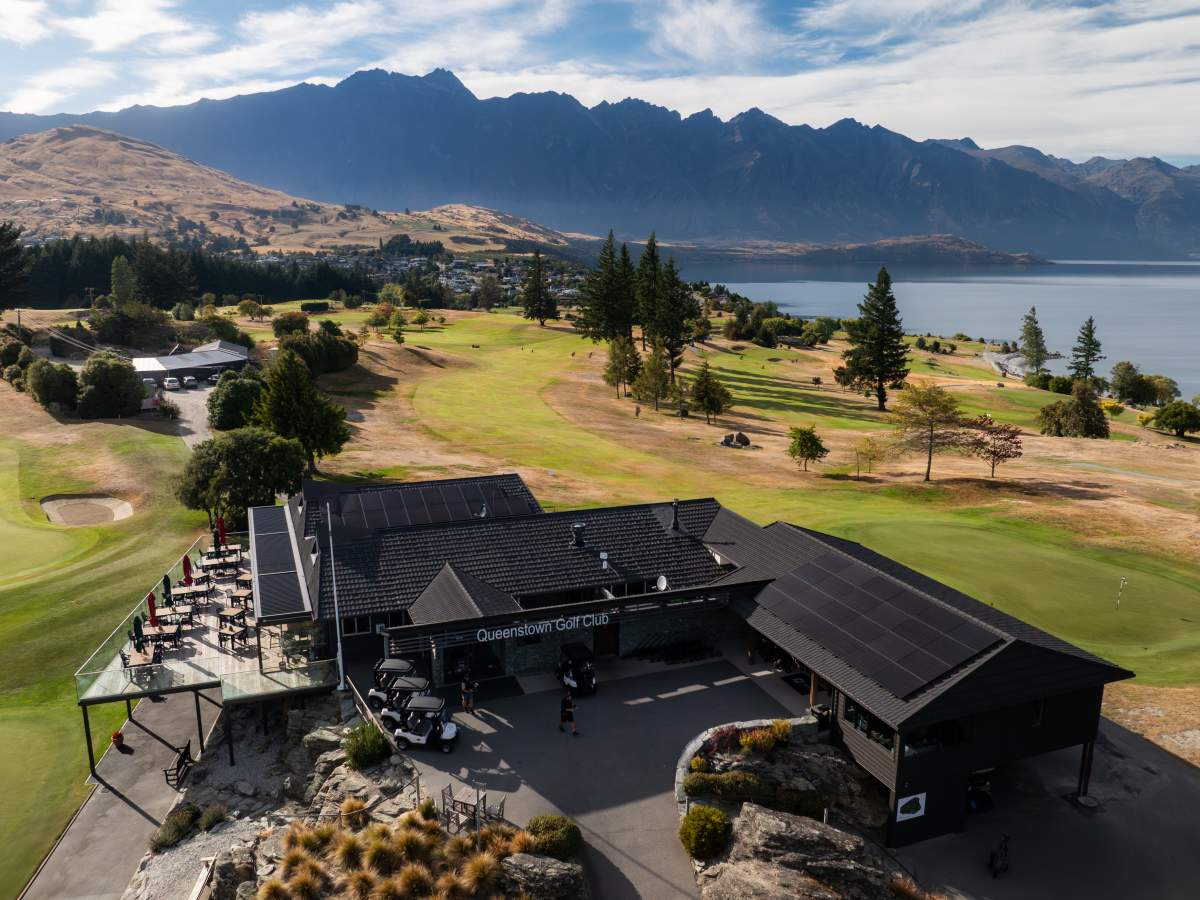
Current events are making EVs more popular, but we've gone from a leader to a laggard and we need to start shifting the fleet to electric now; Queenstown Golf Cub tees up a good deal on solar; an Australian apartment complex switches on 250 charging points with a novel payment system; Taiga electric snowmobiles are taking over; and more efficient solar panels allow bigger systems on smaller roofs.
Read more.png)
EVs are having a moment right now, so how can we get more people driving electric; Tom Selleck sums up how EV owners are feeling right now and staggering analysis shows the sun's prices have been unaffected by decades of geopolitical conflict; Scion goes solar to get off gas, while dairy farmers and homes go with solar and batteries to keep going; Saul Griffith takes his solar-powered scooter to Canberra and starts a fight with regulators; the Cancer Society's Lions Lodge in Hamilton gets some panels donated and will save $17,000 a year; and killing the Friday vibe with new studies on how fossil fuel companies made massive profits after the last energy crisis in 2022 and carbon emissions making our blood boil - perhaps quite literally.
Read moreDiesel generators, you're cooked! We’ve seen a few of our electric communities plug in to their EVs at small events and that's great to see, but Hamish Roberge from Tom Tom Productions in Queenstown has developed a solution that can be rolled out for bigger gigs. Roberge is currently on the job delivering the third Electrify Queenstown conference and it was during last year's conference that he was inspired to create NRG Event Batteries.
Read moreWe're all for getting schools off the diesel and onto electrons - and we're also big fans of solar on schools. In Christchurch, Hornby High School has done just that and its system currently ranks as the biggest of any school in New Zealand.
Read moreLots of community centres run on human energy. But South Alive in Invercargill also runs on the sun and that's saving them heaps.
Read moreWe keep seeing examples of farmers taking energy into their own hands, saving money and increasing their resilience and Tim Campbell of Ernest Energy is one of the people helping them do it down south.
Read moreMore farmers are getting in behind solar, batteries and electric machines. For Blair and Jodi Drysdale, who run Hopefield Farm in Southland, the decision to invest was mostly about reducing energy costs over the long term, but it's also come with a number of other benefits.
Read moreOnce you've electrified your own life, we suggest you electrify someone else's life. Mike Casey has managed to convince a lot of people to do that, including his parents, but his dad Simon Casey has taken things up a notch recently by buying 648 panels for his lifestyle block in the Wairarapa.
Read moreSomething electric is brewing in Auckland - and teacher Charlotte McKeon is leading the charge.
Read moreThere are a lot of cool EVs out there, but Christchurch International Airport has the coolest one in the country - and cackling man-child Mike Casey got to experience it recently.
Read moreAnyone who upgrades their gas hot water system to a hot water heat pump is a Bright Spark in our eyes and that's what Kingston resident Jason Roberts has just done - with an assist from the Queenstown Electrification Accelerator's group discount scheme.
Read moreCheaper, cleaner, better. That's a mantra we often use to explain the benefits of electric machines at Rewiring and it's something Christchurch company E-Stroke can also claim with its electric boat conversions.
Read moreSupport us
Your donations help our team keep the momentum of rapidly electrifying Aotearoa New Zealand within our key focus areas of community, government and industry.
.avif)
.avif)
.avif)
.avif)

Our Newsletter
Stay informed about our work and discover various ways to contribute to enabling rapid electrification. Join our vibrant community of like-minded individuals.
Check out our privacy policy here
Contact us
hello@rewiring.nz
