Don't listen to Old Man Gas. Ditch LNG. Support New Zealand-made energy!

.png)

Some self-inflicted corporate welfare as two big companies put solar on their roof; the trends are revealing and EVs are on the ascendancy right now as people worry about fuel prices and availability; new report shows potential for businesses to save 64% on operational costs by electrifying the fleet, while Ikea shows how to do it in Australia; the Lightship offers a smooth, powerful road trip; when you buy a petrol car you're basically taking out a $20,000 petrol loan; and Robbie Nichol attempts to explain the strange world of New Zealand's electricity market.

Corporate welfare
We’ve covered One NZ Te Kaha stadium before because it’s fully electric - from the heating to the cooling to the cooking. It’s also been set up for solar, which may come in the future, but naming rights sponsor One NZ has got in quick and installed solar on its nearby data centre.
142 rooftop solar panels can generate up to 90kW of electricity on a sunny day, almost enough to power both the site and the nearby mobile network serving the stadium.
It’s a practical example of how connectivity and climate action can work together.
Electricity is the biggest part of our operational emissions, so projects like this help move us towards our goal of 100% renewable electricity by 2030 – helping save carbon and costs, while also strengthening energy resilience.
Toyota, a company we think deserves some grief for its lack of effort on electrification and, in some cases, active lobbying against climate policy, also deserves a carrot for installing solar on its logistics hub roof.

Toyota New Zealand has installed one of the largest rooftop solar systems in New Zealand on top of its 35,000m2 warehouse and National Customer Centre in Palmerston North.
At almost 700-kilowatt capacity, the solar array is expected to generate the equivalent of 60 percent of the centre’s power usage and, during peak periods, will inject renewable energy back into the local network to power up to 35 local homes.
Following its own auto production principles of Quality, Durability and Reliability, Toyota NZ selected Singaporean-manufactured solar panels that have one of the lowest points of degradation; they are expected to still be producing at 90% or more of total capacity (698.88kW) after 30 years of operation.
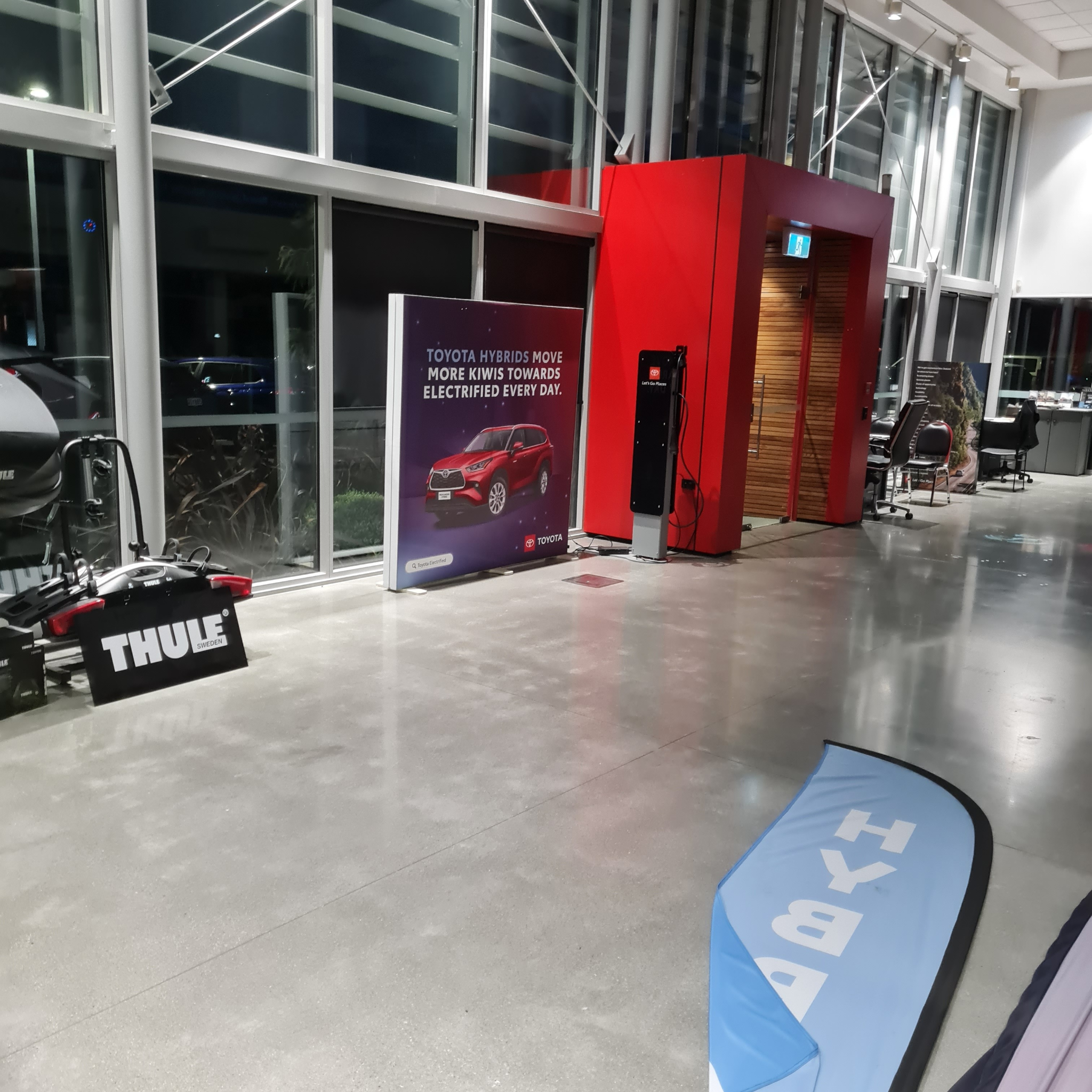
We’re not sold on Toyota’s claims that the hybrid solutions it offers are a stepping stone to electrification, like the sign seen here in a showroom, and in the countries where it has no option but to sell EVs, like Norway and China, it has gone pretty hard on the electric options.
As we say, there’s no need to half-ass it with a hybrid that still uses 70% of the fuel of a normal ICE car or a plug-in hybrid that may be the worst of both worlds when you could cover your ass completely with a fully electric car. And it’s good to see some more EV options arriving from what remains the most trusted auto brand in the country.
A changing of the guard
We love a tipping point at Rewiring and we put up a few Google Trends results last week to show the level of interest in solar and EVs right now. Friend of the show Ted Eustace sent in some more revealing data.
Holden has not sold a car in New Zealand for a few years, but is still a brand that many have a fondness for (and many people still drive). BYD is a relatively new Chinese brand that is now scrambling to keep up as more and more people recognise that EVs make sense on so many levels.
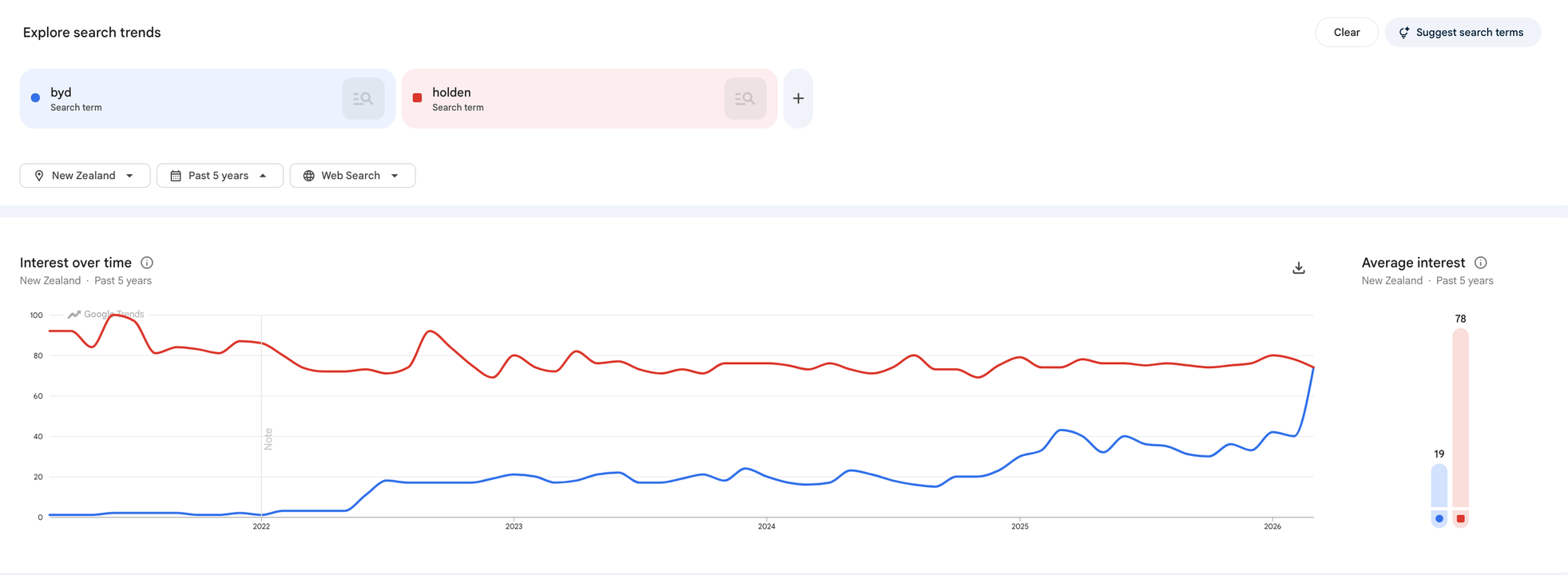
When we compare other brands, we can see it's a similar story.
.png)
For those who already have an EV, be sure to contribute to our ‘This Car Can’ campaign, which has already attracted a few gems, like a car that can bake bread at the fishing hut, a car that can run a cement mixer or a car that can tow a 1350kg caravan.
.png)
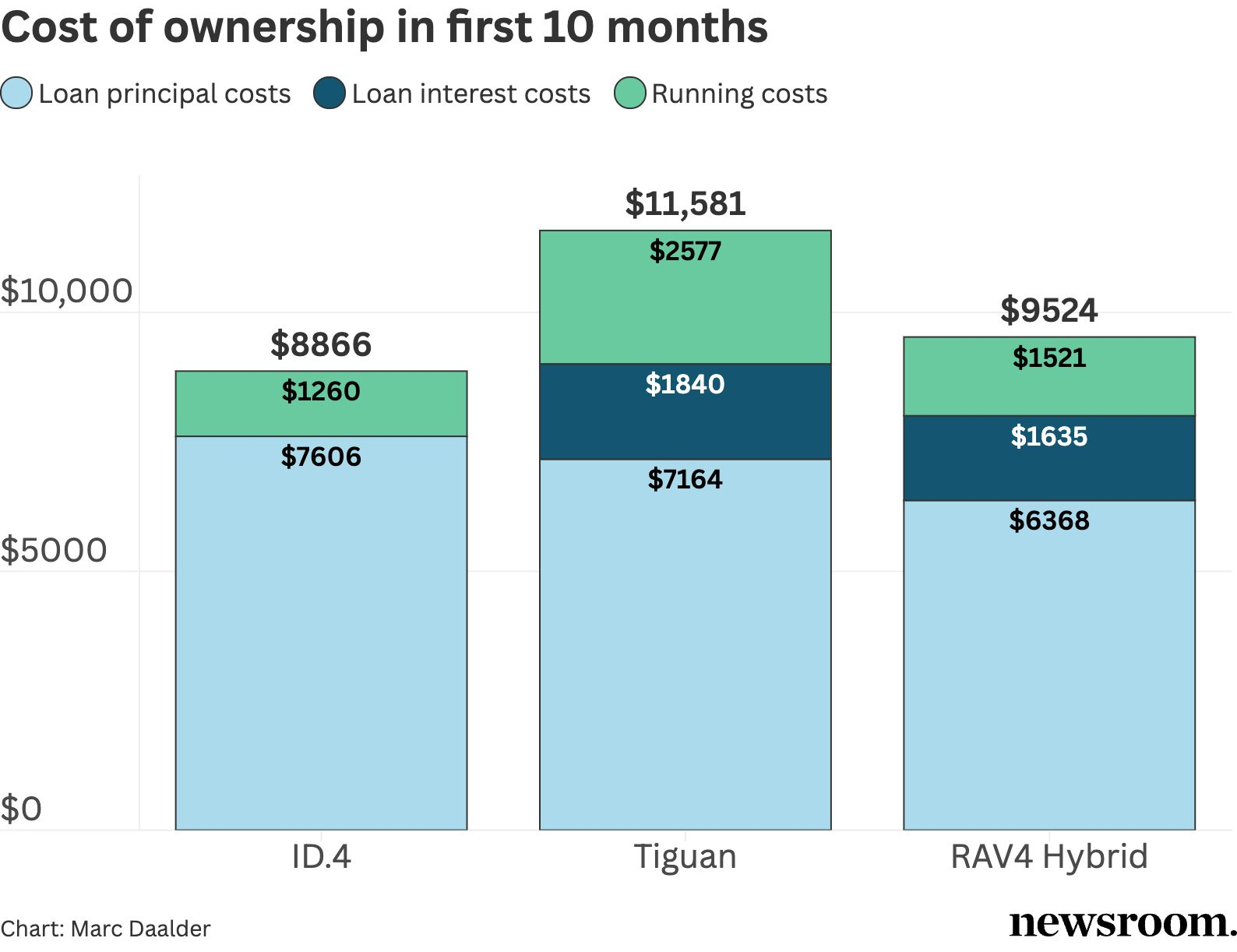
And for those who may be wondering what it’s like to own an EV, Newsroom’s Marc Daalder has written about what he learned (and saved) in his first year.
Fleet of foot
Businesses buy around 60% of the new cars in New Zealand and it’s becoming increasingly clear there are some big savings on offer if they make those cars electric.
A new report from EY suggests that fleets in the UK can cut operating costs by 64% through lower energy, maintenance and tax cost.
Previously, many businesses were compelled to electrify their fleet for the emissions reductions. But now it’s an economic argument - and, in cases where the diesel might actually not be available, a business continuity issue.

In Australia, Ikea has decarbonised 80% of its last mile deliveries by “installing charging infrastructure at its stores and distribution depots has enabled the retailers’ delivery partners to transition to battery-powered vans and trucks.”
There are echoes of Kevin Costner’s Field of Dreams movie in IKEA’s programme to decarbonise its last mile deliveries in Australia. The retailer has installed charging infrastructure at its stores and distribution depots, and now its delivery partners are transitioning their vans and trucks to battery power. “If you build it, he will come.”
Ride the lightning
Running the campervan or towing the caravan is pretty pricey right now. So how does a streamlined electric caravan sound? That's what the Lightship offers and Bob Anderson is a fan.
After years of traveling in a traditional RV, he kept running into the same constraint: power. How much you have, how long it lasts, and how often you have to stop to get more.
What stood out with Lightship was a different approach to that problem, a system built around energy, paired with game-changing aerodynamics that let you go much farther.
In his own words, “It fundamentally changed all the economics of RVing.”
Loan rangers
The way prices are trending, it might not be long before people have to take out a loan for the weekly fill-up. But how does a $20,000 loan over a 30 year period sound?
We often talk about swapping fuels for finance at Rewiring because that's what we need to do to electrify our homes and economy and this comedy skit shows how psychology can get in the way.
Many people don't realise they might spend $20k in fuel over the lifetime of their car. They get sidetracked by the sticker price, but when you look at lifetime cost, electric wins - and wins even harder if you’ve got an oil well on your roof in the form of solar panels.
Confusion reigns
The electricity sector has had a bit of a reprieve recently as a result of the overseas energy crisis. In fact, with more people looking at EVs and people also worried about how much gas we have, our renewables heavy system could be a knight in shining armour.
The market is still pretty borked, though, as Robbie Nichol explains in his Now you Know series.
Political Power has gone local! Dr Nick Smith, mayor of Nelson and ex-National Party minister, is an early adopter when it comes to electric machines but, through his efforts with the council and his close involvement with the Ratepayer Assistance Scheme, he's also embracing one of Rewiring's core mantras: once you've electrified your own life, electrify someone else's life, too.
Read moreDownloadWhether it's the growing number of electric buses, new electric trains for the lower North Island and City Rail Link, or new electric ferries, we love seeing more electric transport options in our big cities. It's also good to see some of our smaller cities like Palmerston North, Timaru and Nelson going electric and, as is almost always the case, the drivers reckon it's better on electrons. At the Electrify Nelson expo, we spoke with one driver Lee about the city's electric buses. And he definitely wouldn't go back to diesel.
Read moreDownload