Don't listen to Old Man Gas. Ditch LNG. Support New Zealand-made energy!


A collection of savvy businesses flipping their fleets and flagging the fuel; countries more reliant on gas for electricity are dealing with higher prices and LNG-loving Japan is looking at a $US3 billion subsidy to help people deal with high costs, which is exactly why we shouldn't get stuck in the gas trap; Australia shows what a solar and batteries strategy can do to change the system, Norway shows what an EV strategy can do to transport and New Zealand shows ... uh, not much, unfortunately; despite gas stoves becoming a culture war prop, lots of Americans will soon experience the joys of induction; and the cruise industry charts some electric waters.
Flipping fleets and flagging the fuel
Any firm that has done their bit to reduce fuel use over the years is sitting pretty now that prices are skyrocketing. While many of them went early for sustainability reasons, they are now being rewarded financially due to the reduced dependence on fuel.
Waste Management is a classic example and SCG, a printing and production company from Auckland, has also been on a mission to reduce its fuel use.
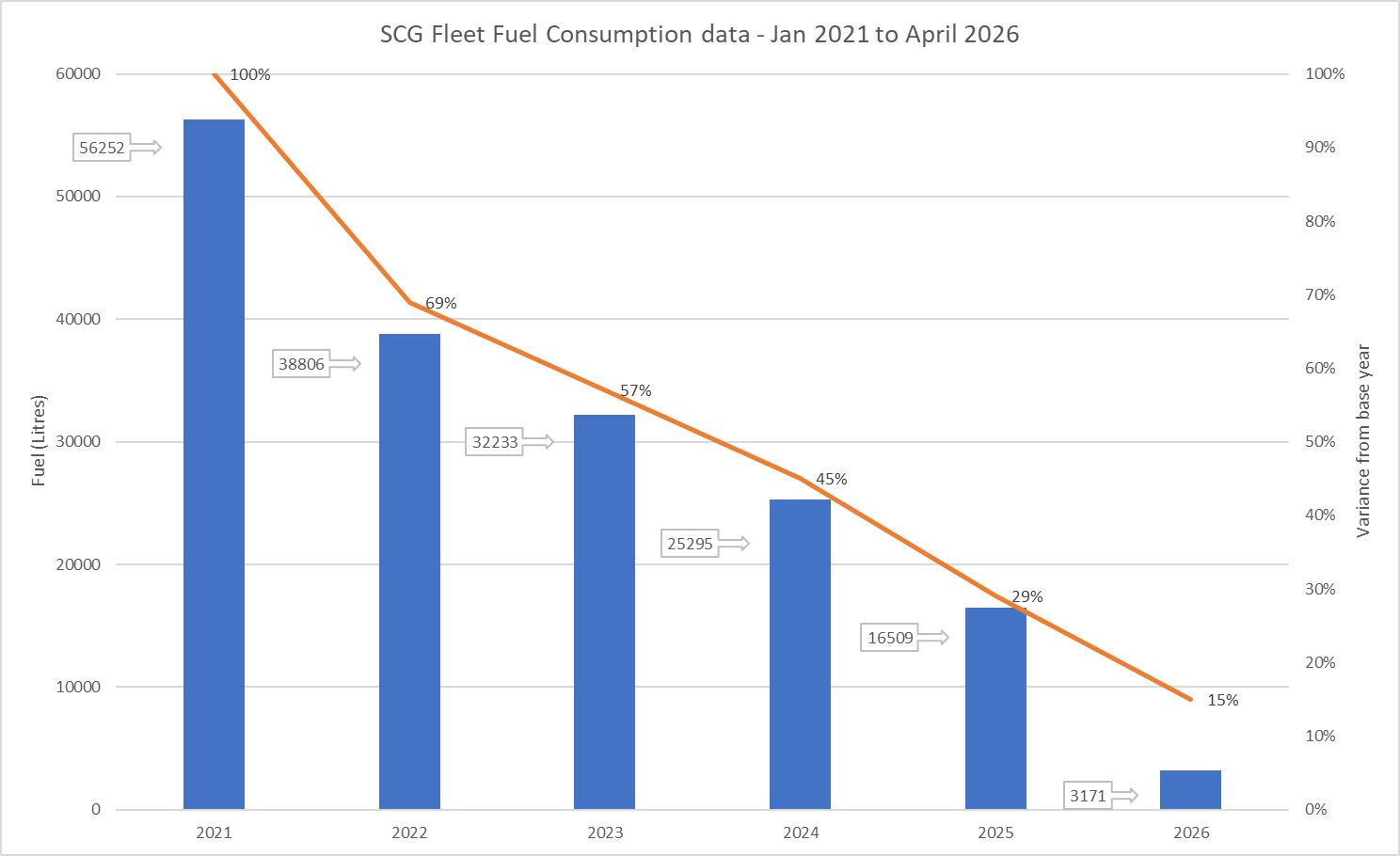
As its joint managing director Fred Soar shows, it’s down by 85% since 2021 by focusing on upgrades to EVs and plug-in hybrids (although some research suggests the plug-in hybrids don’t reduce fuel use as much as the manufacturers claim).
There’s plenty of electric momentum in the regions, too. We covered the cool story of Tumu Timbers and its big solar array recently but there’s another alliterative go-getter in the forestry sector: PermaPine.
Recently, we had the opportunity to be involved with RFH, who delivered logs to our site using an electric logging truck — a first for New Zealand.
Taking it a step further, we unloaded that same truck using our own electric log loader, another early adoption in the sector.
In the public transport sphere, there’s been a pleasing increase in the number of electric buses being added into the fleets of our bigger cities, but Timaru's bus service will also soon be completely electric. It runs an on-demand system and the service will soon introduce ten electric vehicles.
“Six of the new EVs, known as ‘very small buses’ or VSBs, are the first of their kind in New Zealand and can seat up to 13 people, with another 13 standing.”
Each VSB has a 155kWh battery with an expected driving range of approximately 300km per charge.
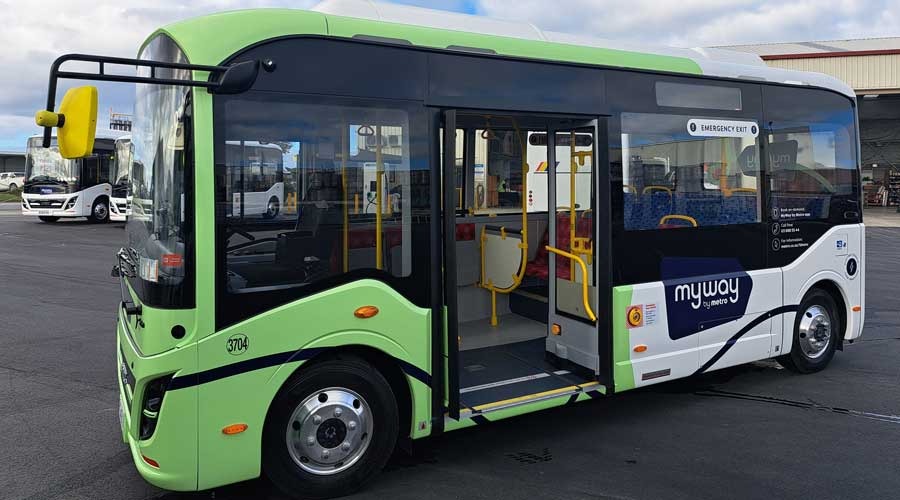
Vehicles can be on the road for the whole day, and charging is only expected to be required in the evening when the vehicle is parked at the depot.
Gavin Shoebridge also pointed his audience to an Aussie trucking firm called Centurion that switched its entire fleet to electric last year.
As they said:
“We’ve successfully commissioned Australia’s first fully off-grid, 100% renewable BEV project at our Hazelmere depot in Perth. As of July 2025, 30 Mercedes-Benz eActros 300 trucks, 25 rigids and 5 prime movers, are now on the road servicing the Perth metro area.
This milestone is backed by 100% renewable energy generated and stored on-site, making this the first project of its kind in Australia.”
The Government recently announced potential changes to trucking rules so that more weight could be carried. This is aimed at reducing fuel use, but it could also be a stepping stone to more electric trucks, which are often slightly heavier.
See what we said about those changes here.
Escaping the gas trap
Any country that has its electricity price tied to gas is more exposed than those where it is more closely tied to renewables, as this graph shows.
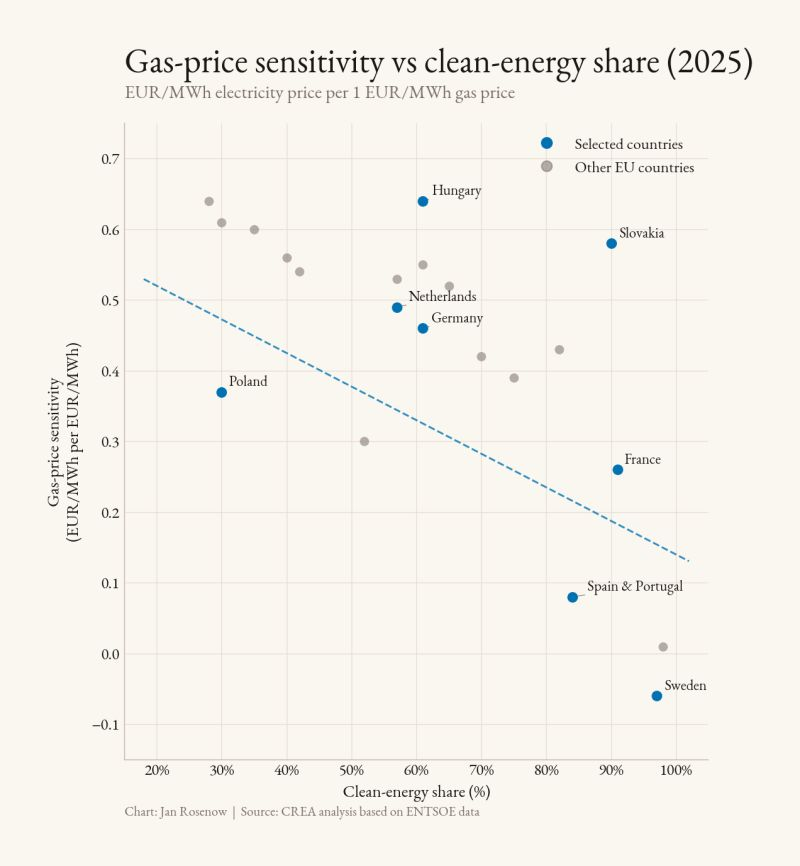
Many Asian countries like Taiwan, Singapore and Japan are very reliant on LNG and Japan is now mulling a US$3 billion subsidy scheme to help users through the current price spike from July.
As the Climate Foundation's Christina Hood says: “New Zealand is incredibly fortunate that our electricity prices aren't tied to volatile international LNG." We should keep it that way and, as the low prices seen in Iceland prove, hydro and geothermal is a good combination.
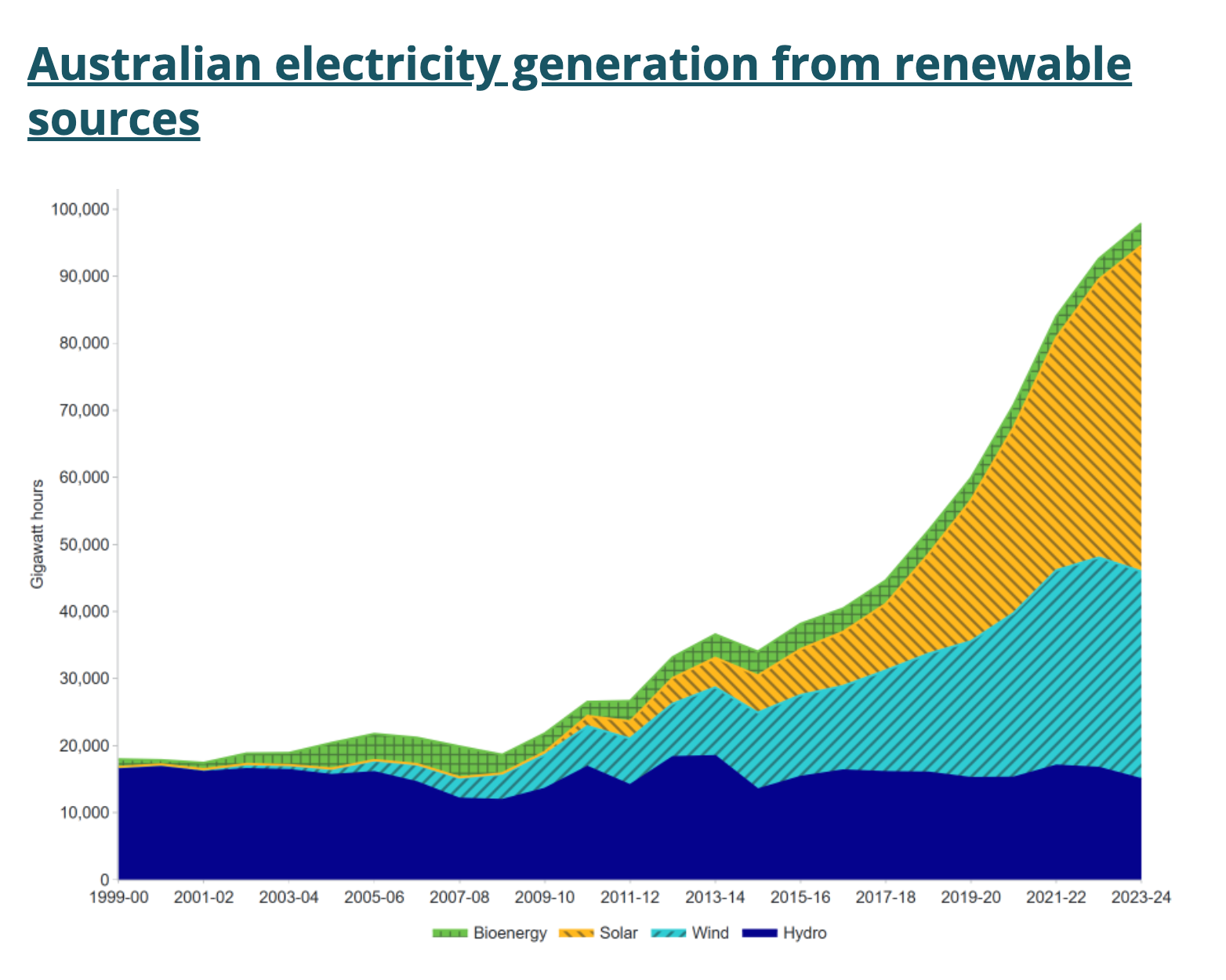
Australia’s solar and battery strategy has also reaped rewards.
Solar - both rooftop and large scale - has gone from a tiny fraction in 2010 and made up around half of the total renewables in 2023-34.
Big batteries are also playing a major role in Australia’s grid and removing the need for gas at peak times, while over 300,000 small batteries in people’s homes as part of the subsidy scheme are also playing their part in reducing bills and reducing the need for grid upgrades.
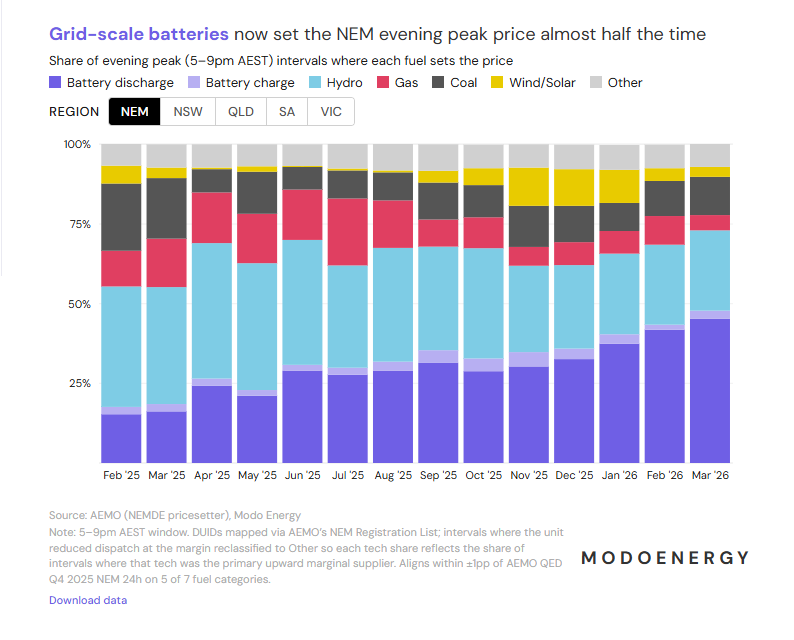
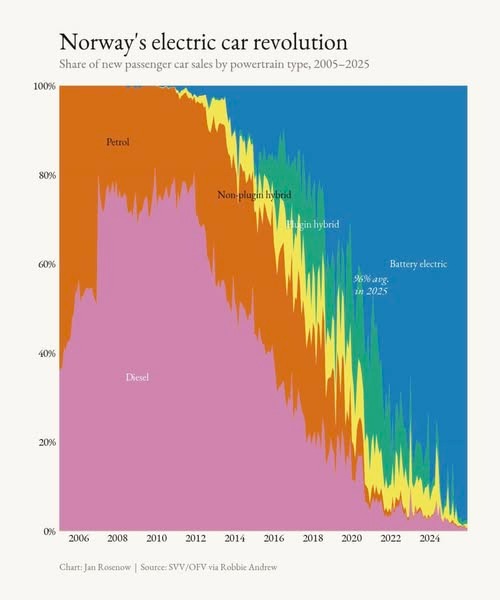
That’s what a strategy looks like. And this is what Norway’s strategy to electrify its fleet looks like.
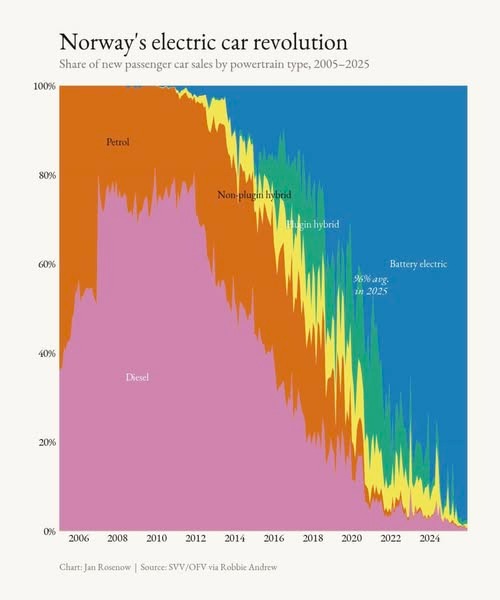
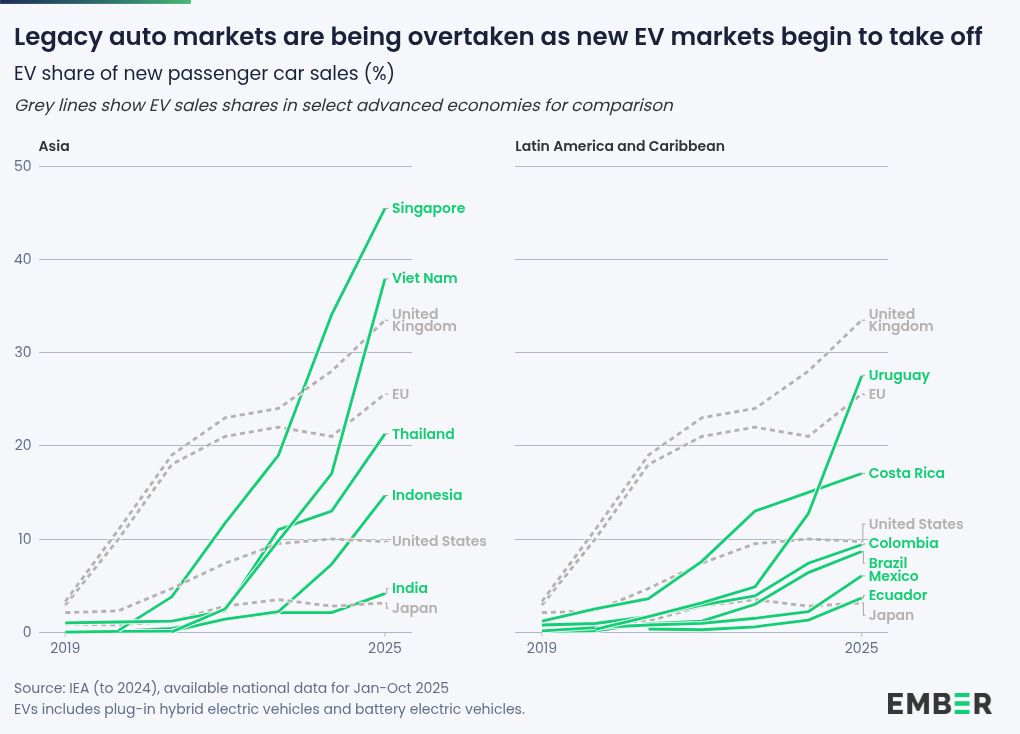
The Norwegian example is a good one to show that it’s possible (although Denmark has done it more rapidly), but the response is often ‘well, they’re rich and have lots of oil and gas money’. That’s why we like talking about the more surprising examples of EV adoptions like Nepal, Vietnam and Ethiopia.
Off the pipes
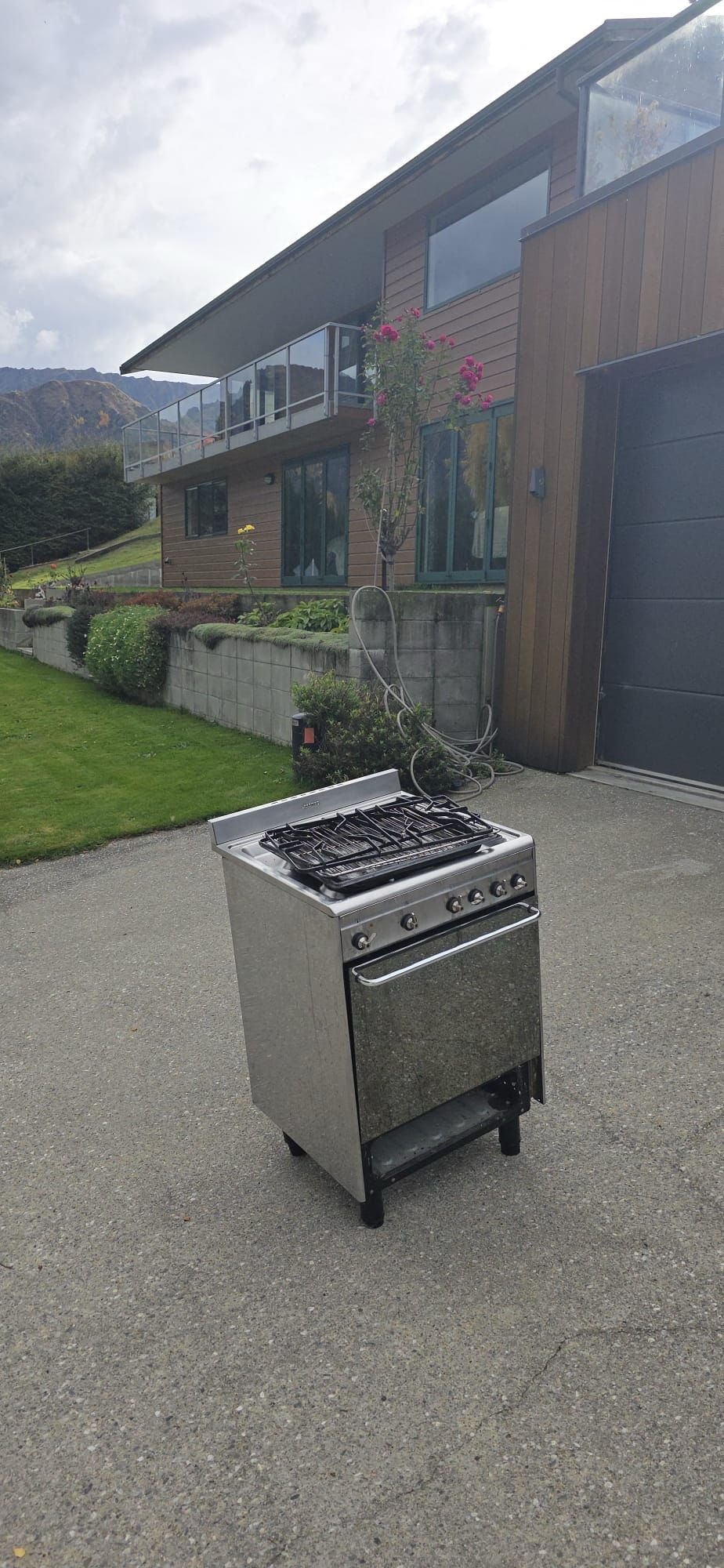
A friendly reminder that piping gas into your house is dumb. It’s expensive. It sometimes causes explosions. It releases noxious fumes when used. And it’s really annoying to clean.
As this Guardian story shows, more US homes are experiencing the benefits of induction, with US states from California to Georgia helping get more induction stoves into homes for climate, health and cost reasons.
Marcos Ramos, who “hasn’t been able to cook a full meal at home in nearly four years, after a gas leak resulted in a lengthy supply cut off for his New York City apartment building” had a Copper induction stove installed and the company is now working on a $32m pilot to replace gas stoves in 10,000 apartments across the New York City Housing Authority system.
The gas stove has become a bit of a culture war prop. And that was by design.
One down, many more to go.
Big ‘ol boats
We’ve covered China’s big battery powered container ship on Electric Avenue before, and there are also some big electric ferries being created these days(including in Tasmania by Incat Crowther). Now the cruise industry looks like getting in on the electric act.
German ship building company Meyer Werft presented a new concept boat at a big trade conference in Miami that promised to reduce greenhouse gas emissions by 95%. Great news if you're hoping to feel a bit better about yourself as you head to the buffet.
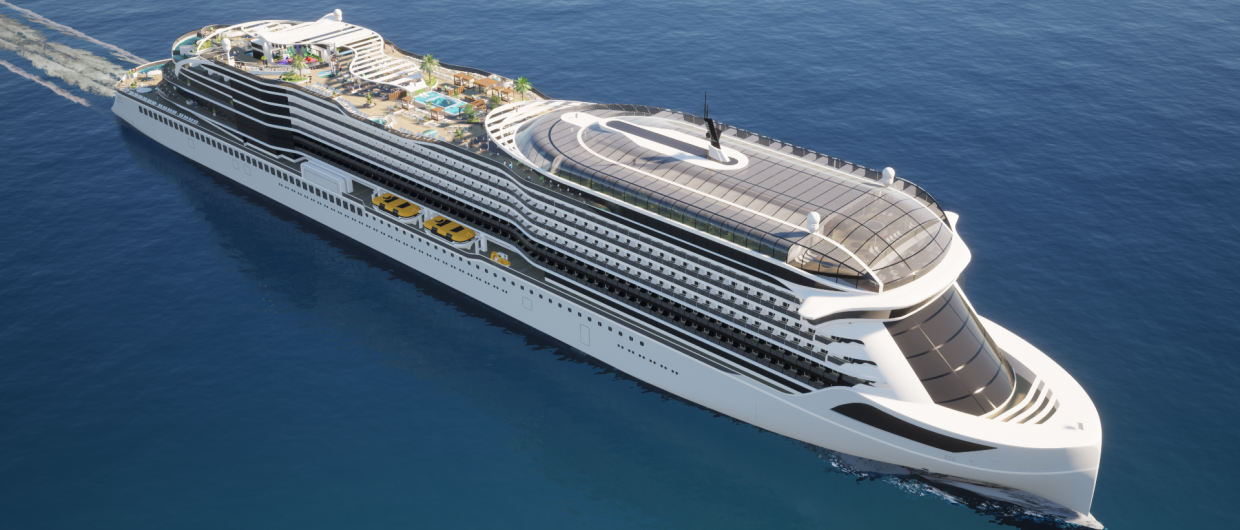
With the battery system, a large portion of typical European cruise routes can be covered, for example the route from Barcelona to Civitavecchia near Rome. By 2030, around one hundred ports across Europe will offer the required charging infrastructure. Upon request, the ships can also be built as hybrids with small generators, enabling, for example, transatlantic crossings
Political Power has gone local! Dr Nick Smith, mayor of Nelson and ex-National Party minister, is an early adopter when it comes to electric machines but, through his efforts with the council and his close involvement with the Ratepayer Assistance Scheme, he's also embracing one of Rewiring's core mantras: once you've electrified your own life, electrify someone else's life, too.
Read moreDownloadWhether it's the growing number of electric buses, new electric trains for the lower North Island and City Rail Link, or new electric ferries, we love seeing more electric transport options in our big cities. It's also good to see some of our smaller cities like Palmerston North, Timaru and Nelson going electric and, as is almost always the case, the drivers reckon it's better on electrons. At the Electrify Nelson expo, we spoke with one driver Lee about the city's electric buses. And he definitely wouldn't go back to diesel.
Read moreDownload