Don't listen to Old Man Gas. Ditch LNG. Support New Zealand-made energy!


Current events are making EVs more popular, but we've gone from a leader to a laggard and we need to start shifting the fleet to electric now; Queenstown Golf Cub tees up a good deal on solar; an Australian apartment complex switches on 250 charging points with a novel payment system; Taiga electric snowmobiles are taking over; and more efficient solar panels allow bigger systems on smaller roofs.

Pain at the pump, gain at the charger
It’s hard to escape the news about petrol prices right now (or Mike Casey's win at the New Zealander of the Year Awards) and there is growing concern that this conflict could stretch on and put our fuel supply at risk.
At a household level, we’re seeing more people looking at and buying EVs and, as this graph shows, that makes sense.
.png)
When you do the maths, the cost of finance and energy for an EV is often lower than the cost of fuel for a petrol car.
%20(3).png)
Public transport has also reached its highest levels since 2019 in Auckland.
At a national level, while the Government continues to criticise the Clean Car Discount (inaccurately claiming that it helped millionaires buy Porsches) and looks at implementing restrictions as part of its fuel escalation strategy, many other countries see it as an opportunity to move away from imported energy over the long term (Wise Response has written a piece showing what community members can do if the trucks don’t come).
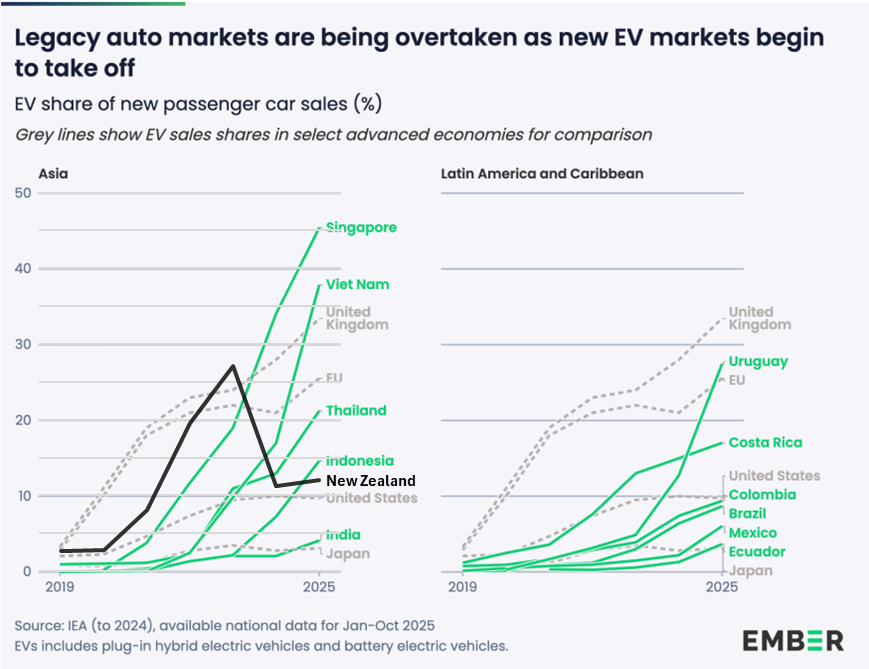
New Zealand went from leader to laggard on EV adoption when those subsidies were removed, as this Ember graph shows (these numbers include plug-in hybrids, so full EVs are a lot lower).
Transitioning a fleet takes a very long time because cars stay on the road for years. In Norway, for example, despite almost 100% of new cars being electric now (12 petrol cars - 12! - were sold in February this year), just one third of the total fleet is electric.
The Ember report the graph features in looks at how countries could become energy independent by embracing electrification. And New Zealand should be one of them given our potentila to create cheap New Zealand energy.
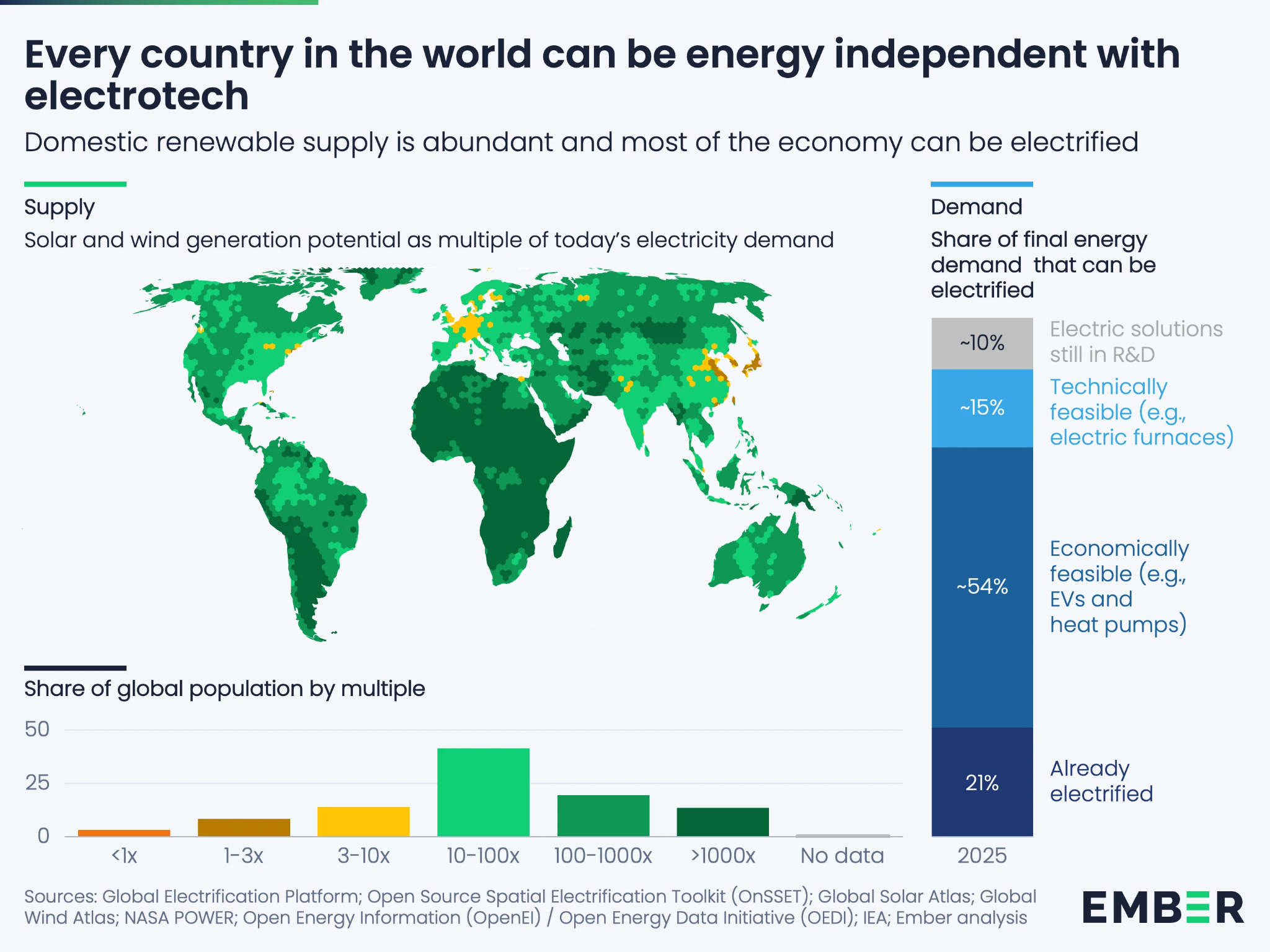
Its conclusion: “At some point the Strait of Hormuz will reopen. Prices will ease. The crisis will fade from the headlines. But the structural logic will not change, and the next disruption will not be long in coming. Every year of continued fossil fuel import dependency is another year of exposure to a system that has shown, repeatedly, that it cannot be relied upon. The technology to end that dependency exists. The only question is how many more crises it takes. The countries with the foresight to invest in electrotech now will be better able to weather the next storm.”
Get in the hole!
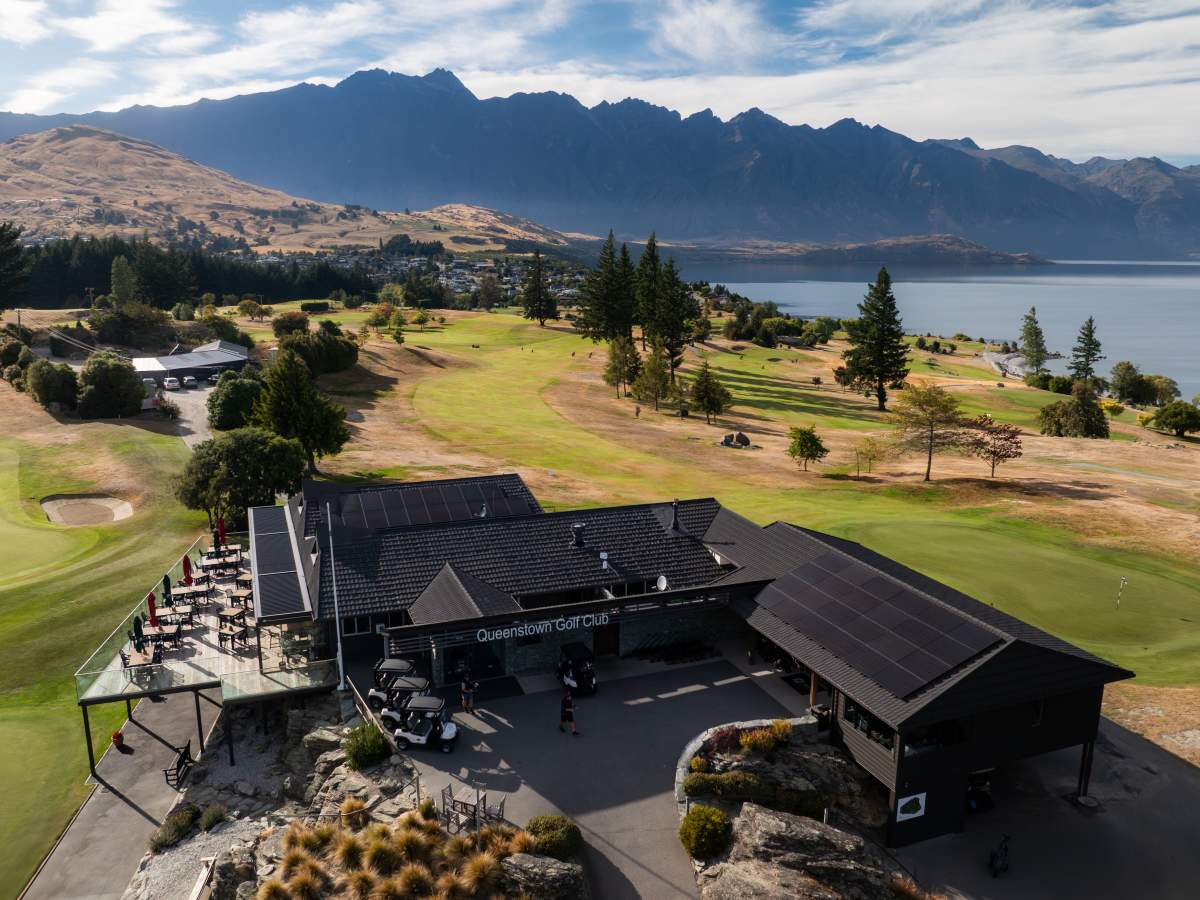
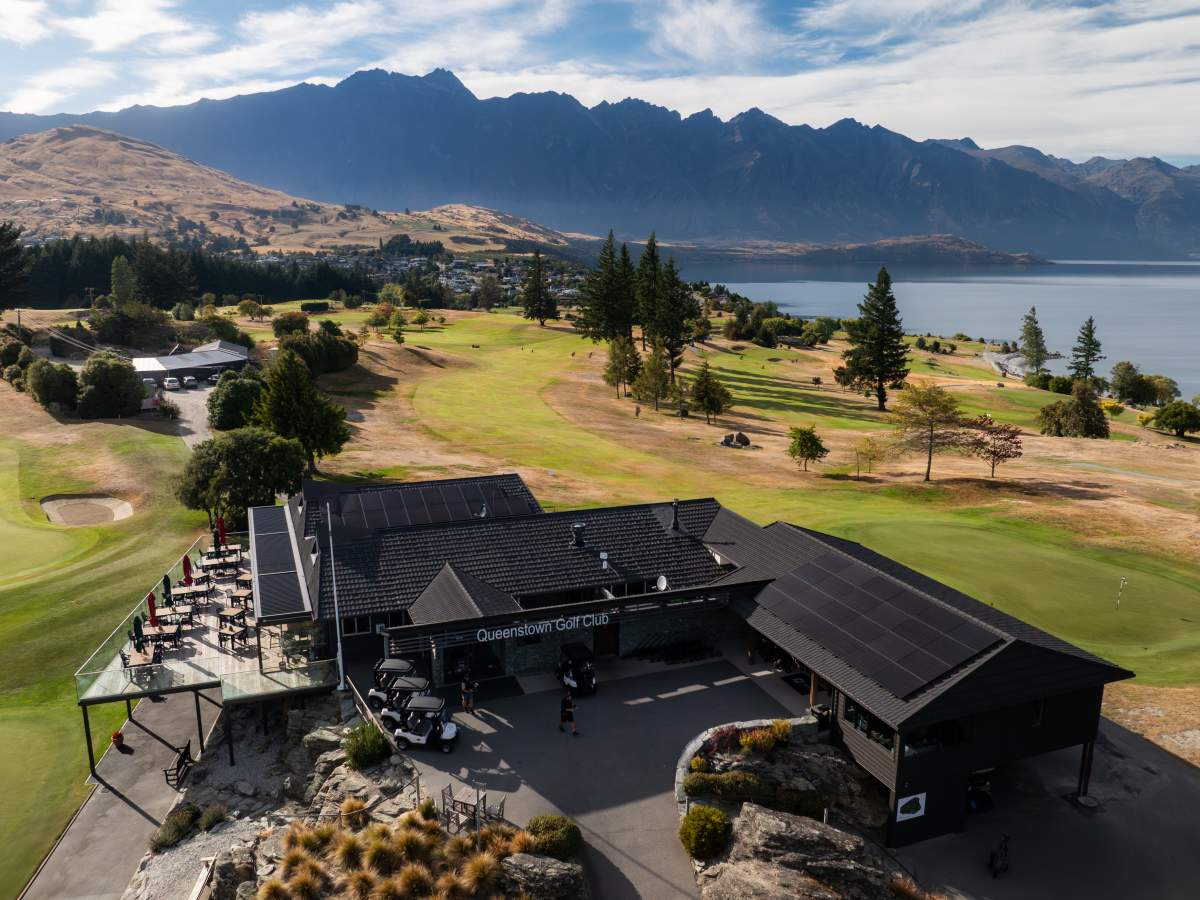
It’s always good for the players to have a bit of sun when they’re out on the golf course, but it’s also good for the clubhouse because the Queenstown Golf Club has gone solar. As Destination Queenstown wrote on its site.
“Earlier this season, the 111-year-old club switched on a new solar system - 80 rooftop panels paired with 42 kilowatt-hours of battery storage - transforming the clubhouse into a largely self-powered facility during daylight hours.
On most days, from around 8.30am until early evening, the café, kitchen, bar, golf cart charging stations and pro shop operate almost entirely off solar energy. But the move wasn’t just about lowering electricity bills or responding to climate change. Club general manager Andrew Bell says resilience played a major role in the decision.
“Queenstown Golf Club is designated as a community shelter hub under the civil defence plan,” he explains. “If a disaster cut off the Kelvin Peninsula, people would naturally come here for shelter. But until recently we had no capacity to operate independently of the grid, so we had a discussion about how we would meet the needs of the community … In an emergency, we’ll have enough energy stored to help for several days. And, of course, the sun comes out every morning to recharge the batteries.”
The solar installation was completed by local company Queenstown Solar in October. On a typical day the clubhouse uses around 18 kilowatts per hour while the system produces about 30. Excess power charges the battery bank, enabling the club to keep the heating, lights and chillers on in an emergency, and locals to charge their phones. Community Trust South stepped in with some partial grant funding for the battery installation, as it upgrades the resilience of the community shelter hub.
Financially, the investment required some long-term thinking. Bell estimates the payback period at six to eight years - but with panels expected to last around three decades, the economics eventually stack up.
“Upfront cost is what puts people off,” he says. “But over 30 years it absolutely makes sense.”
We look forward to seeing some more electric mowers in action soon.
Look up!
We occasionally hear from apartment owners who have been unable to fully embrace electric transport at home because the building won’t allow chargers to be installed. In Australia, an apartment complex has just launched with technology that allows 250 of them.
As EV retrofitter Dave Budge wrote:
“The real innovation isn't the hardware, it's the billing. Via a QR code, each charger is linked to the individual apartment owner's electricity account, not the body corporate, which removes the single biggest barrier to EV charging in multi-dwelling buildings.”
Snow business
Traditional snowmobiles are particularly loud and smelly machines. But the electric options are coming for them, too.
As this story says:
“Canadian electric powersports company Taiga is launching three new electric snowmobiles with a 33% jump in power output to 120 kW and CCS fast charging to 80% in 20 minutes — bringing the same charging standard used by electric cars to the backcountry. The most interesting addition might be the onboard power system: a 3 kW output at 120V and 220V that turns the snowmobile into a mobile generator, capable of powering a remote cabin through a winter storm.
These machines have to be built tough because they're out and about in some pretty rough and cold conditions, but Taiga reckons they've got it nailed.
Space invaders
Solar panel efficiency keeps improving and a new panel from Chinese manufacturer Aiko that has been approved for use in Australia adds “an extra 24 per cent of generating capacity above the average rooftop module”.
With up to 545 watts (the standard is between 370 watts to 440 watts), it allows for much bigger systems to be installed.
Political Power has gone local! Dr Nick Smith, mayor of Nelson and ex-National Party minister, is an early adopter when it comes to electric machines but, through his efforts with the council and his close involvement with the Ratepayer Assistance Scheme, he's also embracing one of Rewiring's core mantras: once you've electrified your own life, electrify someone else's life, too.
Read moreDownloadWhether it's the growing number of electric buses, new electric trains for the lower North Island and City Rail Link, or new electric ferries, we love seeing more electric transport options in our big cities. It's also good to see some of our smaller cities like Palmerston North, Timaru and Nelson going electric and, as is almost always the case, the drivers reckon it's better on electrons. At the Electrify Nelson expo, we spoke with one driver Lee about the city's electric buses. And he definitely wouldn't go back to diesel.
Read moreDownload