Operation Laser Kiwi: help us take New Zealand-made energy on the road


A very cool 'floatovoltaics' project makes use of unproductive pond space and also helps those struggling with their energy bills; renewables push down the price of electricity to nothing (or less than nothing) in Scandinavia and South Australia and New Zealand has an opportunity to follow suit; France goes hard on electrification, while the UK builds better; Aussie truckies reckon electrification will take decades but much bigger electric machines are here now, including some from Volvo; hydrogen generators are an innovation we do not need; the Speight's brewery gets off the gas with a $7.2 million electric boiler; and a bit of 'solarcasm' demonstrates how going off-grid is now an option for some.

Go with the float
While we mostly advocate to put panels on roofs and unproductive paddocks, there are lots of other places solar panels can go. Overseas, we’re seeing them put beside motorways, on car parks and even being integrated into windows. And in some cases, they’re also floating on water.
Now, New Zealand is embracing ‘floatovoltaics’, with a project from Tū Mai Rā Energy Roopu, Rangitāne o Tamaki Nui-ā-Rua and Tararua District Council.
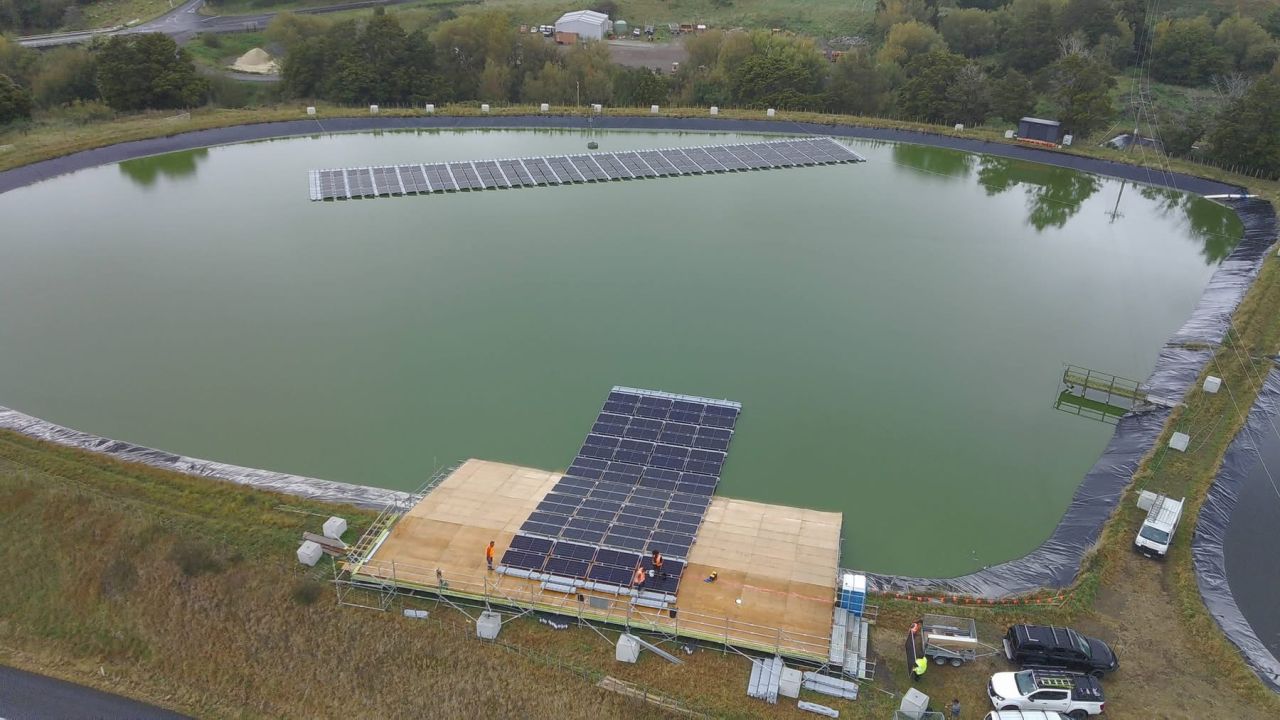
As Richard Richard Te Hurinui Jones said on LinkedIn:
Floatovoltaics is still rare in New Zealand. Every project like this one builds the evidence base, the supply chain capability, and the confidence that this technology works here — in our climate, on our ponds and reservoirs, for our communities.
But as we've said before, the technology is only part of the story. What makes this project significant is the model: an iwi in the room as a decision-maker, a local council backing community-led innovation, and a Māori-led energy company with the technical capability to deliver. That combination — when it works — produces something none of us could build alone.
And then there's the piece that matters most to us. A portion of the income generated by this array will be distributed directly to whānau facing energy hardship in the rohe. Not as a one-off gesture — but as a structural feature of how this project was designed from the start. Clean energy generating real revenue, and that revenue flowing back to the people who need it most. This is what a social enterprise model looks like when it's working as intended.
Free the power
Countries with electricity systems tied to gas have been dealt a double blow from the Middle East conflict: high fuel costs AND high electricity costs.
But the countries that are more reliant on renewables have kept a lid on electricity prices and, in some cases, wholesale prices can be at zero or even into negative territory.
We often see comparisons to Scandinavia, but it is a good example of what can be achieved with renewables and New Zealand has similar potential. As this story shows:
When the wind blows hard and rivers run full and fast in Nordic countries, a routine scene plays out that would have seemed incredible just a decade or two ago: The price of electricity falls below $0.
In some parts of the region, power has become so abundant that generators effectively have to pay to offload it. Electricity prices in northern Sweden over the course of last year slipped into negative territory for a total of 679 hours—equivalent to nearly a full month—because the grid was flooded with excess energy. It’s no surprise, then, that Sweden recorded the most negative-price hours in Europe in 2025, according to Montel EnAppSys data, overtaking Finland, which had the most negative-price hours the previous two years. Scandinavian neighbor Denmark also regularly racks up stretches of low- to no-cost days, thanks to its abundant clean energy.
Iceland, which relies primarily on a combination of geothermal and hydro (sound familiar?), has some of the cheapest electricity prices in the world.
Closer to home, South Australia is also often used as a case study for the rapid roll out of renewables and, as PhD candidate Harry Armstrong-Thawley suggests, low prices are a victory for this strategy.
While fossil fuel dependent grids are experiencing elevated prices, South Australia is showcasing the sheer economic weight of a wind and solar-dominated system.
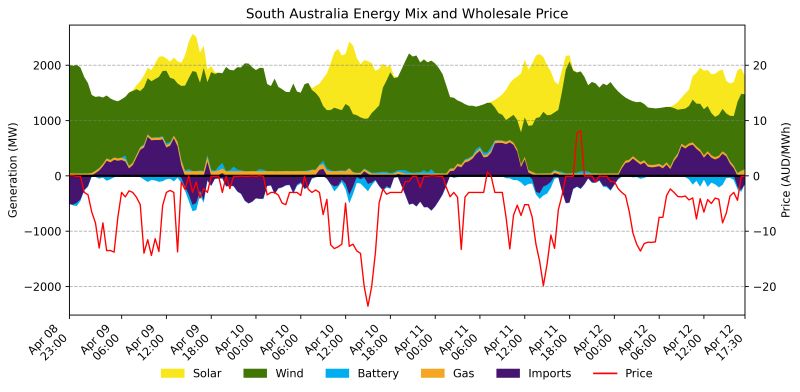
When gas sets the price for electricity, it tends to remain high, but with enough renewables and more batteries (both big and small), we can reduce the need for that gas in the system.
Of course, each electricity system has its own nuances and rules, generation is just one component of the price and negative prices are controversial. In New Zealand, getting electricity to where it needs to be, along with other costs like retail margins and levies, makes up about half the cost to customers. But we could have some of the world's cheapest electricity if we do this right and eventually start attracting businesses back here, rather than forcing them to close down due in part to high energy costs.
Go long
Many countries have come up with emergency measures to deal with the fuel crisis, like reducing fuel tax, lowering the cost of public transport, or offering targeted short term cost-of-living payments. But they are also looking longer term.
France just committed to double state support and offer 10 billion euros a year through 2030 towards electrification. It's also banned gas boilers in buildings from 2027, and is aiming for 2 out of 3 cars to be electric by 2030
"As long as we depend on oil and gas, we will continue to pay the price of other people's wars, which unfortunately will continue and will impoverish us," said Prime Minister Sebastien Lecornu.
In the UK, developers will be required to install solar panels and heat pumps in all new homes in England from 2028 and there are a range of pro-EV policies.
In Australia, over 300,000 households have installed subsidised batteries - something that was in place before the crisis, and over 40% of homes have solar, many of them subsidised by the Government.
Unfortunately, we don't have much at all right now. And that's a real issue for our future prosperity.
Ember released a greatreport showing that the 1970s oil crises led to a decoupling of fossil fuels from GDP growth, but not from electricity.
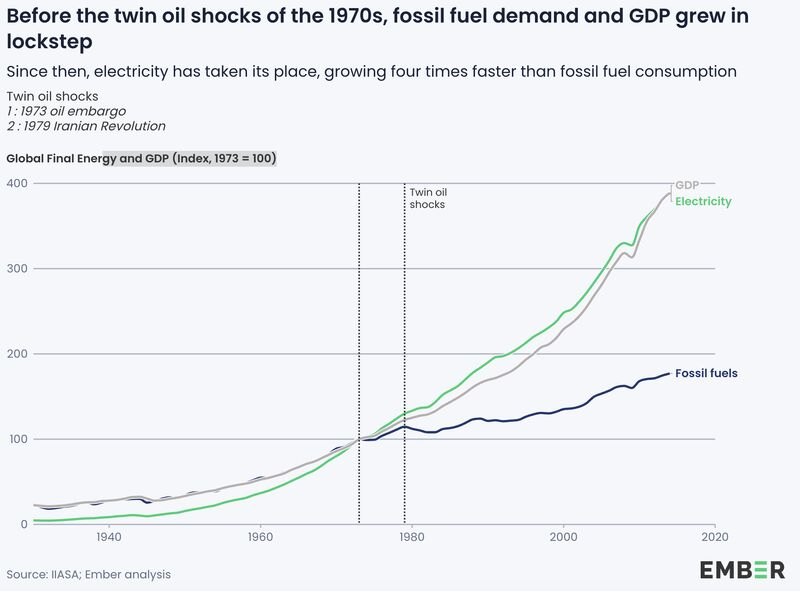
The electrotech revolution was already happening before this crisis. Those that have already started are better insulated from the price shocks we're now seeing. But it’s speeding up and we're falling behind.
Truck me!
We included a fair bit about trucking in last week's rundown and Fortescue's Andrew Forrest dropped the mic on some of the companies (and media) claiming it would take decades to electrify the trucking fleet.
“You think semi-trailers can’t run on batteries?
We could load more than 5 of them onto this electric truck.
“Experts” say heavy vehicles going electric will take decades.
We say years.
Our first Liebherr T 264 battery electric haul truck arrives in months, and our entire fleet - hundreds of vehicles - will be electric by 2030.
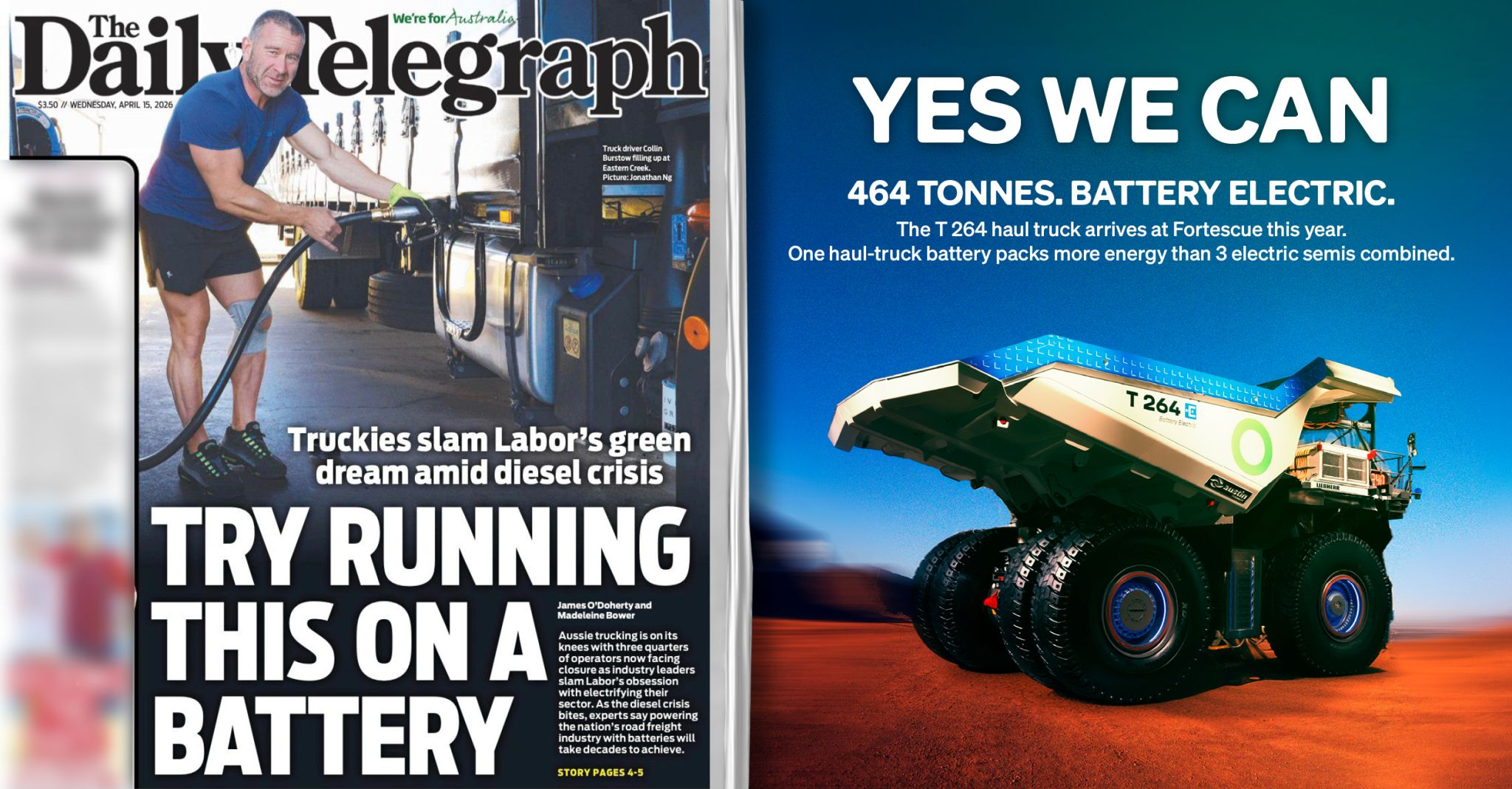
Volvo has also begun production of its new A30 and A40 Electric model articulated haul trucks.
Some large industrial folk are still pro-hydrogen, but it’s thought Forrest changed his tune after hearing Saul Griffith explain the physics.
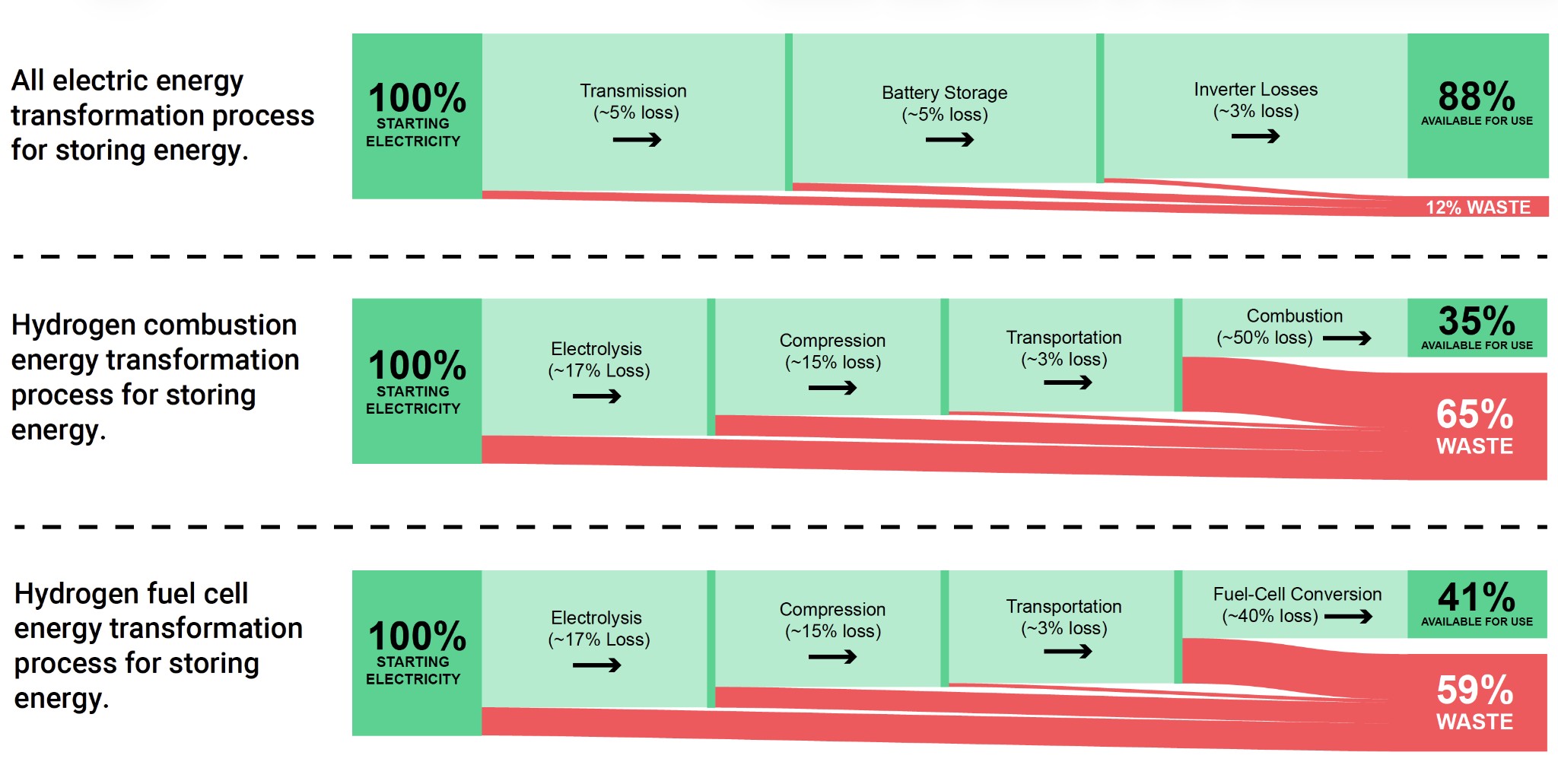
Suffice to say, given the inefficiencies of hydrogen and the difficulty of refuelling, we do not think Toyota’s hydrogen generator is a good idea. Batteries are also very quiet, so if you’re looking to get away from diesel generators, maybe try NRG Event Batteries instead, which developed a battery solution for events after working on the Electrify Queenstown conference.
Electric beer
Lion installed a massive solar system on its Auckland HQ last year. And now, with the help of EECA and Aurora, it’s electrified one of its big boilers at the Speight’s brewery in Dunedin.
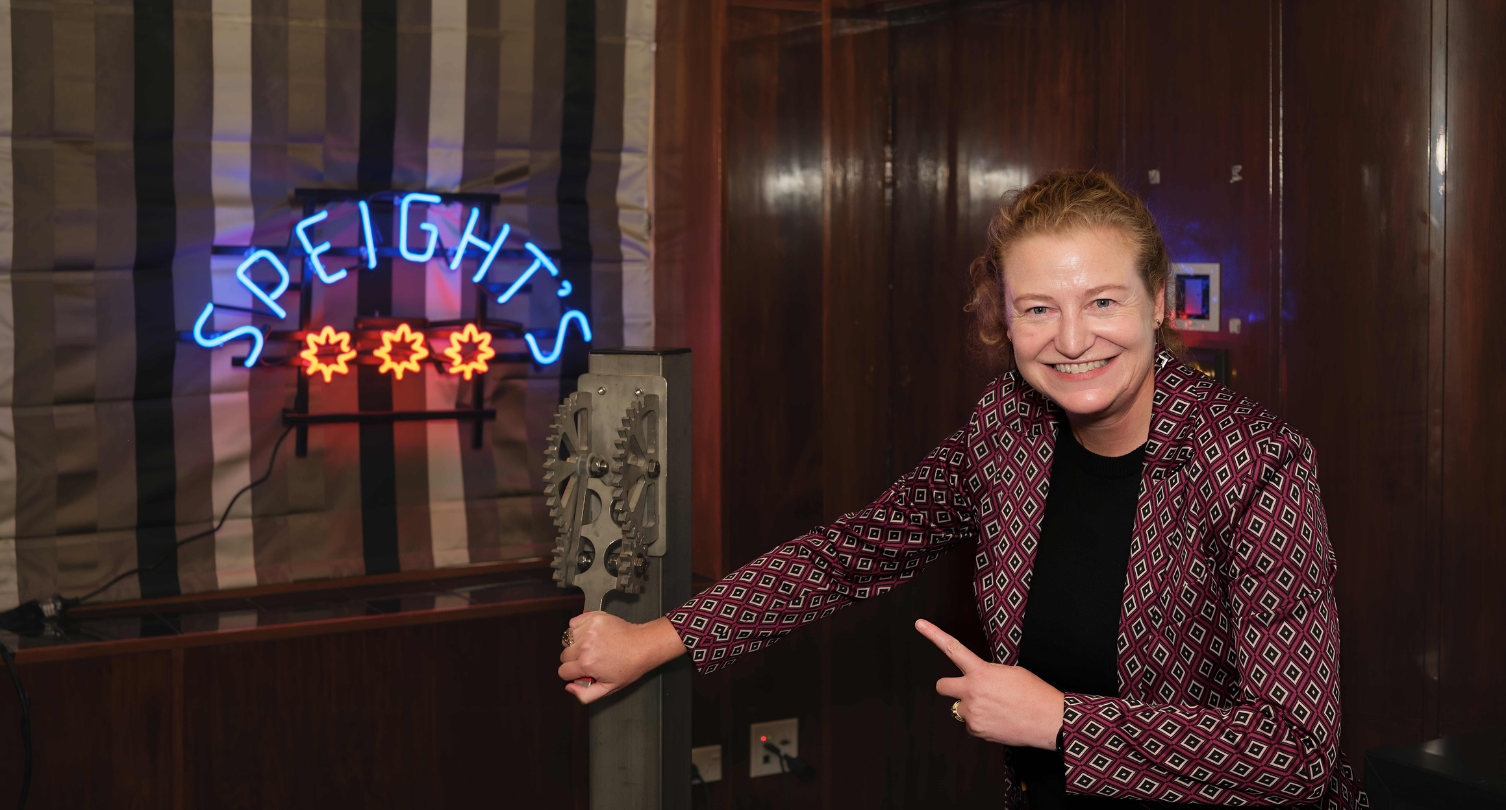
The 3MW electric boiler, opened by Dunedin MP Rachel Brooking, cost $7.2 million and is expected to save 18,500 tonnes of greenhouse gas emissions in its lifetime. And, with domestic gas supplies declining, it will also save what’s left for the businesses that don’t have options to switch.
Rewiring Aotearoa's New Zealand-made energy plan advocates strongly for a smart transition off gas. Some businesses may need assistance to upgrade and Business NZ recently suggested using the $200 million set aside by the Government for oil and gas exploration to instead go towards concessionary loans for businesses to help them electrify. We concur.
Solarcasm
The video may say 'I hate solar', but it is n fact an endorsement of what can be achieved with this technology these days.
While running a home like this without the grid is impressive, we're still pro-grid at Rewiring. It is a risk that if the cost to connect to the grid gets too high, more people will leave and do it on their own, but that means they won't be able to contribute to the syste and whoever is left on the grid will have to pay more to use it, a death spiral we’re currently seeing in the gas network.
"The sentiment around making the electricity market fairer and cheaper for customers is great, but there's still something missing." That's Rewiring Aotearoa CEO Mike Casey's summary of Act's energy policy announcement today.
Read moreDownloadACT will open electricity networks to competition, give New Zealanders more freedom to generate and sell power, and make monopoly lines companies prove consumers are getting value before loading more costs onto their power bills, says ACT spokesperson for Energy and Resources Simon Court.
Read moreDownloadACT is pledging to keep the gentailers whole and use market forces to curb the costs of lines management and increase solar repayment rates. Energy spokesperson Simon Court announced the party's electricity policy at Parliament on Friday afternoon.
Read moreDownload