Don't listen to Old Man Gas. Ditch LNG. Support New Zealand-made energy!

.png)

EVs are having a moment right now, so how can we get more people driving electric; Tom Selleck sums up how EV owners are feeling right now and staggering analysis shows the sun's prices have been unaffected by decades of geopolitical conflict; Scion goes solar to get off gas, while dairy farmers and homes go with solar and batteries to keep going; Saul Griffith takes his solar-powered scooter to Canberra and starts a fight with regulators; the Cancer Society's Lions Lodge in Hamilton gets some panels donated and will save $17,000 a year; and killing the Friday vibe with new studies on how fossil fuel companies made massive profits after the last energy crisis in 2022 and carbon emissions making our blood boil - perhaps quite literally.

Move the dial
There is so much chat about petrol prices and the role EVs can play in insulating us from future shocks right now - and we’re here for it. This could be a watershed moment for adoption. There are now almost 100,000 full electric vehicles on the road in New Zealand and new Consumer NZ research shows that 96% of EV owners would buy another EV.
EVs make up less than 10% of the total new cars sold here, a number that is ticking up after the post-subsidy fall (in Norway, it’s over 90%). But, as Evnex’s Ed Harvey said in a piece last year, confidence is key and the Government is not providing that confidence.
“A vehicle is usually the second biggest purchase a family makes. When policies are stable, when standards are clear and when the Government signals long-term support for charging infrastructure, people are far more likely to make the jump. When everything is being reversed or watered down, they hesitate…”
In the UK, there are grants for EVs, many more charging stations being opened, and even a large Government-funded advertising campaign suggesting now is a good time to “get that electric feeling”. Full electric vehicles accounted for around one quarter of all new car registrations in 2025.
Nepal is at around 75% on new EV sales and Ethiopia’s ban on fossil fuel vehicle imports and a number of tax incentives is driving massive EV demand, so it’s not ‘too expensive’ as many claim.
“The Ethiopia story is fascinating,” said Colin McKerracher, head of clean transport at BloombergNEF. “What you’re seeing in places that don’t make a lot of vehicles of any type, they’re saying: ‘Well, look, if I’m going to import the cars anyway, then I’d rather import less oil. We may as well import the one that cleans up local air quality and is cheaper to buy.’”
We don’t really have a fossil fuel industry in New Zealand. But we’re good at making renewable electricity and that needs to be put into our transport fleet - big and small. That’s what most countries are doing, so let’s lean into that rather than, as David Keat, an ex-manager at Marsden Point, said on RNZ this morning, “going down the 1980s path”.
As energy analyst Jan Rosenow says: “We should fix the roof when the sun is shining, not when there's a thunderstorm. Only when we address the root cause of this energy crisis will we be able to prevent future price shocks. That means a transformation of energy demand from burning fuels to using electricity from clean power generation.”
Smirk when you’re winning
There’s been a raft of material created on how EV owners are feeling right now. This is going to be painful for a lot of people, particularly those on low incomes that spend more on transport as a proportion of their income. But Tom Selleck's beautiful face sums it up.
Those with solar are probably feeling even better. After all, the sun doesn't raise its prices. Or go to war. And last time we checked we had about half a billion years of sun-based energy security left.
As this analysis shows, foreign wars have had little effect.
Leading from the front
While there are legitimate questions to be asked about New Zealand’s strategy as a country, many businesses are just getting on with it and reaping the benefits.
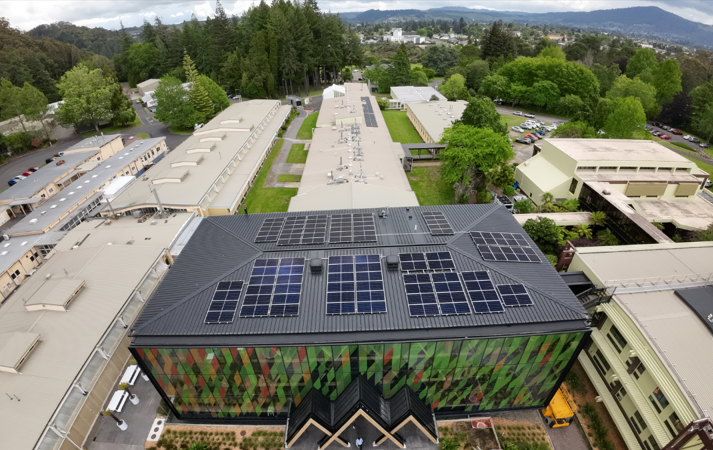
As Mike Casey says, if your opinion on solar or EVs is static and based on something from a few years ago, it’s probably out of date because the technology has come so far and in Rotorua, “New Zealand's largest research institute turned an energy challenge into a blueprint for electrification — with solar at its heart.”
Scion was heavily reliant on gas, which was rapidly increasing in price, and its grid connection wasn’t big enough to handle all of its needs, but “for years, Scion had been told solar wasn't viable for its Rotorua site”.
An electrical engineer had advised that payback periods were too long and that the region didn't receive enough sunshine hours to justify the investment. The turning point came when a different engineer challenged that assumption and connected Scion with ZEN Energy. The initial proposal told a different story, and the team's enthusiasm was sparked. An earlier, small-scale solar installation had hinted at the real numbers; the underlying data showed a payback period closer to five years — not 20.
“We wanted to prove the same maths worked with a full turnkey solar solution provider. It's worked out better than we anticipated.”— Jeremy Peake, science engineer, Bioeconomy Science Institute
At a slightly smaller scale, Fairbank Farms has also been featured as a case study by EECA, which is handing out demonstration grants to farmers.
Dairy farmers Michael Farmer and Chris Stewart didn’t even realise the grid was down during their last power outage. Fairbank Farms kept operating at full capacity thanks to their solar and battery setup.
This was while other farmers scrambled for generators or struggled to get old ones working when they hadn’t been serviced for a while.
With a big Fonterra pay out coming soon, we hope a few farmers decide against getting a new ute (unless it’s an electric upgrade, of course) and instead invest in some resilience that will pay itself off with the savings.
And at the household level, Future Energy shows that self-sufficiency also feels good in Dunedin.
Rolling sunshine
Saul Griffith’s Lightfoot solar-powered bike took a trip to Canberra this week and a few Aussie politicians had a go.
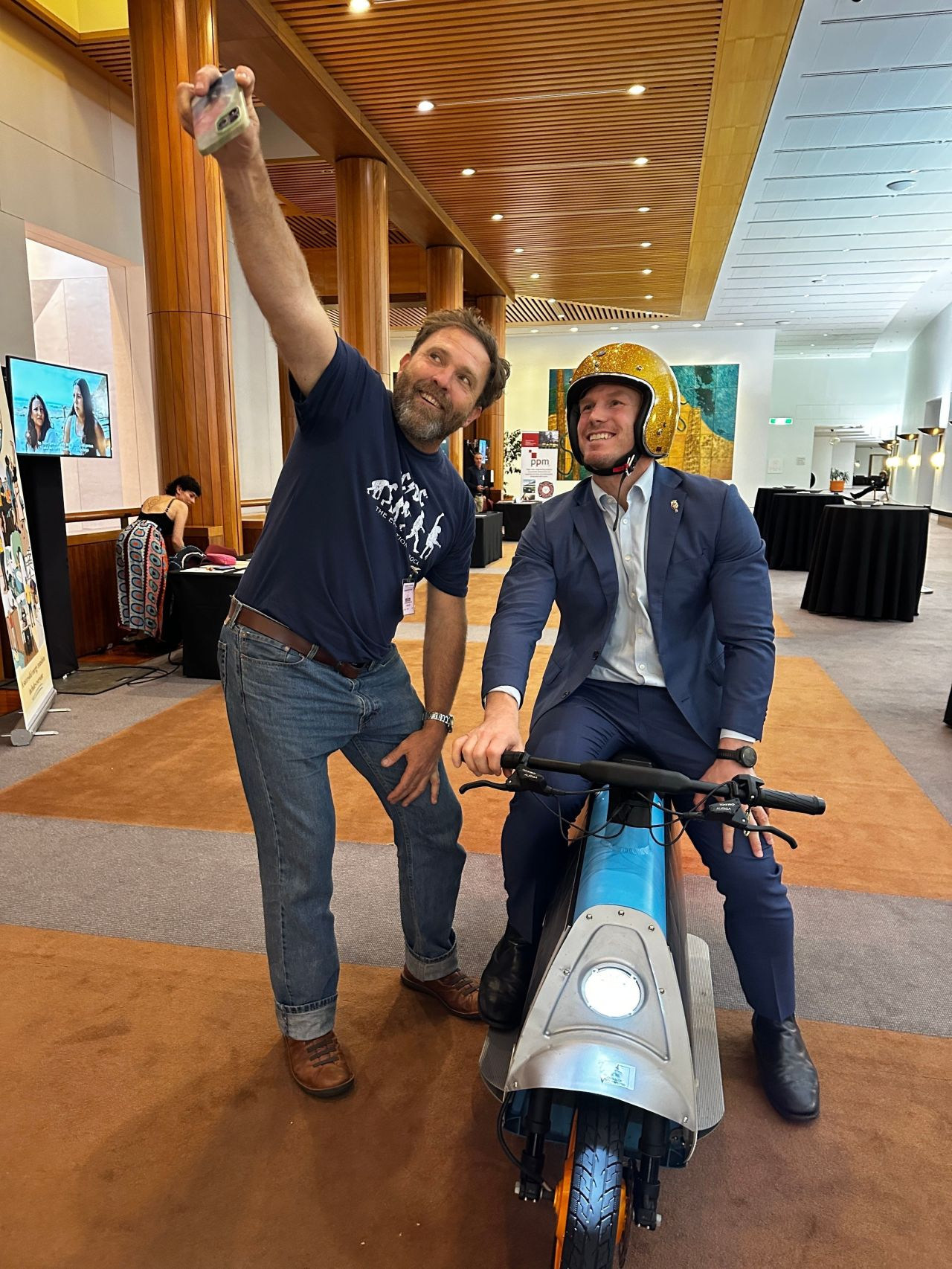
“The Lightfoot charges itself in the sun, has a 60km range, climbs any urban hill, and runs on zero fossil fuels. Saul calls it "rolling sunshine". There's just one catch: it's not currently legal in Australia.”
You can read more about that in Saul Griffith’s Substack, where he says regulation limiting the power of ebikes is like limiting the power of cars.
“The proposal to strictly enforce or lower power limits (Watts) is a misunderstanding of physics that will fail to improve safety. Worse, it will inadvertently penalize the wrong people, the families trying to replace car trips with cargo bikes, while doing little to stop the reckless riding that sparked this debate.
To understand why we need to think more carefully about e-bike regulations, we have to look at how we regulate cars. We do not limit the horsepower of a car; we limit its speed. We don’t tell a Toyota Hilux or Ford Ranger driver they are banned from having enough engine power to tow a trailer or climb a steep driveway. We simply demand they do not exceed 110km/h when that’s the speed limit.
Give the gift of sun
If you’re looking to do something philanthropic that will continue to pay dividends over the long term, why not donate a solar system? That’s what one generous and anonymous donor has done in Hamilton, with a $120,000 system set to save $17,000 a year.
A Hamilton cancer patient facility has slashed its power bill with a donation of 220 solar panels, boosting frontline support as demand continues to grow. The Cancer Society’s Lions Lodge officially flipped the switch on the rooftop system on March 3, a move that will halve electricity costs at the 58-bedroom facility.
The “forever donation” will have long-term benefits for the lodge, which is also celebrating its 15th anniversary... The installation costs were funded by WEL Energy Trust and WEL Networks.
You’ve been shafted!
Sorry to kill the vibe, but just a friendly reminder that the fossil fuel companies may not be too worried right now. The conflict in the Middle East is just the latest in a long line of shocks that benefit the industry and the massive increases in energy prices are largely borne by customers.
A new study ‘Best of times, worst of times: record fossil-fuel profits, inflation and inequality’, looked at what happened after the last crisis in 2022 after Russian invaded Ukraine and it “resulted in record fossil-fuel profits globally that rehabilitated the oil and gas industry, obstructed the energy transition and contributed to inflation, but their magnitude and beneficiaries have been insufficiently understood.
We estimate that globally, net income in publicly listed oil and gas companies alone reached US$916 billion in 2022, with the United States the biggest beneficiary with claims on US$301 billion, more than U.S. investments of US$267 billion in the low carbon economy that year.”
You’ve got climate change!
More vibe killing, sorry, but another study showed that emissions are not just affecting the weather. The increased carbon in the atmosphere is actually affecting our internal chemistry.
“There is mounting experimental evidence that lifetime exposure to these increasing atmospheric CO2 levels can negatively impact the normal physiology of organisms … Studies indicate that, after this time, elevated atmospheric carbon dioxide, leading to CO2 accumulation in the body, has the potential to cause a range of adverse health effects.”
Maybe, given our slightly selfish tendencies, having our bodies bubbling on the inside might be what we need to get some action on this front.
Old Man Gas will be featuring in a few newspapers and billboards this week discussing the proposed LNG import terminal. Not surprisingly, he has his justifications, but they don't stack up. It is a multi-billion dollar tax on Kiwis that many experts and sector players think is unnecessary.
Read moreDownload"The sentiment around making the electricity market fairer and cheaper for customers is great, but there's still something missing." That's Rewiring Aotearoa CEO Mike Casey's summary of Act's energy policy announcement today.
Read moreDownload