Don't listen to Old Man Gas. Ditch LNG. Support New Zealand-made energy!


More evidence that we are in 'the age of electricity'; Dr Saul Griffith lays out his thoughts on a new electric world order (and offers a cautionary tale to New Zealand when it comes to LNG); Vessev keeps expanding, new electric ferries keep proving themselves, and EV Maritime boss says the maritime motivations keep changing; rural solar and batteries are going gangbusters right now and salt of the earth farmers are sharing the love; there's a Cambrian DIY solar explosion happening around the world and it's on its way to New Zealand; and a popular podcast unearths a little known electric first for New Zealand.
The age of electricity
The IEA’s Energy Review is always an exciting time for energy nerds. And one of its key findings was that we are now entering ‘The Age of Electricity’.
Overall global energy demand increased in 2025, but was down on 2024 due to a weaker global economy and lower cooling requirements.
“All energy sources contributed to meeting global energy demand growth in 2025, with solar PV and natural gas leading the way. Growth in solar PV met more than one-quarter of global primary energy demand growth, the first time on record that a modern renewable source contributed the largest share of the growth in global energy demand.
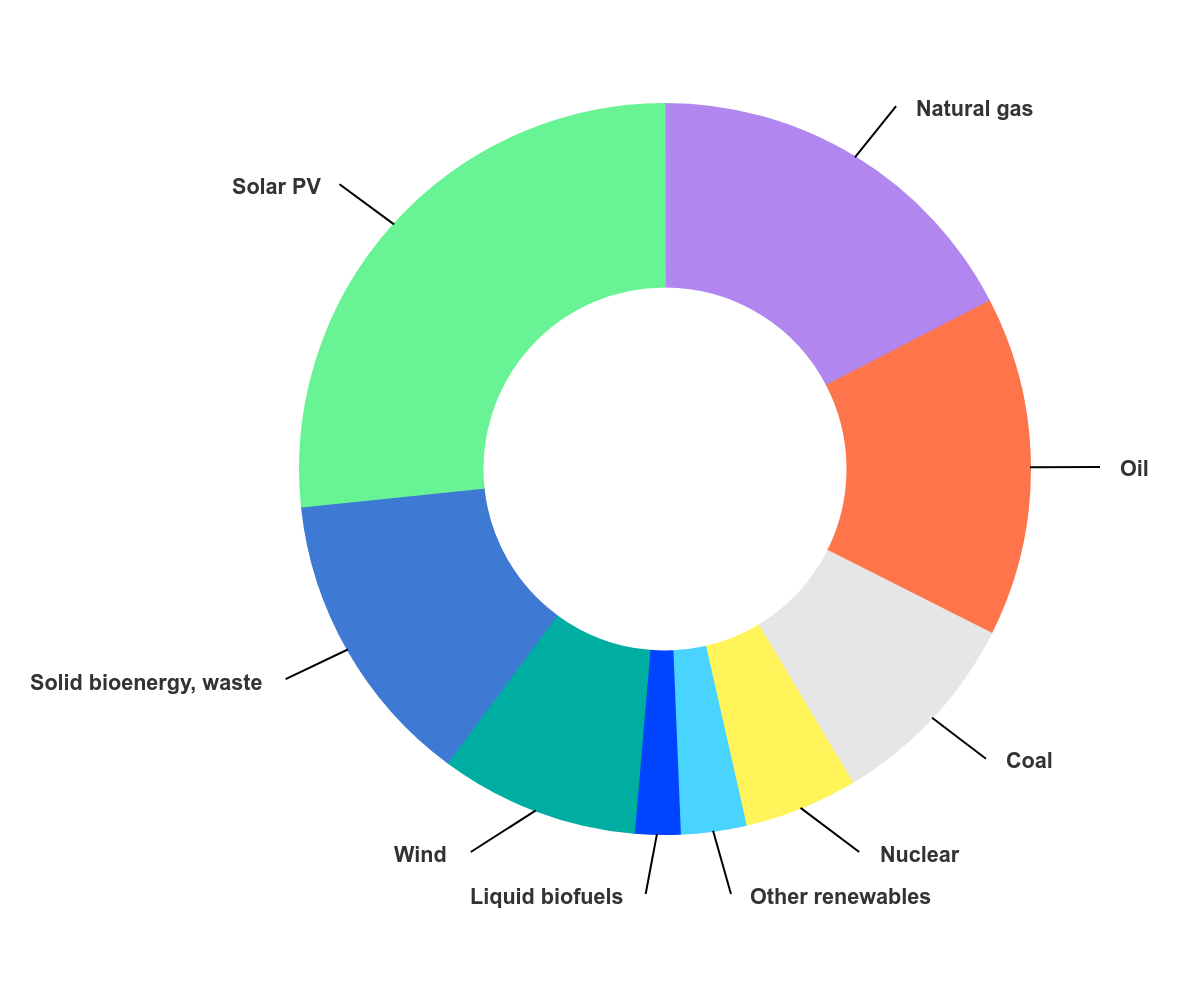
“Demand for oil, natural gas and coal all grew in 2025, but at a slower rate than in 2024. Low-emissions sources combined – solar, wind, nuclear, hydropower and other renewables – contributed nearly 60% of the growth in global demand.
“Global electricity demand in 2025 grew around 2.3 times faster than total energy demand. The drivers of electricity demand growth were broad-based. Demand from electric vehicles (+38%) and data centres (+17%) rose sharply; however, they still accounted for relatively slim shares of total electricity demand growth. Industry, household appliances and commercial buildings (excluding data centres) continued to provide the bulk of demand growth.
A structural shift
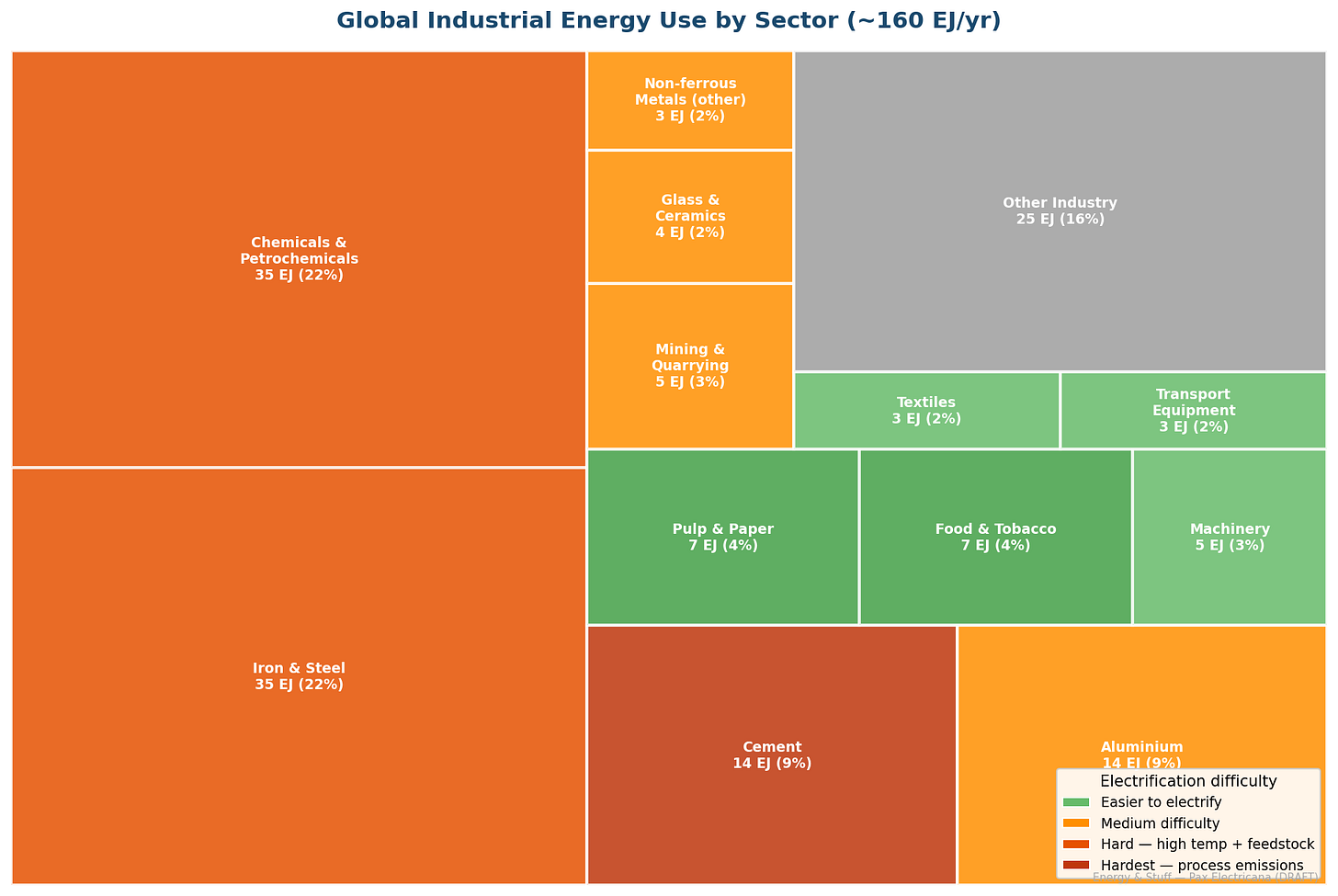
Rewiring founder Dr Saul Griffith has a new thesis: Pax Electricarna, which lays out a plan for “middle powers — states large enough to matter, yet too small to dominate” in the modern context.
He says a lot of “energy transition” debate misses the point. The real issue is structural: we’ve built a global economy that ships fossil fuels so countries can burn them to make materials.
Instead of shipping the fuel, we should ship products made with cheap electricity. That will reduce exposure to volatile commodity markets, decentralise supply chains and reward countries with low-cost clean power. It also changes who wins economically. Countries that understand this - and align policy, capital, and industry around it - will have a structural advantage. It’s about building a cheaper, cleaner and more resilient industrial system.
It’s hard to know whether New Zealand ranks as a middle power, but one section of his thesis is relevant to us right now: The LNG trap.
Japan, South Korea, and Taiwan — three of the more technologically sophisticated countries on earth — are dangerously dependent on imported liquefied natural gas. Japan is the world’s largest LNG importer (they also export a lot, and this trade complicates their decarbonization pathways and political economy). Korea and Taiwan aren’t far behind. Together they spent well over $100 billion per year importing the stuff before the Ukraine shock, and more since.
LNG is an inefficient way to move energy. You take natural gas, cool it to −162°C (which itself consumes about 10% of the energy in the gas), load it onto a specialised tanker, ship it around the world, then regasify it at the other end (losing another few percent). Then you burn it in a power plant at maybe 40–60% efficiency or burn it directly for heat in industry. The round-trip efficiency is poor and all the effort makes it far more expensive than pipeline gas. It also leaks and causes fugitive emissions. Climate accounting struggles to accommodate that, and so they don’t pay for it.
Who is selling them this expensive, inefficient gas? Increasingly, the United States. In 2025 the US became the first country to export more than 100 million metric tonnes of LNG in a single year — 111 million tonnes, a 24% jump. Asian spot prices bounced around $10–12 per MMBtu through 2025, with forecasts trending to $9–10 for 2026. That sounds like a price decline, until you compare it to locally generated solar electricity, which in Australia delivers useful energy at one-fifth to one-tenth the cost.
The deeper problem isn’t the price. It’s the dependency. When your energy system depends on a global commodity shipped from politically volatile suppliers on spot markets subject to war premiums and hurricane disruptions, your economy is perpetually exposed. Ask Europe how that worked out with Russian gas. See what is happening right now in the straight of Hormuz.
[Middle Powers] face a choice: drift in a unipolar petro-legacy order, become satellites of a superpower bloc, or forge a new industrial architecture that neutralises over-reliance on any single geopolitical pole. Electrification makes this new path possible.
As Robbie Nichol explained - and as research has shown - there aren’t many winners from the fuel crisis, but there is one big one.
Flight of fancy
New Zealand electric boat maker Vessev continues to grow its footprint and its flying ferries could be seen on the River Derwent in Tasmania next.
The proposed electric hydrofoil network will be the first in the country and, given Tasmania already operates at close to 100% renewable electricity generation, it will be clean as, too.
Vessev’s VS-9 first hit the water two years ago and, as the below video shows, it has been quite the journey clocking up 10,000 nautical miles.
Overseas, Norway’s beautiful Hyke Ferries just completed a successful 14 month trial.
Michael Eaglen from EV Maritime also shared his views on how things have changed when it comes to marine electrification, and there are some noticeable differences between Australia and New Zealand.
“We’ll piss in!”
Solar and batteries on farms are going gangbusters right now. Farmers can save money and keep the business running in an emergency and, once they figure out it’s a bit mad to be bringing in expensive diesel when they’re generating their own power, it often leads to more electric machine upgrades.
Mike Casey went on a tour of six farms in Southland that have done this and, as he says:
NZ needs its farmers more than ever, to get us the energy we need for our rapidly electrifying our economy. 50,000 farmers doing what Jon Pemberton and Blair Drysdale have done will result in 60% more electricity generation and about a month of additional hydro storage (through deferred generation) while smashing farm input costs. And it can be done without sacrificing productive land. Farmers with solar is very different from solar farms! A lot of a little is a lot.
Dave Swney from Ivondale Farm talked to Farmlands Flex about his journey, from installing panels to then adding storage.
Farmers listen to farmers so it's great that there are a growing number of salt of earth agrarians sharing the story of their solar investment and Dairyman does it extremely well.
The Cambrian DIY solar explosion
We’ve been getting a lot more questions about plug-in solar recently. Rest assured, we’re working on it with the relevant Government departments.
Despite big growth in Europe, it’s still illegal in New Zealand and in many US states. But Utah was the first to allow it and, as this video shows, it’s impressive what you can do in the plug and play space now.
In the UK, budget supermarket LIDL even sells panels, as do places like Ikea.
Feel it in your fingers, feel it your toes
The history of electrification in New Zealand is pretty wild. From the world’s second public street lights, to the southern hemisphere’s first transmission line, to the first all-electric home, to the first all-electric orchard, we’ve been at the forefront of renewable energy for over a century. But we also played a role in figuring out that stray voltage was an issue on farms.
The Radiolab podcast looked into it and it turns out that New Zealand dairy farmers from the 1960s who often went around the fields barefoot were the first to sense something was awry.
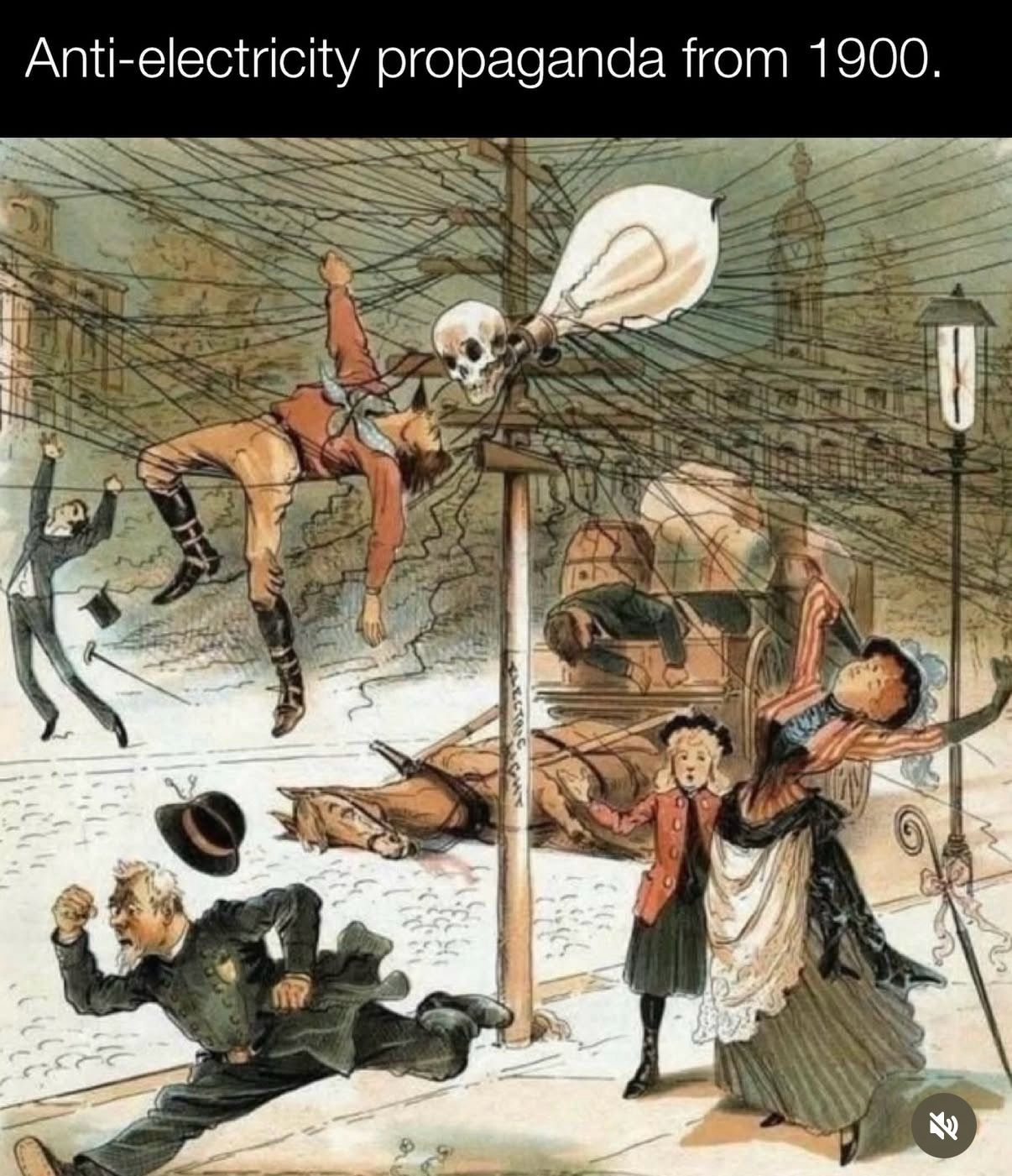
Apparently farmers have been electrocuted in the past attempting to harness the electricity from a pylon to electrify their fences, which is a good reminder that electricity is dangerous - and it was particularly dangerous in its early years, something anti-electricity propagandists played on.
“The artwork is entitled “The Unrestrained Demon”, referring to electricity itself. It is likely that the man in the wires is a depiction of John Feeks, a linesman who died in Manhattan after touching a high voltage line in 1889.”
Political Power has gone local! Dr Nick Smith, mayor of Nelson and ex-National Party minister, is an early adopter when it comes to electric machines but, through his efforts with the council and his close involvement with the Ratepayer Assistance Scheme, he's also embracing one of Rewiring's core mantras: once you've electrified your own life, electrify someone else's life, too.
Read moreDownloadWhether it's the growing number of electric buses, new electric trains for the lower North Island and City Rail Link, or new electric ferries, we love seeing more electric transport options in our big cities. It's also good to see some of our smaller cities like Palmerston North, Timaru and Nelson going electric and, as is almost always the case, the drivers reckon it's better on electrons. At the Electrify Nelson expo, we spoke with one driver Lee about the city's electric buses. And he definitely wouldn't go back to diesel.
Read moreDownload