



Pay it forward: the many benefits of combining Winter Energy Payments into a lump sum
The annual Winter Energy Payment was designed to support those struggling to heat their homes, but it’s not targeted and, as the price of electricity continues to go up, it’s buying less warmth each year. So what if New Zealanders could instead combine those payments, put it towards solar and lower their costs permanently? That’s what our Energy Freedom Payment is proposing and it would be better for homes, better for the country and better for the Government.


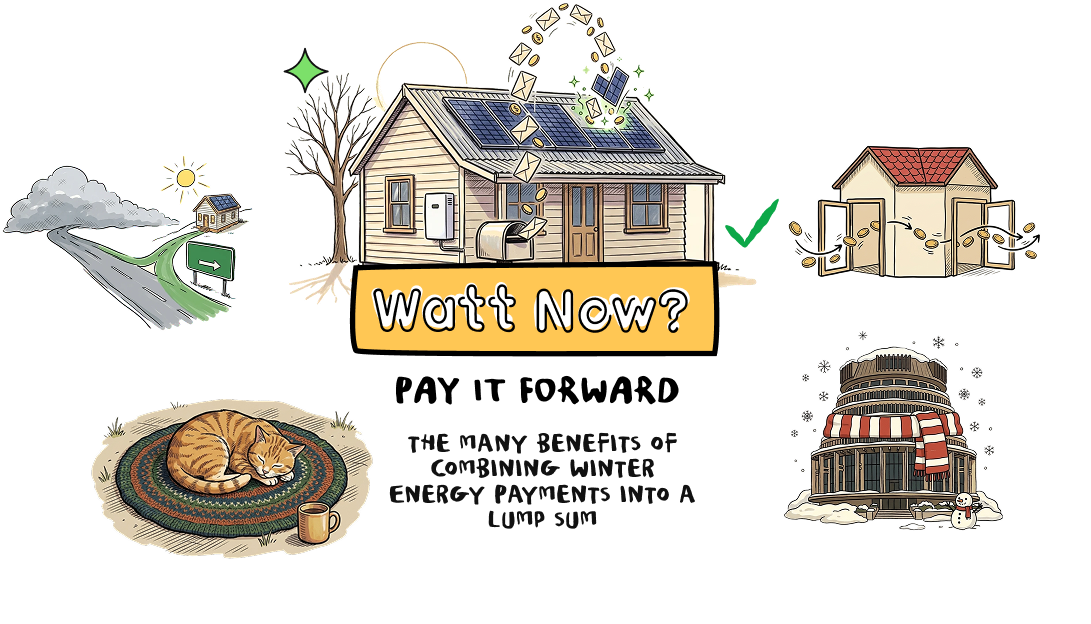
TLDR? Check out our infographic
Jump to sections:
- What is the Winter Energy Payment?
- What could we replace it with?
- How would the Energy Freedom Payment work?
- What else could improve it?
- What would the numbers look like for someone who owned their home?
- What about renters? And won’t landlords benefit the most?
- What about renters? And won’t landlords benefit the most?
- What would it cost the Government?
- Who’s backing this?
- Has anything like this been tried elsewhere?
- The wash up
What is the Winter Energy Payment?
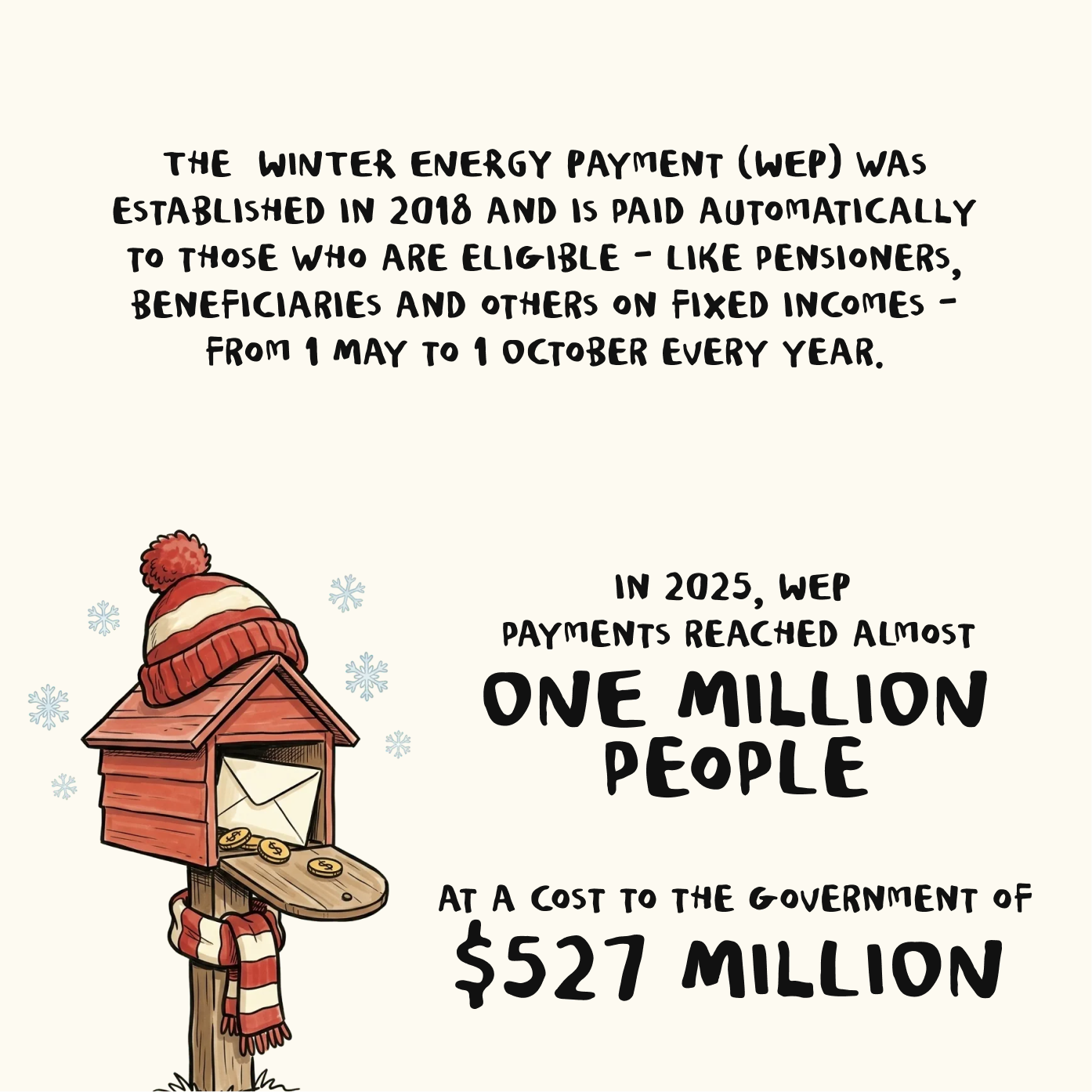
The Winter Energy Payment (WEP) was established in 2018 and is paid automatically to those who are eligible - like pensioners, beneficiaries and others on fixed incomes - from 1 May to 1 October every year.
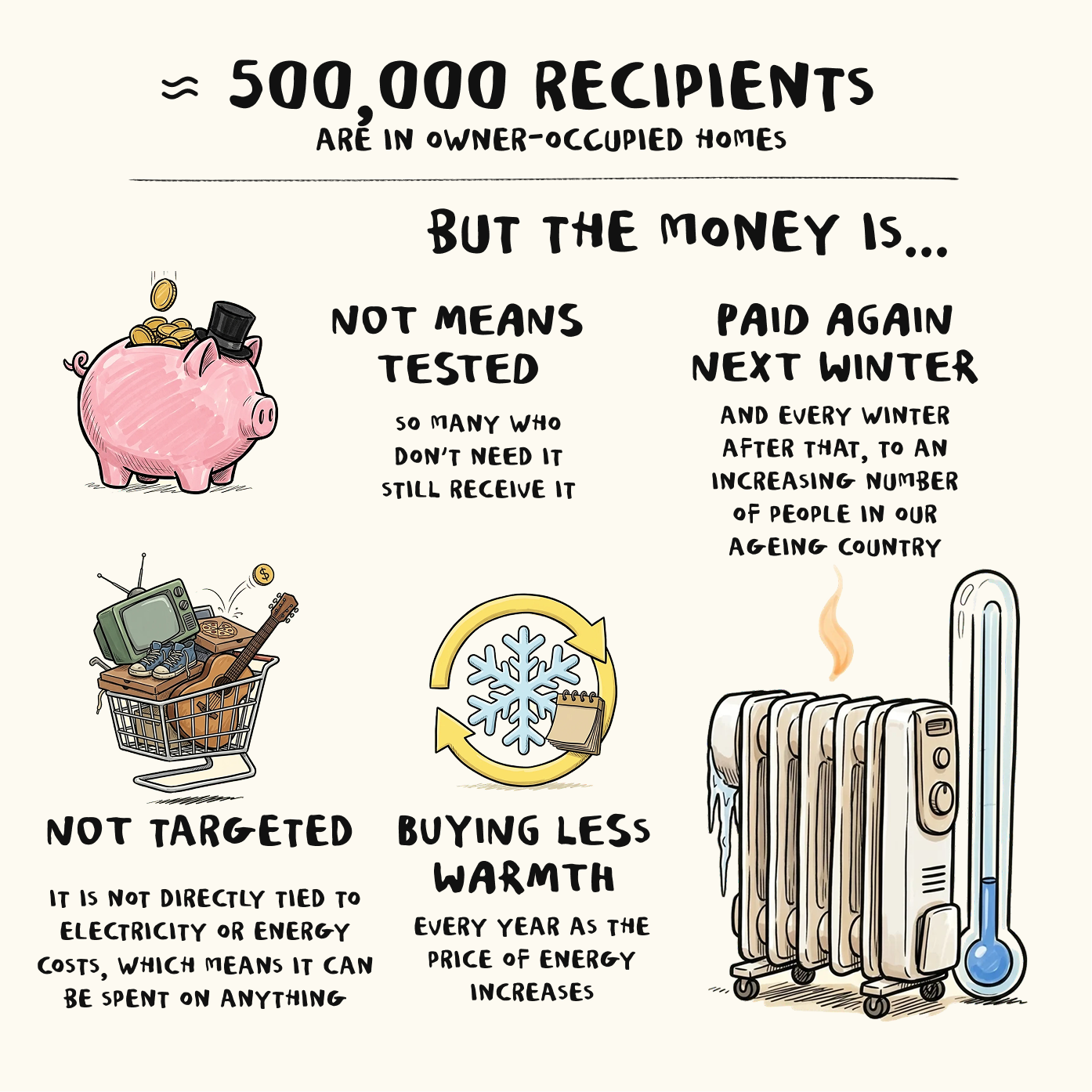
It pays $20.46 a week to a single person and $31.82 to a couple or a household with children. That adds up to around $450 and $700 a year, respectively. In 2025, it reached almost one million people at a cost of $527 million (there are roughly 500,000 WEP recipients in owner-occupied homes).
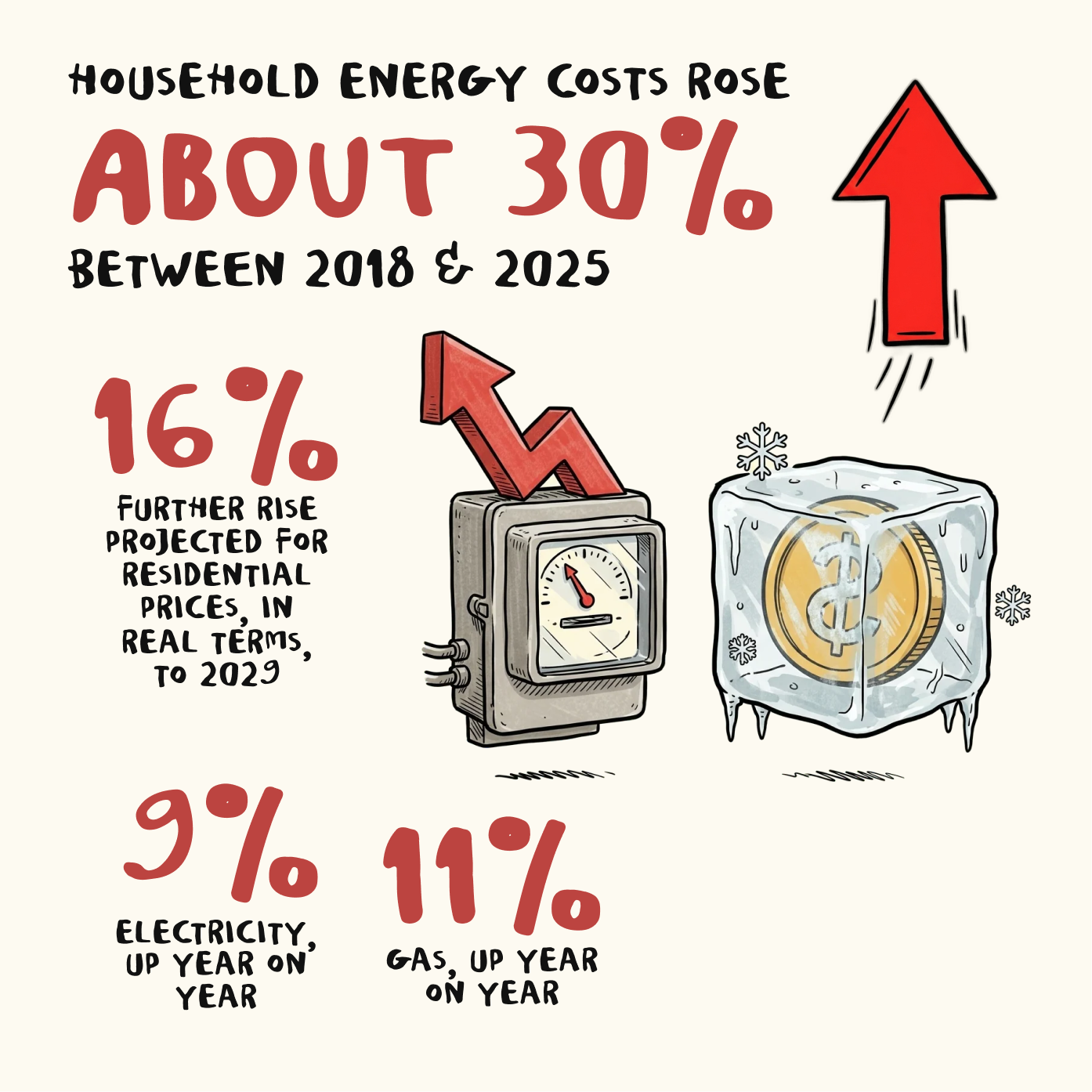
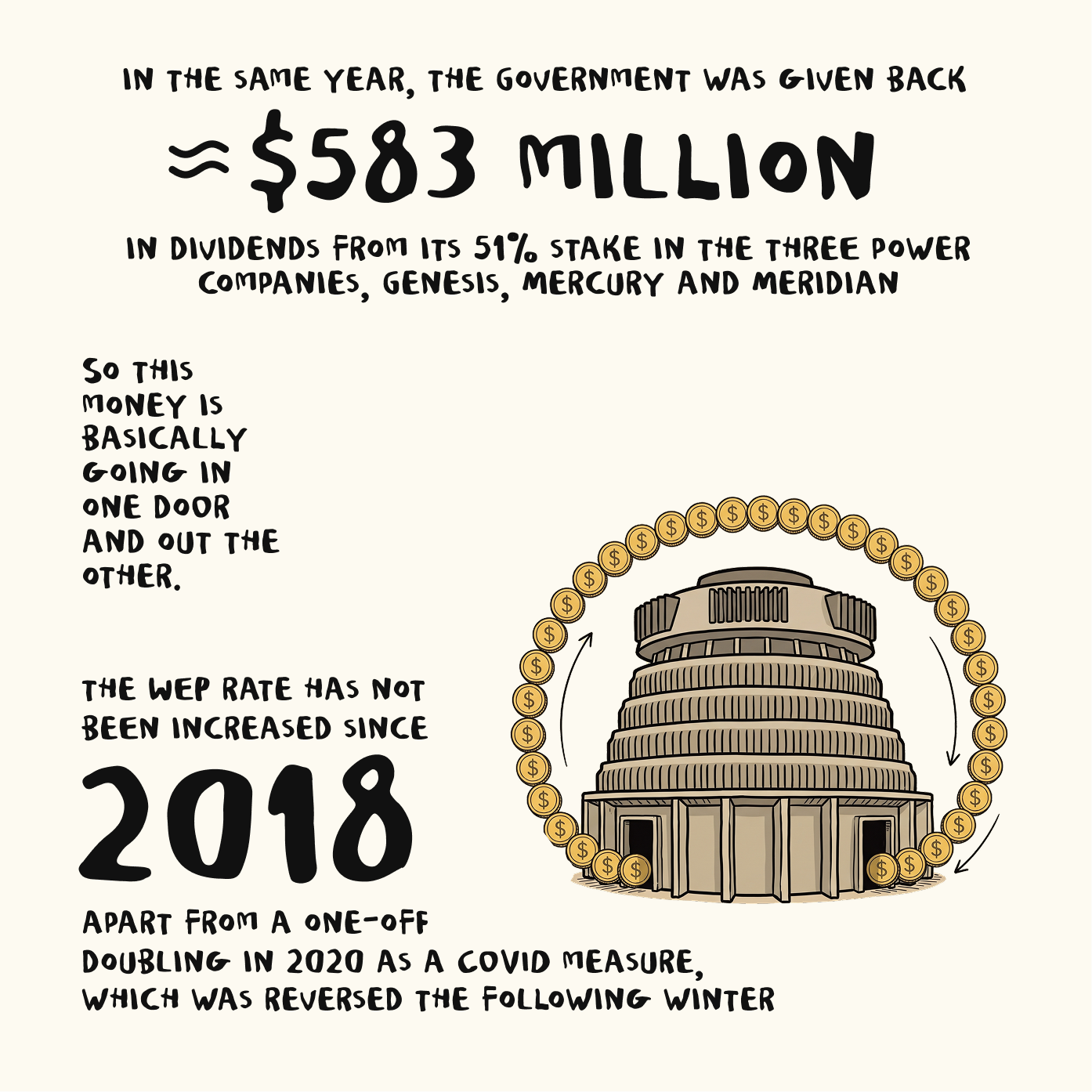
The rate has not been increased since 2018, apart from a one-off doubling in 2020 as a COVID measure, which was reversed the following winter. Household energy costs rose about 30% between 2018 and 2025 (gas is up by 11% year on year and electricity is up by 9%) and residential prices are projected to rise a further 16% in real terms to 2029.
The money is not directly tied to electricity or energy costs, which means it can be spent on anything; it is also not means tested, so many who don’t need it still receive it; it buys less warmth every year as the price of energy increases; and it will have to be paid again next winter, and every winter after that, to an increasing number of people in our ageing country.
The WEP itself could be much better targeted to those that need it, rather than all retirees, but major political parties have been unwilling to take it away from anyone.
While the WEP remains a critical support, it is, as Kimberley O’Sullivan, Otago University Senior Research Fellow in the Department of Public Health, writes, a band-aid measure.
“The pressures the Winter Energy Payment was designed to ease have continued to mount, driven by rising energy prices and a worsening cost-of-living crisis. Having not increased in line with energy prices, it has become less effective than originally intended.”
Households have also been hit with rising prices in other areas this year as a result of the war in the Middle East.
As she told RNZ: "As taxpayers, we should be asking, is this the most sensible long-term policy we've got? Or could we bridge in something else to replace it?"
Household energy bills are rising faster than the rate of inflation (and have done for some time) and a very similar amount of money - around $583 million - was given back to the Government in the form of dividends from its 51% stake in the three power companies Genesis, Mercury and Meridian, so this money is basically going in one door and out the other.
What could we replace it with?
What is missing is an off-ramp, both for households stuck receiving payments that help less every year, and for the Government committed to paying them. Enter the Energy Freedom Payment.
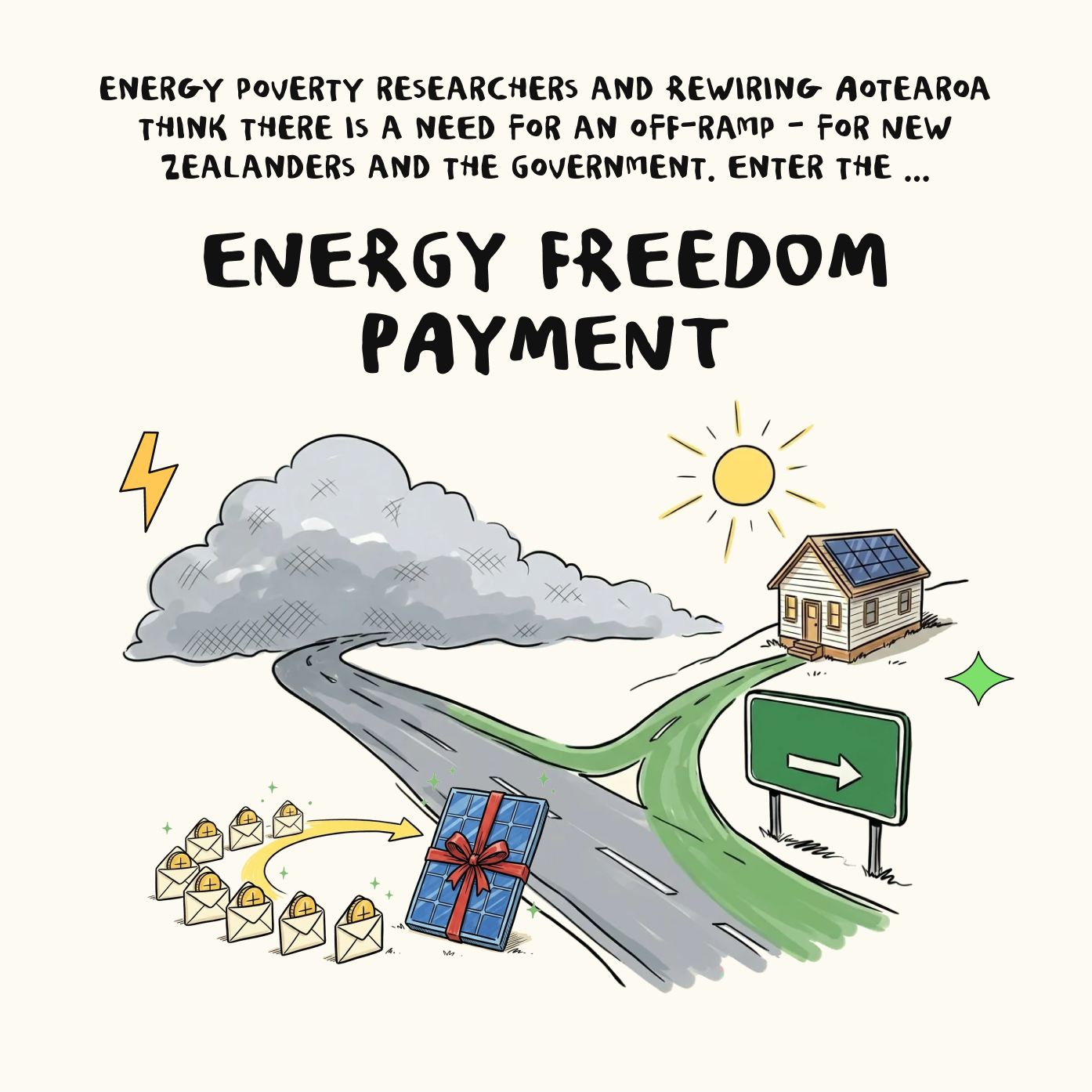
Rather than a small weekly payment, it would give eligible New Zealanders the choice to opt in and combine future payments (of say eight or ten years) into a lump sum that they could put towards solar or batteries.
This would result in savings worth between two and three times the annual payment that it replaces and the money would be put towards an asset that keeps delivering for 30 years.
While energy companies talk about competition lowering prices and politicians and regulators talk about ‘applying downward pressure on prices’, the cost of electricity has continued to rise, even though the cost of generation has continued to fall. Customers producing (and storing) their own energy is the real competition the market needs.
This scheme would enable individual New Zealanders to partially break up with their own gentailer and greatly decrease the control they have over the energy bills of those households that opt in, while also providing a structural upgrade to our housing stock over time, additional generation without the need for upgrades to poles and wires, and more jobs in the regions.
How would it work?
The scheme could be designed in a number of ways, but at its heart, the payment would not go to the household as it does currently, but directly to an accredited provider to pay for the install.
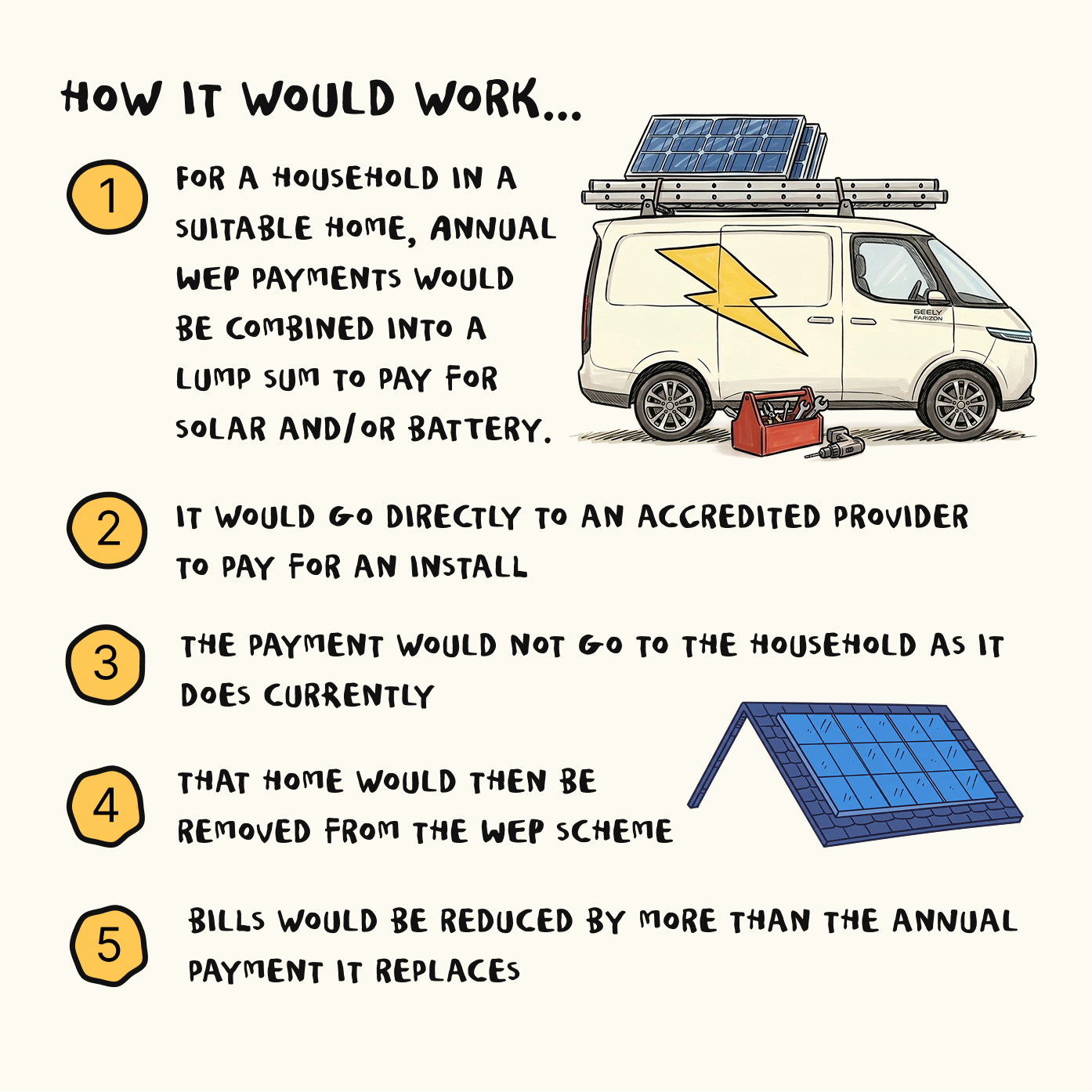
A couple on NZ Super currently receives $700 a year for the WEP. They could instead choose to combine those payments and chalk up savings worth around $1,940 a year from solar alone.
As the price of electricity continues to rise, there are likely to be even greater savings every year for the 30-year life of the system, and more again with a battery.
The lowest-income households and those whose situations are unlikely to change would potentially receive the largest sum upfront, because they have the least ability to co-fund energy upgrades that will permanently reduce their bills.
Those receiving only a temporary benefit like Jobseeker would not be eligible for the Energy Freedom Payment as they aren't expected to continue receiving the WEP indefinitely.
If an eligible person moves out of a house that has had the payment applied and moves into one that hasn’t, they’ll be able to receive the WEP again (and request the lump sum payment for that property).
What else could improve it?
This lump sum payment option would work best alongside the proposed Ratepayer Assistance Scheme (RAS), which will offer long-term, low-interest loans for electric upgrades and will be tied to a property. This would enable households to install larger solar systems and batteries to further reduce their energy bills.
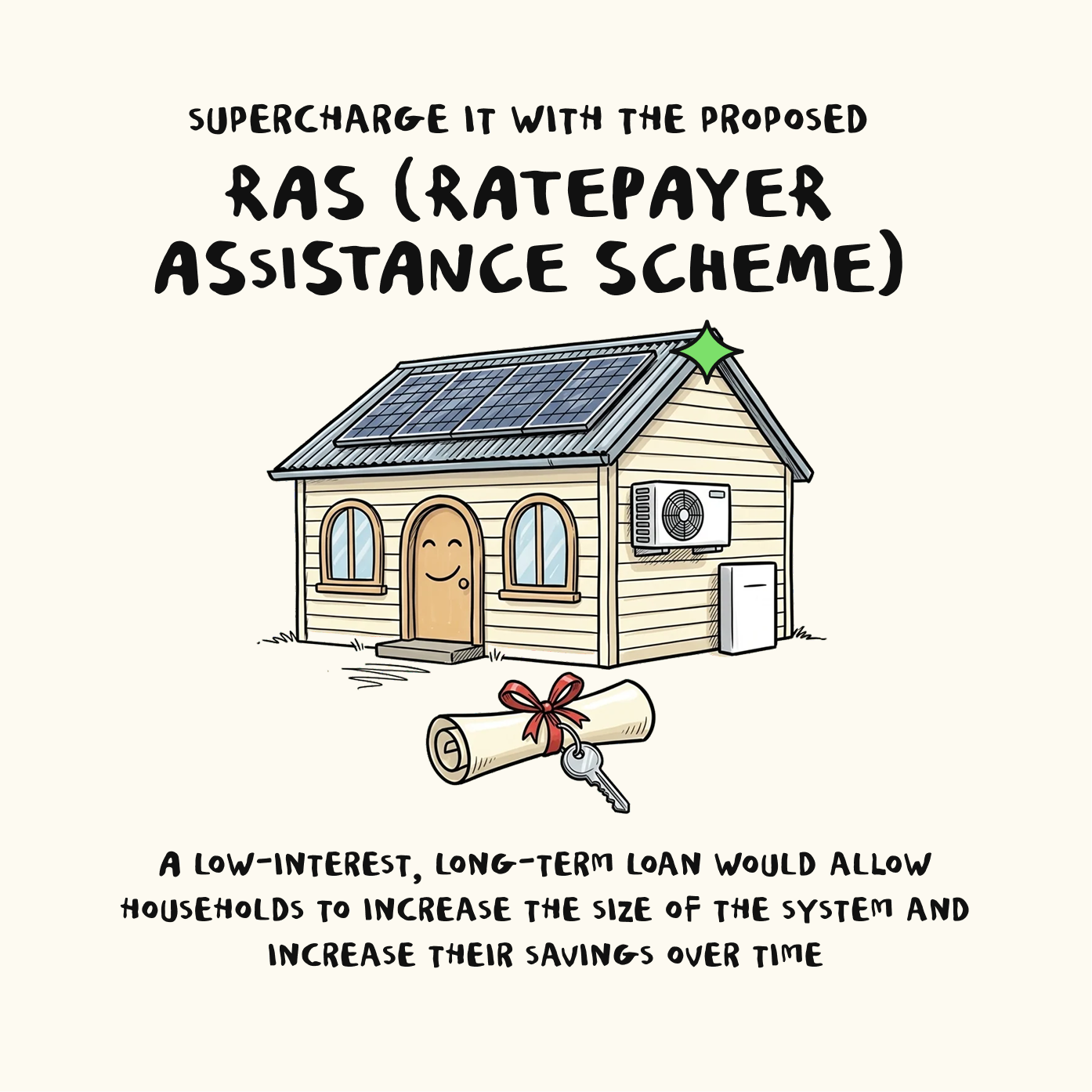
For homeowners, the RAS would also enable energy loans for those 55+ (and all others eligible for the Rates Rebate) to fully defer repayment of their loans until they sell their property, which would free up several thousand more per year to meet other rising costs of living.
Homeowners could also use the loans to convert to more efficient machines like heat pumps for space and hot water heating.
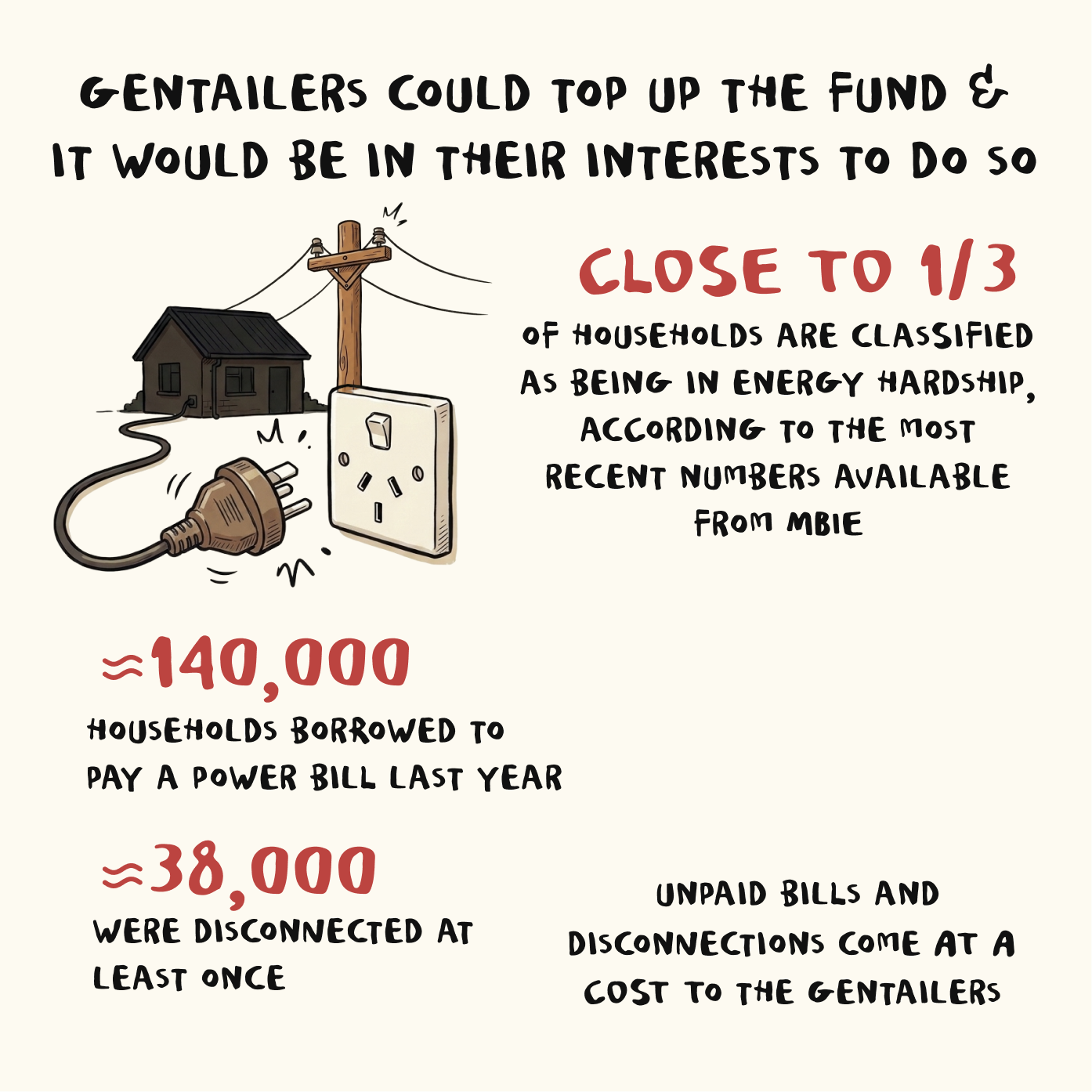
Gentailers should also come to the party and top up the fund because, somewhat counterintuitively, it’s in their interests to do so.
Around 140,000 households borrowed to pay a power bill last year and about 38,000 were disconnected at least once. These come at a cost to retailers and lead to arrears, credit control, disconnection and reconnection, write-offs, and reputational damage.
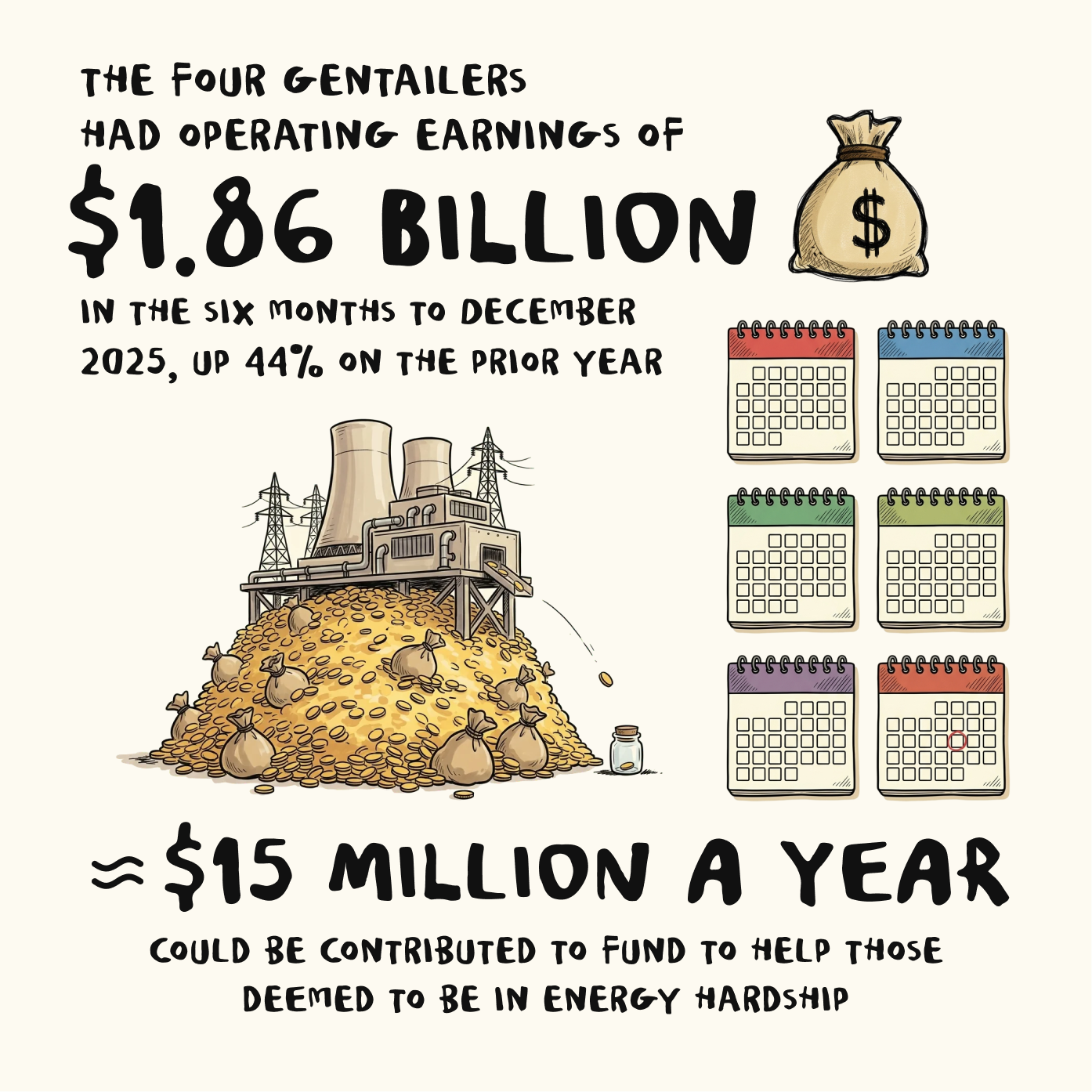
Close to a third of households are classified as being in energy hardship, according to the most recent numbers available from MBIE (this energy hardship work has now been stopped). If we concentrate on these households joining the Energy Freedom Payment each year, an industry contribution on these conservative assumptions would be around $15 million a year, which is well under 1% of the four major gentailers' operating earnings. They reached $1.86 billion in the six months to December 2025, up 44% on the prior year.
A household that’s $1,500 better off each year is a household that’s more likely to pay its bill. A retailer may reasonably ask for a defined minimum period, maybe two years, where a household that has taken its money does not switch away without the contributor's agreement. That is a fair return on a several-thousand-dollar contribution, but it should not become an open-ended tie to the retailer for the life of the system: the household keeps the asset and beyond the agreed period it keeps the right to switch.
The electricity sector faces sustained political pressure on prices, profits and potential regulatory interventions and a visible, permanent, tightly targeted contribution would be a better solution than structural remedies that are imposed later.
What would the numbers look like for someone who owned their home?
We’ve chosen to look at how this would affect people living in Dargaville (see methodology here) because its population is older than the New Zealand average (by about five years) and average incomes are lower (by about 30%). It also has average sunlight hours, so hasn’t been chosen to provide an optimistic savings figure.
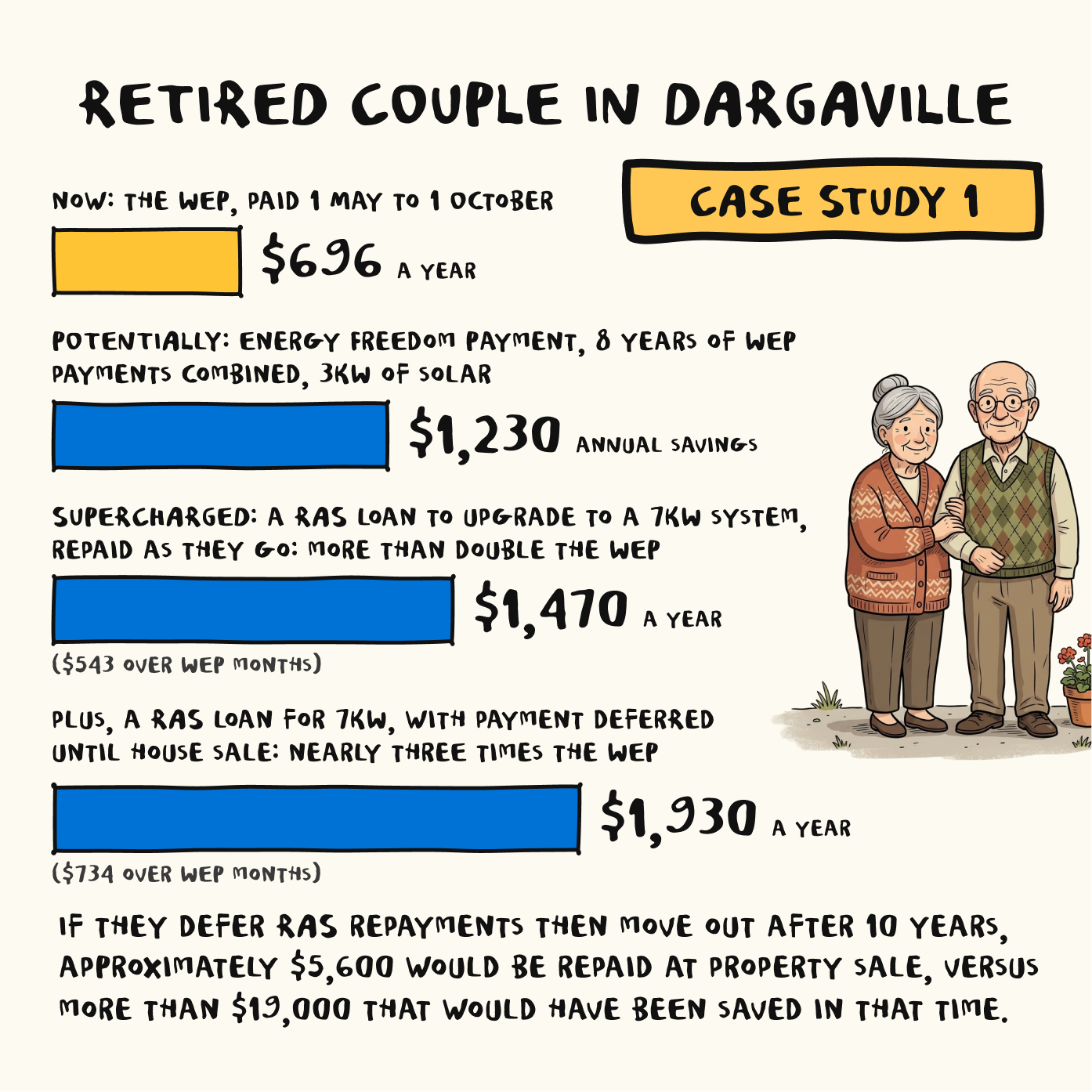
Case study 1: A retired couple in Dargaville
Currently: Receiving $696 a year from the WEP (paid 1 May to 1 October)
Potentially: Energy Freedom Payment combines 8 years of WEP payments and leads to $1,230 annual savings from 3kW of solar.
Supercharge it: The couple could also choose to take out a RAS loan to increase the size of the system to 7kW, alongside the Energy Freedom Payment.
- If they choose to repay the loan as they go, they will save more than double the WEP: $1,470/year ($543 over WEP months)
- If they choose to defer the loan until the sale of the property, they will save nearly three times the WEP: $1,930/year ($734 over WEP months).
If they choose to defer RAS repayments then move out of their house after 10 years, approximately $5,600 would be repaid at sale of property (versus the more than $19,000 that would have been saved in that time).
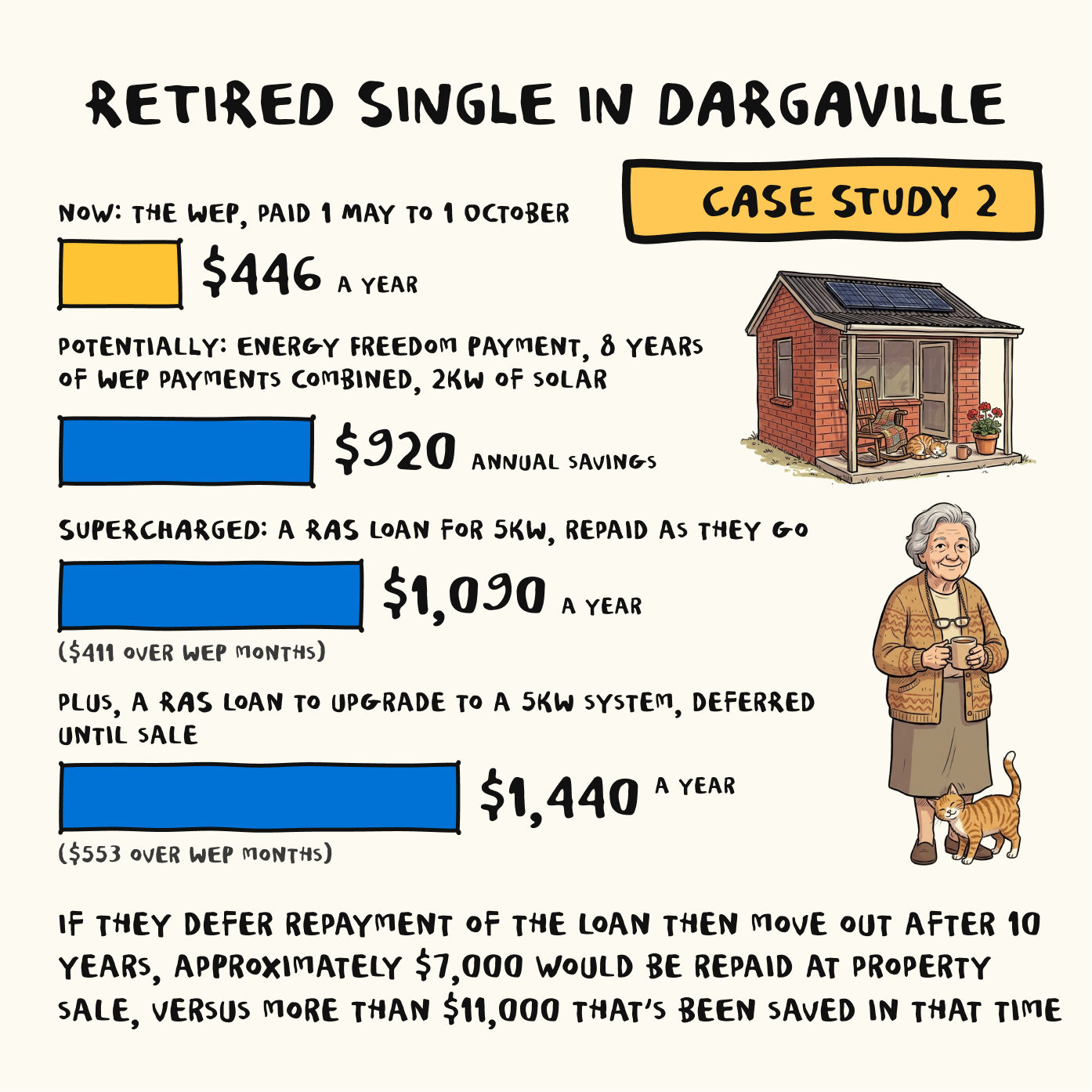
Case study 2: A single retired person in Dargaville.
Currently: Receiving $446 a year from the WEP (paid 1 May to 1 October).
Potentially: Energy Freedom Payment combines 8 years of WEP payments and leads to $920 annual savings from 2kW of solar.
Supercharge it: The retiree could also choose to take out a RAS loan to increase the size of the system to 5kW, alongside the Energy Freedom Payment:
- If they choose to repay loan as they go, they will save $1,090/year ($411 over WEP months)
- If they choose to defer repayment of the loan until the sale of their property, they will save $1,440/year ($553 over WEP months).
If they choose to defer repayment of the loan, then move out of house after 10 years, approximately $7,000 would be repaid at sale of property (versus the more than $11,000 that has been saved in that time).
What about renters? And won’t landlords benefit the most?
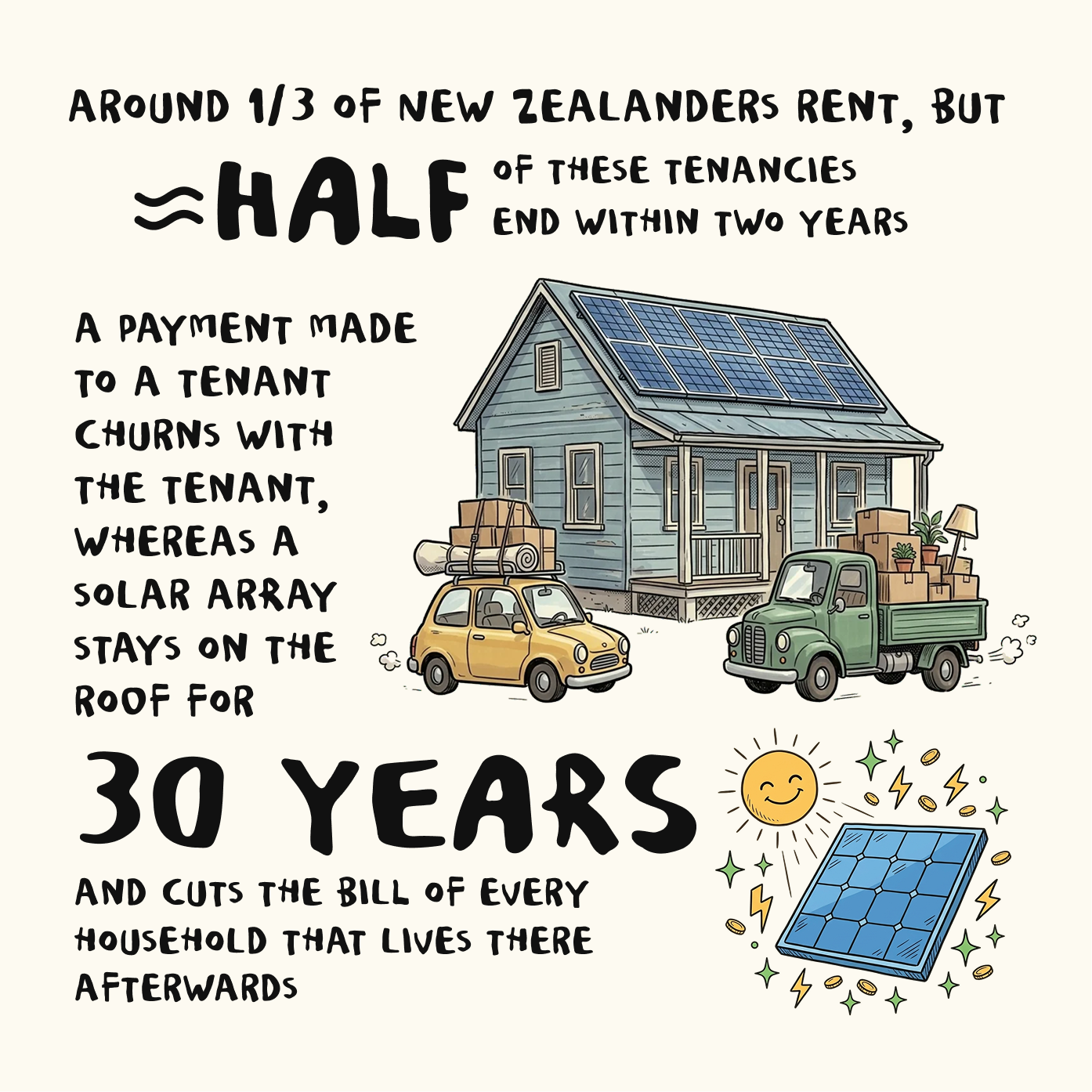
Around one third of New Zealanders rent, but around half of New Zealand tenancies end within two years (median 25 months; only 9% reach ten years). A payment made to a tenant churns with the tenant, whereas a solar array stays on the roof for 30 years and cuts the bill of every household that lives there after.
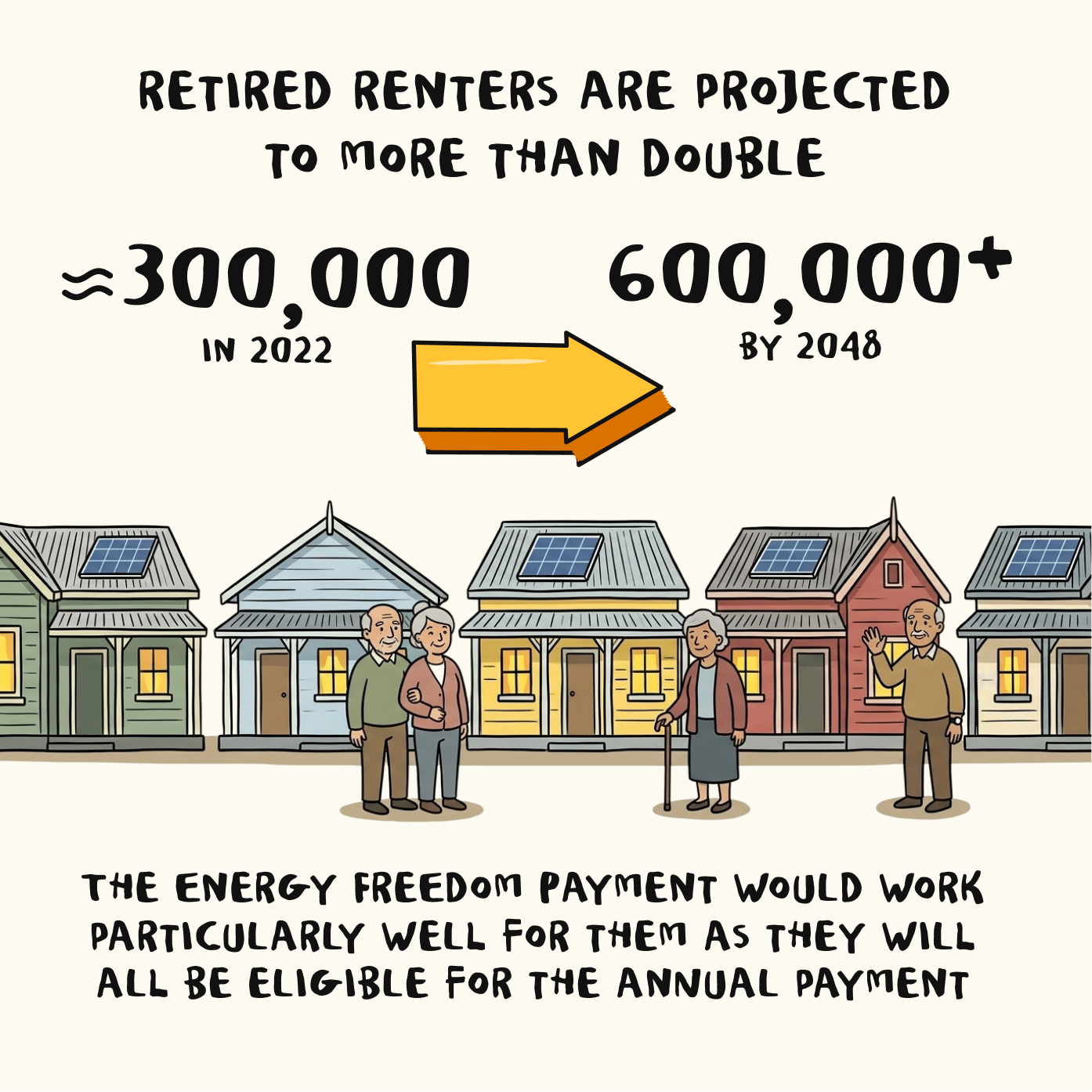
Retired renters are projected to more than double from around 300,000 in 2022 to over 600,000 by 2048, and the Energy Freedom Payment would work particularly well for them as they will all be eligible for the annual payment.
Renters are obviously unable to make the decision to install solar as they don’t own the asset, but this does give them a very good argument to take to the landlord and they can basically bring a dowry in the form of the combined WEP payments, plus any top-ups.
The option for a landlord to add RAS finance means they could feasibly make upgrades to the property with someone else's money, permanently improve their asset, and not need to increase the rent.
Many landlords already want this. According to a 2024 survey by Te Ara Ahunga Ora Retirement Commission, ‘Population Ageing and the Private Rental Sector’, 74% said it matters that tenants can stay in a property as they age, and 39% would consider modifying one, but only 5% have ever accessed funding to do it, and 57% of those who modify pay for it themselves.
The Energy Freedom Payment combined with the RAS is the funded route they have been missing.
The scheme would be entirely voluntary and even if a landlord took the payment on account of a tenant receiving the WEP and rented it to someone who is not a recipient when that tenancy ended, that would be a feature, not a bug: the array stays on the roof for 30 years, the dwelling would leave the WEP system permanently, and the public money still buys the thing it was meant to buy.
Renter protections still need to be designed, but a tenant should not end up paying through rent for an upgrade their own entitlement bought, and a landlord who takes the package should be held to acting in good faith. How that is enforced, and how it sits with the Residential Tenancies Act, has not been worked out yet and needs to be done properly with tenant advocates. How long rent protection should run for is one of the questions to settle.
Complementary policy, like how the upgrade is treated for tax or the ability to finance the balance through RAS as a charge on the property rather than on the owner's balance sheet, could help turn landlords that are interested into landlords that install.
What are the other benefits?
Rewiring’s analysis shows that more solar on rooftops is not just good for the household, it’s good for the energy system as a whole.
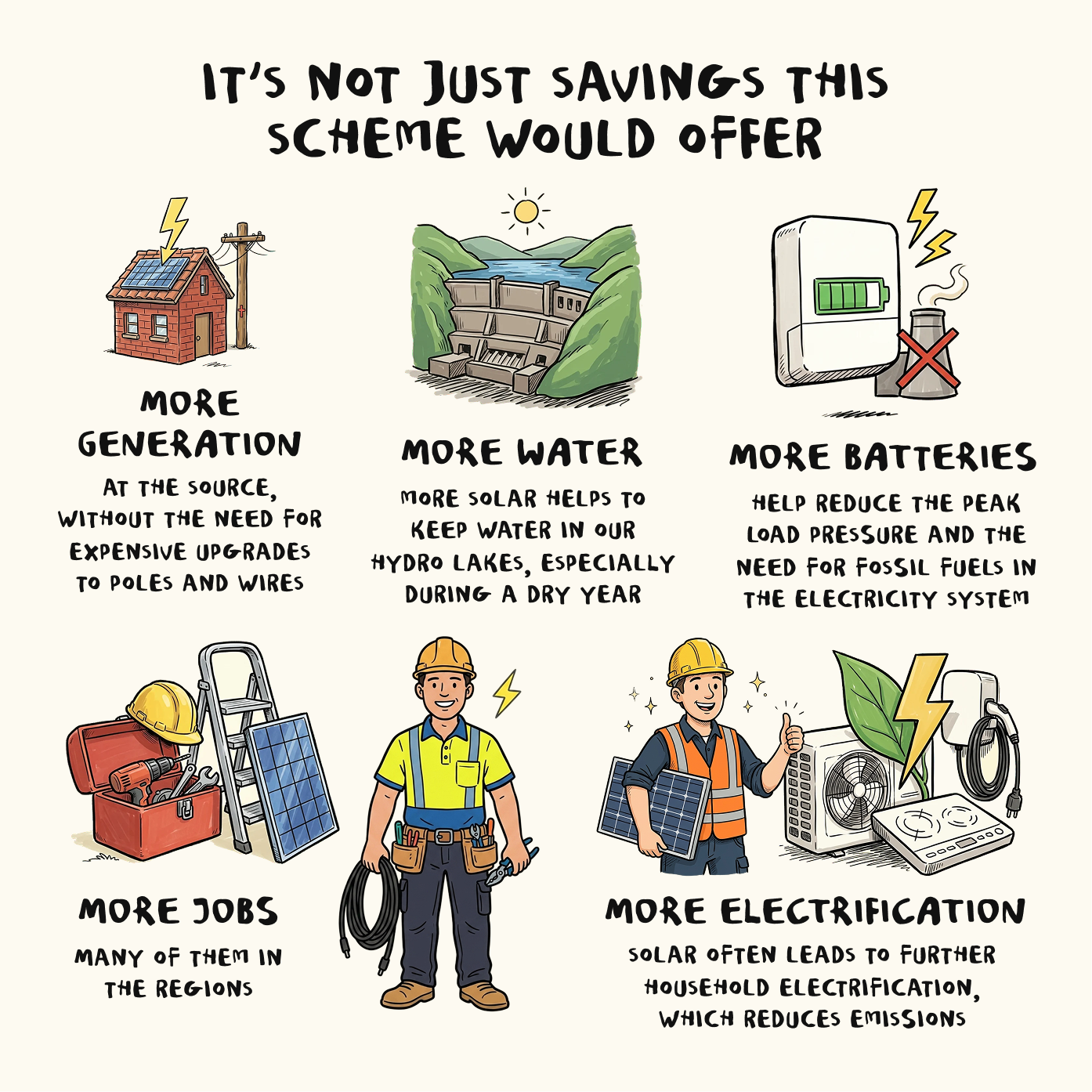
A scheme like this would lead to a significant amount of new distributed generation at the point of demand and would require no new transmission or distribution, which has made up a large chunk of the recent increases to the price of electricity. Solar also leaves more water in our hydro lakes during dry years and would lower the wholesale price for everyone, as it has done in Australia.
Solar would also provide protection in summer. Summer energy use is increasing in New Zealand and cheaper power makes cooling more affordable. Many homes in the warmer regions are already overheating and warmer temperatures are on their way. The WEP cannot help with that, but solar helps to reduce bills year round.
Solar is also a great gateway drug for electrification and households that install it commonly go on to replace gas, LPG and petrol machines because they recognise that the cheapest power they will ever be able to buy comes from their roof. These upgrades increase savings for the household, cut emissions and reduce the need for imported fuel.
Incorporating batteries would reduce strain on the network during peaks, especially in winter, and this displaces expensive gas, coal and diesel in the electricity system. Batteries are also important to keep the lights, heating and medical equipment running in homes after a grid outage.
Current solar installation capacity will limit what is possible in the early years, but this scheme would also provide more certainty for installers and create more jobs in the regions.
What would it cost the Government?
The costs will come down to the design of the scheme and the rate of uptake but, like many things in the world of electrification, accessing the savings requires an upfront investment. The Energy Freedom Payment is no different.
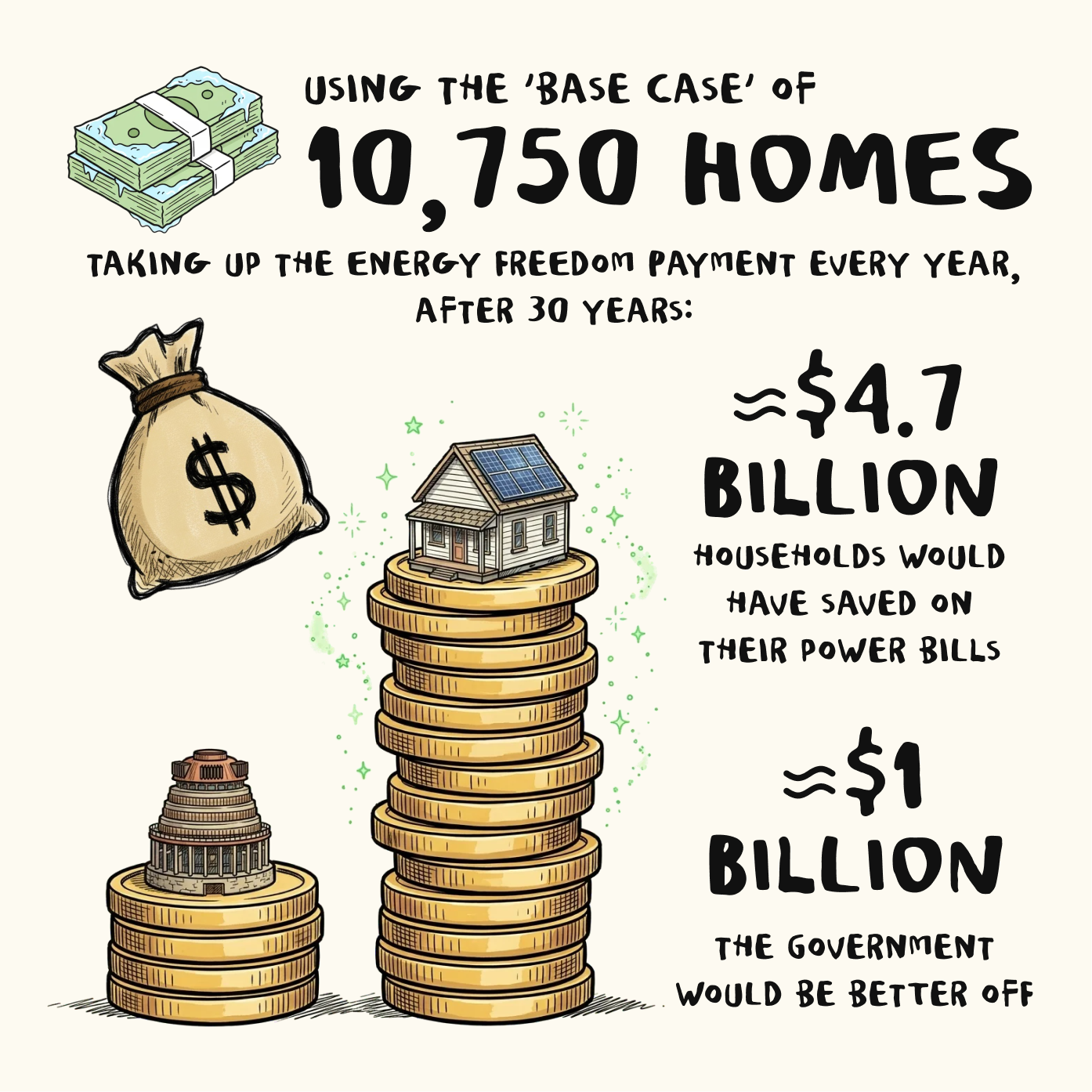
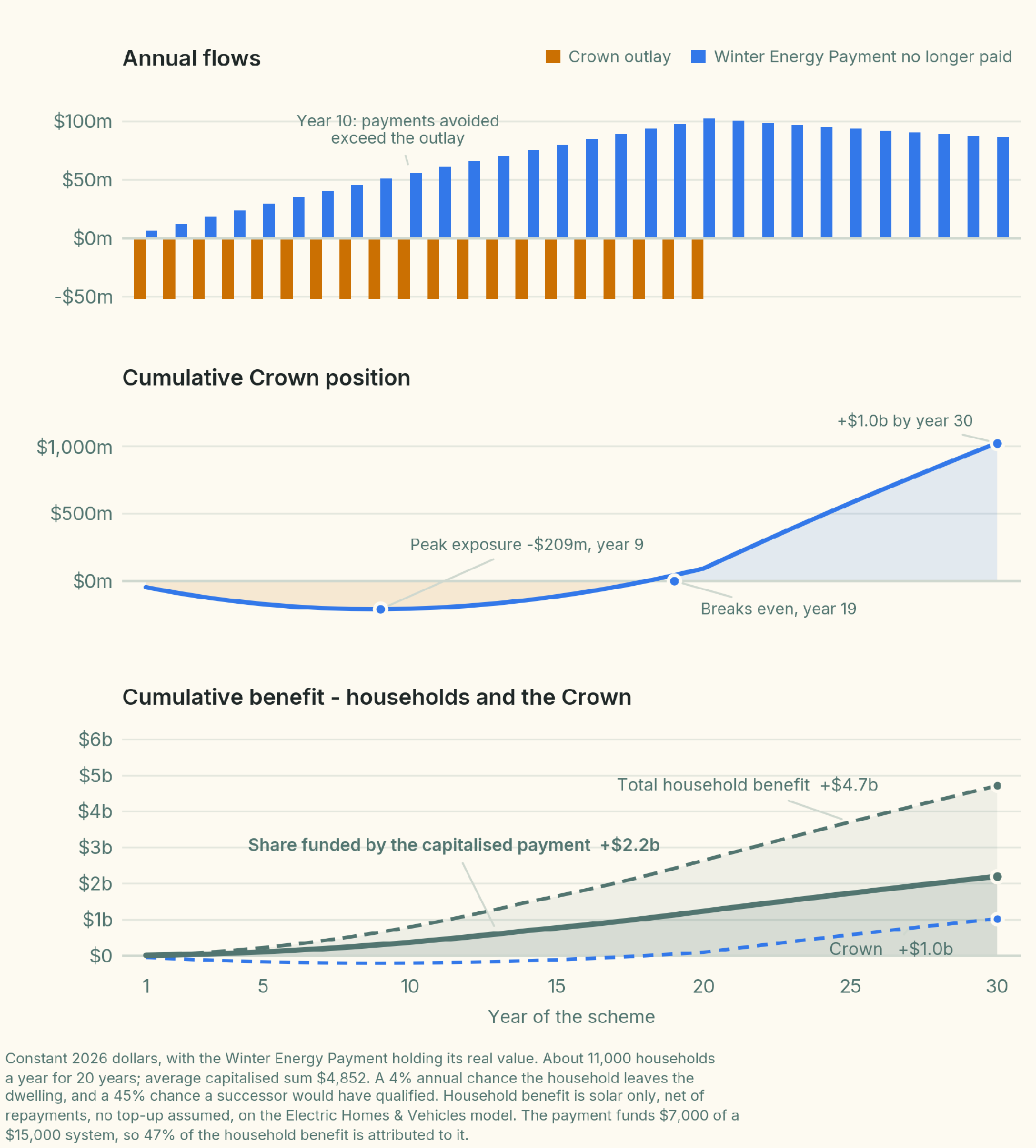
The Government would need to invest upfront to offer the annual payments as a lump sum, but this would deliver significant long-term savings by reducing the number of annual WEPs over time, while also offering immediate cost-of-living benefits for those who elect to take it up (as demonstrated in the case studies above).
The Government could decide to cap the number of eligible households able to choose the Energy Freedom Payment each year. The graph and table below illustrate approximate fiscal costs and benefits of different uptake scenarios.
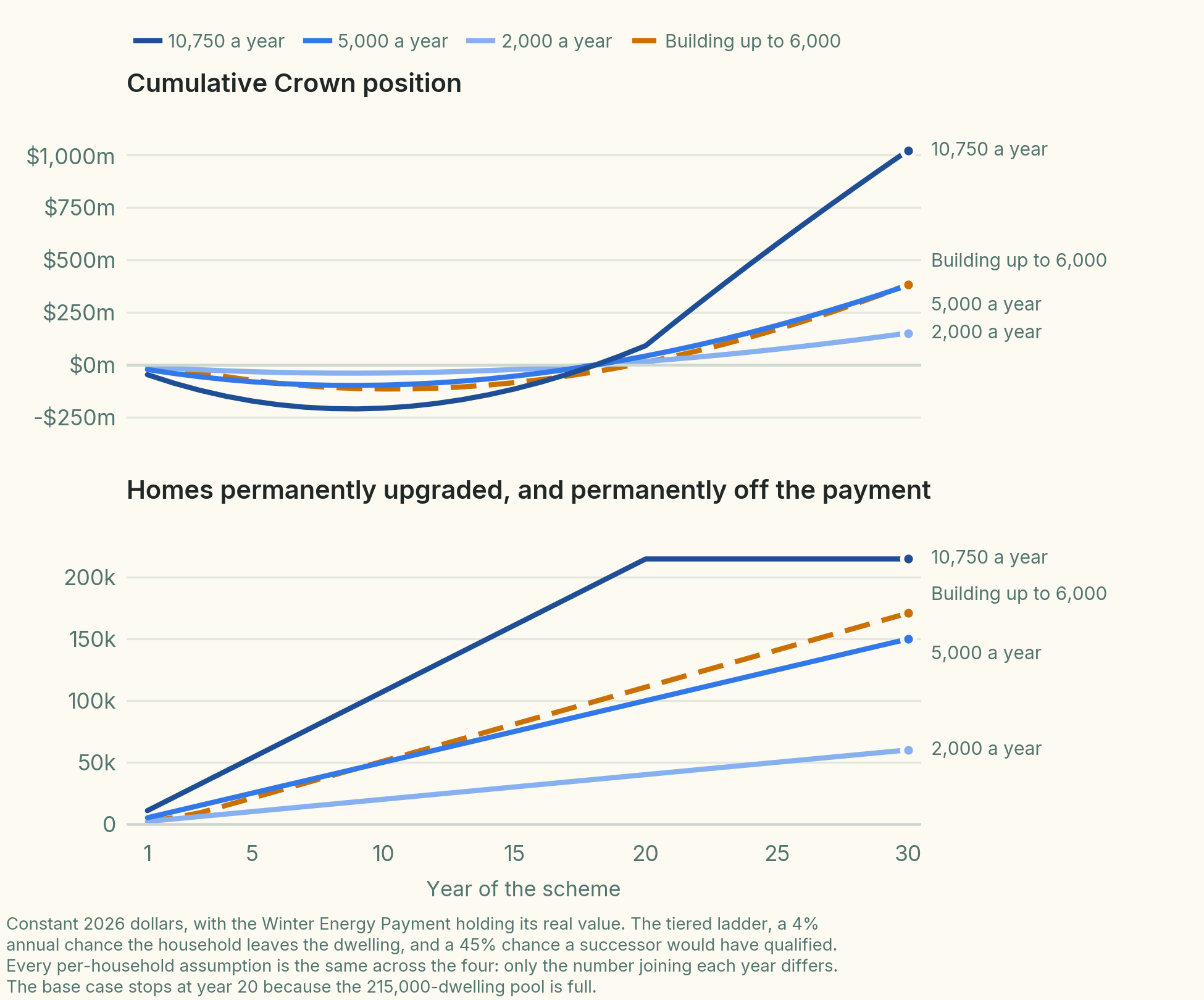
10,750 was chosen as the “base case” as this would reach approximately 85% of all households (not just pensioners) receiving the WEP over 20 years. The remaining 15% of the housing stock may not be appropriate for solar, due to local site and/or building conditions.
If the numbers are lower than that, it would cost less in the early years but the Crown and consumers would miss out on savings.
Between the ambitious 10,750 a year and 2,000 a year scenarios, the Crown would give up +$850m while households in homes that could have been upgraded would give up +$3.7b in forgone power bill savings, more than four times as much, and 155,000 homes are never reached at all.
Starting at 2,000 and building to 6,000 keeps peak exposure near the 5,000 cap while reaching more homes than a flat 5,000 does, and is more realistic in terms of likely uptake trends.
Who’s backing this?
According to a poll from Talbot Mills before the election, nearly 70% of respondents said long-term solutions to lower energy and transport bills would be critical or one of the main factors in their vote. The cost-of-living and inflation were the top two concerns among voters, with petrol rising from fifth to third just before the election as prices spiked again.
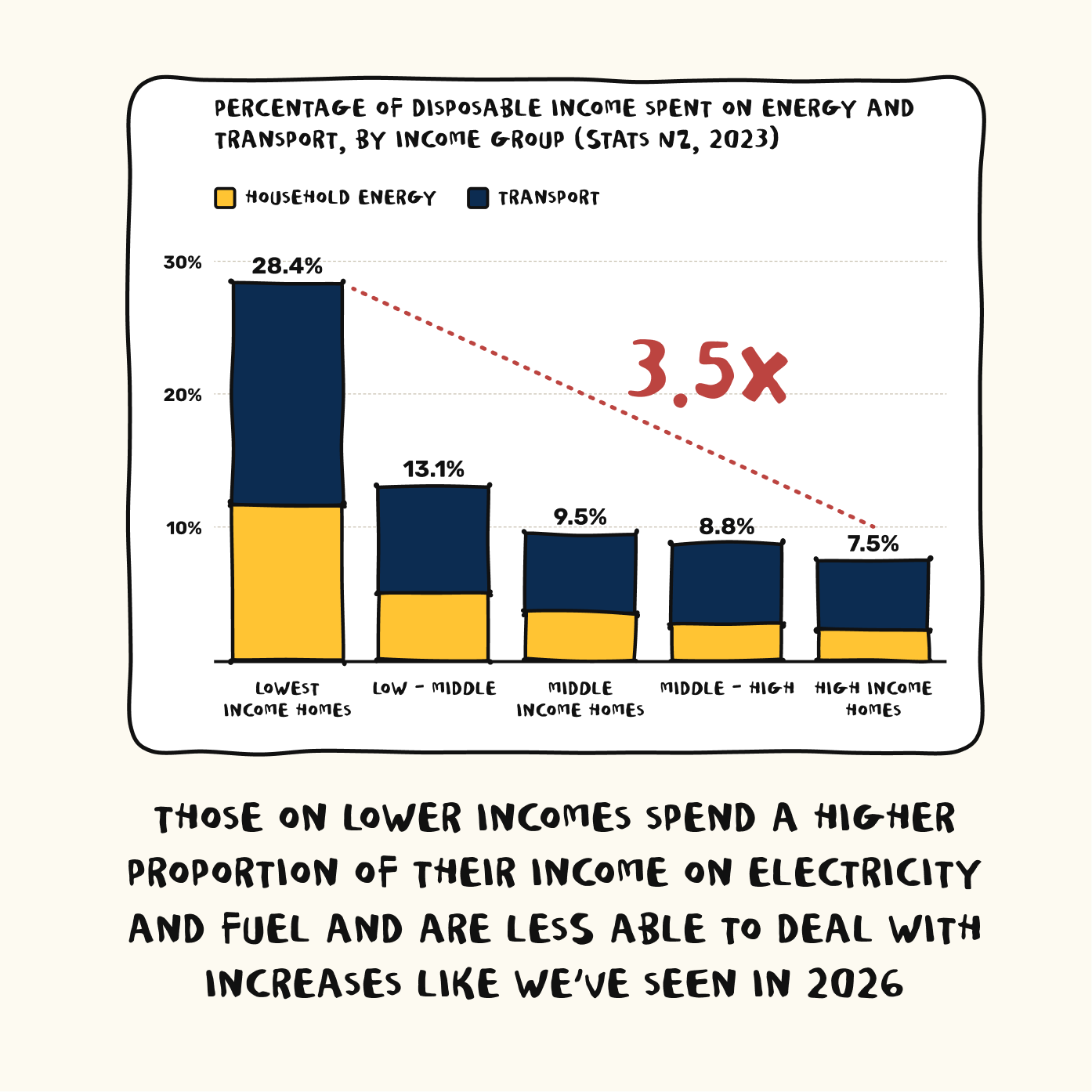
Those on lower incomes spend a higher proportion of their income on electricity and fuel, and would benefit most from the savings that solar and electrification offer. So there’s a clear desire from the public for long-term solutions.
Energy poverty researchers like O'Sullivan have also raised the need for long-term solutions and we believe broad political support for this idea is likely given most of the major parties have also given their backing to the Ratepayer Assistance Scheme.
The Grey Power Board supports the Ratepayer Assistance Scheme’s Energy Loans as a choice for their members and we are confident the Energy Freedom Payment concept will also resonate with them given it is so well-suited to pensioners, many of whom are on fixed incomes and would welcome the price stability that solar can offer over the long-term.
Has anything like this been tried elsewhere?
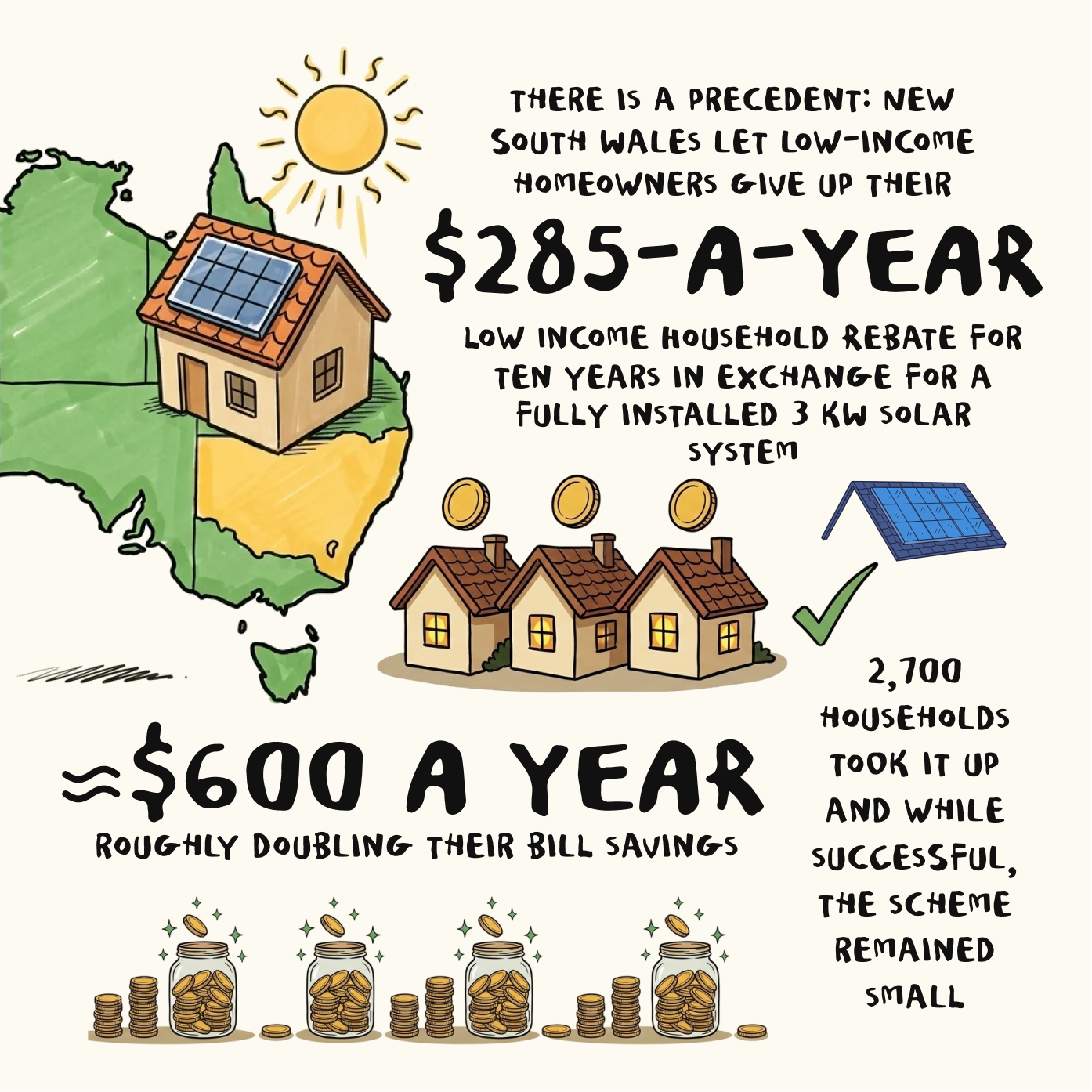
New South Wales allowed low-income homeowners to give up the $285-a-year Low Income Household Rebate for ten years in exchange for a fully installed 3 kW solar system, roughly doubling their bill savings to around $600 a year. 2,700 households took it up and, while successful, the scheme remained small (mostly as it drew on a fixed-term COVID stimulus pool, offered a single token system, had no financing layer to build on to increase the size of the installs, and reached only owner-occupiers).
Ireland, France and the Netherlands are building property-linked finance for upgrades and British Columbia has offered property-charge deferral. But nobody has yet turned a recurring welfare entitlement into a permanent household asset at national scale. That would be a New Zealand first and something that could be exported around the world.
The wash up
For a household in a suitable home, the Energy Freedom Payment would permanently and substantially reduce the power bill by a lot more than the annual payment it replaces.
The WEP as it currently stands buys less every year, so its effectiveness erodes over time and the Government will need to pay more as more people become eligible for it. In comparison, the benefits of a home with its own generation and storage compound over time as the price of grid electricity rises.
The Energy Freedom Payment is not a substitute for warm, dry housing. We still need Warmer Kiwi Homes, the Healthy Homes Standards and the Healthy Homes Initiative. But it is something that should sit alongside these schemes and it would be better for households, better for the energy system and better for the Government.

Note the above is based on actual data for Dargaville, including sunlight, monthly consumption pattern, and local average electricity costs. It assumes the couple will consume 6250kWh/year (national household average is around 7200), and the single person consuming 5000 kWh/year. Note consumption (i.e. warmth) likely to increase with solar. Assumes 65% self-consumption. Based on 4% RAS interest rate. This does NOT account for increased electricity prices and, as such, understates savings. All solar systems are assumed to cost $2,000/kW (in reality cheaper per kW for larger systems).
Related posts
More Watt Now? posts from Rewiring Aotearoa
Pay it forward: the many benefits of combining Winter Energy Payments into a lump sum
Read More
Dangling carrots: the argument for electrification incentives in New Zealand
Read More
Release the pressure: how the EV Salary Boost scheme would help consumers, communities and the country
Read More
Solving the dry year
Read More
Sun in a socket: plug-in solar
Read More
The case for energy loans
Read More

A bad case of gas
Read More

Scale and speed: why the climate needs electric vehicles
Read More

A future with two visions
Read More

Show me the money: the economics of going electric
Read More

Why electric vehicles matter
Read More

Why solar makes sense
Read More

Why going electric wins on emissions
Read More

Energy use in New Zealand
Read More
Closing The Loop
Read More
Electricity means efficiency
Read More
