Te Whakahiko i ngā Marae | the Electric Marae report

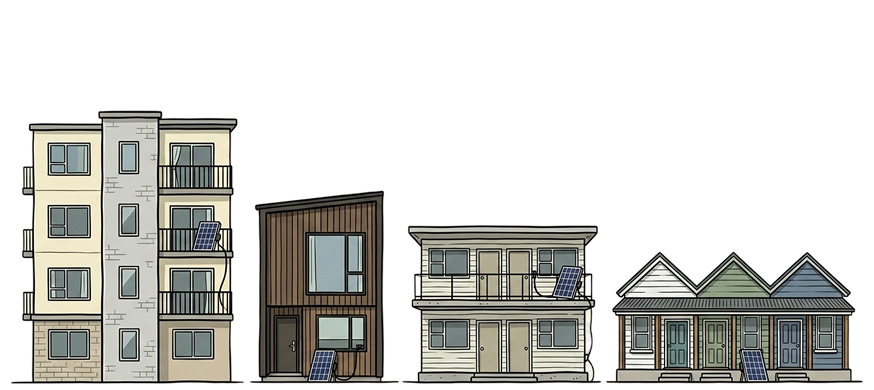

Here are some pointers to get you started in a conversation with your body corporate to install EV chargers. These are the ideal steps to work through. We’ve included some arguments to use to persuade a reluctant committee, and if you get the big “NO”, some alternative options.
This is for residents of apartment buildings who own or are planning to buy an electric vehicle and want to be able to charge at home. Because most apartments are governed by a body corporate, getting a charger installed is a building-wide project. Every building is different but it can be done if you follow a structured process.
Firstly, the main reason for enabling your residents to charge EVs at home is that it will massively reduce their transport bills, and also their household emissions.
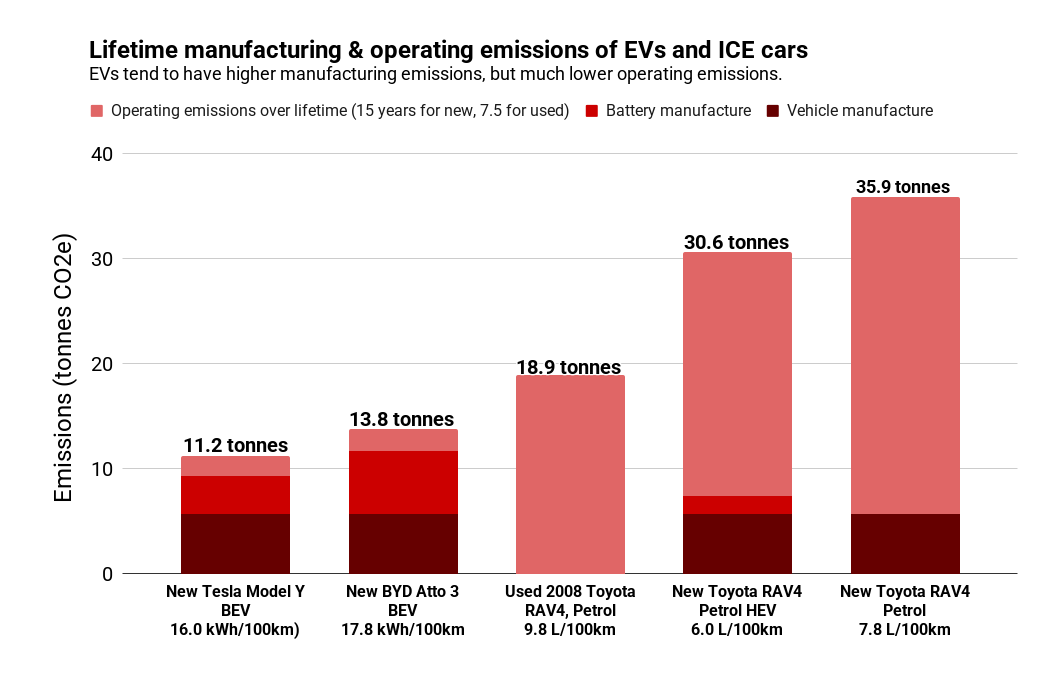
Yearly running costs are a lot lower for EVs and, over its lifetime, including upfront costs, an EV could save up to $20,000 in comparison to an ICE car (and more if fuel prices rise further).

EVs can also reduce your operating emissions by over 90%. They do have higher manufacturing emissions from the battery, but this is paid off quickly from the operating emissions savings.
Before approaching your body corporate committee, read up on what's involved. There’s a couple of useful resources with really helpful practical advice that you can start with:
Two free New Zealand standards, published by Standards NZ and sponsored by EECA, are essential reading. Both are free to download. Which standard is relevant will depend on the set up in your apartment. E.g. in a basement set up with all the chargers operating together as a group and all powered from the same distribution board and MEN (multiple earth neutral link), then the commercial standard would likely apply. If the apartments were more like multi-unit dwellings, the chargers may be installed to each apartment/townhouse own board directly. If this is the case, the residential standard would apply.
Finally, check out your apartment body corporate rules and committee cycles.
Find out how many other residents own an EV or are considering one, and talk about the savings and environmental benefits of going electric. We have many free EV resource on our website to help. A shared proposal carries more weight with a body corporate committee than a single resident's request, and knowing likely demand helps size the infrastructure correctly. A simple survey through your building's existing communication channels (email list, residents' group chat) is a good starting point.
Submit a request to your body corporate committee asking them to consider installing EV charging as a building infrastructure project. Frame it as a building improvement and reference the BCCG NZ guidelines, which are the recognised NZ industry standard for this process.
The committee's first step should be commissioning a professional electrical capacity assessment to understand what the building can support and what upgrades, if any, are needed. If charging can be managed within existing capacity, you may avoid expensive upgrades. Smart load management is often more cost effective than increasing supply capacity
Consider demand now and in the future and likely charging patterns. Decide how many carparks will have a charger installed based on this.
The body corporate should agree on a consistent, approved charger type before any installations proceed. Mode 3 smart chargers are the recommended standard for apartments - they include load management capability, meaning the building's electrical supply is shared intelligently across multiple users rather than overloading the system.
If the design is based on Mode 3 Smart Chargers, new electrical energy meters will not be required because the Smart Chargers will themselves log all power usage and this information can be pulled from the CPO platform allowing power usage to be on-charged to the vehicle owner.
There’s more detail on this step and step 6 in the BCCG guidelines which is worth reading.
EECA maintains an approved list of smart EV chargers that meet New Zealand technical specifications. This is a good starting point for selecting compliant chargers.
Note: A range of technological solutions are already available or emerging, each suited to different apartment situations, such as wireless charging pads, mobile charging units, and subscription-based models where chargers are installed at no upfront cost to the body corporate, with users instead paying for the service as they charge. As this market matures, apartment complexes will have an increasingly broad set of options to match their budget, infrastructure constraints, and resident demand.
The body corporate typically owns the core electrical infrastructure (cabling, sub-boards), while individual residents own their charger unit. Billing and rules will depend on the set up design e.g. if communal or individual chargers; type of charger used. Your body corporate's operational rules should document this clearly.
Common billing arrangements include:
All EV charger installations must be carried out by a licensed electrician and must comply with New Zealand electrical safety standards. The body corporate should make sure any contractor has experience with multi-unit or commercial EV installations.
Moving might not be an option; here’s some other ideas
Rewiring Aotearoa's Matt Newman: "For marae, however, there aren't a huge amount of places where they could turn to unless they're engaging professional services around electrification. We know that that hasn't often been in the funding piece either. You know, funders will happily fund upgrades for marae, but they won't fund the due diligence that's necessary to support marae in making really good decisions for the long-term future."
Read moreDownloadRewiring Aotearoa CEO Mike Casey told Andrew Dickens plug-in solar is a simple process, which many countries including the US, UK, and places across Europe have made the most of. Labour's policy is similar but says changes to enable plug-in solar would be within 12 months of a government it leads taking office.
A shocking increase in the power bill for a marae that converted to solar energy has raised concerns about installers and regulation. The monthly power bill for Taranaki's Owae Marae has rocked to as much as $2000 a month, up from about $400. That's despite installing a solar system on its wharekai to save money. Matt Newman from Rewiring Aotearoa spoke to Lisa Owen about this issue and our new Electric Marae report.

