The 'Electric Election': energy policies, side by side

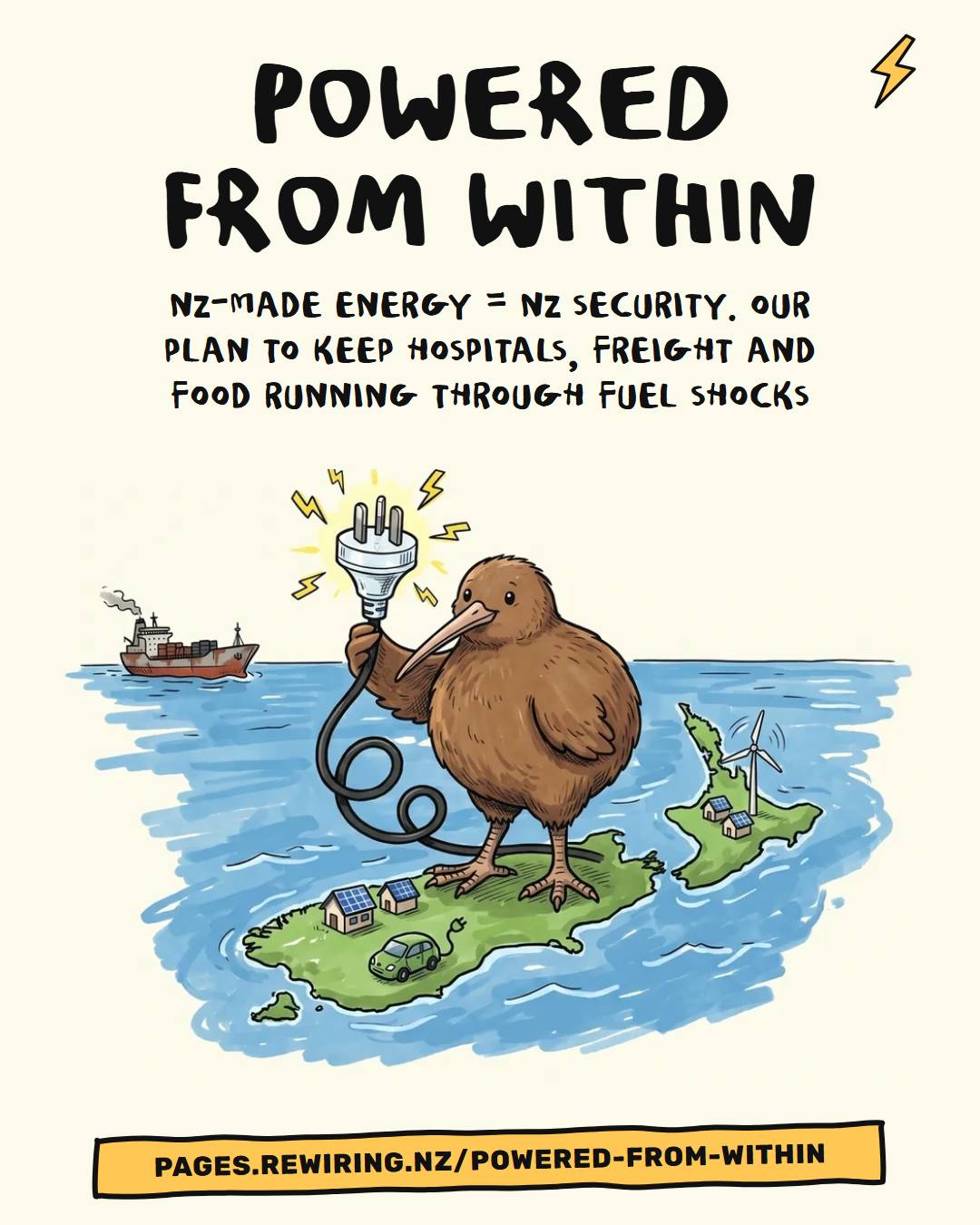

As we have seen clearly this year, New Zealand's reliance on volatile, imported energy is one of our major vulnerabilities. High fuel prices are damaging enough to the economy - and they have the biggest impact on those who are least able to handle the sharp rises - but what if the boats don't turn up?
All our liquid fuel comes on ships, so if the flow stops, the economy would basically grind to a halt. But electrification reduces that reliance and that's why we've developed a plan for the Government to get its own house in order and keep hospitals, freight, food and other critical services running through fuel shocks.
The countries that took action during previous energy crises are now better insulated against fuel volatility, but even if the shocks don't eventuate, these investments still make sense because they save us money in the long-run.
2026 has provided a rare moment of clarity. It's time to start powering ourselves from within. And the Government should be leading the charge.
See the plan here.
'Twas the night before Chris-mas, and all through the house, all the voters were stirring, the pundits showing their nous … the election will soon be over, but the energy crisis won't, so we'll be there to pester whoever is in power about the need to run more of the economy on New Zealand-made energy; can Ethiopia's aggressive push for EVs work and how does New Zealand compare in terms of adoption rates?; a two-way charging trial from Genesis shows promise in Auckland, but there's still a way to go before it's mainstream; small electric vehicles are often overlooked when it comes to electrifying transport, but it's hard to miss this weird French one; a solar-powered cafe (and some electric coffee); and we endorse the political vandalism of Keith of All Trades.
Read moreDownloadPoliticians are being urged to adopt stronger electric vehicle incentives ahead of the election. Climate and energy advocacy group Rewiring Aotearoa is arguing that EVs are one of the most effective long-term solutions for rising transport and energy costs. They're promoting an EV Salary Boost proposal, which would allow workers to access EVs through pre-tax salary arrangements – similarly to already existing schemes in the UK and Australia. Policy and Government Relations Spokesperson Ngaio Neumegen told Kerre Woodham that even with the rising cost of power, it's still cheaper to run an EV than a car running on imported fuel.
A proposal that would let New Zealanders lease an electric car using their before-tax pay has not won a commitment from either National or Labour, with the 7 November election days away. Under the EV Salary Boost, put forward by Rewiring Aotearoa and Drive Electric, an employee would lease a new or used EV for three to five years. The payments would come out of their pay before tax, lowering the cost of running the car. The idea is based on Australia’s novated leasing system, though the groups say they are not proposing a direct copy.
Read moreDownload