Te Whakahiko i ngā Marae | the Electric Marae report



New Zealand's distributed solar growth, tracked over time; a new tool from Ember looks at EV adoption across different markets and how much those vehicles save on oil imports; the QEA offers locals a chance to test an EV for free; Frances Cook crunches the numbers on going electric; a social housing development tries to bring down transport costs with shared EVs; Fortescue keeps pushing for the big electric stuff to try and clean up a dirty industry; and 'babe, can you take me somewhere expensive tonight?'

Raise the roof
Our biggest power station is now on the rooftops and in the fields of New Zealand, with distributed solar recently overtaking Huntly.
As this visualisation shows, solar started slow, but it’s picking up pace and while all that solar is technically bigger, the capacity is lower. Plus, the regulator uses a strange definition of ‘distributed’ so it includes solar farms.
Speaking of which, the country’s biggest solar farm near the Christchurch Airport was switched on by Contact and Genesis cut the ribbon on a big ol’ 100MW battery at Huntly. We need more electricity for our industries and transport and burning stuff is expensive and polluting, so these are good things, but we can’t just have abundance from the energy and lines companies. That might actually increase bills because of the inbuilt bias towards bigness in the energy system. The energy abundance we want also has to come from people’s homes and allow customers to take more control. That’s the way we can bring bills down for homeowners (and renters) and also bring prices down for everyone else, too.
While some believe solar will drop in popularity when the wholesale price gets low enough, that’s not what’s happening in Australia. It has recorded a record number of solar installs in the past six months and “the average system size on a six-month rolling basis reached 10.45kW, up 4.5% on a year earlier.”
Up, up and away
EV demand is on the rise in pretty much every market right now. And the countries going down this track are saving a fair whack of cash by avoiding oil, as Ember has found.
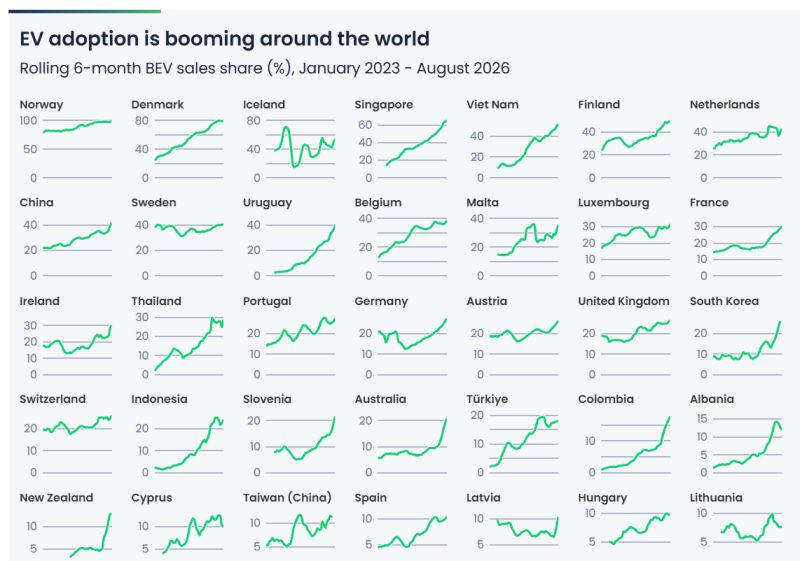
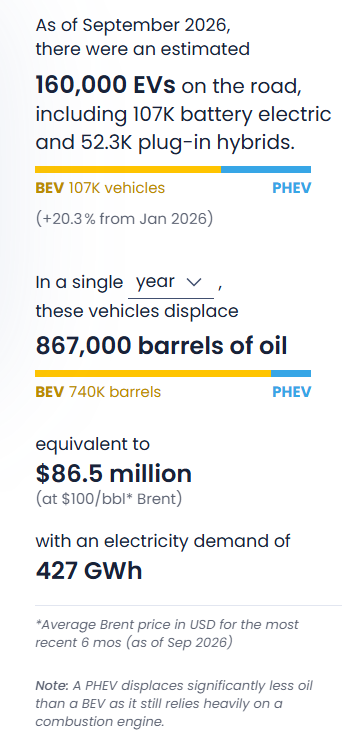
It has created a dashboard of EV adoption to show how different countries are tracking. New Zealand's rates are on the up, but we’re a long way behind the leaders. And with our 160k EVs and plug-in hybrids, that’s estimated to avoid 867,000 barrels of oil every year and save US$86 million. Given we have no refining capability, the savings are likely to be much higher (and given we pay some of the highest prices in the world for petrol and diesel at the pump, the savings for customers are likely to add up to a bigger number).
Try before you buy
We know those who get into an EV very rarely go back to a petrol car. But there are a few barriers and misperceptions in the way. The QEA is trying to break some of them down with its ‘Experience an EV’ programme so if you’re in Queenstown and keen to try an EV for free, book a drive.
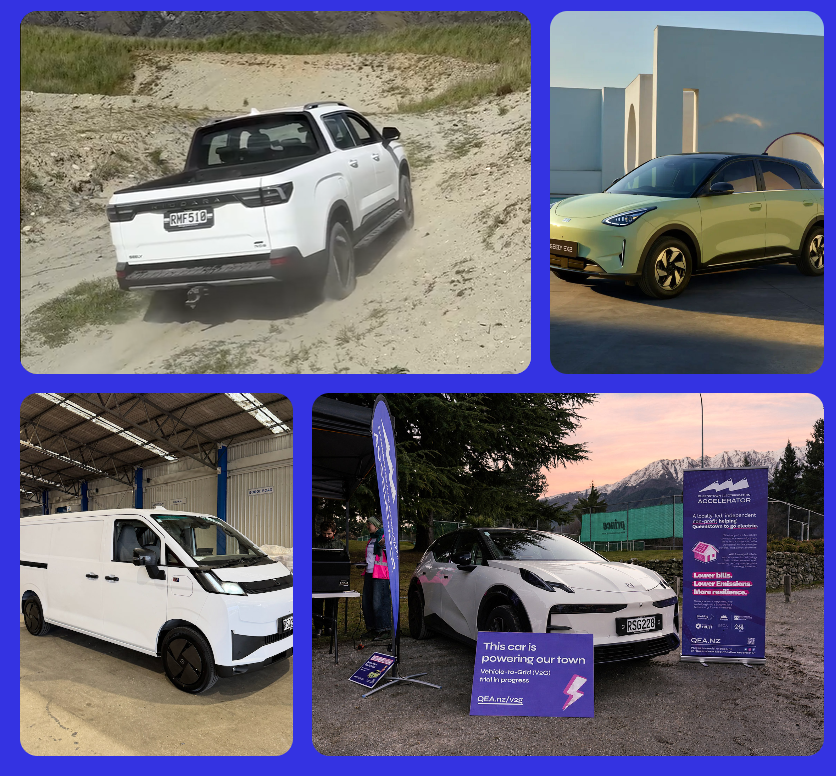
As it says on the website:
“96% of EV owners say they won't go back to a petrol car. Maybe they are all crazy, or maybe you're missing something. Experience an EV for a full day for free, whether it's for your home or business.”
QEA, like Rewiring, is fully independent and doesn’t make any money from selling cars or any other electric kit. But there’s no substitute for experience, which is why we have partnered with NordEast and Carbn to make these available to trial.
Running the numbers
Early adopters have generally had to pay an environmental premium for the better option, whether that's solar panels or EVs. Now the electric option is the smart economic choice as well and that’s when things start to change in the mainstream market.
Financial commentator Frances Cook looked closely at solar and got it herself. And she also looked at EVs and got one herself.
She goes through the considerations of going electric on her show, from higher insurance costs (not a major difference) to battery health concerns (relevant for older Leafs but not for modern EVs).
Our independent research shows there are big savings on offer for average drivers, but that does depend on how much charging happens at home.
If you can, use your legs, or jump on a train or bus. If you need to buy a car, make it electric. And if you can get away with just a few trips, there are options like Zilch and Mevo.
Some developers also have shared EVs, and that’s something being offered in this Auckland social housing development.
Chief executive Lisa Woolley said it wanted to help provide affordable housing and the subsidised rent included the use of two electric cars. "Running a car is expensive, it's especially expensive right now ... and so what we've provided through partnership with others are two bookable EV cars."
She said the apartments were close to both bus and train stations.
"Our hope is that in time the tenants won't even need to own a car. We're excited about that, it's about making a sustainable transport option for the whanau that live there," Wolley said. "Once we get whanau in we'll be able to share with them how they can use those cars, we're really keen to see them well used."
Cleaning up a dirty business
We’ve covered Fortescue before and we like outspoken CEO Andrew Forrest’s focus on getting to real zero rather than net zero.
For the company, that means electrifying as many of the big machines as possible and producing as much of its own electricity as possible in very remote areas. And it's investing a huge amount into this mission.
Australia imports more diesel per capita than any other country (New Zealand isn’t too far behind) and, as he says on the Everything Electric podcast, embracing electric tech at the big end of town has already helped the company avoid around one billion litres of diesel.
He says people are waiting for the technology to be proven and beholden to the manufacturers to give them a piece of kit, but when they go to technology suppliers and ask for a 3.6MW charger they are often keen to help. The problem is that no one has ever asked them to build one before.
A story in the Australian Financial Review showed that “the surge in oil prices due to the war in Iran has, for the first time, made electric vehicles cheaper to run than heavy diesel trucks on mine sites, potentially clearing a key barrier to faster adoption of the technology in the Pilbara.”
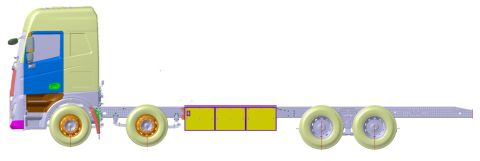
In New Zealand, ETrucks’ Ross Linton has just announced there’s a special electric short-haul truck that’s been designed for this market.
Forecourt foreplay
‘Babe, take me somewhere expensive tonight?’
Rewiring Aotearoa's Matt Newman: "For marae, however, there aren't a huge amount of places where they could turn to unless they're engaging professional services around electrification. We know that that hasn't often been in the funding piece either. You know, funders will happily fund upgrades for marae, but they won't fund the due diligence that's necessary to support marae in making really good decisions for the long-term future."
Read moreDownloadRewiring Aotearoa CEO Mike Casey told Andrew Dickens plug-in solar is a simple process, which many countries including the US, UK, and places across Europe have made the most of. Labour's policy is similar but says changes to enable plug-in solar would be within 12 months of a government it leads taking office.
A shocking increase in the power bill for a marae that converted to solar energy has raised concerns about installers and regulation. The monthly power bill for Taranaki's Owae Marae has rocked to as much as $2000 a month, up from about $400. That's despite installing a solar system on its wharekai to save money. Matt Newman from Rewiring Aotearoa spoke to Lisa Owen about this issue and our new Electric Marae report.

