Don't listen to Old Man Gas. Ditch LNG. Support New Zealand-made energy!



Everyone is rocking on down to Electric Avenue today (this one online, not that other small one in Hagley Park in Christchurch), so let's ride the lightning: profits and electricity prices keep going up, as panels keep going down; a new paper puts a number on how much more homes with solar sell for; we're bottling things up with big and small batteries and they are eating into gas in Australia and California; transport emissions drop across the Tasman as a result of Government EV incentives, while HEB Construction electrifies its fleet; electrons are coming from above in China; and Xpeng announces the arrival of a crazy looking electric van/aircraft carrier.

The rent is too damn high!
We generally like to focus on the positives here at Electric Avenue, but it’s hard not to mention the massive gentailer returns, followed by the announcements of electricity price rises.
As we keep saying, many of the benefits of electrification disappear if electricity gets too expensive and, for households, as this Westpac graph shows, household energy costs have gone up by 173% since 2002 (that includes gas). Petrol is also up 130% in that time.
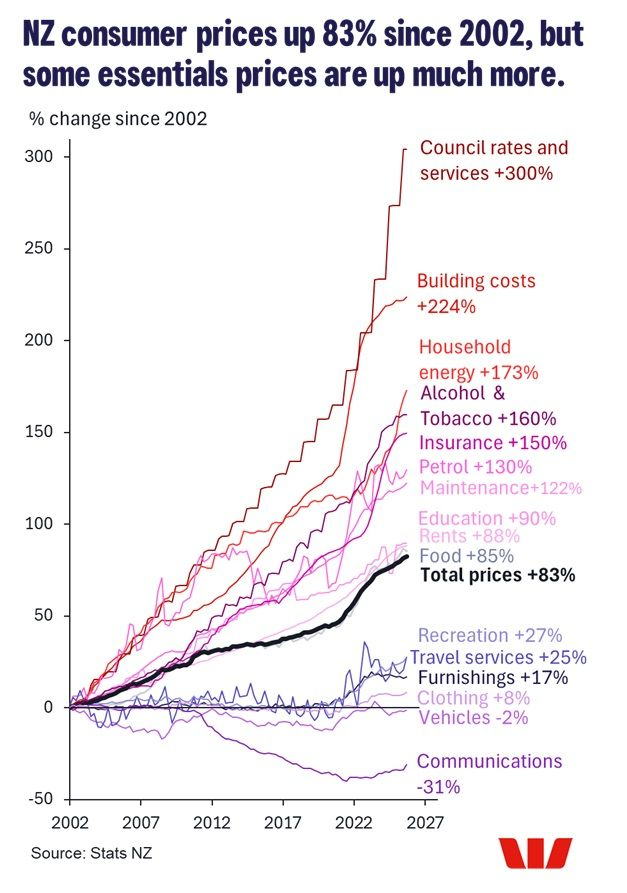
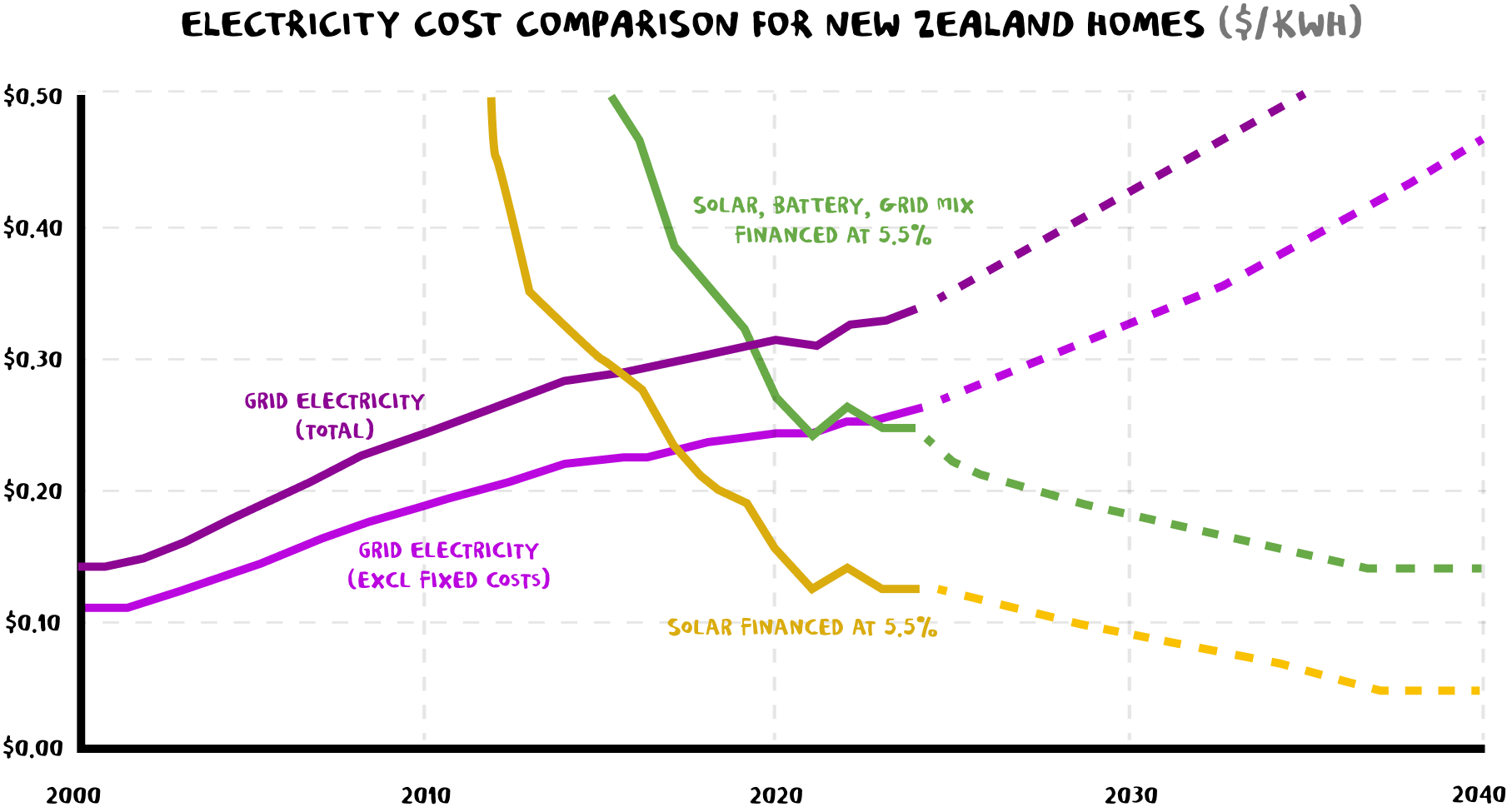
Downward pressure on prices, as the oft-used political catchphrase goes, has clearly not worked. But as we also keep saying, solar and batteries keep dropping in price and are cheaper than grid electricity, even when you factor in loan repayments.
We recently compared energy to the telco industry, which used to offer hideosuly expensive calls and data but, through technological advancement (and some market reforms), has dropped by 30% in that time. That’s what technology should do.
As Mike Casey wrote in Newsroom:
“Cast your mind back a few decades. We were paying astronomical per minute rates for international phone calls, 20c per text, and huge fees per megabyte to get online. The telcos that had profited handsomely from the status quo were starting to be confronted with competition from the much cheaper internet.
They tried to protect their incumbency and did all they could to stop the technology from gaining a foothold, but customers eventually won and we now live in an era of basically unlimited texts, data and phone calls. Imagine if the telcos suggested that customers who were worried about their high bills should just have shorter calls or cut back on the data.
That’s often what it feels like when it comes to energy. We now have access to technologies that can significantly reduce bills for customers at a time when many are clearly struggling to pay them, but the incumbents advise customers to take shorter showers or only boil as much water as they need. They are told to look for savings by switching plans and retailers, or to look for slightly cheaper gas and petrol.”
The gentailers keep talking about doing their best to control prices (and in the background casting doubt over the role of rooftop solar). If Governments actually want bills to drop, households need to start competing with them directly.
Roof returns
The savings from solar are very compelling on their own, but there are many who don’t want to invest because they may not be planning to stay in the home for very long. It’s a reasonable concern given the average time spent in a house is now just over five years. But a new paper shows that solar can be a good investment when it comes to house prices.
We have heard plenty of anecdotal evidence that solar has this effect, but the paper by Chad Harland and Yvonne Matthews called Power in the Pitch has put a number on it.
“Results show that solar homes are marketed through lifestyle, rural and quality cues rather than explicit sustainability framing, suggesting that PV is bundled with broader amenity signals rather than positioned as a distinct attribute. PV-equipped homes command an average sale price premium of 1.34%, with no significant difference in days on market. Effects do not vary with solar irradiance or local solar penetration, indicating limited salience of site-specific energy benefits in buyer decision-making.”
As Kristy Hoare from MySolarQuotes wrote:
“On a $900,000 home that’s over $12,000 - approximately the initial cost of a 6kW system. And that’s before you factor in the power savings while you’re living there. This matters for the solar industry because we hear this all the time: “I’m not planning to stay here long-term, so what’s the point of going solar?” If solar is a capital improvement, not just a bill saver, that objection starts to fall apart.”
It works for homes, and it also works for businesses and even KFC is getting in on the solar act.
Hope they're talking to the amazing electric chicken farmer Jeff Collings.
Bottle it up
Batteries are a game-changer for the energy transition. And they continue to boom (in a good way) as costs continue to drop.
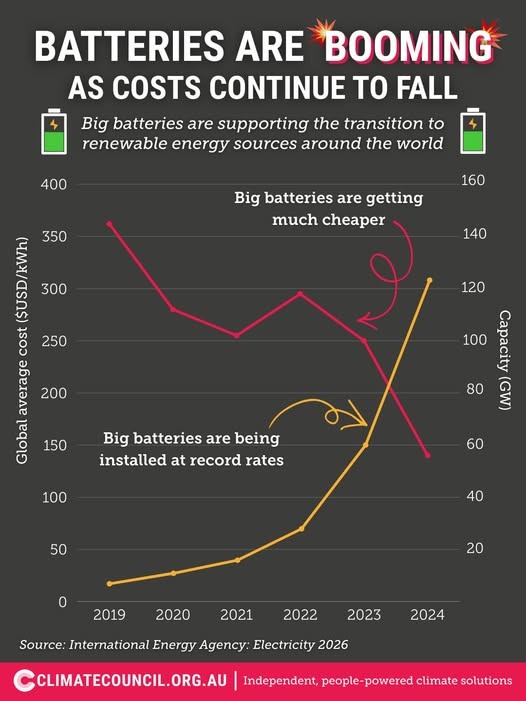
Batteries aren’t really a solution to our dry year issues, but on a day to day level, they are starting to change the generation mix in places like California and Australia - and gas is the biggest casualty.
Every battery in a home basically removes that home from peak, and over 200,000 of them have been installed in Australia in the past six months as part of a Government subsidy programme. Along with big grid-scale batteries, Ketan Joshi writes that they are “picking up solar output in the middle of the day, and dumping it out in the evening: cutting very deep into the output of fossil gas.”
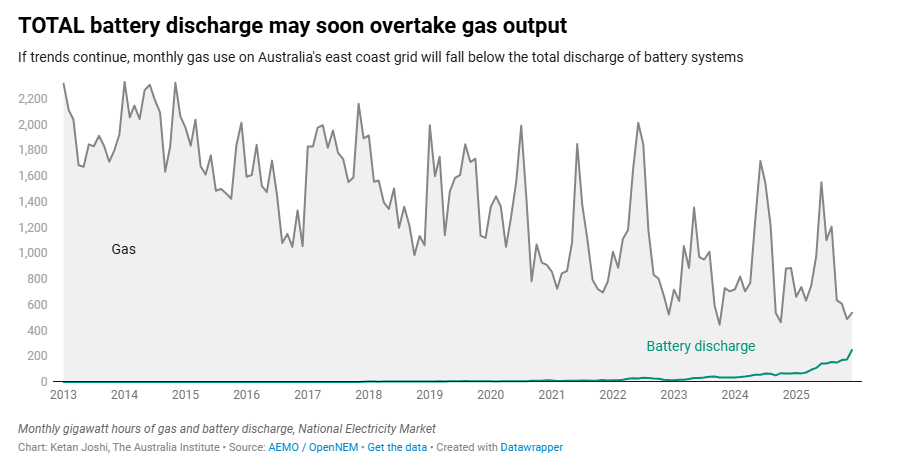
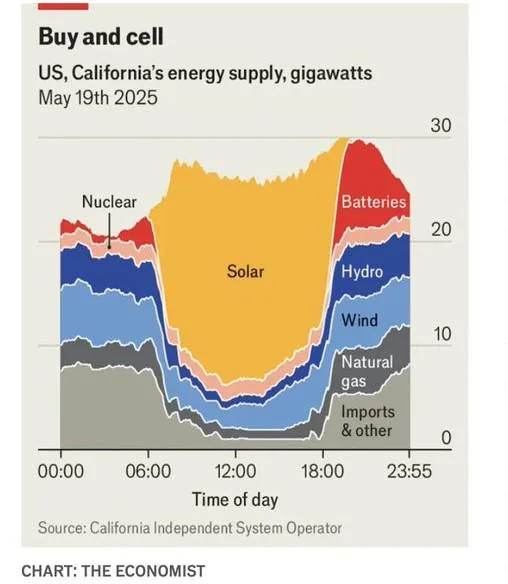
“We have already had a good year of data from California, where batteries have enabled the state’s massive solar growth and taken a massive chunk out of gas, resulting in California being the only state in 2025 in the US with falling emissions. Australia is now formally having its California moment.”
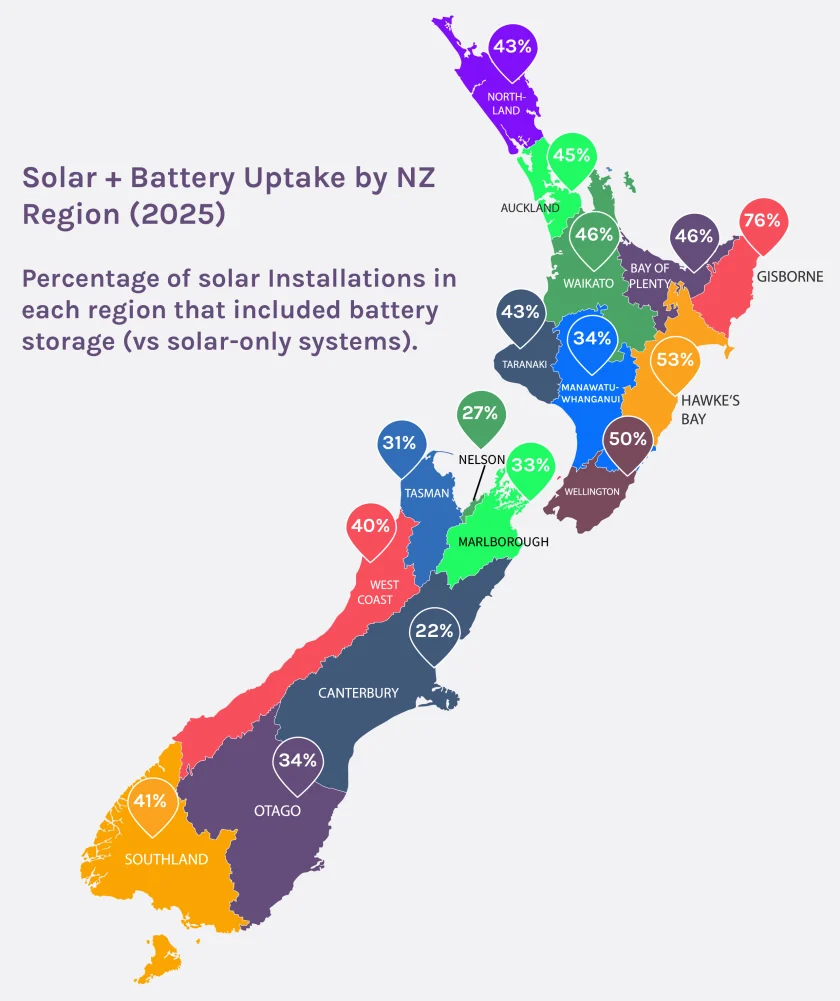
In New Zealand, there is an uneven spread when it comes to battery uptake, as MySolarQuotes has shown. But we reckon there's a need for lots more of them.
Driving it down
Australia has got another one over on us, with news that its transport emissions have declined, in part due to EV incentives.
As the AFR reports:
“Emissions from transport have grown more than any other sector since 2005, driven by the huge popularity of large diesel utes and SUVs, growing demand for heavy freight and increasing fleet size from population growth. But a threefold increase in electric vehicle ownership since 2022 offset rises in aviation and diesel-powered emissions in the year to September 2025, pushing overall transport emissions down by 0.4 per cent – the first year-on-year decline since the pandemic began in 2020.”
New Zealand’s EV sales numbers have been affected by Government policy in the opposite direction and while sales have increased gradually after the big dip, we are still not back at the levels of 2023 when the Clean Car Discount was in place.
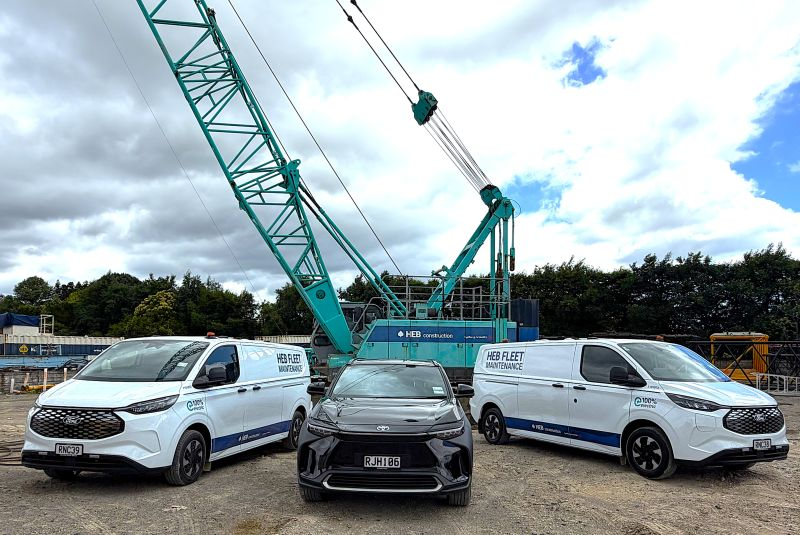
Rewiring is heavily focused on fleets, because businesses buy around 60% of all new vehicles in New Zealand and more company EVs would help seed the second-hand market. It was good to see the changes to WorkSafe guidance recently around at-home charging and it was also good to see HEB Construction go electric.
As national equipment manager Grant Moffatt said: “I’m incredibly proud of the team for continually pushing boundaries, being OPEN to challenging the status quo, working TOGETHER across the wider group, CARE about our footprint, and most importantly, being REAL about the process, and still DELIVERING to get the job done for our families and communities.”
Electrons from above
A lack of charging infrastructure remains a barrier to uptake here, although we're expecting some good news on that front soon, but if the mountain will not come to Muhammad, then Muhammad must go to the mountain.
In China, that's what happening at a parking building, with EV chargers that can come to the cars on a network of rails.
In New Zealand, ChargeNet is trying to get them while they’re young and one of the Rewiring team spotted this 'charger' at the local play centre.
Unlock the sky
Chinese EV company Xpeng has unveiled the Land Aircraft Carrier, a crazy-looking six-wheeled electric van with a range of around 1,000km that can fit an ‘airplane’ in the back and charge it up.
If the extra two wheels don’t capture enough attention, rolling out the folding, six-rotor drone, which is capable of lifting a single occupant into the air, certainly will.
While there will clearly be regulatory hurdles to overcome with the eVTOL creation, the company says production is starting in late 2026, and around 7000 orders have reportedly already been placed.
‘Sorry kids, you’re walking to school today. I’ve got to take my personal drone’. Not sure how that will fly - quite literally.