Don't listen to Old Man Gas. Ditch LNG. Support New Zealand-made energy!


'Gas backwards' policy signs us up for an expensive new international fossil fuel subscription with no guarantee of lower bills, Gull provides a good comparison with EV charging prices added to its sign, Ferrari launches its new electric car with the help of Apple's Jonny Ive, Lightforce wants to put solar in every carport, how to adapt your life to run on the sun, and an old home in the UK gets the Zero Bills treatment.

‘Gas backwards’
We love opening an L&P. We don’t love opening an LNG - for a number of reasons, all of which are laid out in our statement and were eloquently explained by Mike Casey’ in his various media appearances.
As he told Bernard Hickey and Peter Bale on 'The Hoon', "like any cricket umpire, there is an occasional howler. And this is pitching well outside off."
It is a tax on electricity users to remove the dry year risk, but it's also about keeping the gas flowing. And it’s worse than a tax. It’s regressive, because poor people pay more of their income on power bills.
There's also a simple question of how anyone can be confident that the price of LNG will be $X when it is entirely at the whim of global forces. If anyone tries to argue that ‘forecasts say…’ it means they are gambling the future of consumer bills on speculation.
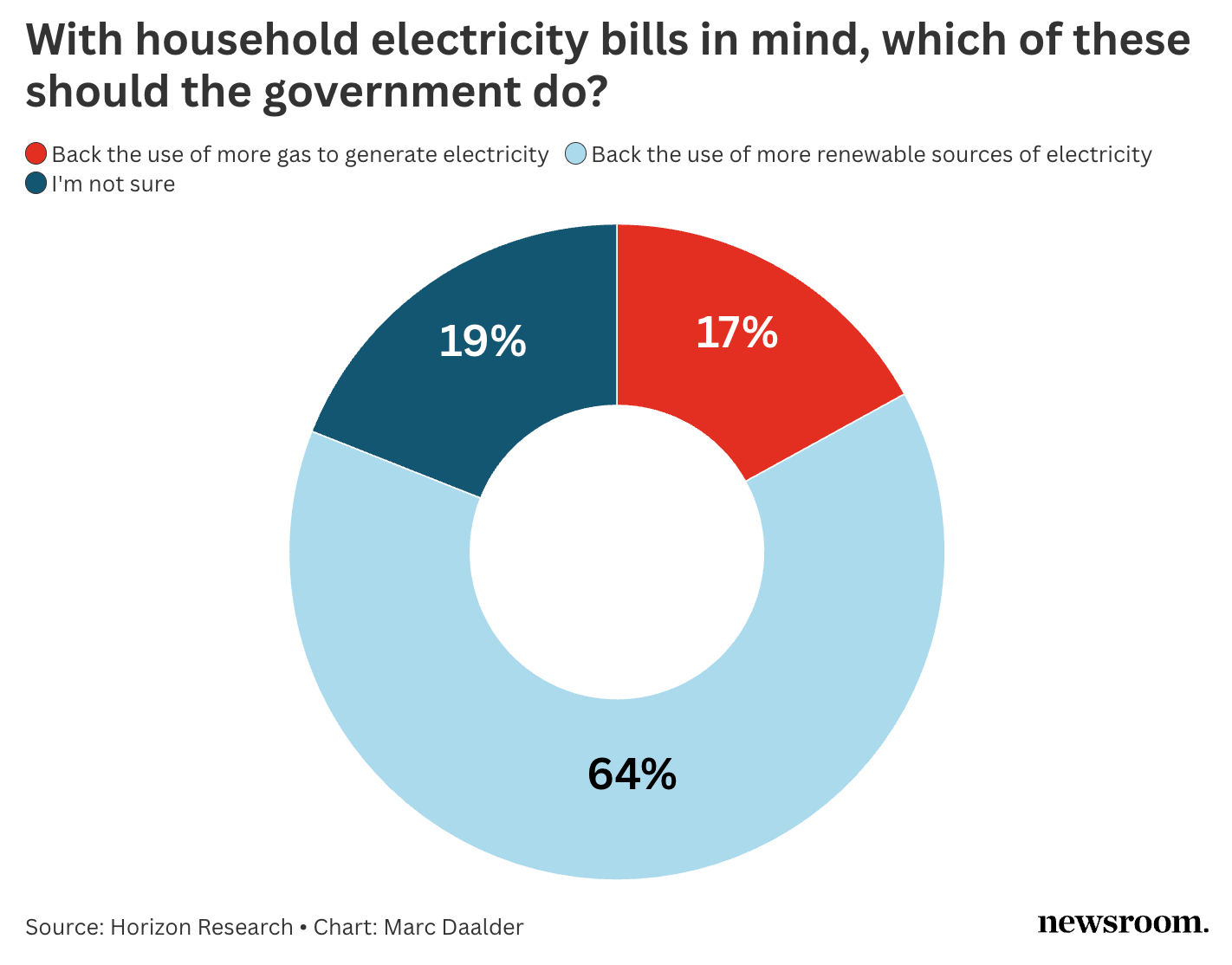
Lawyers for Climate Action’s research last year, as reported in Newsroom, suggested 64% wanted renewables and lower bills. Instead, they get a new fossil fuel subscription and no guarantee of lower bills.
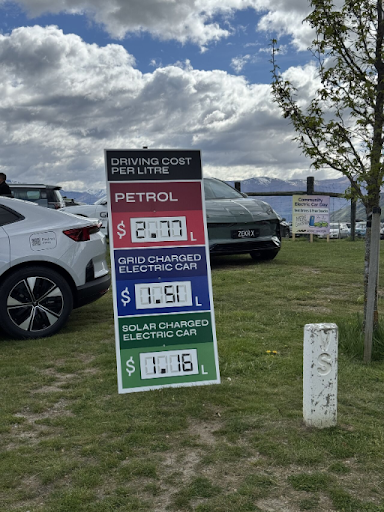
Fill ‘er up!

Over on the NZ EV owners page, we were stoked to see a photo from Steve Chung of the Gull St Heliers on St Johns Road in Auckland. We’ve wanted to see charging prices up on petrol station signs for a while now and while it's not apples for apples, it makes for a good point of comparison (and 69c for 300kw is also a pretty good price in comparison to some of the other options).
Fast charging an EV is already very easy (except for all the apps you need to navigate). But it could be even easier in the future, as this clip shows.
The new electric Ferrari would look good there, but, according to Reddit, Jonny Ive's involvement in the design process may be problematic.

You can see how the new electric Ferrari Luce came to be here.
And you can see how a family wagon from China with massage seats can beat a petrol Ferrari in a drag race.
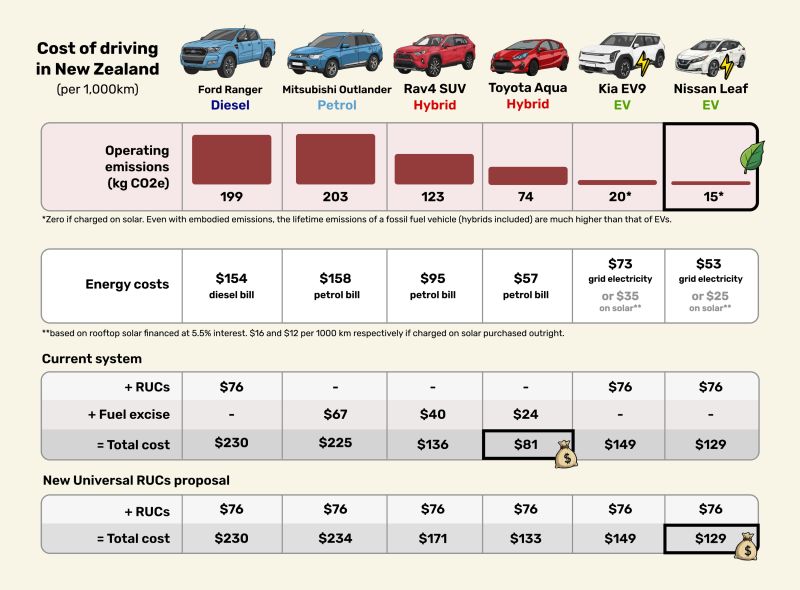
While we enjoy the sign at Gull, we have calculated the cost of electrons vs petrol and diesel (and you can check out our methodology here).
We’ve also done a few calculations on how universal RUCs will affect the price per kilometre.
A sun in every port
Solar is booming everywhere, both large and small scale. And while we think more attention should be paid to existing rooftops, there’s also an opportunity to add solar on new roofspace, like the SolarPort that’s being brought in by Lightforce.
As the website says:
Shade that pays for itself: The Lightforce SolarPort gives you reliable shelter for your vehicles, and high‑output solar generation that helps power your home and keep your EV battery charged while you park. Built with reinforced double‑glass solar panels, integrated drainage, and coastal‑grade aluminium framing, it is engineered for New Zealand’s weather and designed to look good doing it.
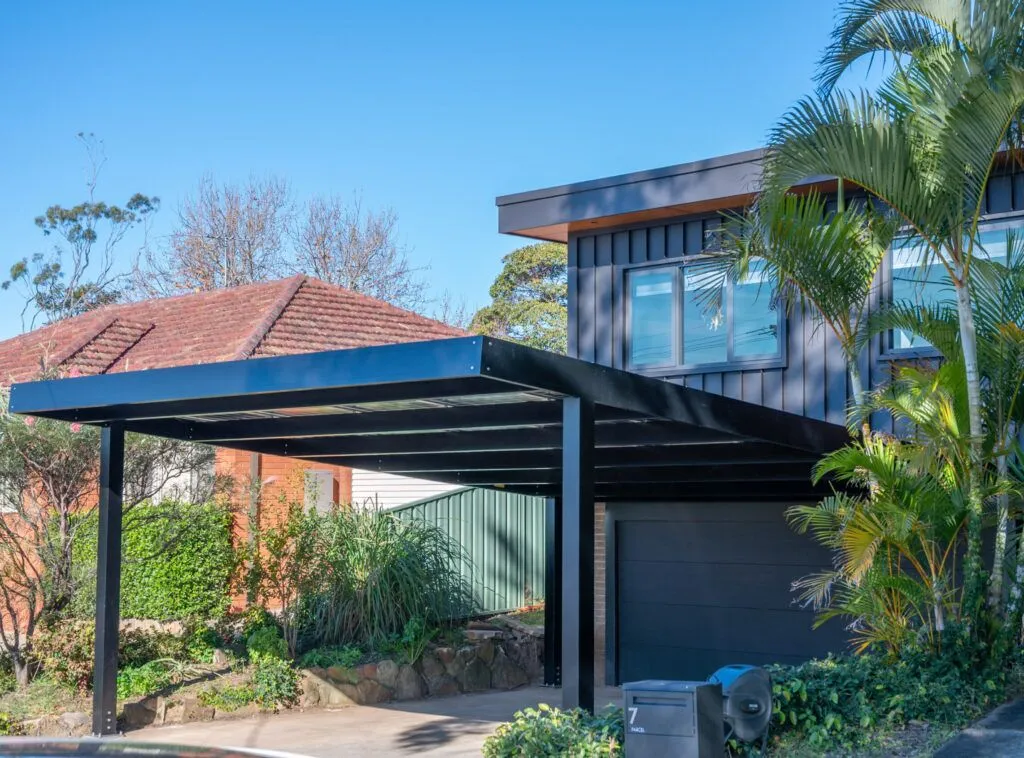
They are designed with EVs in mind, have a 15 year warranty and can boost existing solar systems. The XL size offers 10kW, which is well above the average install size in New Zealand.
Ahead of the curve
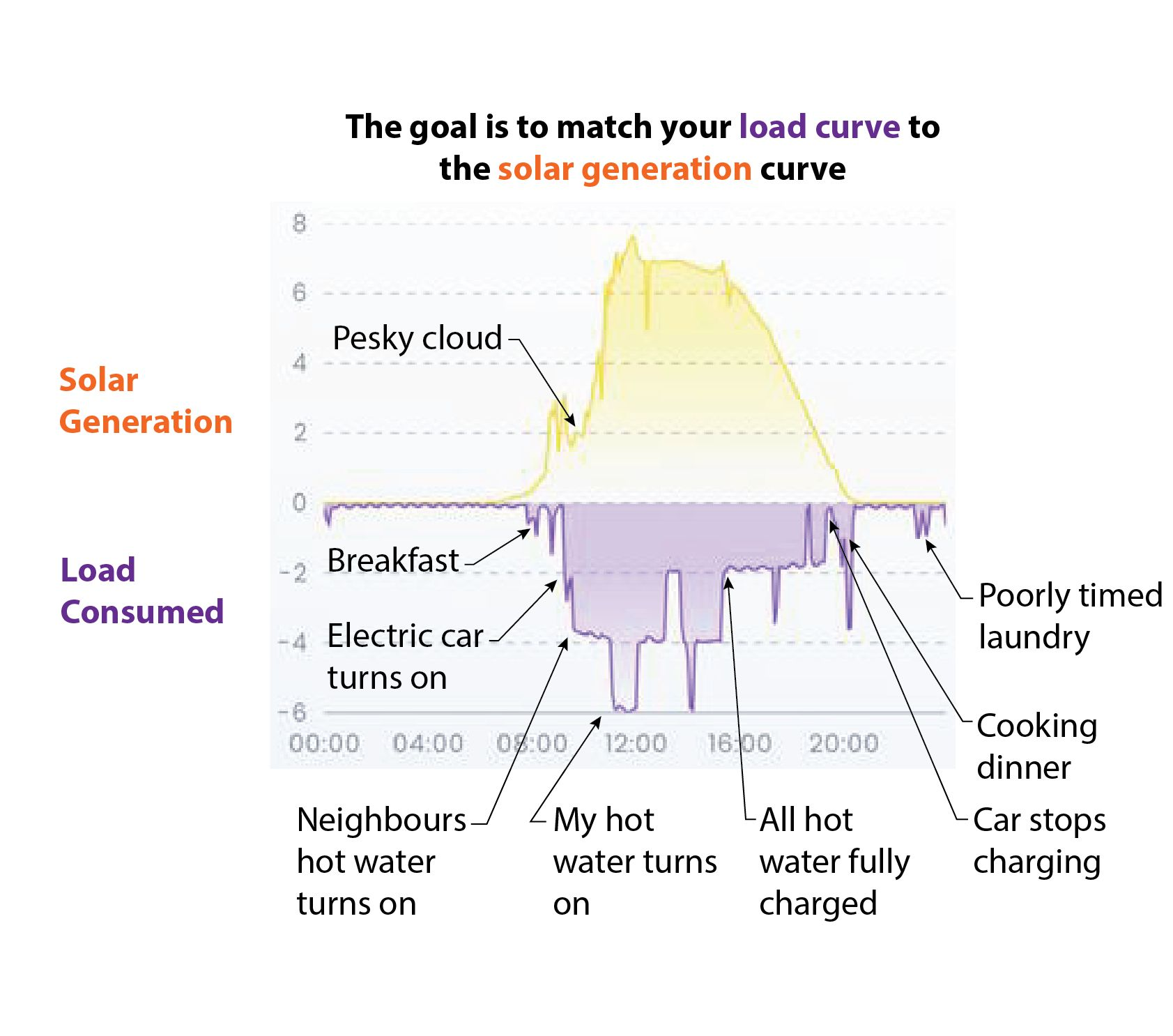
Vector’s GM of sustainability Prageeth Jayathissa recently got solar installed. And the graph that he posted on social is a thing of beauty because it shows how he's making the most of the sun.
Humans aren’t that keen on changing their behaviour (unless there's an economic benefit involved), but those with solar do tend to become a lot more engaged in their energy use and often start to adapt their activities to fit with the power plant on their roof.
That can be as easy as setting a timer for the water to heat during the day, or plugging in the car to run on sun. That helps at an individual level because you're avoiding high retail costs and when you add that all up, it helps at a national level, too, as EECA's recent report showed.
Moving more electricity use off-peak could save the country up to $3 billion.
“Lowering peak demand on the network, especially as more of our lives are electrified, means we won't need to build as much new infrastructure to meet electricity needs at peak times. Reducing the cost to build the network should flow through to lower costs to electricity users,” says EECA chief executive Dr Marcos Pelenur. “This ability to shift load on the network is up to five times more than we expected. With many industry observers estimating electricity network upgrades will cost tens of billions of dollars, this shows we could save billions as a country just by moving when we use power. Not only can flexibility save the country billions, it can also give people and businesses more choices and control over their energy use, helping them save money themselves as well as lowering costs for others.”
Home sweet home
As we talk about a $50 a year saving (if we’re lucky) by embracing Old Man Gas and LNG, the Zero Bills Home movement continues to show that heat pumps, solar panels, and batteries make the biggest difference to bills.
There is an understandable focus on new homes and what technologies they incorporate. Gas in new homes is very dumb, mostly because of the cost. But we need to retrofit the old ones as well because there are a lot more of them around.
In the UK, Octopus shows us “a charming Victorian two-bedroom terrace”, which is "the first retrofitted home in the UK to achieve the Zero Bills standard".
That's the kind of downward pressure we'd like to see more of.
Political Power has gone local! Dr Nick Smith, mayor of Nelson and ex-National Party minister, is an early adopter when it comes to electric machines but, through his efforts with the council and his close involvement with the Ratepayer Assistance Scheme, he's also embracing one of Rewiring's core mantras: once you've electrified your own life, electrify someone else's life, too.
Read moreDownloadWhether it's the growing number of electric buses, new electric trains for the lower North Island and City Rail Link, or new electric ferries, we love seeing more electric transport options in our big cities. It's also good to see some of our smaller cities like Palmerston North, Timaru and Nelson going electric and, as is almost always the case, the drivers reckon it's better on electrons. At the Electrify Nelson expo, we spoke with one driver Lee about the city's electric buses. And he definitely wouldn't go back to diesel.
Read moreDownload