EV Salary Boost: it's a pay rise you can drive!


The Government has announced it is moving onto the next phase of its proposed Liquified Natural Gas (LNG) terminal and Rewiring Aotearoa is disappointed there is still such a reliance on expensive foreign molecules rather than locally-generated electrons. “Cheap energy is essential for any prosperous economy, but you cannot make cheap electricity with expensive fuels,” says Rewiring Aotearoa CEO Mike Casey. “And LNG is one of the most expensive fuels there is. The world is increasingly volatile and New Zealand is basically the Chatham Islands of the world. We don’t like burning Indonesian coal so why would we try to solve the problem with expensive Australian gas? There are cheaper, cleaner solutions to fix the problem and they’re here at home.”
In summary:
The Government has announced it is moving onto the next phase of its proposed Liquified Natural Gas (LNG) terminal and Rewiring Aotearoa is disappointed there is still such a reliance on expensive foreign molecules rather than locally-generated electrons and what could be seen as a new tax on electricity users.
“The Government is basically forcing New Zealanders to invest in an LNG terminal and hoping prices might go down eventually. Cheap energy is essential for any prosperous economy, but you cannot make cheap electricity with expensive fuels,” says Rewiring Aotearoa CEO Mike Casey. “And LNG is one of the most expensive fuels there is. The world is increasingly volatile and New Zealand is basically the Chatham Islands of the world. We don’t like burning Indonesian coal so why would we try to solve the problem with expensive Australian gas? There are cheaper, cleaner solutions to fix the problem and they’re here at home.”
Minister Simon Watts says in a release there are savings of $265 million (or $50 per household per annum) for removing dry year risk. And while the Government has said it is working hard to reduce electricity bills, the Minister could not confirm whether power prices would be cheaper next winter.
As he told RNZ: "I'm not going to guarantee, based on the advice I've been given the benefits outweigh the costs.”
“We consider the Minister is wise to not guarantee the benefits of this decision … LNG offers tiny savings and adds costs, while solar delivers large household savings and helps bring down prices across the whole system."
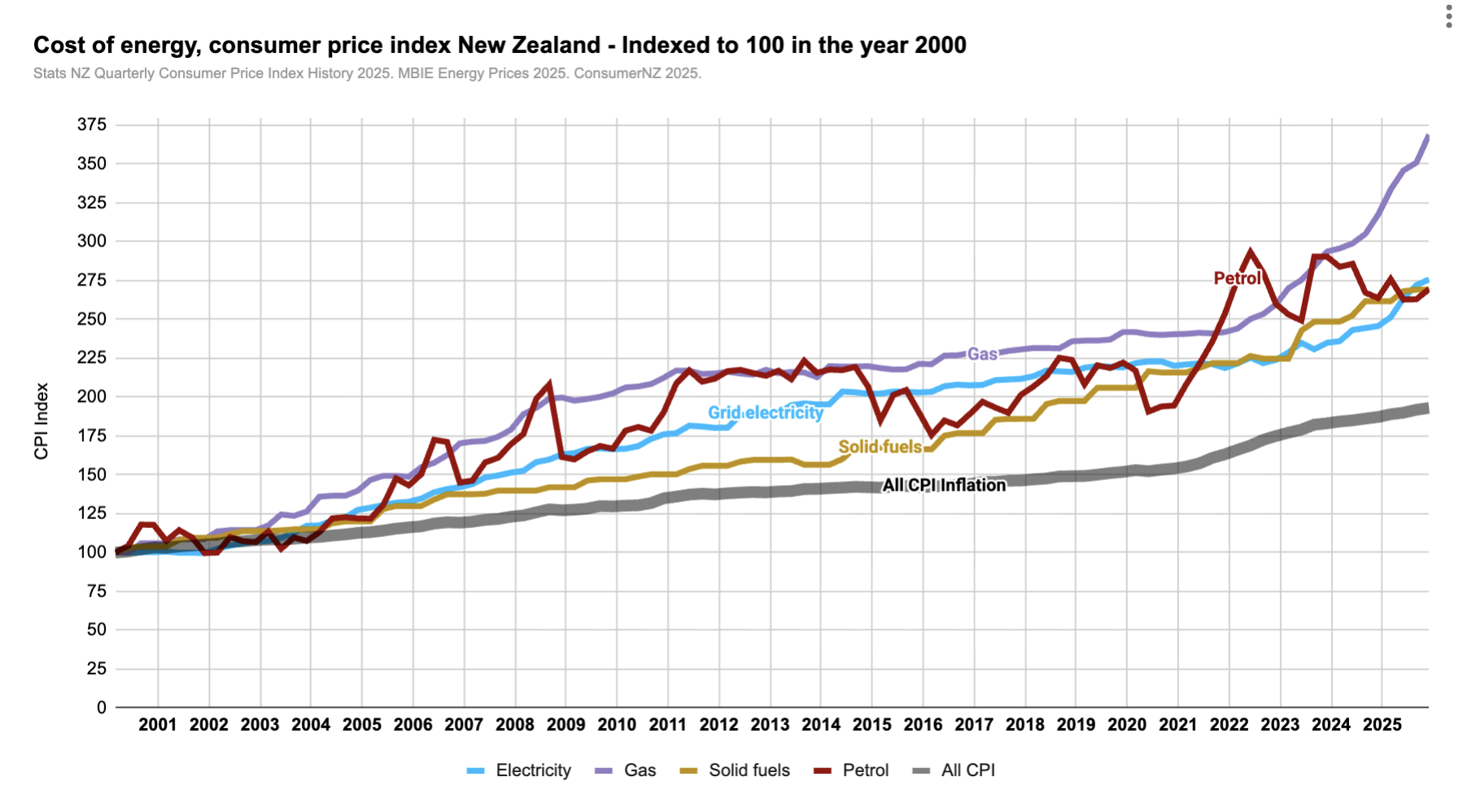
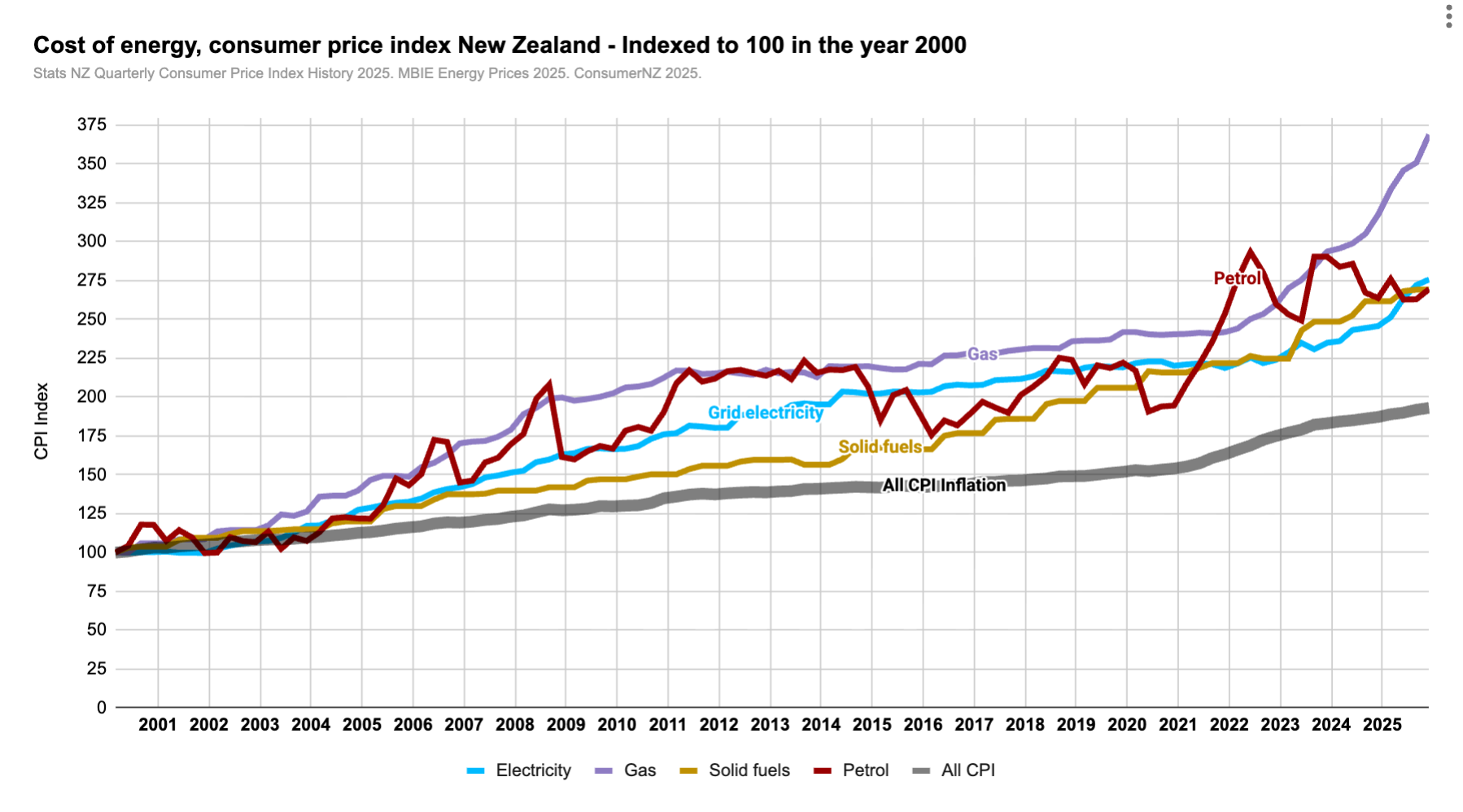
The cost of electricity has gone up at above the rate of inflation for the past two decades and there is no guarantee these savings will be passed on to customers, Casey says.
Casey says we need more dry year certainty. But all electricity users will pay a levy for this, not just gas users, which means it is adding a cost on households and hoping the price of electricity comes down.
“There are two parts to the solution: 1) We should instead be investing in much more solar on our homes, farms and businesses, building more renewables like wind and geothermal, and using our coal and diesel peakers only if required. And 2) we also need to make better use of our existing gas reserves and help businesses electrify.”
Diesel itself is more expensive than LNG, but the facility is significantly cheaper and the equipment can be on-sold or reused once it's not needed. Coal is not ideal but we already have the infrastructure in place to use that and an agreement from the gentailers to stockpile it.
Our analysis of existing EECA RETA reports suggests that 1/3 of use from big gas users could transition to electricity and save money without any Government financial support, while another 1/3 could likely transition for around what we will end up paying for the LNG terminal.
“This would mean New Zealand could get about an extra decade's use out of the gas we've got left. Let’s see those numbers, based on that two part solution, before we lock New Zealanders into higher energy prices. We cannot look at solutions in isolation. We need to look at what everyone can bring to it: consumers installing generation, big users getting off gas, and then what additional coverage is needed.”
The release says that “access to LNG will support many gas-dependent industries to consider their long-term energy needs and invest accordingly, by reducing the risk of supply disruptions and extreme price volatility”.
“This is the wrong signal and may delay a shift away from gas and keep energy costs high for businesses. Study after study has shown how many big, gas-dependent industries can get off gas, including those done through EECA's RETA programme. Additional time will only cost the New Zealand economy in many cases. This is a short-term fix with long-term ramifications.”
Casey says the government needs to check its evidence again before they sign Kiwis up to higher energy bills that we will be paying off for decades and emissions that we could avoid with a different approach.
It was also concerning to see that "other options, including renewable projects, were considered but not advanced due to a range of factors such as expected time to construct, feasibility of generating power reliably on the required scale, and effects on electricity market incentives."
"We will be asking to see the modelling and analysis, including of high renewable uptake," he says.
If this terminal does go ahead, Casey says the least the Government could do is to balance the ledger somewhat and also sign off on the Ratepayer Assistance Scheme, which would guarantee bill savings for New Zealand households by offering loans for solar, batteries, heat pumps and hot water heat pumps.
“That’s not $50 per household. That's around $1,000 saved per year for homes with solar or around $2,000 per year for homes with the whole suite, including loan repayments.”
The Minister says this decision will help “protect around 2000 jobs from the economic impact of rising energy prices and gas shortages”.
Casey says the jobs they are talking about aren't reliant on gas. They're reliant on those businesses existing, which many can do on electricity. The remaining businesses will have access to gas so they can buy time to transition.
It is inevitable there will be some job losses as the gas industry contracts, but electrification will also be a huge job creation opportunity and this decision misses that opportunity.
The release suggests there will be a 0.3 Mt decrease in net emissions once LNG is available in New Zealand, “driven by a less conservative approach to use of hydro-generation and lower coal use.”
“We should be comparing LNG to other energy sources. Not building the import terminal, shifting homes and businesses off gas, and trying to avoid burning coal and diesel with more renewables would have a much bigger impact on emissions. "
Casey says Australia is a good example of what’s possible when customers are considered part of the energy system: around 15% of the country’s electricity now comes from rooftops and around 200,000 homes have installed batteries as part of a subsidy scheme.
“In the last Australian election, voters had to choose between a dumb nuclear plan and a plan that could actually reduce bills by building more renewables and helping households pay for household batteries. It will be interesting to see what choice Kiwi voters are given in November.”
An ex-coal man embraces the sun; another New Zealand record is broken as two new solar farms come on stream; a new long range electric bus launches with cheap fares between Oamaru and Dunedin (and it wouldn't be economical with diesel); Ed Conway on how diesel is being used as a geopolitical weapon (and how our Powered From Within plan to electrify critical assets would reduce our reliance on fuel); will we be using cords to charge our cars in the future?; and oil is good (for salad).
Read moreDownloadCould solar panels and electric vehicles help New Zealand households save thousands on energy? Rewiring Aotearoa’s Mike Casey joins The Front Page to explain the potential savings from electrification, the upfront costs stopping people from making the switch, and how cheaper finance could help. Plus, would breaking up the big power companies lower bills, does New Zealand need an LNG terminal, and could we one day buy electricity directly from our neighbours?
Read moreDownloadA collection of our most influential leaders joined the NZ Herald's Future of New Zealand Debate, including Contact Energy CEO Mike Fuge and Rewiring Aotearoa CEO Mike Casey.
Read moreDownload