Te Whakahiko i ngā Marae | the Electric Marae report


An ex-coal man embraces the sun; another New Zealand record is broken as two new solar farms come on stream; a new long range electric bus launches with cheap fares between Oamaru and Dunedin (and it wouldn't be economical with diesel); Ed Conway on how diesel is being used as a geopolitical weapon (and how our Powered From Within plan to electrify critical assets would reduce our reliance on fuel); will we be using cords to charge our cars in the future?; and oil is good (for salad).

Ray of light
Coal is basically stored sunlight. Solar panels just speed the process up. And ex-coal man Don Elder has recognised that.
Think Solar installed a system at his place in Wānaka and Elder also featured in a great Stuff story from Nikki Macdonald about the rise of solar in Central Otago.
As the story went:
Thirteen years ago, Don Elder was the boss of government coalmining company Solid Energy. Now he's sitting in the Wanaka sun soaking in the same rays powering his house.
Elder argues Solid Energy's early forays into solar faltered because it was too expensive and niche. But when he did a back-of-the-envelope estimate of the cost of building his new house with solar panels and a battery, versus rising electricity costs, he quickly worked out the economics had changed.
He got a zero-interest loan and spent more than $50,000 putting in 34 panels and two batteries as part of the build. Ten months on, he's already saved $7400.
So then he got a bigger envelope and sketched out some bigger sums. What if Queenstown, for example, put in more solar to generate its own power, instead of investing $134m-$225m to upgrade a transmission line that still needs more energy to be generated elsewhere?
"The more electricity we generate where it's needed, the less we need distribution and transmission systems and far-off mega-solar farms and wind farms to do it."
That’s something we can agree on.
The big bright
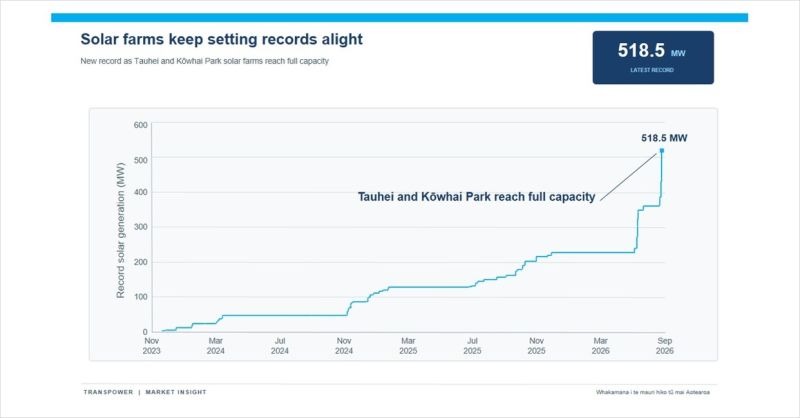
Rooftop solar is growing rapidly. So are the big solar farms and, as Transpower showed, New Zealand reached another solar record recently.
Solar generation reached a new high of 518.5 MW on 24 September, nearly 153 MW above the record we posted about just over a month ago.
The latest jump follows Harmony Energy’s 150 MW Tauhei Solar Farm and Lightsource bp’s 150 MW Kōwhai Park Solar Farm reaching full capacity with support from our generation commissioning teams.
The graph shows just how quickly solar generation has grown. The record has risen from around 226 MW at the end of July to more than 500 MW in less than two months.
Go long
The Otago Regional Council has launched a new daily Oamaru to Dunedin bus, it’s fully electric and the introductory fare is just $2.50. A route like this would be uneconomical with diesel, but long range EV buses make it possible.
In Dunedin, new additions to the fleet mean that 77% of the buses are now electric. The full bus fleet is expected to be electric by 2028.
As we always say, use your legs if you can, jump on an electric bus or train if it works and if you need a car, make it electric.
Diesel wars
Ed Conway does excellent work explaining the modern economy, and he’s gone into great detail on the current diesel situation.
As he writes:
On the surface, it probably seems desperately odd that, all of a sudden, everyone is quite so obsessed with diesel. How is it that a type of fuel (not even the most important fuel for UK or American cars, for heaven’s sake) has become so significant that it’s at the heart of a geopolitical battle - with G7 leaders including Emmanuel Macron holding an emergency meeting, mostly about diesel?
The short answer is that politicians on both sides of the Atlantic are waking up to two very important home truths. The first is that energy matters. The second is that while once upon a time we lived in a world where the economic determined the geopolitics, the world of 2026 is one in which geopolitics is driving the economics. Diesel just so happens to find itself at the heart of these two forces.
One of the more interesting graphs is the correlation between diesel prices and the chances of a Democratic victory in the senate.
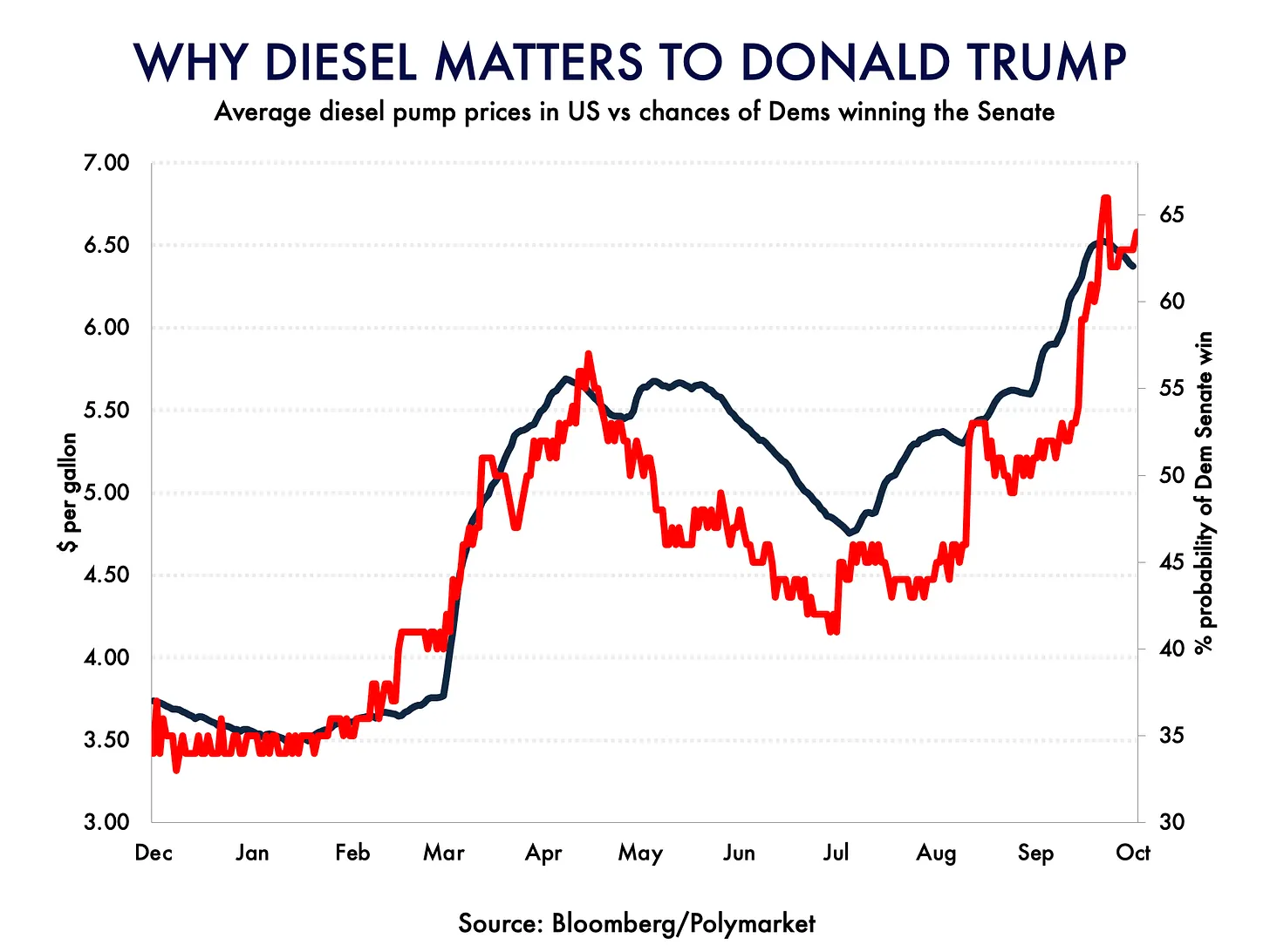
Fuel prices are also an issue for our politicians. It’s not quite the same for us, because the Government tends to blame outside forces, whereas Trump is directly responsible for what's unfolding and is now feeling the effects. But there are ways we can reduce that reliance and many countries are going down that path.
Remarkably, the price of petrol in the USA is about $2/L at the moment and people are up in arms. Yet more evidence, if any were needed, that at $3.50/litre we should be trying to run our economy on New Zealand-made energy.
That could start with the Government and the electrification of our essential services. See our Powered from Within plan here.

Cutting the cords
From a team member in Slack: “Controversial opinion: wired charging won’t exist in 20 years.”
Wireless charging sounds good ion theory. But there are lots of issues. As this video details, Porsche has managed to solve a number of them.
You don’t make friends with salad
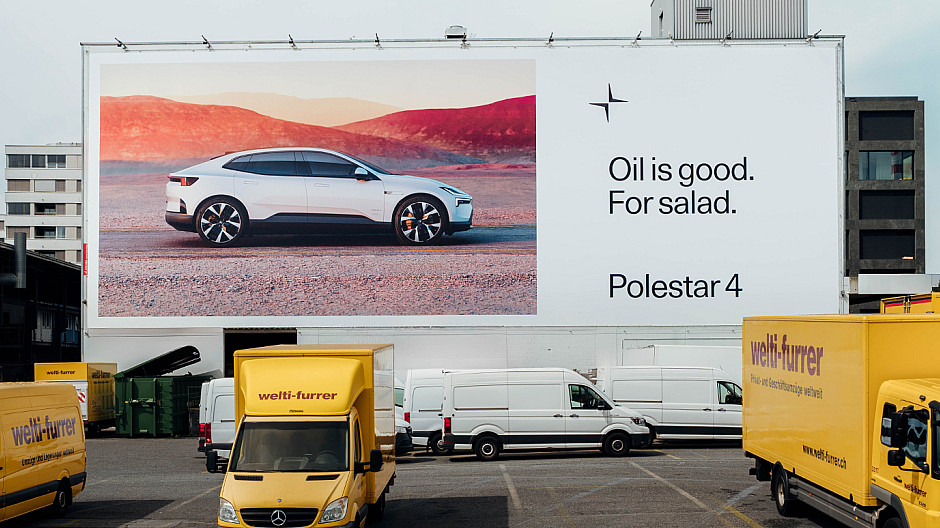
Oil has taken us a long way. But Polestar's new campaign reckons we should save it for salad.
Rewiring Aotearoa's Matt Newman: "For marae, however, there aren't a huge amount of places where they could turn to unless they're engaging professional services around electrification. We know that that hasn't often been in the funding piece either. You know, funders will happily fund upgrades for marae, but they won't fund the due diligence that's necessary to support marae in making really good decisions for the long-term future."
Read moreDownloadRewiring Aotearoa CEO Mike Casey told Andrew Dickens plug-in solar is a simple process, which many countries including the US, UK, and places across Europe have made the most of. Labour's policy is similar but says changes to enable plug-in solar would be within 12 months of a government it leads taking office.
A shocking increase in the power bill for a marae that converted to solar energy has raised concerns about installers and regulation. The monthly power bill for Taranaki's Owae Marae has rocked to as much as $2000 a month, up from about $400. That's despite installing a solar system on its wharekai to save money. Matt Newman from Rewiring Aotearoa spoke to Lisa Owen about this issue and our new Electric Marae report.

