




Fixing the Finance
In our policy manifesto, Rewiring Aotearoa ranked long-term, low-interest finance for electric upgrades as the most effective option out of 60 policy ideas and said it would speed up adoption rates, lower bills and reduce emissions.
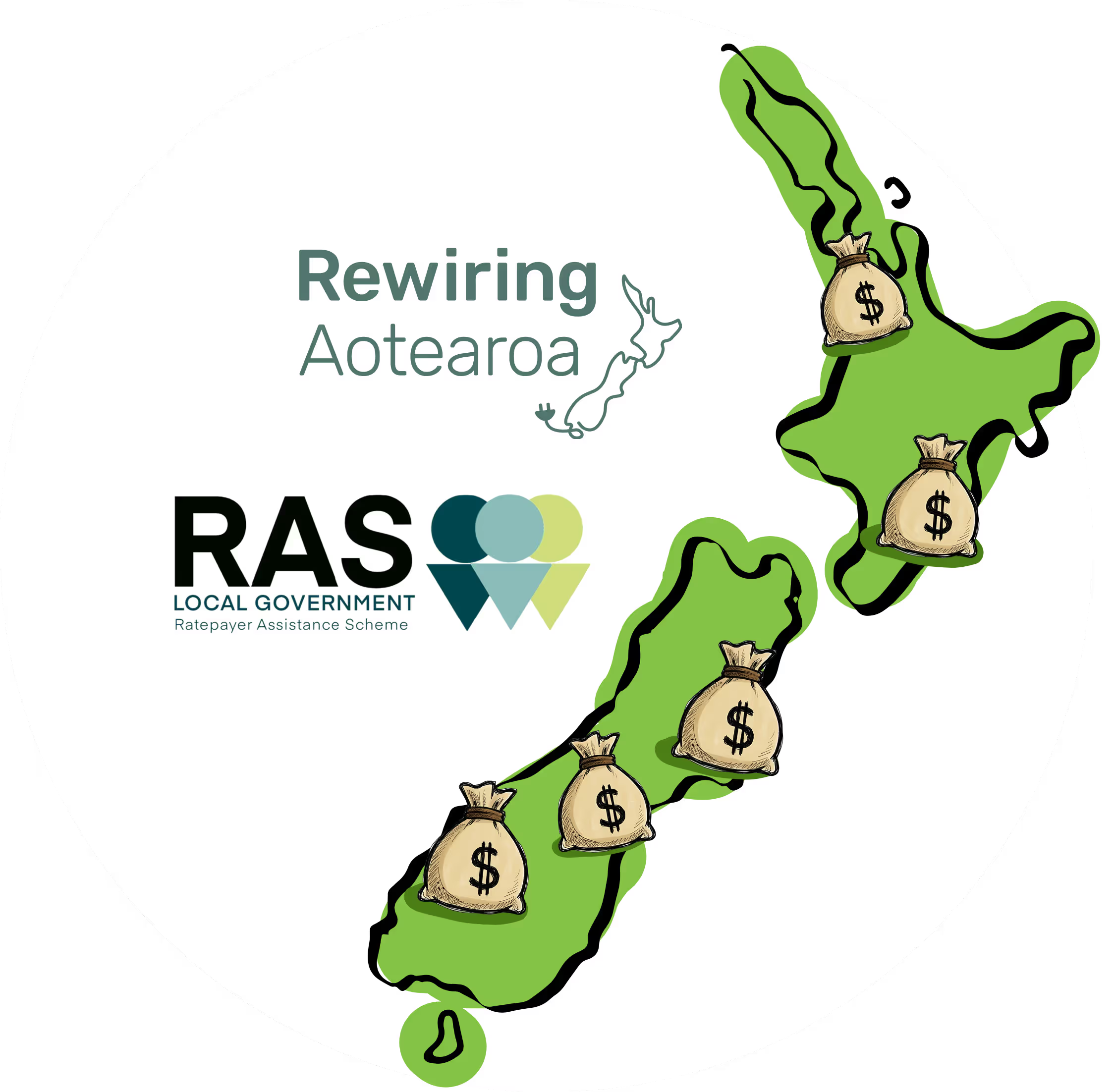
While the costs of solar, batteries and electric machines are coming down, higher upfront costs remain the biggest barrier. The Ratepayer Assistance Scheme (RAS) offers a ladder to get over that hurdle and can quickly provide relief from the high cost of living. Now we need your help to get the attention of our politicians so they can approve it quickly.
Rewiring Aotearoa, with the support of EECA, has been working alongside the local government sector to develop the RAS and offer accessible, affordable energy loans to every rateable property with flexible payment options. We’re confident the RAS can be enabled quickly and it could be up and running by the middle of 2026.
While the costs of solar, batteries and electric machines are coming down, higher upfront costs remain the biggest barrier. The Ratepayer Assistance Scheme (RAS) offers a ladder to get over that hurdle and can quickly provide relief from the high cost of living. Now we need your help to get the attention of our politicians so they can approve it quickly.
Rewiring Aotearoa, with the support of EECA, has been working alongside the local government sector to develop the RAS and offer accessible, affordable energy loans to every rateable property with flexible payment options. We’re confident the RAS can be enabled quickly and it could be up and running by the middle of 2026.
The numbers stack up - even with very conservative estimates of uptake - but the Government has a lot on its plate right now.
We need to make sure a wide range of important organisations, businesses and individuals make it clear to the Government that this needs to be prioritised very early in 2026, otherwise it is unlikely to get over the line in time. By signing onto this letter calling for the Government to prioritise the RAS, you’ll be helping to unlock the significant cost of living relief and wider benefits for ratepayers as soon as possible.
You can back the RAS and save New Zealanders money, improve our energy security and resilience, lower emissions and ensure households and businesses play a bigger role in our energy system.
We need to make sure a wide range of important organisations, businesses and individuals make it clear to the Government that this needs to be prioritised very early in 2026, otherwise it is unlikely to get over the line in time. By signing onto this letter calling for the Government to prioritise the RAS, you’ll be helping to unlock the significant cost of living relief and wider benefits for ratepayers as soon as possible.
You can back the RAS and save New Zealanders money, improve our energy security and resilience, lower emissions and ensure households and businesses play a bigger role in our energy system.
Oops! Something went wrong while submitting the form.
Thank you! Your submission has been received!
Oops! Something went wrong while submitting the form.

To the Mayors, Chairs and Councillors interested in expressing your support for the RAS. By signing on to this open letter, you are expressing your in principle support as an elected member for the RAS and encouraging the Government to prioritise its side of things in the first half of 2026.
While not committing your council, the signal you are sending Government is critical to the RAS progressing next year. In early 2026 there will likely be a Road Show seeking to inform council members about the RAS and encourage an active role for individual councils. This will lead to councils formally considering offering RAS products to their ratepayers and, for those who choose, taking a shareholding in the RAS.
While not committing your council, the signal you are sending Government is critical to the RAS progressing next year. In early 2026 there will likely be a Road Show seeking to inform council members about the RAS and encourage an active role for individual councils. This will lead to councils formally considering offering RAS products to their ratepayers and, for those who choose, taking a shareholding in the RAS.
Why do we need this scheme? And what will it look like?

Rising energy bills
More than two-thirds of homeowners are worried about their electricity and gas bills. 140,000 households took out loans to cover electricity costs last year, with 38,000 households disconnected due to unpaid bills.
More than two-thirds of homeowners are worried about their electricity and gas bills. 140,000 households took out loans to cover electricity costs last year, with 38,000 households disconnected due to unpaid bills.
Existing approaches are not cutting it
Swapping retailers to save 5% when bills have gone up 20% barely helps, while energy retailers recommend households go without to lower bills (shorter showers, get another blanket). Various Government energy payments and grants are meeting less and less of households’ energy bills and existing bank green loans have limited eligibility and therefore limited impact.
Swapping retailers to save 5% when bills have gone up 20% barely helps, while energy retailers recommend households go without to lower bills (shorter showers, get another blanket). Various Government energy payments and grants are meeting less and less of households’ energy bills and existing bank green loans have limited eligibility and therefore limited impact.

Energy IMPACT loans
Ratepayers can choose to install solar, home batteries, hot water heat pumps, and/or heat pumps, at the very attractive RAS interest rate and at terms that largely match the expected lifetime of the upgrades.
Ratepayers can choose to install solar, home batteries, hot water heat pumps, and/or heat pumps, at the very attractive RAS interest rate and at terms that largely match the expected lifetime of the upgrades.

Immediate energy bill relief
Rewiring Aotearoa estimates the average household installing a decent size solar system can save around $1,000 a year, and with solar, batteries and upgrading to space and hot water heat pumps will save well in excess $2,000 a year under the RAS. Including all loan repayment and financing costs. Wider energy and sustainability benefits will follow.
Rewiring Aotearoa estimates the average household installing a decent size solar system can save around $1,000 a year, and with solar, batteries and upgrading to space and hot water heat pumps will save well in excess $2,000 a year under the RAS. Including all loan repayment and financing costs. Wider energy and sustainability benefits will follow.
Support us
Your donations help our team keep the momentum of rapidly electrifying Aotearoa New Zealand within our key focus areas of community, government and industry.
.avif)
.avif)
.avif)

Our Newsletter
Stay informed about our work and discover various ways to contribute to enabling rapid electrification. Join our vibrant community of like-minded individuals.
Check out our privacy policy here
Thank you! Your submission has been received!
Oops! Something went wrong while submitting the form.
Contact us
hello@rewiring.nz

Facebook
Instagram
LinkedIn
.avif)
X | Twitter