Don't listen to Old Man Gas. Ditch LNG. Support New Zealand-made energy!

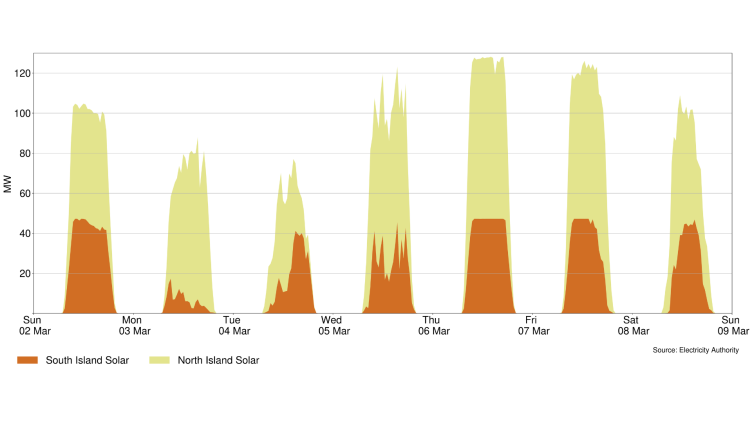

Newsroom's Marc Daalder talks to Rewiring research lead Josh Ellison about our growing solar uptake and the reasons for regional variations. As he writes: "One in 27 homes now has rooftop solar, with more than 73,000 registered systems in the latest data from the Electricity Authority, which runs to the end of 2025. That represents a 15 percent increase from 2024 and follows declining solar install prices."
Ellison says affluence was one of the key drivers in solar uptake.
“That highlights the gap between how solar should be rolling out and how it is currently rolling out, which is that people who need the solar savings most are the people who don’t have the spare income to spend $20,000 on solar panels up front,” he said.
“Someone spending $20,000 on solar panels up front might save $60,000 over the life of those panels. Generally speaking, with all costs included – including finance – the savings are about $1000 a year for an average home across the country. People who need the $1000 a year of savings the most are lower-income homes, but ultimately it’s harder for them to make the upfront purchase.”
If the energy system optimised for lower household bills for consumers, the market would be incentivising home solar and batteries. Instead, the market is focused on wholesale power prices and profits for the gentailers, he said.
“If that was the optimisation that NZ Inc was going for, our energy companies would be installing solar and batteries en masse across households, but our regulatory system design creates a different incentive to that, which is why that’s not happening. And of course, it is also contributing to how much bills are rising.”
Political Power has gone local! Dr Nick Smith, mayor of Nelson and ex-National Party minister, is an early adopter when it comes to electric machines but, through his efforts with the council and his close involvement with the Ratepayer Assistance Scheme, he's also embracing one of Rewiring's core mantras: once you've electrified your own life, electrify someone else's life, too.
Read moreDownloadWhether it's the growing number of electric buses, new electric trains for the lower North Island and City Rail Link, or new electric ferries, we love seeing more electric transport options in our big cities. It's also good to see some of our smaller cities like Palmerston North, Timaru and Nelson going electric and, as is almost always the case, the drivers reckon it's better on electrons. At the Electrify Nelson expo, we spoke with one driver Lee about the city's electric buses. And he definitely wouldn't go back to diesel.
Read moreDownload