Don't listen to Old Man Gas. Ditch LNG. Support New Zealand-made energy!

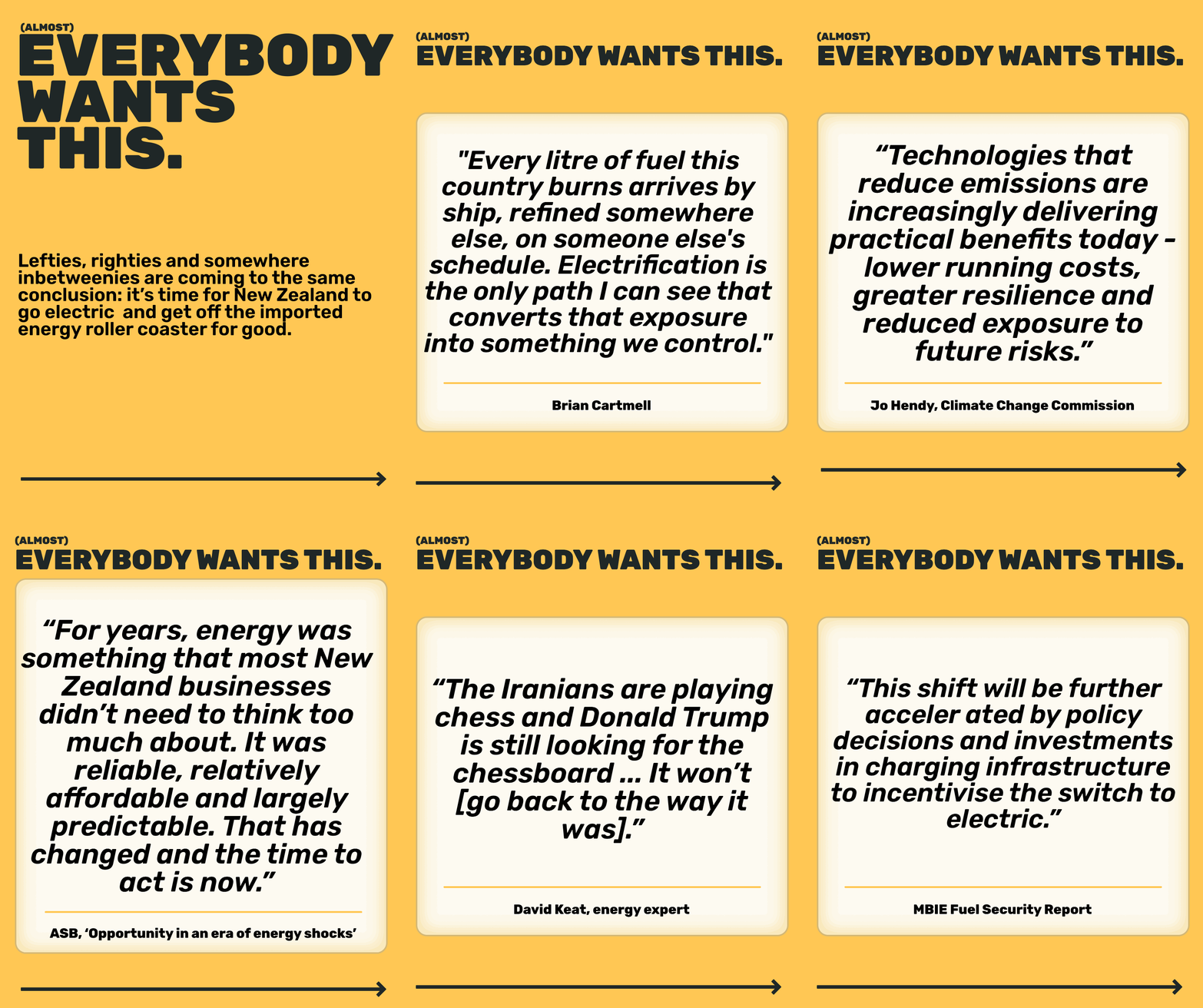

Right across the political spectrum, people are realising that more New Zealand-made energy running through more efficient electric machines makes sense for the country. Going electric wins on economics, it wins on energy security and it wins on emissions. And that means everyone wins when we get off the imported energy roller coaster. We're already heading in that direction. But we need to, as Sir Peter Blake almost said, make the electric boat go faster.
“The status quo’s time has passed.” Cameron Bagrie, independent economist
"Every litre of fuel this country burns arrives by ship, refined somewhere else, on someone else's schedule. Electrification is the only path I can see that converts that exposure into something we actually control." Brian Cartmell, entrepreneur.
“New Zealand-made energy is a critical driver of our economic prosperity. It’s so much more efficient than buying energy from the other side of the world, and way less risky, too. There are no wars getting in the way of energy made here. The Cook Strait cable is still open and the sun is still shining.” Anna Mowbray, entrepreneuer
“In a way, energy security is the new climate change ... We need to be talking about getting electrification of the whole economy to more like 70%, 75%. It’s doable. There’s massive investment required. But there’s massive growth opportunity in that investment and, in the process, a hugely reduced reliance on fossil fuels and much greater energy independence.” Pattrick Smellie, BusinessDesk founder.
“Technologies that reduce emissions are increasingly delivering practical benefits today - lower running costs, greater resilience and reduced exposure to future risks.” Jo Hendy, Climate Change Commission.
“For years, energy was something that most New Zealand businesses didn’t need to think too much about. It was reliable, relatively affordable and largely predictable. That has changed and the time to act is now.” ASB, ‘Opportunity in an era of energy shocks’
“Overall, we expect the electrification of light vehicles and improved fuel efficiency to lead to a significant reduction in petrol demand. This shift will be further accelerated by policy decisions and investments in charging infrastructure to incentivise the switch to electric. ... We concluded that the most cost-effective strategies for enhancing fuel resilience is accelerating the transition to zero-emission vehicles, adding trucking capacity and increasing diesel storage. These measures provide the highest resilience benefits for the cost.” MBIE, fuel security report.
“By June, New Zealand’s monthly bill for fossil fuel imports hit $1.5 billion per month, double its level from a year earlier. But it doesn’t have to be that way.” Bernard Hickey, The Kākā

“Electrification is the next operating system of the New Zealand economy. It will power growth, productivity and resilience, but only if the workforce exists to deliver it safely and at pace.” Alexandra Vranyac-Wheeler, Master Electricians New Zealand CEO.
“... As long as we’re importing diesel, we’re a chew toy in the jaws of slobbering superpowers. And we need to get out. We need to electrify. Now. En masse.” Verity Johnson, Stuff.
“Voters should judge parties less on slogans than on whether their policies can achieve the difficult but essential task of providing abundant, affordable and reliable energy while continuing to reduce emissions. That is one of the defining economic challenges facing New Zealand.” The Post editorial.
“We need to accelerate new supply, unlock the regulatory constraints faced by our transmission network, and further encourage electrification.” Alan McDonald, Employers’ and Manufacturers’ Association.
.png)
“The smartest response is not to hope for cheaper petrol. It's to reduce our dependence on it.” Danusia Wypych, ChargeNet.
“If we take major parties at face value, the future of New Zealand is solar. Yesterday’s climate policy is today’s cost of living intervention.” Lyric Waiwiri-Smith, The Spinoff
Political Power has gone local! Dr Nick Smith, mayor of Nelson and ex-National Party minister, is an early adopter when it comes to electric machines but, through his efforts with the council and his close involvement with the Ratepayer Assistance Scheme, he's also embracing one of Rewiring's core mantras: once you've electrified your own life, electrify someone else's life, too.
Read moreDownloadWhether it's the growing number of electric buses, new electric trains for the lower North Island and City Rail Link, or new electric ferries, we love seeing more electric transport options in our big cities. It's also good to see some of our smaller cities like Palmerston North, Timaru and Nelson going electric and, as is almost always the case, the drivers reckon it's better on electrons. At the Electrify Nelson expo, we spoke with one driver Lee about the city's electric buses. And he definitely wouldn't go back to diesel.
Read moreDownload