The 'Electric Election': energy policies, side by side

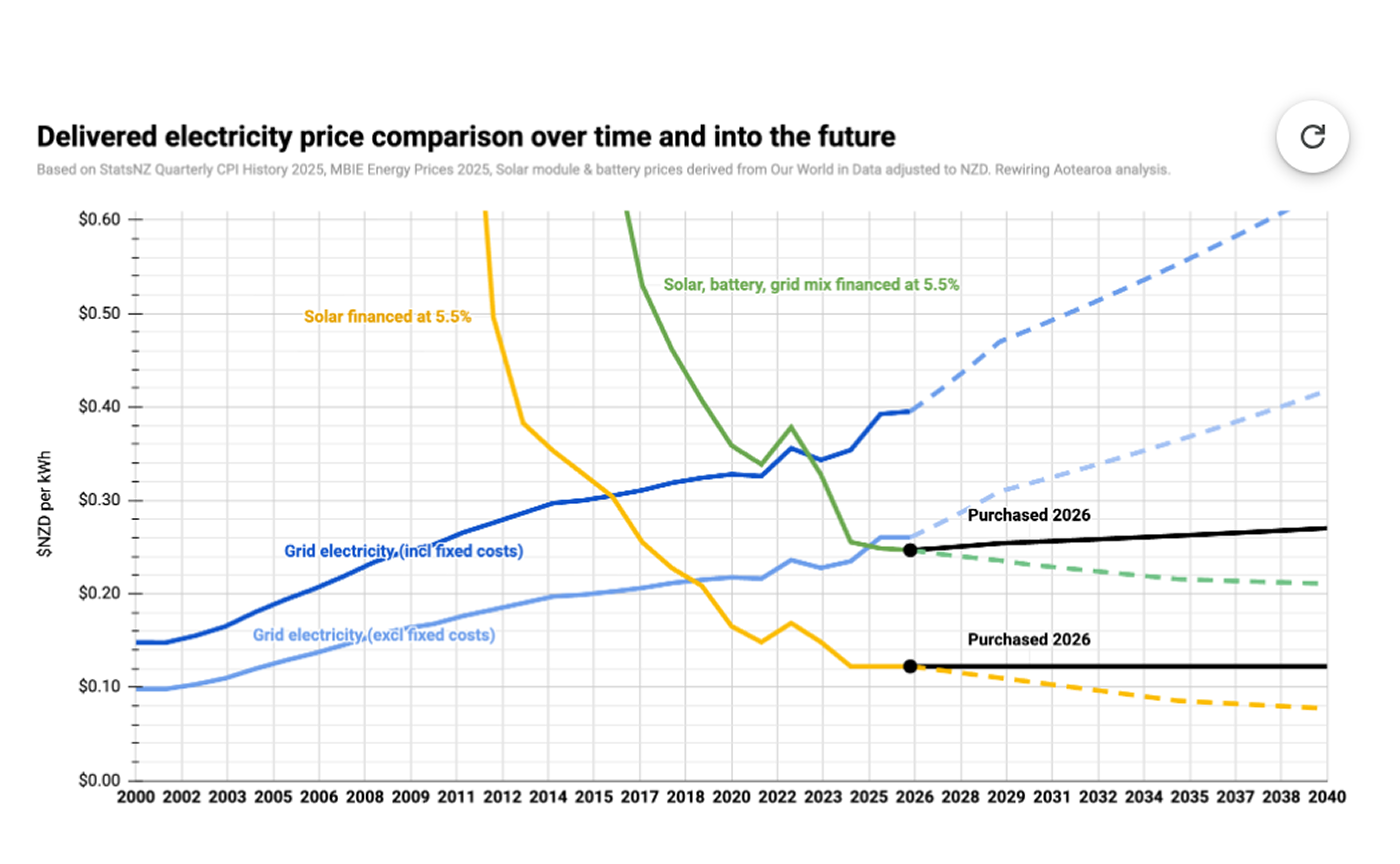

As electrification blossoms and homes save money by getting off gas, we need to prepare for more electricity use. That doesn't necessarily mean more expensive upgrades to poles and wires paid for by customers on their bills. It could also be lines companies innovating and ensuring that they make the most of new technology like solar, batteries and two-way charging that can provide generation and reduce the pressure at peak times.
Wellington homeowner Mike Anthony has electrified. “We came off gas cooking about a year and a bit ago. We came off a gas ducted central heating at the beginning of August. And we've actually just finally got off gas completely by replacing our infinity hot water with an electric hot water heat pump at the beginning of this month,” he said.
The family’s household energy bill in August was 36% lower than in August last year, and he expected to save in the region of $1000 to $2000 in the first full year.Karl also said his household was coming off gas.“We are just the kind of home Greg [Skelton] is worried about,” he said.The Karl household had put in solar with a battery, which meant it could operate and charge its EV without adding to the city’s peak demand, reducing the need for investment in the city’s power lines.Sam Cook, owner of Wiretec Electrical in Lower Hutt, said 80% to 90% of solar systems his company installs have batteries.
'Twas the night before Chris-mas, and all through the house, all the voters were stirring, the pundits showing their nous … the election will soon be over, but the energy crisis won't, so we'll be there to pester whoever is in power about the need to run more of the economy on New Zealand-made energy; can Ethiopia's aggressive push for EVs work and how does New Zealand compare in terms of adoption rates?; a two-way charging trial from Genesis shows promise in Auckland, but there's still a way to go before it's mainstream; small electric vehicles are often overlooked when it comes to electrifying transport, but it's hard to miss this weird French one; a solar-powered cafe (and some electric coffee); and we endorse the political vandalism of Keith of All Trades.
Read moreDownloadPoliticians are being urged to adopt stronger electric vehicle incentives ahead of the election. Climate and energy advocacy group Rewiring Aotearoa is arguing that EVs are one of the most effective long-term solutions for rising transport and energy costs. They're promoting an EV Salary Boost proposal, which would allow workers to access EVs through pre-tax salary arrangements – similarly to already existing schemes in the UK and Australia. Policy and Government Relations Spokesperson Ngaio Neumegen told Kerre Woodham that even with the rising cost of power, it's still cheaper to run an EV than a car running on imported fuel.
A proposal that would let New Zealanders lease an electric car using their before-tax pay has not won a commitment from either National or Labour, with the 7 November election days away. Under the EV Salary Boost, put forward by Rewiring Aotearoa and Drive Electric, an employee would lease a new or used EV for three to five years. The payments would come out of their pay before tax, lowering the cost of running the car. The idea is based on Australia’s novated leasing system, though the groups say they are not proposing a direct copy.
Read moreDownload
