Don't listen to Old Man Gas. Ditch LNG. Support New Zealand-made energy!

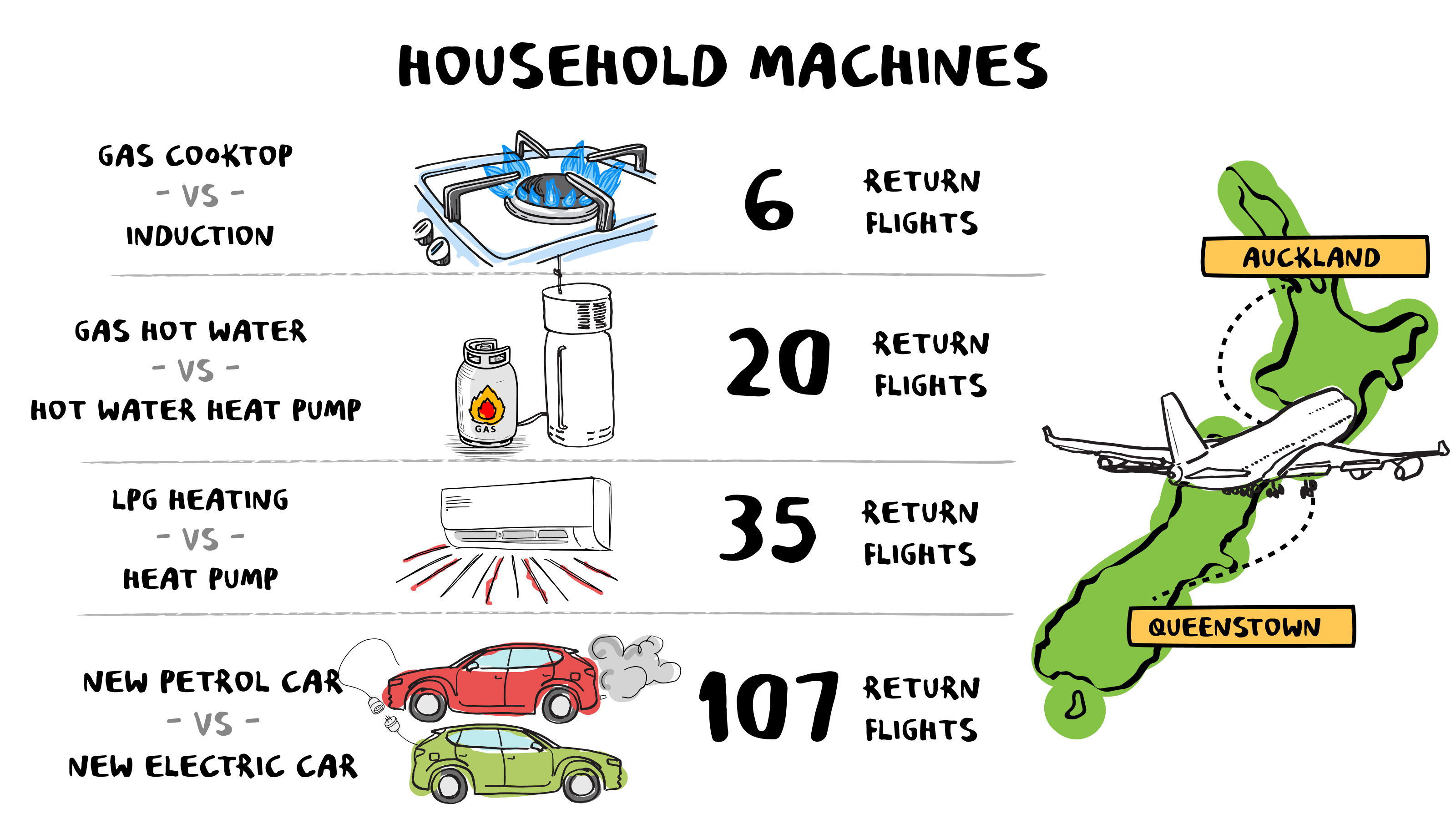

We should definitely be moving away from fossil fuel machines at the big end of town, and the LNG terminal has united almost everyone in opposition on both economic and environmental grounds. But raging against your fossil fuel machines at home and swapping them for better-performing electric options is one of the best ways to reduce your own household emissions.
When Mike Casey was setting up his cherry orchard near Cromwell, he thought all the trees that were being planted would suck up a lot of carbon. That did help, but once he crunched the numbers, he realised he wasn't focusing on the right thing. Instead of capturing carbon with trees, he needed to use machines that just didn't emit it.
That decision to shift way from expensive foreign molecules and instead run his business with cheaper local electrons and electric machines saves him tens of thousands of dollars each year on energy and has slashed the emissions on farm to almost nothing.
Many people still think recycling is the best response to climate change. Others who are more clued up on the science might avoid unnecessary flights, eat less meat or dairy, or choose to travel by foot, bike or public transport. We think a big part of the solution is for more people to electrify their machines, and many New Zealanders are not aware that the biggest emission savings in their own life are often hiding in plain sight - in their driveways, in their hot water cupboards, and in their kitchens.
To illustrate this, we decided to compare those machines with the emissions from something people can relate to: return flights between Queenstown and Auckland. And, over a lifetime, those numbers add up.
.jpg)
Old Man Gas will be featuring in a few newspapers and billboards this week discussing the proposed LNG import terminal. Not surprisingly, he has his justifications, but they don't stack up. It is a multi-billion dollar tax on Kiwis that many experts and sector players think is unnecessary.
Read moreDownload"The sentiment around making the electricity market fairer and cheaper for customers is great, but there's still something missing." That's Rewiring Aotearoa CEO Mike Casey's summary of Act's energy policy announcement today.
Read moreDownload