The 'Electric Election': energy policies, side by side

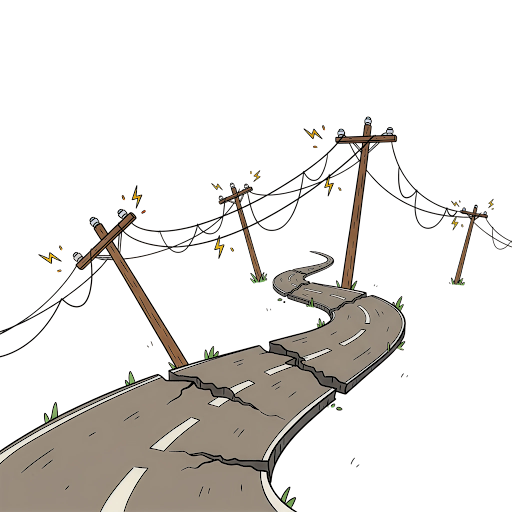

When many of the poles and wires went down in Southland after the recent storms, a number of homes, farms and businesses with solar and batteries were able to keep running. And TVNZ's Jared McCulloch spoke to the owners of Fairbank Farms about their experience.
While many farmers in the region were scrambling for generators, sharing with neighbours, or having to dump milk, co-owner Chris Stewart says they managed pretty well and got all their milk out the gate.
As fellow co-owner Michael Farmer says: "It took a bit of stress away and I probably didn't realise how stressed a lot of other people were during the time."
This is something we hear a lot and those who are set up for it often don't even notice when the grid power stops flowing.
With a sizeable payout coming to Fonterra farmers from the sale of its consumer brands soon, Stewart says it could be a good time to do what they did and invest in some 'free' resilience. The $200k system is expected to pay itself off in five to seven years.
Human nature suggests that many of us sort out our emergency kit right after an emergency and Rewiring Aotearoa CEO Mike Casey thinks this storm and the ensuing chaos could be a big driver of uptake among farmers. Social proof also plays a role.
"Dairy farmers listen to dairy farmers," he says, so being able to cope during such a trying time will do a lot to convince others.
Federated Farmers wants to see more members setting themselves up to run off the grid and, as well as resilience, it's also about animal welfare as the cows need to be milked.
There will be more storms. There will be more earthquakes. There will be more grid outages. New Zealand farmers have always prided themselves on self-sufficiency and more and more of them are finding that's what solar and batteries can offer.
Watch the whole segment on One News (from 15.23) ⚡
'Twas the night before Chris-mas, and all through the house, all the voters were stirring, the pundits showing their nous … the election will soon be over, but the energy crisis won't, so we'll be there to pester whoever is in power about the need to run more of the economy on New Zealand-made energy; can Ethiopia's aggressive push for EVs work and how does New Zealand compare in terms of adoption rates?; a two-way charging trial from Genesis shows promise in Auckland, but there's still a way to go before it's mainstream; small electric vehicles are often overlooked when it comes to electrifying transport, but it's hard to miss this weird French one; a solar-powered cafe (and some electric coffee); and we endorse the political vandalism of Keith of All Trades.
Read moreDownloadPoliticians are being urged to adopt stronger electric vehicle incentives ahead of the election. Climate and energy advocacy group Rewiring Aotearoa is arguing that EVs are one of the most effective long-term solutions for rising transport and energy costs. They're promoting an EV Salary Boost proposal, which would allow workers to access EVs through pre-tax salary arrangements – similarly to already existing schemes in the UK and Australia. Policy and Government Relations Spokesperson Ngaio Neumegen told Kerre Woodham that even with the rising cost of power, it's still cheaper to run an EV than a car running on imported fuel.
A proposal that would let New Zealanders lease an electric car using their before-tax pay has not won a commitment from either National or Labour, with the 7 November election days away. Under the EV Salary Boost, put forward by Rewiring Aotearoa and Drive Electric, an employee would lease a new or used EV for three to five years. The payments would come out of their pay before tax, lowering the cost of running the car. The idea is based on Australia’s novated leasing system, though the groups say they are not proposing a direct copy.
Read moreDownload