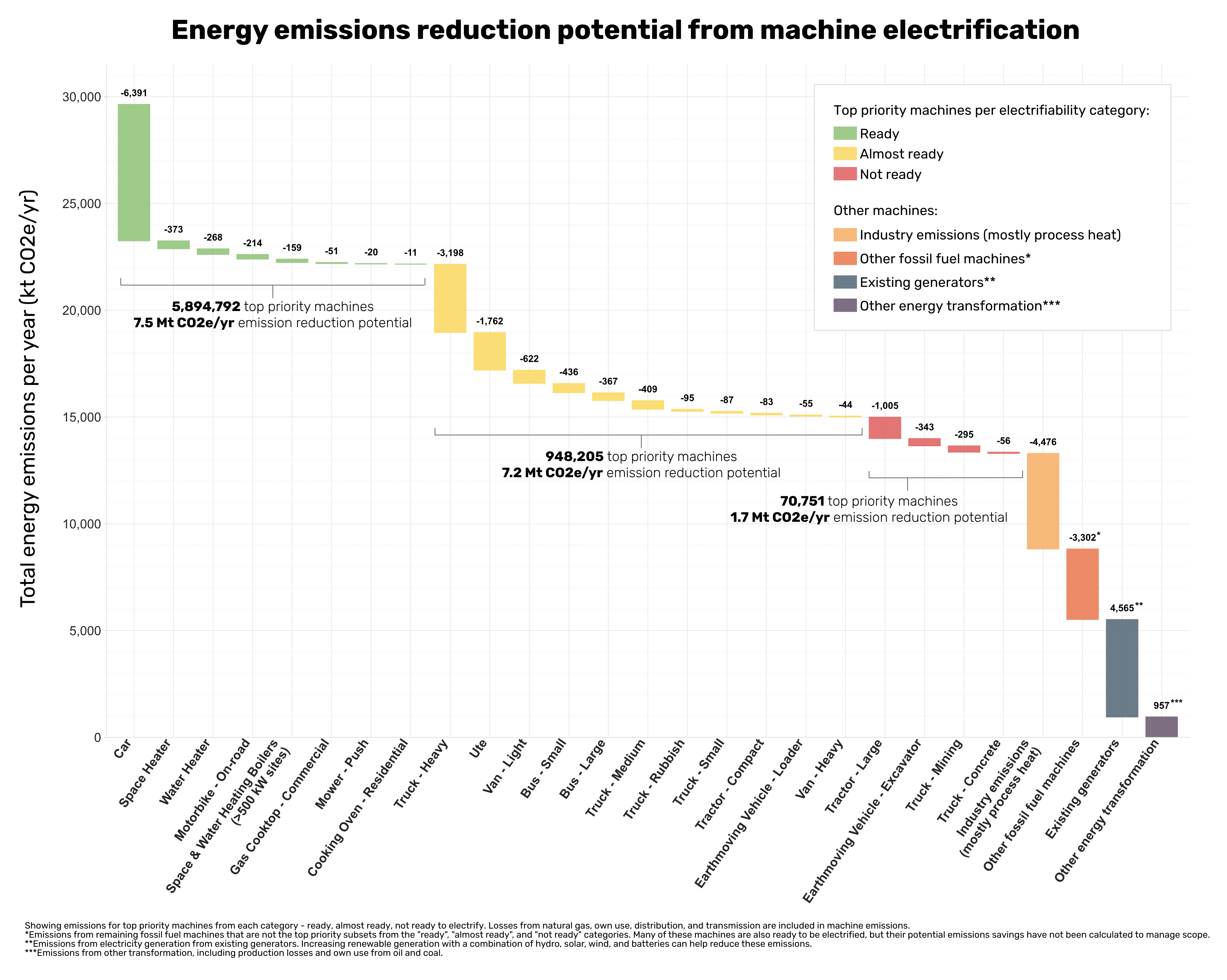
Rather than relying on unproven technologies like carbon capture or unreliable offsets in the form of overseas trees, upgrading our small fossil fuel machines to electric equivalents and running them off renewable electricity is one of the best ways to reach our climate targets. We've been saying it for a while and the Climate Change Commission agrees, with an RNZ story saying "there are big opportunities in renewable energy and clean farming that could cut household bills, help businesses - and get the country back on track".
The Climate Change Commission released its update on how the country is tracking and, while emissions are trending down, there is a risk we will not meet our 2050 target. Jo Hendy, the commission's chief executive, said: "If we do this right we have a lot of opportunity for lowering energy costs to households, for example solar and wind are the lowest cost source of electricity right now, we have the opportunity to create new jobs in new clean industries and really protect our local businesses access to market."
Around 25% of New Zealand's gross emissions come from small fossil fuel machines. These are, as Rewiring Aotearoa CEO Mike Casey says, the low-hanging cherries of emissions reduction and he has proven on Forest Lodge Orchard that going electric is not only good for the environment, it's also good business. More farmers are recognising that energy is one area they can reduce costs without compromising on anything.
Financial commentator Frances Cook uses her own story to show that that an investment in solar and an EV significantly outperforms the stock market and fellow number cruncher Nadine Higgins says that if you do it right, EVs are cheaper to run and own; EV sales have climbed to their highest level since 2022 and are closing in on 2023's numbers and Go Rentals has just invested $2.3 million in some new Tesla Model Y Premiums; the gap between energy costs of diesel vans and utes and electric vans and utes is absolutely massive; solar is also going off right now, with one installer in Otago 448% above their sales target in March; Lightforce has gone back to the Barretts with a new TV ad; Wellington mayor Andrew Little explains its electrification strategy and Hutt City Council shares data showing how its fleet has gone from dirty Toyotas to cleaner EVs; Shenzen in China has electrified its public transport and taxis and that's come with big benefits - and some challenges; and a very simple illustration of the LNG terminal.
Read moreDownloadAs Minister of energy, climate and local government, Simon Watts had a great opportunity to push the country towards cheaper, cleaner and more reliable New Zealand-made energy. And that’s why we laid down a challenge and gave him the ‘MegaWatts’ moniker last year. Rewiring Aotearoa CEO Mike Casey says he did some good things, like enabling more solar on farms, removing tax on solar exports, fixing onerous solar consenting requirements, putting pressure on the lines companies to pull up their socks, and getting the ball rolling on the Ratepayer Assistance Scheme. "But the LNG import terminal appears to have been a defining issue."
Read moreDownloadAfter ‘crunching the numbers’ and adding in new sources of ‘New Zealand-made energy’ to our equations, CEO Mike Casey has announced that Rewiring Aotearoa will be changing its name to Refuelling Aotearoa. There has been a huge amount of independently verified research showing electrification beats fossil fuels on economics, efficiency, emissions and energy security and that there is a huge opportunity for New Zealand to electrify, but the discovery of an infinite supply of snake oil in New Zealand has changed everything, he says.
Read moreDownload