Don't listen to Old Man Gas. Ditch LNG. Support New Zealand-made energy!

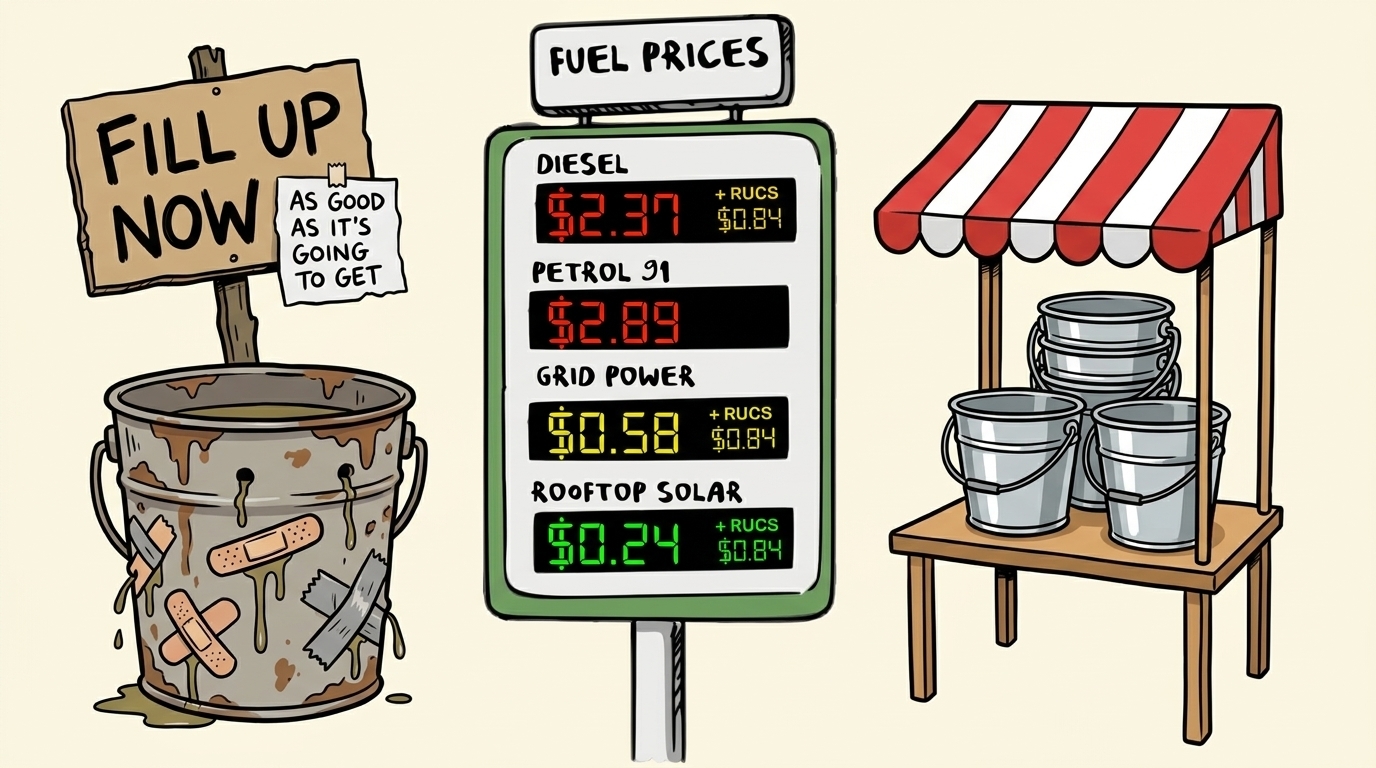

Every time the price of petrol shoots up, we see the same kind of advice: ‘Fill up now before it gets even higher’; ‘Shop around for cheaper fuel’; ‘Use your 6c off a litre coupons; ‘Change the way you drive and stretch your tank’. We’re mostly short-term creatures so these are all pretty normal responses to a price shock, but if you're looking to save money on fuel the best advice is to think longer term and remove yourself from the volatility of imported energy entirely.
Driving on electrons from the grid is the equivalent of about $0.60 per “litre” (excl RUCs), $0.40/L overnight, and $0.30/L from solar. And, over their lifetime, and depending on how you charge, EVs can be up to $20,000 cheaper than a petrol equivalent, including upfront costs.
As the price of fuel keeps rising, we see transport as the next big battleground of the 'electric election' and there's a real opportunity to roll out policies that speed up EV adoption and offer more cost of living relief to those who need it most.
An EV salary boost scheme could get nurses, teachers and essential workers into a new EV for $200 a week or less (including charging, tyres and maintenance).
Around 60% of all new cars are purchased by businesses and if those purchases shift to electric now, we would get more EVs into the second hand market, which is critical in bringing forward the ability of lower income households to benefit from the savings EVs offer. Accelerated depreciation and fringe benefit tax relief would help with that.
We also need to maintain the Clean Car Standard so our market does not become a dumping ground for high-emitting vehicles that may have a lower sticker price but will cost much more over time.
As RNZ reported, most New Zealanders are ‘tepid’ on the Government’s response to the fuel crisis. The Budget was mostly focused on fuel, not how we get off it, and our approach to enhancing energy security was mostly just adding more storage tanks (even though electrifying transport was ranked as the best option in a recent Government report).
Political Power has gone local! Dr Nick Smith, mayor of Nelson and ex-National Party minister, is an early adopter when it comes to electric machines but, through his efforts with the council and his close involvement with the Ratepayer Assistance Scheme, he's also embracing one of Rewiring's core mantras: once you've electrified your own life, electrify someone else's life, too.
Read moreDownloadWhether it's the growing number of electric buses, new electric trains for the lower North Island and City Rail Link, or new electric ferries, we love seeing more electric transport options in our big cities. It's also good to see some of our smaller cities like Palmerston North, Timaru and Nelson going electric and, as is almost always the case, the drivers reckon it's better on electrons. At the Electrify Nelson expo, we spoke with one driver Lee about the city's electric buses. And he definitely wouldn't go back to diesel.
Read moreDownload