Don't listen to Old Man Gas. Ditch LNG. Support New Zealand-made energy!

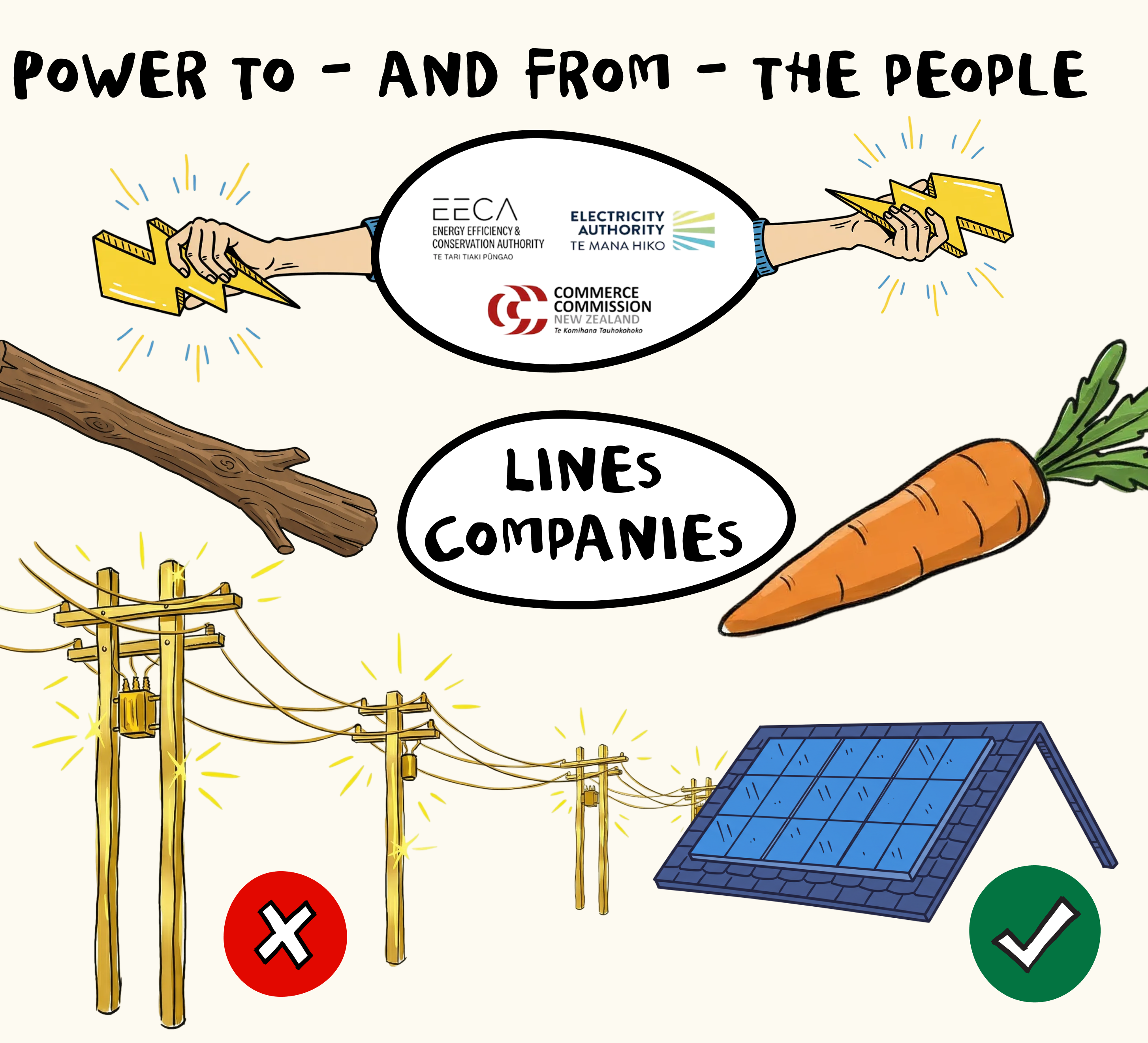

Warren G and Nate Dogg said it best when they said: 'Regulators, mount up!' - and this week, they have.In a rare joint open letter, three different regulators - EECA (Energy Efficiency and Conservation Authority), the Commerce Commission and the Electricity Authority - have basically told the lines companies to pull their socks up and make the most of ‘non-network solutions’ (AKA stop building more expensive poles and wires and start looking at customers and new technology as part of the solution!).
As the letter says: “By shifting electricity use away from peak periods and better aligning demand with available network capacity, flexibility can reduce pressure on upstream networks, lower the need for high-cost generation and defer or avoid expensive network upgrades. Non-network solutions can also buy time before committing to major upgrades and allow network owners to refine their forecasting and demand assumptions. This means when (or if) reinforcement is needed, it is based on better information and more accurate cost-benefit analysis.”
Lines companies are incentivised to build assets that they control. These investments are approved by the regulators and paid for by customers. But one of our primary arguments is that if modern technology like solar, batteries and smart devices to shift demand can do the same job for less, that should be the path that is chosen.
It’s good to see the regulators pushing in this direction with their letter, and it was good to see EECA’s report showing there’s a $3 billion opportunity on the table, just from moving away from peak electricity usage.
Incentives matter - for customers and the big players. Carrots help spark innovation, but sometimes you also need a few well-placed sticks to keep the system honest, something the EA has been given recently to deal with bad behaviour.
With lines charges projected to rise, this is a chance to fine-tune the regulatory toolkit, strengthen the Commerce Commission’s powers where needed, and back ideas like network utilisation targets before major new investments get the go ahead.
Lines companies could (and should) massively improve their pricing signals so there are better incentives for customers to contribute to the energy system or shift demand at certain times. But we have seen some examples of retailers not passing those benefits on or not reflecting them in their consumer offerings. That is a broken link and also needs to be addressed.
We've seen a great response from MOST lines companies to Energy Minister Simon Watts' letter late last year and some of them are embracing this future. Hopefully ALL of them will take notice of this united front from the regulators and start to think a bit differently.
We applaud all three for writing this letter - and for taking on board some of our arguments. Our door is always open if any of the lines companies want some help to deliver better outcomes for customers and speed up the adoption of these helpful technologies.
Political Power has gone local! Dr Nick Smith, mayor of Nelson and ex-National Party minister, is an early adopter when it comes to electric machines but, through his efforts with the council and his close involvement with the Ratepayer Assistance Scheme, he's also embracing one of Rewiring's core mantras: once you've electrified your own life, electrify someone else's life, too.
Read moreDownloadWhether it's the growing number of electric buses, new electric trains for the lower North Island and City Rail Link, or new electric ferries, we love seeing more electric transport options in our big cities. It's also good to see some of our smaller cities like Palmerston North, Timaru and Nelson going electric and, as is almost always the case, the drivers reckon it's better on electrons. At the Electrify Nelson expo, we spoke with one driver Lee about the city's electric buses. And he definitely wouldn't go back to diesel.
Read moreDownload