The 'Electric Election': energy policies, side by side

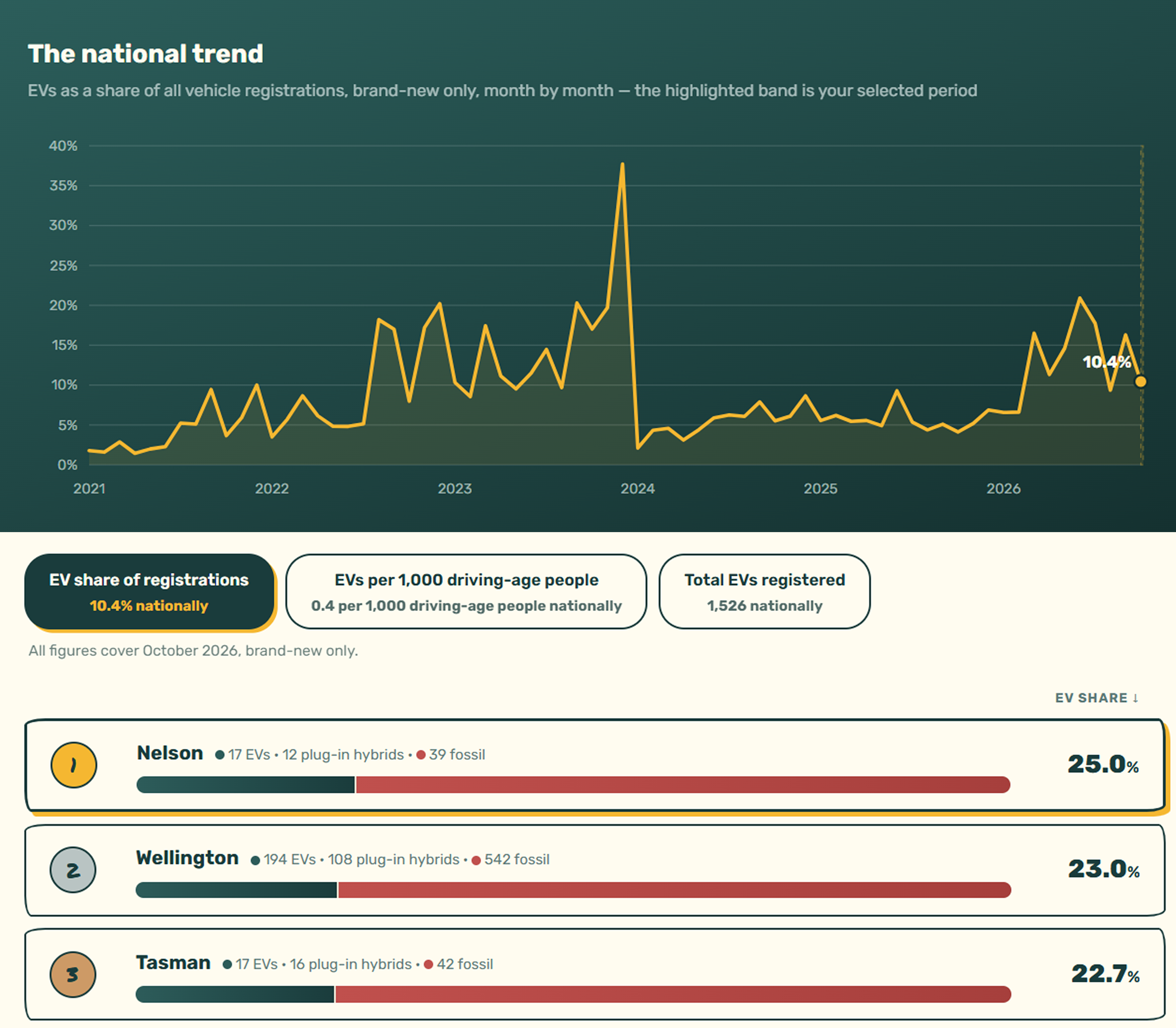

We always like to celebrate a lift in EV sales at Rewiring, but we’re not celebrating too hard, because new Zealand is lagging behind most other markets when it comes to adoption rates. While sales are up by around 170% on the same time last year, just 10% of new cars sold were electric in October, down slightly from previous months (at a regional level, Nelson took the prize for highest share with 25%, followed by Wellington and Tasman).
The annual sales graph is still following the typical three-month cycle of one boom month followed by two subdued months, but the overall trend is clear: EV sales have been heading upwards for about eight months now and total sales for the year are above 2023 levels when there was a subsidy in place.
Business purchases remain stubbornly low and while they account for a majority of sales, they made up just 35% of EV purchases.
Ship arrivals can affect registration numbers and elections do tend to have a dampening effect on demand for both homes and businesses, especially when it comes to large decisions like vehicles, so it’s not surprising to see a slight dip in October and we expect to see increased EV sales over the next two months.
So how do we compare to other markets?
Norway is well known for its electric vehicle adoption rates, and almost 100% of new cars are now fully electric. Other Scandinavian and European countries are also well above 50% and China, the country with by far the biggest number of EVs, is at around 50% share.
But it’s not just the big, wealthy countries going down this track: Nepal’s new EV share is around 70%, while Vietnam is around 40%.
In Australia, around 25% of new cars were fully electric in October and Government policies are helping to drive demand. That’s what we’re lacking here and why we’re pushing for the EV Salary Boost scheme, which would help more New Zealanders who want an EV get into one - and get over the upfront cost barrier.
It’s great to see growth, but it pays to put it in context: there were around ten times more combustion vehicles than BEVs registered in October and every one of those will be burning expensive, imported fuel for a couple of decades.
There were also a lot of people (and businesses) half-assing it with a hybrid when they could instead be covering their asses completely with an EV that can be run on cheaper, more stable New Zealand-made energy.
The installation of a vehicle-to-grid (V2G) charger at the Arrowtown Community Centre has made it one of the most resilient emergency hubs in the country. The bidirectional Starcharge unit, which was fully commissioned last week, can not only charge an electric vehicle (EV) but also draw power from the batteries of compatible EVS to provide backup power for the building in the event of an emergency.
Read moreDownloadThere is growing demand from voters for long-term solutions to energy and transport costs and this year we’ve seen some rare political unity around solar in New Zealand, but there is a gaping hole when it comes to EV policy, writes Rewiring Aotearoa’s Josh Ellison.
Read moreDownloadWe always like to celebrate a lift in EV sales at Rewiring, but we’re not celebrating too hard, because new Zealand is lagging behind most other markets when it comes to adoption rates. While sales are up by around 170% on the same time last year, just 10% of new cars sold were electric in October, down slightly from previous months (at a regional level, Nelson took the prize for highest share with 25%, followed by Wellington and Tasman).
Read moreDownload
