Operation Laser Kiwi: help us take New Zealand-made energy on the road

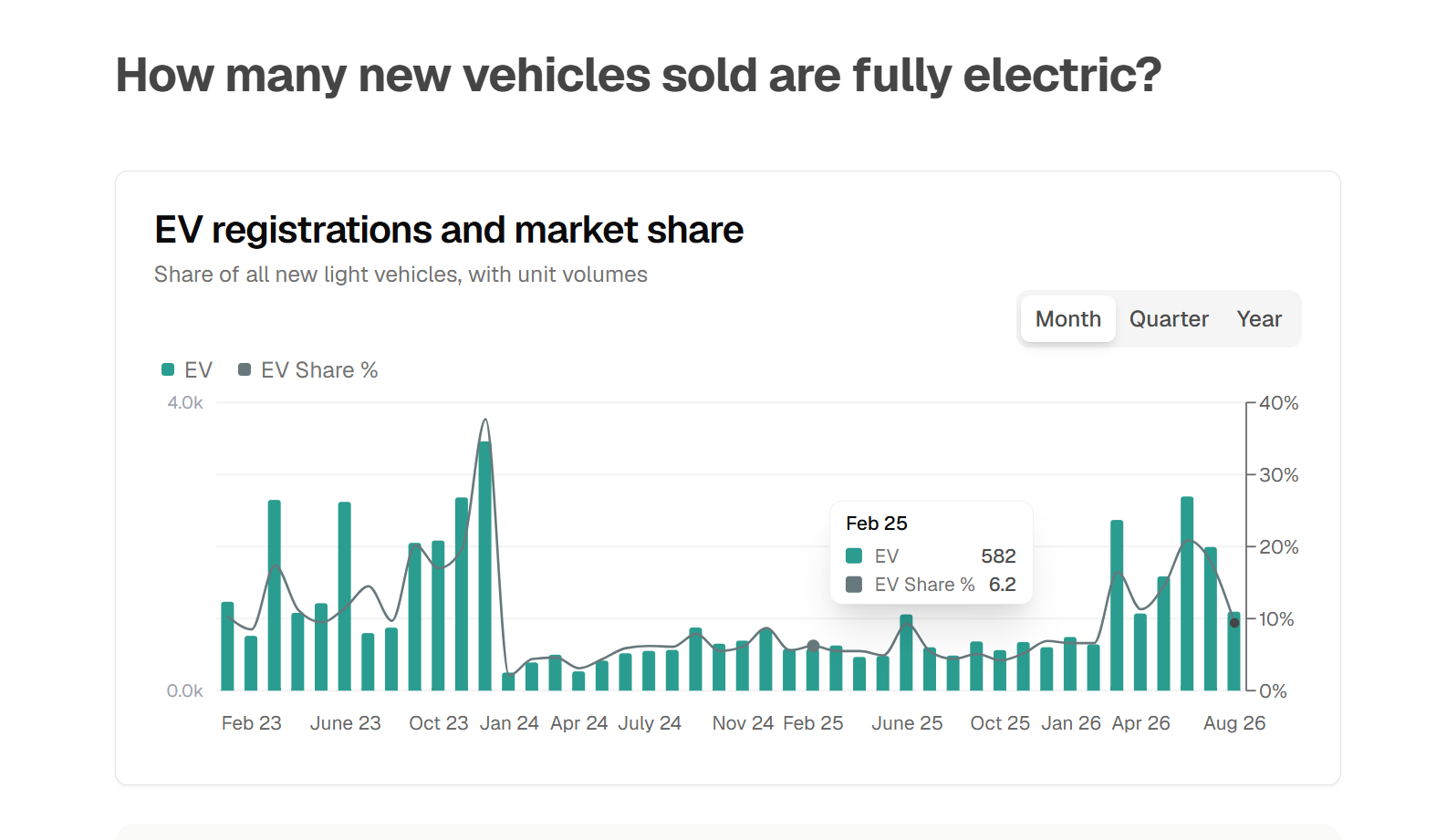

A pinch and a punch (and a big bunch of new EVs) for the first of the month. The Rewiring gang is always pretty jazzed about the release of the new car sales numbers each month and, while the short-term stats tend to bounce around a bit, the long-term trend is clear: sales of new EVs are up by 150% year to date and sales of new petrol vehicles are down by 15% in the same period.
Detractors may point out that growth in new EV sales in August was not as rapid as it was in previous months. But EV sales still grew significantly in comparison to the same time last year.
The reason for this monthly dip could be down to a combination of some businesses reaching the end of their financial year at the end of June and delays of big EV shipments out of China due to storms.
Looking at EVDB numbers from 2023, when EV sales were at similar levels and the Clean Car Discount was in place, sales in July and August were also low before picking up again before the scheme stopped (1,223 new BEVs were sold in August 2023, and 1,096 were sold in August 2026).
Despite the growth in EV sales, they still make up a small share of overall sales. Approximately 9,000 new petrol or diesel light vehicles were brought into the country in August and each one of those will lock in a couple of decades of imported fuel costs and emissions.
The sticker price might be lower than the electric equivalent, but those owners are likely to face higher lifetime costs, as the comparison graph shows (EVs that rely exclusively on expensive public fast-chargers will pay more but they are in the minority and EV owners do most of their charging at home).
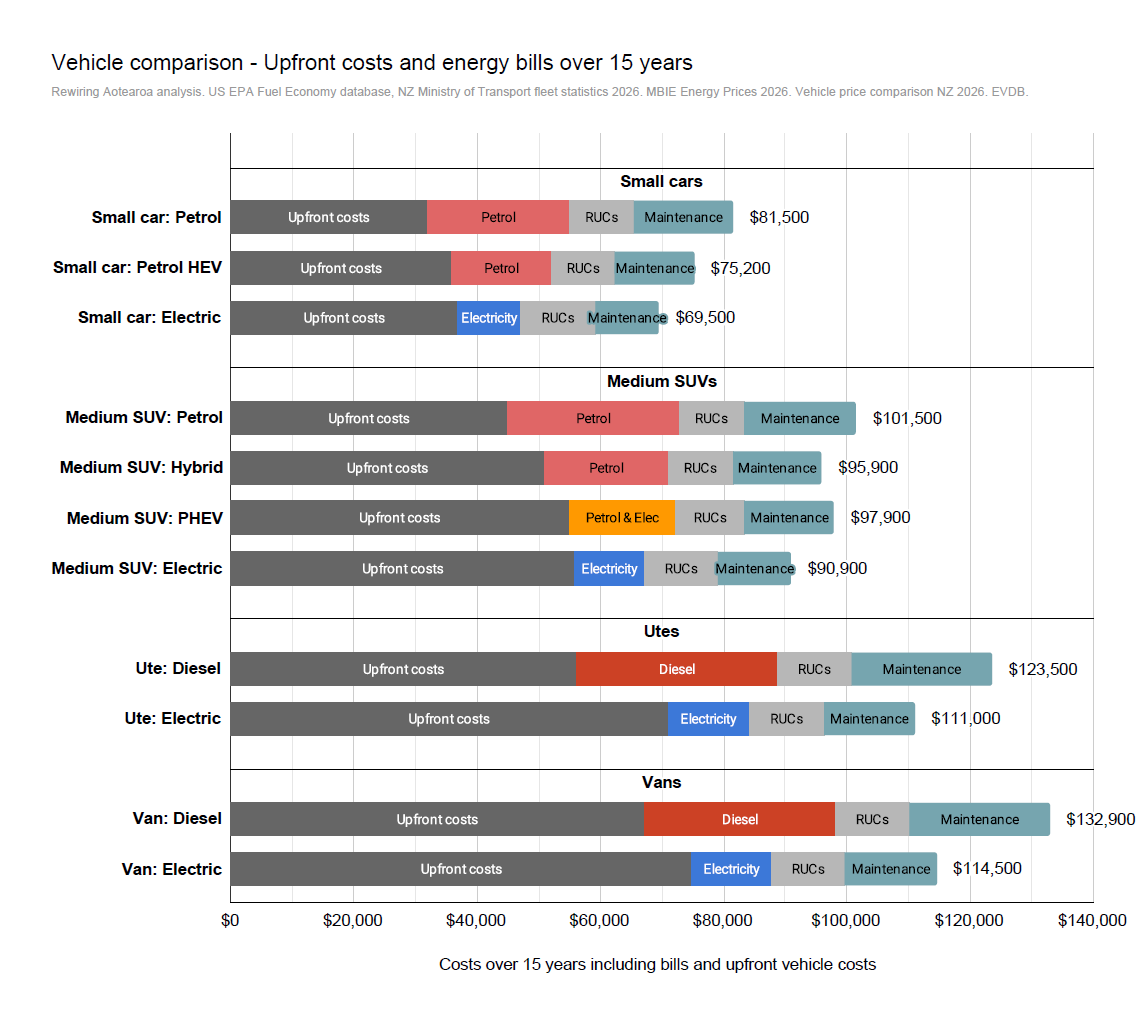
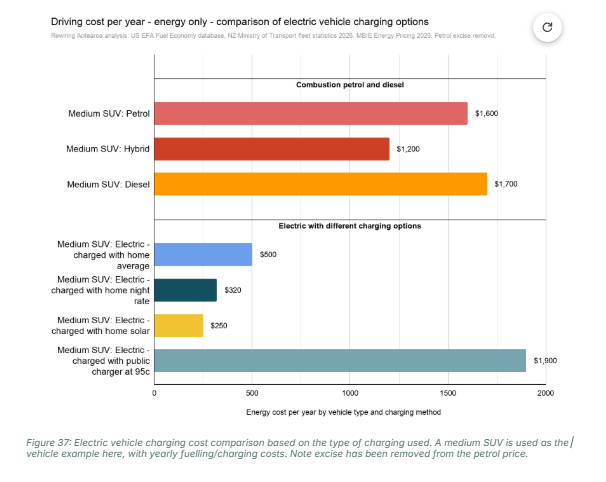
With fuel excise tax remaining lower for the foreseeable future, our policy settings are reinforcing this false economy.
To even the playing field, Fringe Benefit Tax should be removed (or significantly reduced) to give the incentive for businesses to run on New Zealand-made energy.
And for households, the EV Salary Boost, which lets employees lease a new or second-hand EV using pre-tax income, would provide more New Zealanders with access to the savings.
There is no end in sight to the war in the Middle East and fuel prices are set to remain high. More support is needed for New Zealanders to get off that imported energy hamster wheel and go electric.
People installing solar power systems with batteries on their homes, hoping to avoid the disruption of a power cut, are being told to check with the installer that the battery can provide that protection.
Read moreDownloadKiwis are catching on to the benefits of solar panels - and demand's spiking ... But the industry warns we need about six thousand more trained electricians - across the country - to do the work. Rewiring Aotearoa Chief Executive, Mike Casey told Heather du Plessis-Allan he hopes interest will continue over time. He says oil shortages because of the Iran war is keeping demand high - with energy prices climbing. He says solar is the one reprieve Kiwis get.
Roger Robson-Williams owns 20% of New Zealand's electric tractor fleet. That sounds impressive, until you learn there are only five of them. But, like his fellow electric tractor enthusiast Mike Casey, he's on a mission to change that by providing a bit of inspiration and information.
Read moreDownload