Don't listen to Old Man Gas. Ditch LNG. Support New Zealand-made energy!


Rewiring Aotearoa’s latest research shows that the average electric home could save around $3,000 every year, including upfront costs and interest on a loan, compared to a home running on petrol and gas. The savings gap between electric homes and cars and fossil fuelled homes and cars has doubled in two years as energy prices have increased and the price of solar, batteries, electric vehicles and other appliances has fallen. These household savings add up to millions in savings for communities and billions for the country, while also adding jobs, increasing productivity and energy security, and slashing emissions and fuel imports.
JUNE 29: Two years after Rewiring Aotearoa research showed that New Zealand was one of the first countries to cross the electrification tipping point, the follow up has shown that the savings gap between electric homes and cars and gas and petrol equivalents has now doubled.
“The Electric Homes and Vehicles 2026 report provides even stronger evidence that electric appliances and cars running on a combination of the grid, solar and batteries stack up at every level,“ says Rewiring Aotearoa CEO Mike Casey. “Homes save thousands every year. Communities save millions. The country saves billions - all while increasing productivity, improving energy security and slashing emissions.”
To provide accurate long term representation, the volatile fuel price rises seen in 2026 have not been included in the report.
“The numbers stacked up before the war, but the gap would be even bigger this year due to the fuel price spikes,” he says. “We’ve taken a pretty conservative approach with some other numbers, too, but the gap between these two ends of the spectrum is growing and an all-electric home is $3,000 net better off per year, including upfront costs and interest, and a net $45,000 better off over 15 years.”
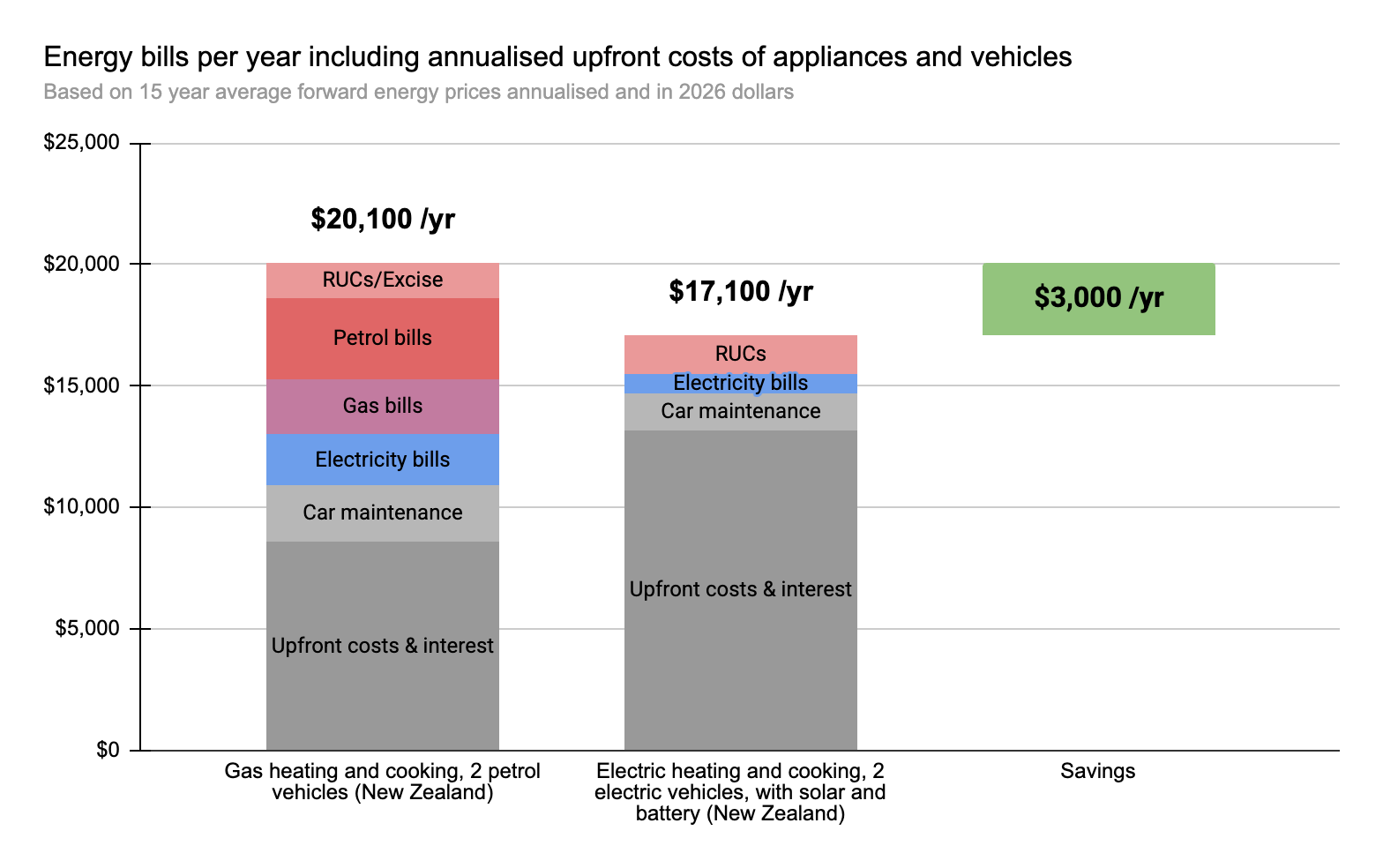
Electric machines are more expensive upfront but they require less energy to run. When you exclude upfront costs and interest, an average home using gas and petrol is missing out on bill savings of over $7,500 every year in comparison to electric homes and cars.

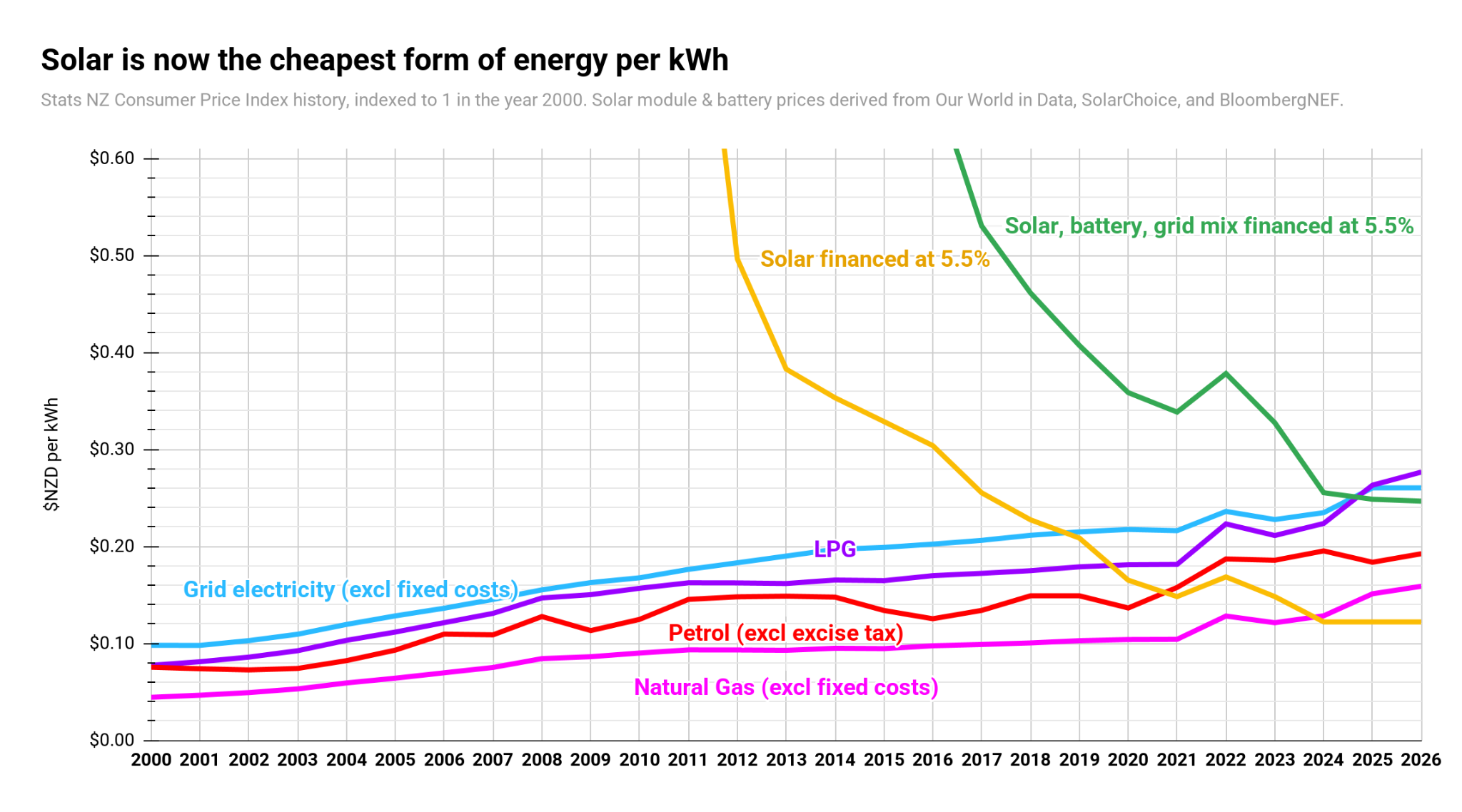
“Solar is the cheapest delivered electricity available to New Zealand homes and we’ve crossed another tipping point with solar and batteries,” says Casey. “The price of grid electricity, gas, petrol and diesel have risen at well above the rate of inflation, but the price of solar and batteries continues to fall and is now cheaper than the grid.”
Independent economist Cameron Bagrie, who peer reviewed the report alongside the University of Auckland’s Shaun Hendy, says energy policy shifted massively around the globe after the second oil shock of the 1970s, and he is anticipating a repeat in the coming years as energy security becomes paramount.
“Electrification can help both with short term cost of living problems, and also assist in building a more productive energy system underlying a more productive economy in the long term,” he said in the report. “We have passed a key inflection point, where the economics of solar have become compelling. Households represent the country's largest energy-consuming sector, and shifting that consumption onto domestically generated renewable electricity reduces the import bill, keeps spending within the New Zealand economy, and delivers further savings through the inherent efficiency of electric machines.”
Casey says households are a larger part of our energy sector than often recognised.
“Residential use is likely the largest energy consuming sector in the country when household transport is added. Of the approximately five million vehicles on New Zealand roads, around four million park at households.”

Casey says “a lot of a little is a lot” and the report shows that these household savings add up to big savings for communities and the country as a whole.
For an example community of 10,000 homes, electrification would create bill savings of $6.6 million per year, and net savings, including capital costs, of over 15 years of $33 million. At a national level, the bill savings would be $12.9 billion per year, while net savings would be $63.8 billion over 15 years to 2040, as homes electrify over time.
“The additional labour to install heat pumps, solar, and EV chargers combined with the community savings that flow through the local economy would create around 60,000 jobs and create a positive economic feedback loop in the regions,” Casey says.
Unfortunately, just as there is a big gap between electric and fossil fuelled homes, there is another gap when it comes to accessing those technologies.
“Not everyone can get these savings right now because high upfront costs are a big barrier and they can’t access loans. There is a clear market failure here. Yesterday, National announced its support for the Ratepayer Assistance Scheme, and most of the other parties are supportive of the scheme that would offer long-term, low-interest loans for electric upgrades. That’s positive, but there is a lot more that could be done to drive adoption and help those low-income households who would benefit most from lower energy bills.”
New Zealand’s reliance on imported energy was also brought into sharp focus after the war in the Middle East kicked off and household electrification can play a big role in reducing that exposure.
“In 2025, we spent around $20 billion on fossil fuels, most of which were imported - and that will be a lot higher this year due to the price spikes. Running our homes and cars on New Zealand-made electricity would remove around half of our imported fossil fuels.”
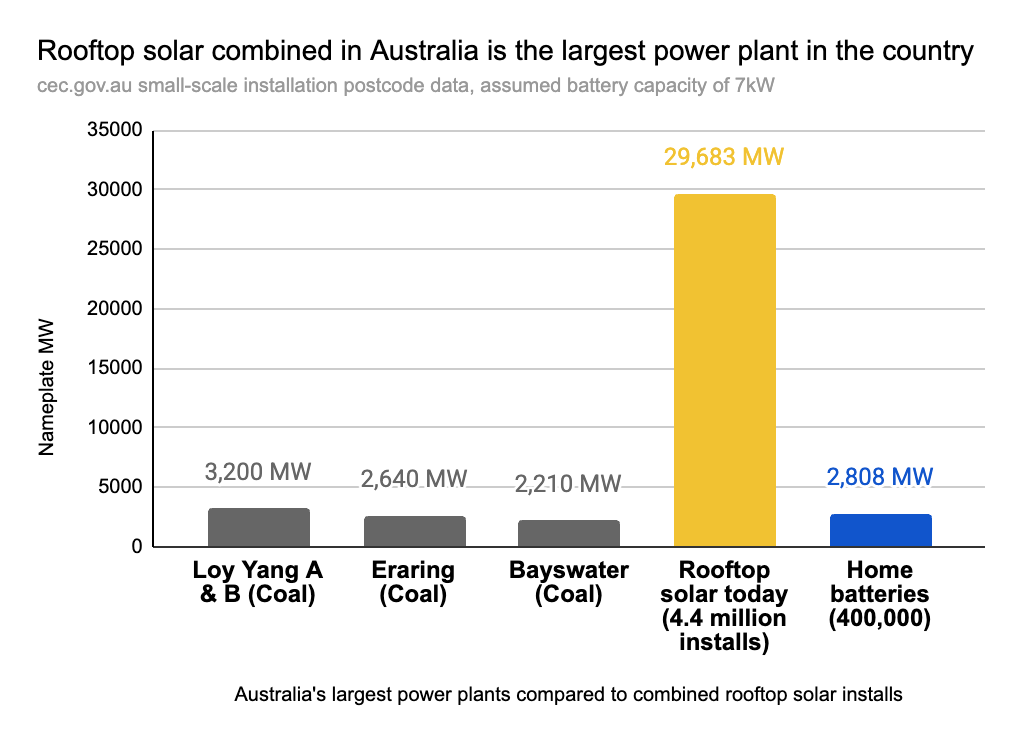
Casey says there is growing awareness of the role that households, farms and businesses can play in the energy system, and that’s being proven in Australia.
“If 80% of homes had a 9kW solar system and a 10 kWh battery, this would provide an unprecedented level of energy resilience for communities. These homes combined would amount to a distributed ‘power plant’ larger than any in New Zealand today, and if the four million household cars we have in New Zealand today were electric, they would have the equivalent energy storage capacity of running all of New Zealand’s power plants combined at average capacity for around 50 days straight.”

Casey says running on New Zealand-made electricity needs to be seen as the country’s biggest productivity opportunity.
“Electric machines are generally more efficient, so less energy is needed overall. That works at a household level and also at a national level. Electrification also significantly reduces our carbon emissions so the argument that it is too expensive to solve climate change no longer holds. It’s actually more expensive to continue with the status quo.”

The report lays out three main barriers holding things back.
“We need an energy strategy that stands in the shoes of New Zealanders. We need to make energy financing easy and accessible to enable mass investment by consumers. And we need to ensure low-income homes and renters are able to benefit from these electric savings.”
ENDS
Download the full report, as well as graphs and images of Rewiring Aotearoa CEO Mike Casey, here.
For more information or to arrange an interview, contact Ben Fahy at ben@rewiring.nz or 021 245 4894.
Rewiring Aotearoa is an independent charity working on energy, climate and electrification research, advocacy and education. The New Zealand-based team consists of energy, policy, communications and community outreach experts and it is funded by New Zealand-based philanthropists including Sir Stephen Tindall and Urs Hölzle. While we are selling the achievable dream of a more secure, resilient, productive, affordable and renewable energy system, we do not financially benefit from sales of solar, EVs or any of the electric technologies we advocate for.
Political Power has gone local! Dr Nick Smith, mayor of Nelson and ex-National Party minister, is an early adopter when it comes to electric machines but, through his efforts with the council and his close involvement with the Ratepayer Assistance Scheme, he's also embracing one of Rewiring's core mantras: once you've electrified your own life, electrify someone else's life, too.
Read moreDownloadWhether it's the growing number of electric buses, new electric trains for the lower North Island and City Rail Link, or new electric ferries, we love seeing more electric transport options in our big cities. It's also good to see some of our smaller cities like Palmerston North, Timaru and Nelson going electric and, as is almost always the case, the drivers reckon it's better on electrons. At the Electrify Nelson expo, we spoke with one driver Lee about the city's electric buses. And he definitely wouldn't go back to diesel.
Read moreDownload