Don't listen to Old Man Gas. Ditch LNG. Support New Zealand-made energy!



New Zealand First’s leader Winston Peters is also the Minister of Racing, so he presumably loves a bit of a flutter, but yesterday’s speech shows he’s backing the wrong horse when it comes to energy. “Rather than spend $1 billion surveying for more oil and gas, you’d be better off putting a billion on a long-shot to win the Melbourne Cup,” says Rewiring Aotearoa CEO Mike Casey. “Peters said there was a 90% chance of finding deposits, but this disregards the many previous years of no significant finds and every piece of reputable research we have seen. It also disregards economics and physics. New Zealand is one of the favourites to win the race on cheap electricity. That’s the horse we need to be backing.”
Like Peters, Casey agrees that energy independence is a massive issue for the country and it will affect future generations.
“He set out a vision for the country, but when we talk about New Zealand-made Energy, we talk about cheap electricity running through more efficient electric machines, not undiscovered reserves of expensive oil and gas running through old technology. This would be a great idea if it was 1982.”
Casey says he’s disappointed by New Zealand First’s response, but not entirely surprised.
“Overseas, we have seen a similar lurch backwards on energy in some places and it’s more based on ideology than reality. Oil and gas has taken society a long way, as did the horse and cart before it, but we’re entering a new era. Solar and wind are so much cheaper, geothermal is a massive opportunity for New Zealand, and electric machines are just so much more efficient at a fundamental level. That is the big productivity and prosperity opportunity we should be exploring for our future generations.”
As our recent Electric Homes and Vehicles research shows, there is a much better option: combined savings at a household level mean the country could save $13 billion per year on energy bills and create net savings of $61 billion over 15 years to 2040 - plus we’d create around 58,000 jobs. That’s a better bet. It is almost always sunny, windy or raining somewhere in New Zealand. Plus, it’s always steamy in our volcanic zones and that’s where we should be focusing if we’re going to be drilling. This combination of resources gives New Zealand a pathway to a more diversified renewable energy system and a more productive electric economy that few other countries have.”
Assuming any oil and gas is found - “and that’s a very big if” - Casey says it will take years to come on stream and cost a huge amount.
“By that time hardly anyone will be buying petrol or diesel vehicles anyway. At this point looking for oil and gas is a performative waste of money that won’t lower energy bills for New Zealanders.”
Peters said the other major parties are just tinkering around the edges by backing loan schemes for solar, batteries and other electric upgrades.
“But this is not tinkering. This is a massive structural shift and we think these loans could be the energy equivalent of KiwiSaver. The full Ratepayer Assistance Scheme could free up around $7k/year between rates postponement and energy loans (with deferred payments). Solar is the cheapest energy New Zealand homes can get and, as we’ve seen in Australia, the solar and battery revolution is not just a transition from molecules to electrons, it's also a transition from big to small. Most of the rest of the world is also going in this direction.”

According to the EA, New Zealand just reached 1GW of installed solar and around half of that is from residential. That's already at MBIE's predicted 'high growth' levels for 2035 and electric vehicles also offer massive potential, as Marc Daalder outlined in an in-depth feature about two-way charging in Newsroom.
“Driving an EV and running it with the equivalent of an oil well on your roof should be seen as a patriotic act. And batteries are to electricity as fridges were to food. Unlike previous energy crises, we now have the technology to move away from fuel. There are substitutions available right now and they’ll save New Zealanders money straight away.”
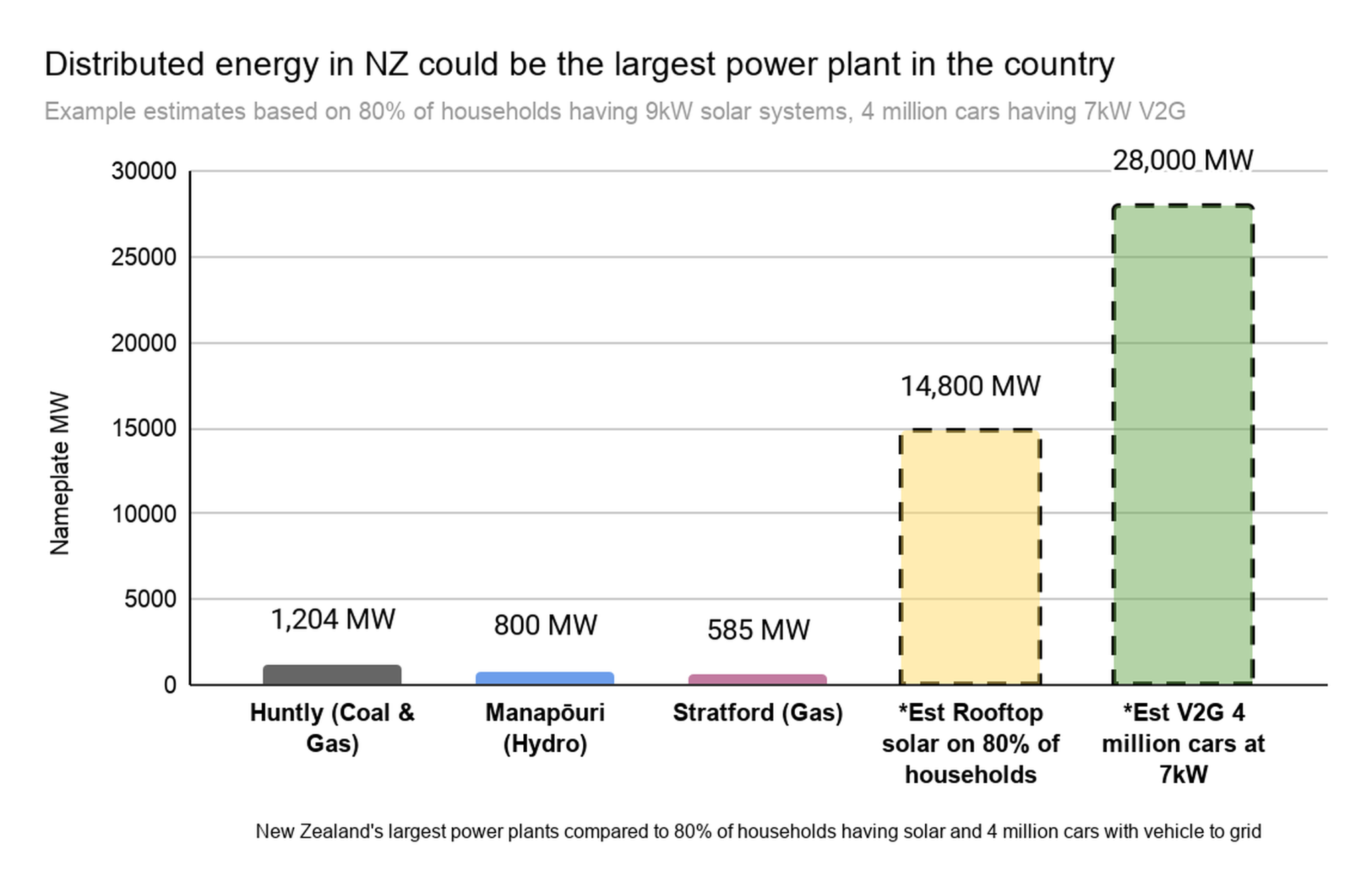
Casey says Peters and his deputy Shane Jones are clearly concerned about affordability, fuel security, energy independence and resilience.
"But this is the wrong route. The Government’s own research shows the cheapest and most effective approach when it comes to fuel security is electrifying the fleet. And that's a sure thing, not a hope.”
As Sapere’s ‘From Faultlines to Resilience’ report showed, helping businesses get off gas also needs to be seen as a crucial part of our energy strategy.
“New Zealand First’s gamble just delays this transition.”
While little mention was made by Peters of the party’s plan to split the gentailers, Casey doesn’t believe this will change that much for customers struggling with rising electricity bills.
“That would be tinkering around the edges and would require a lot of effort for an unknown result - much like the oil and gas survey. Solar is the biggest competitor to the gentailers and it’s especially helpful for older voters on fixed incomes."
Political Power has gone local! Dr Nick Smith, mayor of Nelson and ex-National Party minister, is an early adopter when it comes to electric machines but, through his efforts with the council and his close involvement with the Ratepayer Assistance Scheme, he's also embracing one of Rewiring's core mantras: once you've electrified your own life, electrify someone else's life, too.
Read moreDownloadWhether it's the growing number of electric buses, new electric trains for the lower North Island and City Rail Link, or new electric ferries, we love seeing more electric transport options in our big cities. It's also good to see some of our smaller cities like Palmerston North, Timaru and Nelson going electric and, as is almost always the case, the drivers reckon it's better on electrons. At the Electrify Nelson expo, we spoke with one driver Lee about the city's electric buses. And he definitely wouldn't go back to diesel.
Read moreDownload