Don't listen to Old Man Gas. Ditch LNG. Support New Zealand-made energy!

.png)

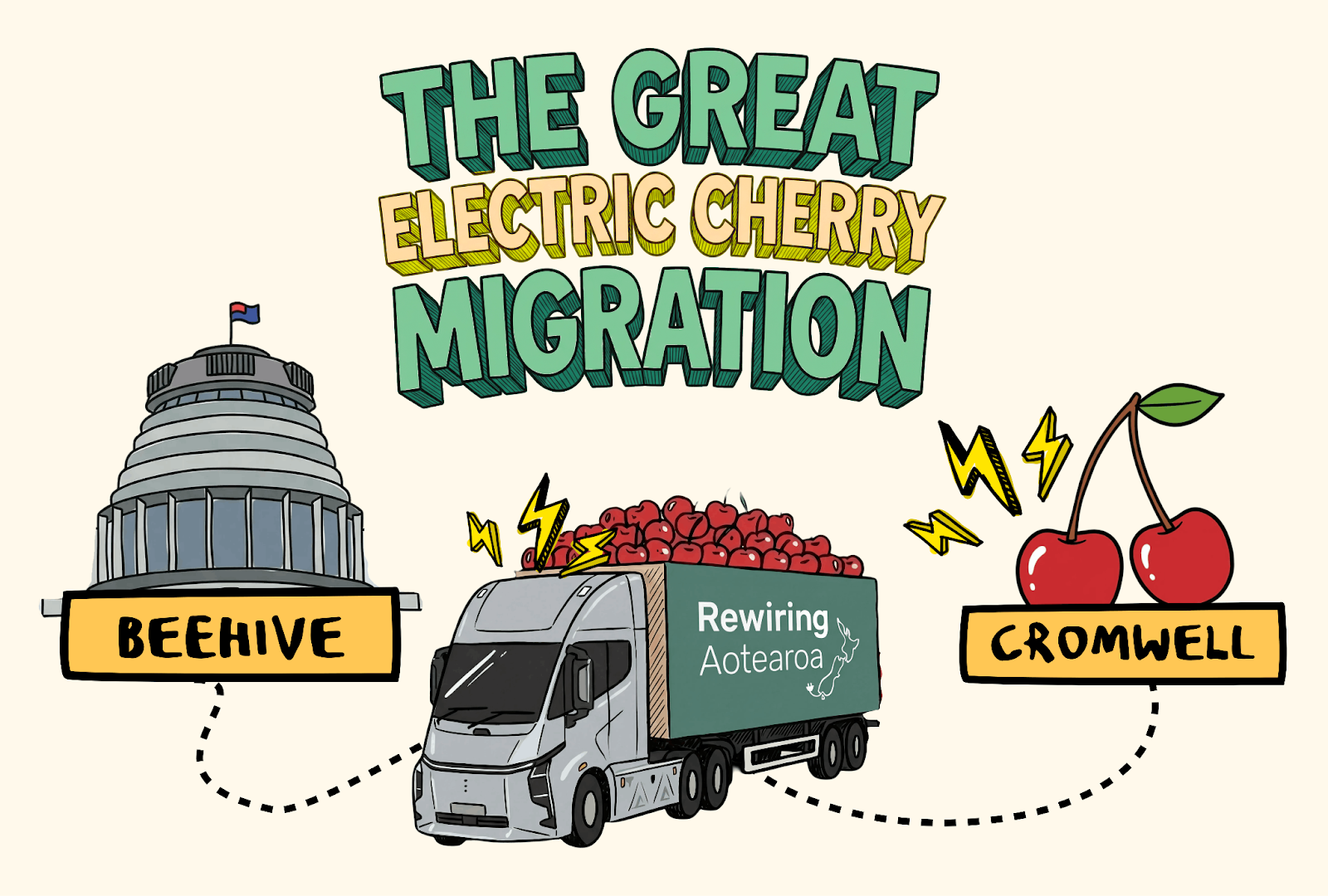
‘The Great Electric Cherry Migration’ is sending 100% Electric Cherries via a 100% electric truck to 100% of our Members of Parliament. Rewiring Aotearoa’s Mike Casey, Etrucks’ Ross Linton and the Deepway electric truck will be on Parliament grounds on Tuesday February 10th from 11am - 2pm.
9th February, 2026: For the past few years, Rewiring Aotearoa has sent all Members of Parliament a box of Electric Cherries to thank them for their hard work and raise awareness of the many benefits of going electric. But this year, the annual cherry migration north for the summer is more electric than ever because the precious cargo is being transported from Cromwell to the Beehive on a big electric truck.
“We’ve grown the cherries with locally-made electrons. We’re delivering the cherries with locally-made electrons. And we want our politicians to deliver savings for New Zealanders with locally-made electrons. That’s what we’re looking for as we head into what we’re calling the ‘electric election’,” says Rewiring Aotearoa CEO and co-owner of Electric Cherries Mike Casey.
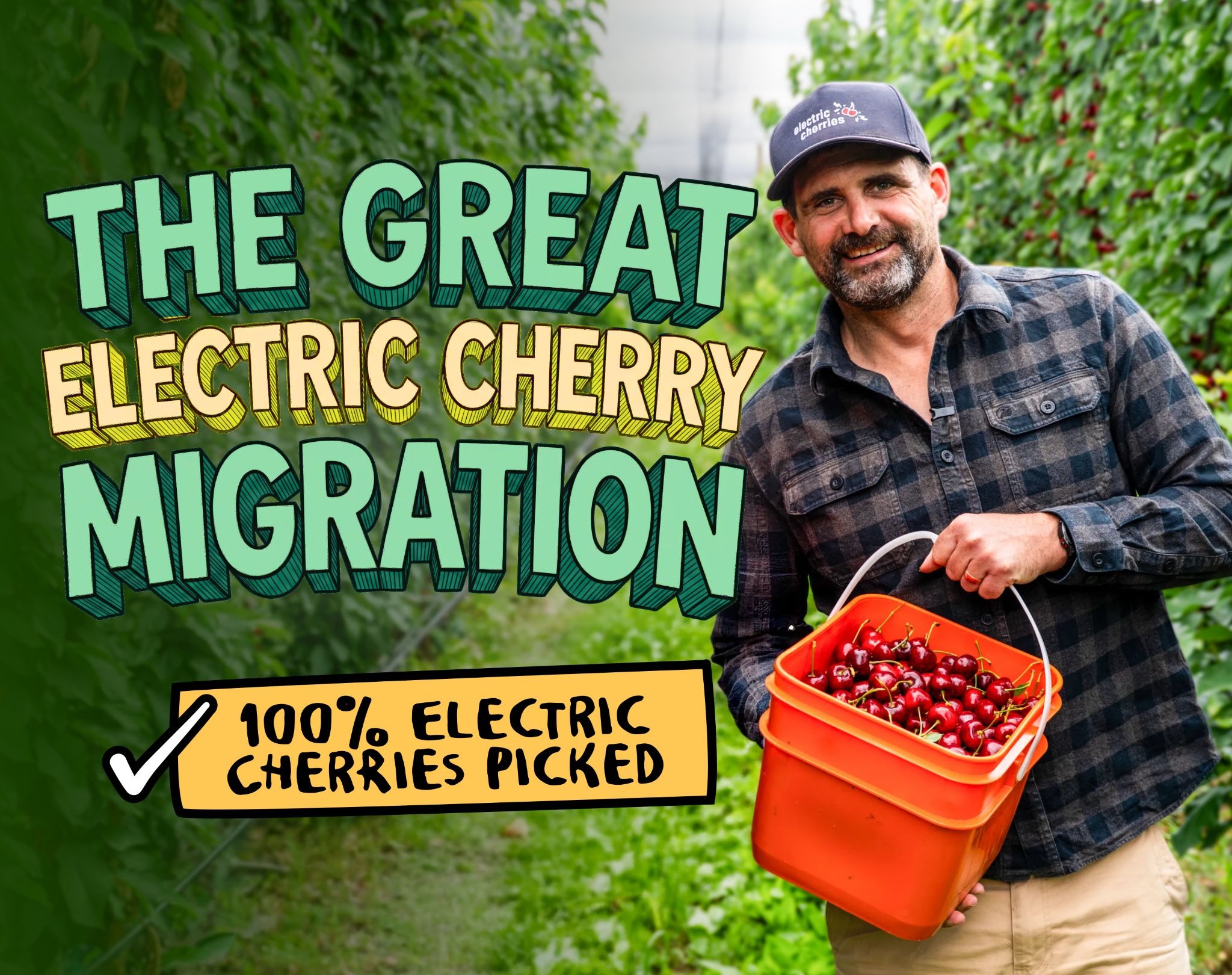
Casey saves tens of thousands of dollars every year on his farm by operating 21 electric machines and generating as much of the energy as possible from his own solar and battery system.
“Running on electricity rather than fossil fuels makes my business far more productive and there’s no competition when it comes to emissions. We can now also transport our cherries long distances with these new electric trucks. ‘The Great Electric Cherry Migration’ is all about showing what’s possible now and inspiring some more ambitious policies from all parties.”
Ross Linton, the owner and founder of Etrucks, drove the cherries from Cromwell to Wellington in a Deepway electric truck. He is at the forefront of New Zealand's nascent electric trucking scene and can claim responsibility for a number of firsts, from the country's first electric concrete truck to the country's first battery swap set up.
“Since I brought my first electric truck into the country back in 2018, the technology has advanced massively and they are now quite a bit cheaper to run than diesel trucks. Not surprisingly, that's inspiring a great deal of interest among businesses. Whether it’s trucking firms, massive mining companies or public transport providers, they’re increasingly choosing to invest in battery powered machinery.”
No matter where you sit on the political spectrum, Casey says $20 billion a year is on the line.
“That is how much the country spends on fossil fuels every year. That's $55 million every day, most of it being sent offshore. Keeping those billions in New Zealand and investing in our own productivity, households and economic future would be transformative for our energy system, energy bills, and economy.”
Casey says this is a critical year for the future of New Zealand and its energy system, with decisions and actions that will be felt for decades.
“Energy was a decisive issue in the last election in Australia and we think it will be here, too. Combined with rising fuel costs, high electricity costs are affecting New Zealand's productivity and competitiveness, and adding to cost of living woes.
“We believe that electrifying our economy is one of the biggest productivity opportunities we have. But continuing to focus only on the big end of town, building more poles and wires and tinkering around the edges of a broken system won't bring prices down enough or help families and pensioners struggling to pay their bills.”
He says there is currently a customer-sized hole in our energy system and we need policies to make our electricity system fairer and rein in the ever-increasing costs that are pushed onto Kiwi households and businesses every day.
“We only need to look to Australia to see what’s possible when customers are seen as part of the solution. Homes are being offered discounts on batteries and they will soon have the option of getting a few hours of free power in the middle of the day because of all the cheap renewable electricity in the system.”
The average New Zealand home could save around $1,000 every year by installing solar - including loan repayments - and around $2,000 per year with batteries and space and water heat pumps. Casey says a big focus of ‘The Great Cherry Migration’ is to make sure the current Government knows it could help relieve some cost of living pressure right now by signing off on the Ratepayer Assistance Scheme, which will offer long-term low-interest loans for electric upgrades.
“Going electric makes sense for homes, farms and businesses; it makes sense for communities; and it makes sense for the country. It beats fossil fuels on economics, emissions and energy security. And for those reasons, it also makes sense for our politicians to embrace this huge electric opportunity.”
Notes to editors:
Mike Casey, Ross Linton and the Deepway electric truck will be on Parliament grounds on Tuesday February 10th from 11am - 2pm if you would like to talk to them there.
For more information, images or to arrange an interview with Mike Casey or an Etrucks representative, contact Ben Fahy at ben@rewiring.nz.
Rewiring Aotearoa is an independent ‘think / do tank’ working on energy, climate, and electrification research, advocacy, and supporting communities through the energy transition. The New Zealand-based team consists of energy, policy, communications and community outreach experts and it is funded by New Zealand-based philanthropists including Sir Stephen Tindall, Urs Hölzle and the Whakatupu Aotearoa Foundation.
Political Power has gone local! Dr Nick Smith, mayor of Nelson and ex-National Party minister, is an early adopter when it comes to electric machines but, through his efforts with the council and his close involvement with the Ratepayer Assistance Scheme, he's also embracing one of Rewiring's core mantras: once you've electrified your own life, electrify someone else's life, too.
Read moreDownloadWhether it's the growing number of electric buses, new electric trains for the lower North Island and City Rail Link, or new electric ferries, we love seeing more electric transport options in our big cities. It's also good to see some of our smaller cities like Palmerston North, Timaru and Nelson going electric and, as is almost always the case, the drivers reckon it's better on electrons. At the Electrify Nelson expo, we spoke with one driver Lee about the city's electric buses. And he definitely wouldn't go back to diesel.
Read moreDownload