The 'Electric Election': energy policies, side by side

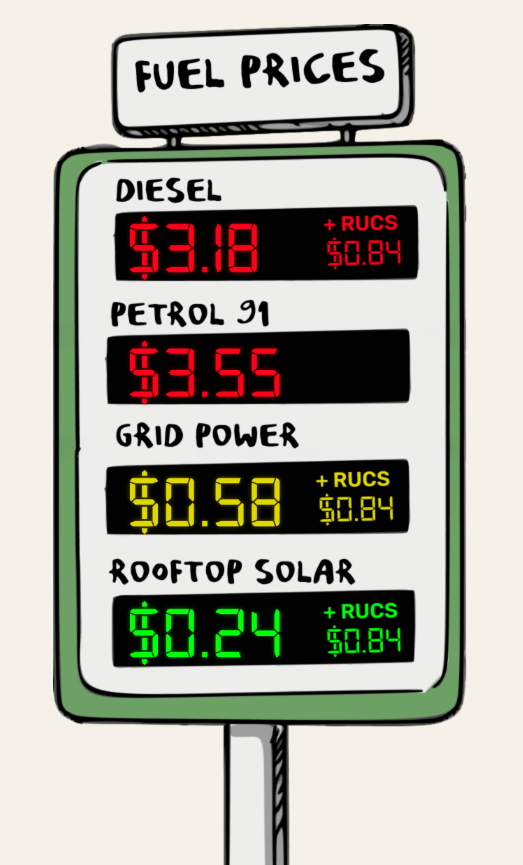

Q: Hi Liam, I picked up on a comment made by a farmer who is promoting his use of solar power to power his activities including the home and also his EV farm vehicles (shout out to @electricorchadist). He said that generating renewable power locally reduces reliance on overseas fuel. Hard to argue with that. That got me thinking about how much fuel we import relative to our current account deficit and what the implications would be if we were able to electrify our car fleet in NZ powered by locally renewable energy (we’d need some more, obviously). Cheers, Tom
A: Hi Tom, I agree. Regardless of your politics, it’s hard to argue with being less reliant on imported fossil fuels.And, yes, in theory, if we didn’t have to buy imported fuel, the current account deficit – as it currently stands – would almost be largely erased.As at the end of June, our annual current account deficit was $14.6 billion (or 3.2% of GDP).Meanwhile, Stats NZ says petroleum imports in the year to July 2026 were $12.1 billion, up 23%, with higher prices for diesel, petrol and jet fuel all contributing.If we got rid of most of that, it would deliver a meaningful shift in our balance of payments.
It wouldn’t turn us into a rich creditor nation overnight. But it would take pressure off our external debt, it would probably lift our international credit rating (reducing our interest bill), and leave us less exposed every time there’s a crisis in the Middle East.At the annual meeting this week, Genesis Energy chief executive Malcolm Johns took a similar line to your farmer. "Today, electricity only makes up around 30% of New Zealand’s total annual energy use. 70% comes from non-electrical sources, with 50% of our overall energy being imported,” he said.
Johns said if electricity made up 60% of New Zealand’s total annual energy today, the average household would be saving up to $3000 a year on total energy costs. New Zealand’s total annual energy bill would be around $10 billion a year less than it is today.
So is it achievable? On the one hand, I think the full electrification of land transport in New Zealand (and the world) now seems inevitable. The technology for generating and storing renewable energy is there and improving fast. In New Zealand, we have abundant natural resources for renewable energy, so we are better placed than many nations to match the spike in demand for power that electrification would cause.Electric vehicles are also already matching or bettering petrol vehicles for speed, performance and range, and they are getting cheaper every day. So I do think it’s when, not if.But on the other hand, we need to be realistic about the turnover of the New Zealand vehicle fleet.
On that front, we’re up against it compared with many other nations. In New Zealand, sales of new electric vehicles are still strong. In June, battery-electric vehicles (BEVs) were 20.4% of all new registrations and plug-in hybrids (PHEVs) 10.4%.Among passenger vehicles, BEVs and PHEVs together were 38% of new registrations. That sounds promising until you look at how slow our national fleet is to turn over. A large proportion of the cars imported into New Zealand are not new; they are used imports.
Data for August showed new registrations of 12,000-13,000 a month, plus used imports at about 8600.Against a fleet of about 4.7 million, that implies turnover of about 5% per year. So the 38% EV share of new sales changes the total fleet by about 1-2 percentage points annually.
Even on an optimistic reading of those numbers, it would take around 50 years to fully electrify. I think it will be faster than that, for a few reasons. The electrified proportion of new registrations will continue to grow. We’ll start to see an increasing proportion of electric used imports.
In Japan, which still supplies the bulk of our used imports, the electric Nissan Leaf is now one of the top 10 most exported used cars. Electric vehicles are also going to get a lot cheaper in the next few years. Production in China has surged. It accounts for about three-quarters of global electric-car production now. Consumer demand in China has been weak, so manufacturers have been exporting more. China exported nearly 1.4 million electric vehicles in the first four months of 2026, more than double the same period last year. Meanwhile, the United States has effectively blocked imports of Chinese cars with a 100% tariff.
All of which is good news for Kiwi consumers. My hunch, simply based on other technologies I’ve seen get adopted over the last half-century, is that there is often a tipping point where price and convenience of a new technology get so compelling that adoption dramatically and rapidly accelerates. I’m confident we’ll reach that point in the next decade. But it’s worth noting that so far, even China, with a decade of heavy state support and a dominant domestic industry, has electrified only about one car in eight of the cars on the road.
Humans are comparative creatures and they're particularly comparative during election season. That's why we've created a rundown of all the energy-related election policies that have been announced by the parties so far.
Read moreDownloadHow much money could you save by powering your home with an electric car? Genesis is trialling tech to let owners charge their car battery off-peak for use in the house at peak times, effectively making it a power-storage unit. The three-month test on a four person home let the car feed electricity to the household, drawing little from the national grid. General retail manager James Ryan says hypothetically, it could save up to $2000 a year.

