The 'Electric Election': energy policies, side by side


Regulation Minister David Seymour has today welcomed the Ministry for Regulation’s Sector Review Report (“the Report”) on how to make residential and small to medium scale solar panel installation in New Zealand the simplest in the developed world. “Kiwis need access to reliable and affordable energy, but Installation of solar panels can take months. Implementation of the Report’s recommendations would see solar become an easy option for Kiwi families,” Mr Seymour says.
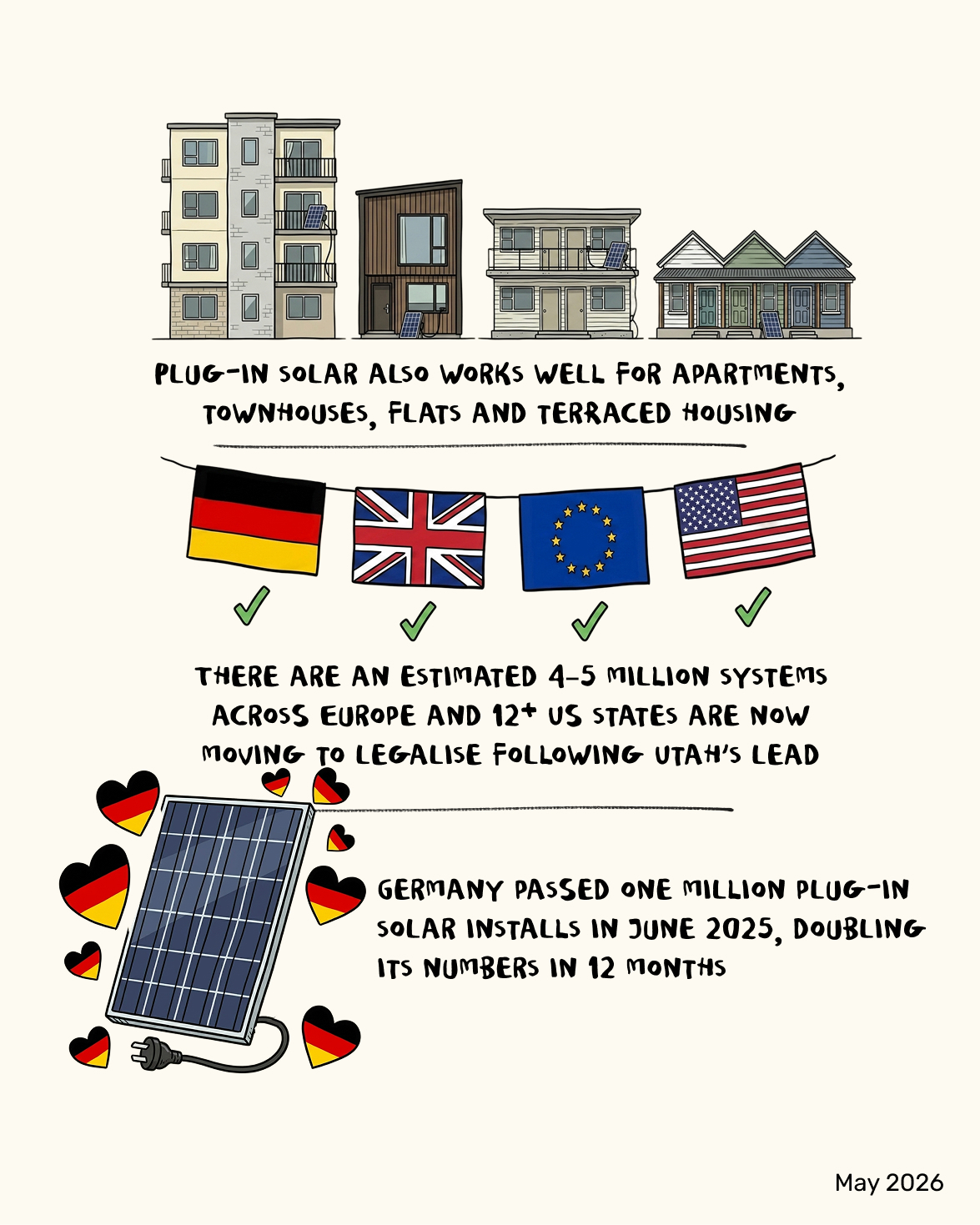
“The Report recommends legalising plug in solar because there was no good for reason for preventing Kiwis using it. Plug-in systems can be used by renters and people living in apartments who can’t access traditional rooftop solar. If they’re good enough for Germany and the UK, they’re good enough for us.
“We heard about problems with residential a small to medium scale solar through the Red Tape Tipline. Then the Ministry went straight to the source to understand the problem. They engaged with installers, industry participants, regulators and other stakeholders.
“The Ministry found that in some cases, installing a small-scale solar system can involve up to six separate sign-offs and five site visits from four different entities before it can be switched on. All of this can take months. Most of it is unnecessary.
“Implementing the recommendations in the Report would take installation approval for residential solar from about $640 and 3 months, down to $200 and 6 days. For small-medium scale solar, such as a farmer installing panels on a milking shed, it would take installation approval from up to $11,000 and 6 months, down to $1,300 and 1 month.
“The Ministry estimates that the recommendations could deliver net benefits of between $28 million and $50 million over 10 years. This is through lower compliance costs, reduced delays, and the use of plug in solar.
“The Review found that Kiwis would benefit from moving to a more proportionate, risk-based inspection model. It found that requiring an electrical inspector to check every solar installation in person was too expensive, too time consuming, and absolutely unnecessary. Accredited installers can do the same job, without the call out costs or delays, because they’re already there. This could save consumers up to 45 days of waiting, and $600.
“The Report also recommends shortening processing times for lines companies processing requests to install solar. A standard residential request would be cut from 10 working days to the next working day, and medium sized installation requests would be cut from over 30 days, to just 5 working days.
“The Review found that planning rules can create barriers for some solar installations, particularly larger or ground-mounted systems, and installations in heritage or outstanding natural landscape areas. These often require resource consents which add cost, delay and uncertainty. The report recommends exempting these types of solar installations from needing resource consent. This could save consumers up to 30 days of waiting time and between $3000 and $10,000.”
Energy Minister Simeon Brown welcomes the proposals in the Ministry for Regulation’s Sector Review Report to speed up and further simplify the uptake of solar on New Zealanders’ homes.
“New Zealanders want more control over their power bills and want to harness the power of the sun. These proposals will help give power back to the people by making solar uptake cheaper and faster,” Mr Brown says.
“The Government is focused on ensuring NZ has access to affordable and reliable power with these proposals building on what the Government is already delivering, from fast-track consenting big renewable projects, to doubling the export limits for households exporting power back to the grid. This Government is delivering on that agenda.”
“This fast, and comprehensive review will get the Government off the roofs of Kiwi homes, so the sun can shine on their solar panels,” Mr Seymour says.
“Now, we need the Government to prioritise it.”
'Twas the night before Chris-mas, and all through the house, all the voters were stirring, the pundits showing their nous … the election will soon be over, but the energy crisis won't, so we'll be there to pester whoever is in power about the need to run more of the economy on New Zealand-made energy; can Ethiopia's aggressive push for EVs work and how does New Zealand compare in terms of adoption rates?; a two-way charging trial from Genesis shows promise in Auckland, but there's still a way to go before it's mainstream; small electric vehicles are often overlooked when it comes to electrifying transport, but it's hard to miss this weird French one; a solar-powered cafe (and some electric coffee); and we endorse the political vandalism of Keith of All Trades.
Read moreDownloadPoliticians are being urged to adopt stronger electric vehicle incentives ahead of the election. Climate and energy advocacy group Rewiring Aotearoa is arguing that EVs are one of the most effective long-term solutions for rising transport and energy costs. They're promoting an EV Salary Boost proposal, which would allow workers to access EVs through pre-tax salary arrangements – similarly to already existing schemes in the UK and Australia. Policy and Government Relations Spokesperson Ngaio Neumegen told Kerre Woodham that even with the rising cost of power, it's still cheaper to run an EV than a car running on imported fuel.
A proposal that would let New Zealanders lease an electric car using their before-tax pay has not won a commitment from either National or Labour, with the 7 November election days away. Under the EV Salary Boost, put forward by Rewiring Aotearoa and Drive Electric, an employee would lease a new or used EV for three to five years. The payments would come out of their pay before tax, lowering the cost of running the car. The idea is based on Australia’s novated leasing system, though the groups say they are not proposing a direct copy.
Read moreDownload
