The 'Electric Election': energy policies, side by side

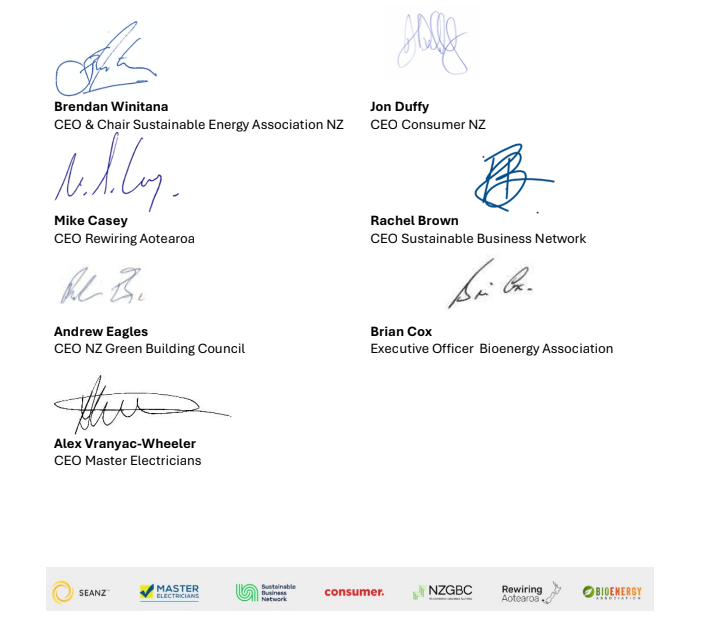

21 July 2026: The Smart Energy Alliance respectfully urges the Government not to enter into a binding commercial agreement for a liquefied natural gas (LNG) import facility in the period immediately preceding the General Election. This is not a request to abandon consideration of an LNG import terminal. Rather, it is a request that a decision of such long-term strategic significance be made by the Government that receives a mandate from New Zealanders at the forthcoming election.
In our view, the Government should exercise restraint in recognition of rushing through such a major investment with potentially serious safety, economic and environmental implications during the pre-election period.
There is no immediate imperative requiring a binding commitment in the coming weeks.
Multiple assessments indicate New Zealand has sufficient electricity supply to manage dry-year risk for at least the next 18 months, and likely considerably longer. Deferring a contractual commitment until after the election would therefore have little practical impact on energy security while preserving public confidence in the decision-making process.
Importantly, a number of fundamental questions remain unresolved.
These include:
● Whether an LNG import terminal represents the best value for New Zealand compared with alternative investments in generation, storage, demand flexibility and distributed energy resources.
● The absence of publicly available analysis comparing LNG against other options using consistent assumptions and methodologies. (Publicly released information shows the Infrastructure Commission and the Treasury raised early concerns about the problem definition, strength of the business case, limited assessment of other options and that there are questions about some of MBIE’s own modelling. This reinforces, rather than resolves, the case for full and timely disclosure of the analysis underpinning the decision).
● The eventual allocation of costs, including whether households and electricity consumers could ultimately bear costs that principally benefit a smaller group of gas users.
● The long-term exposure of consumers to LNG-linked pricing and risk that LNG could push up power prices economy-wide, not only for gas users, for decades to come.
International LNG supply is typically secured through 25-30 year contracts and New Zealand's wholesale electricity market design means the most expensive generator running at any given time sets the price paid by all consumers. On some estimates, LNG-fired generation could cost in the order of at least NZ$200-250/MWh.
● Potential environmental, marine and fisheries impacts associated with port modifications, dredging and ongoing vessel operations.
● Safety considerations associated with the siting of the LNG import facility in Port Taranaki LNG shipping, storage and handling, particularly if new infrastructure is required.
● The extent of legislative or regulatory changes that may be required to enable or support the project.
● The commercial arrangements, risk allocation and long-term liabilities that would accompany any binding agreement. Collectively, these issues demonstrate that this remains a complex national infrastructure decision rather than a routine procurement.
Whatever one’s view of the LNG import facility, New Zealanders should expect that decisions involving potentially billions of dollars, decades of consequences and significant public policy implications are made transparently and with broad public confidence. This is particularly important given the costs and benefits of this decision will be borne by consumers over decades, well beyond the term of any single Government. The funding and cost allocation model has not yet been settled.
Delaying a binding commitment by only a few months would allow the issue to be debated during the election campaign, enable all political parties to present their positions, and ensure that whichever Government is elected has a clear democratic mandate to proceed—or not proceed. Such an approach would strengthen, rather than weaken, confidence in New Zealand’s governance and investment environment.
The Smart Energy Alliance therefore respectfully requests that the Government:
1. Refrain from signing any binding commercial agreement relating to an LNG import facility before the General Election. We note recent reports that the Government intends to select a preferred provider and sign a contract before the November election, and ask that this timeline be reconsidered in light of the unresolved matters set out above.
2. Continue technical and commercial evaluation work so that an incoming Government can make an informed decision without unnecessary delay.
3. Release further information regarding alternative options, expected costs, commercial arrangements, safety assessments and regulatory implications to enable informed public discussion. In particular, we ask that the Government clarify how the facility will be funded now that the proposed electricity levy has been withdrawn and confirm what protections, if any, will be in place to prevent costs being passed through to consumers regardless of the funding mechanism chosen.
Energy security is one of the most significant infrastructure challenges facing New Zealand over coming decades. It deserves a decision that is not only commercially robust, but also enjoys the confidence that comes from a transparent process and an appropriate democratic mandate.
We ask that the Government exercise the restraint that New Zealanders have traditionally expected when major long-term decisions coincide with an imminent election.
'Twas the night before Chris-mas, and all through the house, all the voters were stirring, the pundits showing their nous … the election will soon be over, but the energy crisis won't, so we'll be there to pester whoever is in power about the need to run more of the economy on New Zealand-made energy; can Ethiopia's aggressive push for EVs work and how does New Zealand compare in terms of adoption rates?; a two-way charging trial from Genesis shows promise in Auckland, but there's still a way to go before it's mainstream; small electric vehicles are often overlooked when it comes to electrifying transport, but it's hard to miss this weird French one; a solar-powered cafe (and some electric coffee); and we endorse the political vandalism of Keith of All Trades.
Read moreDownloadPoliticians are being urged to adopt stronger electric vehicle incentives ahead of the election. Climate and energy advocacy group Rewiring Aotearoa is arguing that EVs are one of the most effective long-term solutions for rising transport and energy costs. They're promoting an EV Salary Boost proposal, which would allow workers to access EVs through pre-tax salary arrangements – similarly to already existing schemes in the UK and Australia. Policy and Government Relations Spokesperson Ngaio Neumegen told Kerre Woodham that even with the rising cost of power, it's still cheaper to run an EV than a car running on imported fuel.
A proposal that would let New Zealanders lease an electric car using their before-tax pay has not won a commitment from either National or Labour, with the 7 November election days away. Under the EV Salary Boost, put forward by Rewiring Aotearoa and Drive Electric, an employee would lease a new or used EV for three to five years. The payments would come out of their pay before tax, lowering the cost of running the car. The idea is based on Australia’s novated leasing system, though the groups say they are not proposing a direct copy.
Read moreDownload