Don't listen to Old Man Gas. Ditch LNG. Support New Zealand-made energy!


The LNG can has been kicked down the road, now it's time to stick it in the bin for good; EECA releases its first report on the two-way charging trial in Queenstown; the IEA releases its first electrification-focused report and says we're well and truly in the 'Age of Electricity'; two of our favourite energy nerds explain the primary energy fallacy; old EVs are more likely to pass tests than old petrol cars; who needs roads when you've got boats that work like planes?; and a spurious link between penguins and electrification.
LNG NFW
The LNG can has been kicked down the road. Now it’s time to put it in the bin for good.
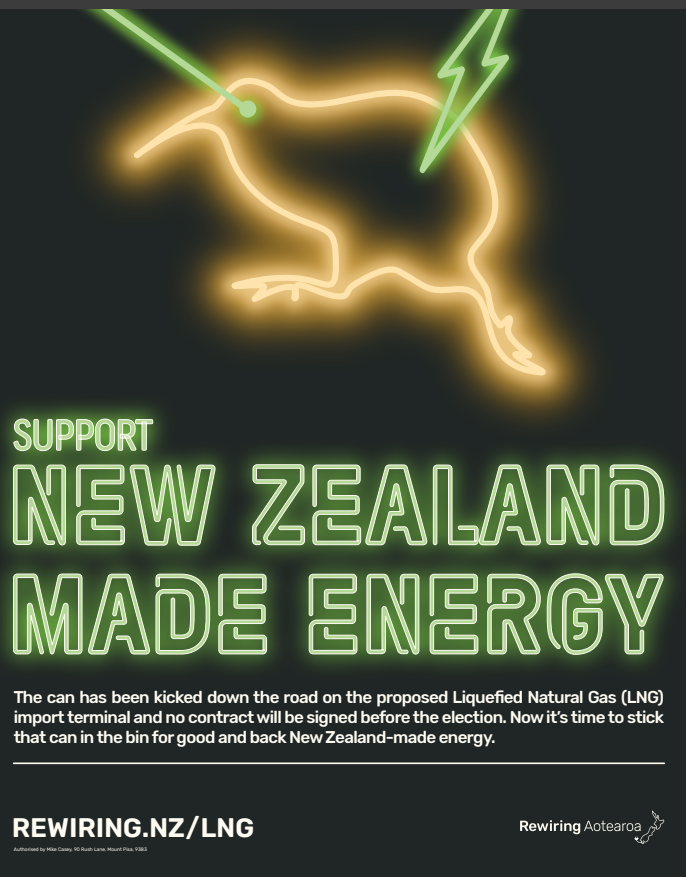
The Government has wisely recognised that the risk is too high to sign a contract for the LNG import terminal before the election. The war in the Middle East has seen LNG prices rise by 135% in a year, the renewables roll out is continuing at pace, there is more back-up for the dry year, and the closure of Methanex has meant there is now more gas available for electricity in the short-term, something energy minister Simeon Brown and others have said may provide some short-term relief.
Last weekend, we launched a campaign featuring Old Man Gas that was focused on ditching LNG and backing New Zealand-made energy, and there has been a lot of work done by many others to show that the LNG import terminal was expensive and unnecessary. To them we raise a toast.
We will take this short-term reprieve as a win - and we hope that sense will prevail and a contract will never be signed. But we could still lose if we don't have a plan to get our big businesses off gas.
Now that it is off the table for now, it's time to direct some of that resource to electrifying industry, as well as our homes, farms and businesses.
The future is going both ways
EECA has published the first report from its two-way EV charging trial in Queenstown, which is being conducted in partnership with Rewiring Aotearoa, Retyna and McKay.
Check it out here (and check out Marc Daalder's piece on Newsroom explaining the potential).
As EECA wrote:
[The report] outlines the current state of the vehicle to grid charging market in New Zealand including:
⚡ vehicle compatibility
⚡ manufacturer support
⚡ charger availability
⚡ broader market readiness
Key takeaways include…
🚘 Commercial deployment in New Zealand is currently limited by the availability of compatible vehicles and chargers, electricity market arrangements, and vehicle manufacturer support.
🚘 Although the market is starting to develop, coordination across vehicle manufacturers, charger suppliers, electricity retailers, network companies, regulators and consumers will be essential for widespread adoption. This includes software compatibility and open communication between technologies.
🚘 Continued improvements in vehicle manufacturer support, charger availability and commercial incentives are expected to accelerate market development over the coming years.
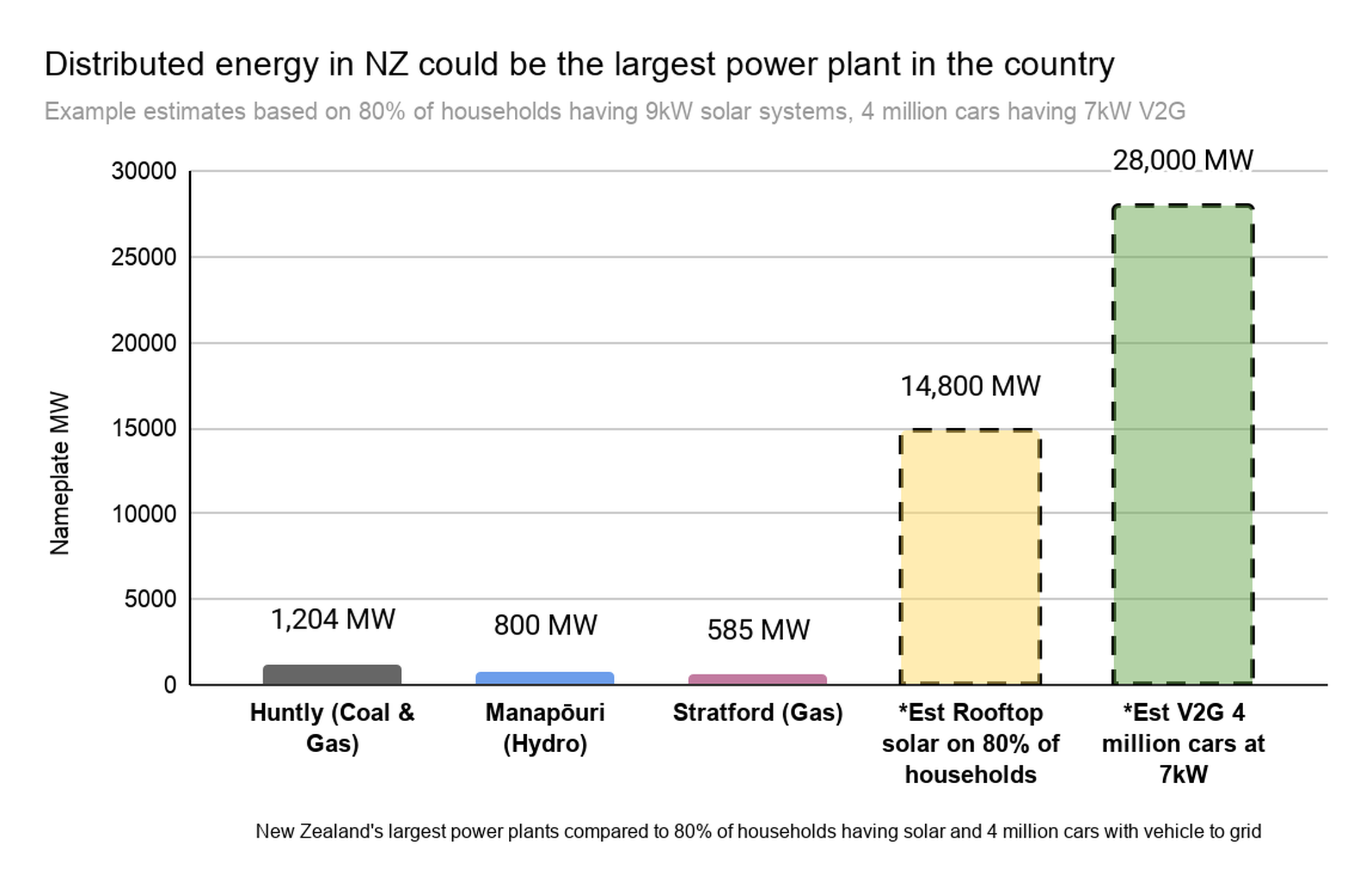
Widespread use of newer two-way or vehicle-to-grid (V2G) charging technologies (enabling electricity to flow from the EV battery back into anywhere connected to the grid) could potentially reduce New Zealand’s overall electricity system costs, by making better use of existing infrastructure and avoiding or delaying some new investment.
Over time, this could contribute to downward pressure on electricity prices. Our research is testing how two-way charging performs in real New Zealand conditions, and we will keep sharing our findings as we go.
If you’ve already got the kit, here’s a clip from Electrify This showing a company that claims to allow you to make even better use of your EV without upgrading.
The Age of Electricity
The IEA has released its first ever electrification-focused report. Things were already heading in an electric direction, but the war in the Middle East is making it even more appealing.
As it says:
“Since 2019, electricity demand has grown more than twice as fast as overall energy use, driven by electric vehicles, heat pumps, air conditioning, industrial electrification, data centres and artificial intelligence.
“Electricity is taking on an increasingly central role in economies around the world, opening up new opportunities for countries to strengthen energy security, boost competitiveness and reduce emissions through faster electrification of their economies, according to a new IEA special report.”
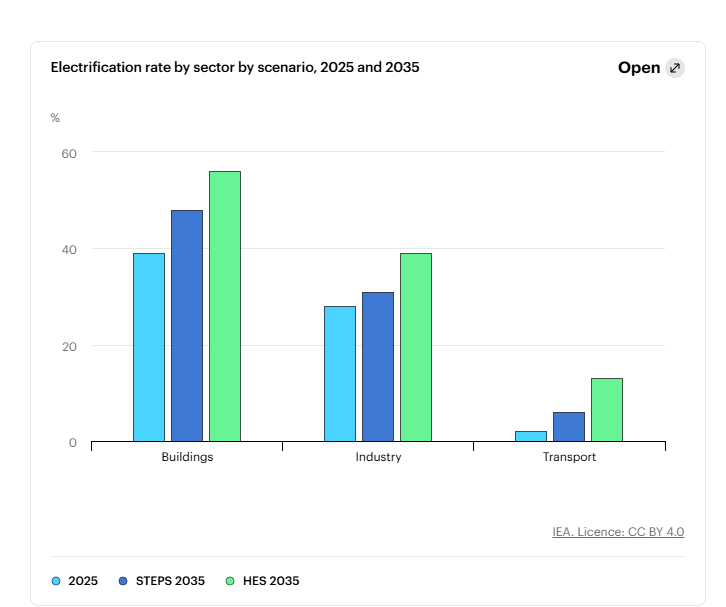
Based on technologies available today and energy prices at the levels seen before the onset of the current supply shock, the report finds that electricity could cost-effectively meet 33% of the world’s final energy consumption by 2035, up from 23% today. This would put the 35% goal that is under discussion within striking distance, according to the report. Energy prices at their current levels, amid the Strait of Hormuz crisis, would make even more of the world’s energy consumption cost effective to electrify.
Scandalous fallacies
Two of our favourite energy nerds in one place. Professor Jan Rosenow joined Michael Liebreich talk about the “primary energy fallacy” and “why focusing on the energy going into the system can obscure the useful energy we actually get out”.
“Around two-thirds of the energy we put into today’s energy system ends up as rejected heat. So are we measuring the energy transition all wrong … They explore why electrification can dramatically reduce energy demand, and what genuine systems thinking means for efficiency, waste heat and infrastructure. They also examine hydrogen versus electrification, including Jan’s review of more than 60 independent studies on hydrogen for heating, why hydrogen continues to attract support despite its disadvantages in many end uses, and how incumbent industries resist technological change.
We agree that it’s scandalous energy ministers don’t know what actually powers the economy (and how New Zealand's economy could be improved greatly with different energy sources).
Take the long way
We’ve written a fair bit about the battery life of EVs. It’s one of the main misperceptions holding back adoption, even though studies show it’s not really much of an issue in modern EVs and the batteries are likely to outlive the car. Now there’s some more good news about EV longevity, with a UK study showing they’re more reliable than petrol vehicles after 200,000km on the clock.
“An analysis of 47.4m MOT tests found that after cars were driven 90,000 to 120,000 miles, EVs were about 25% less likely to fail than petrol models of the same age (based on a failure rate of 16.5% versus 22.1%).”
There are plenty of anecdotal stories about massive kilometres being put on the clocks of EVs. Here's a Kia from Wales that just keeps on trucking.
Fly the friendly, watery skies
Who needs roads when you’ve got the blue highway? The Press reports that Ocean Flyers is proposing a network of electric seaplanes running down the coast of New Zealand.
"A company behind plans to bring electric “seagliders” to New Zealand has sketched out a South Island network, with proposed one-way fares ranging from $15 to $75.
Ocean Flyer plans to use the battery-powered seagliders to carry passengers and freight between coastal centres, and said it flew a full-sized craft for the first time in a test flight last week.
A smaller model is expected to carry 12 passengers at speeds of up to about 290kph at 10m above the surface of the sea, giving Ocean Flyer the unusual task of persuading travellers that something that looks like a plane, leaves from a wharf and is regulated as a vessel is a perfectly ordinary way to get to Timaru.
Happy feet
Penguins are not something we talk a lot about at Rewiring, but it turns out that their feet are like little heat pumps and we are fully behind those. Now you know.
No-one likes a skite, but everyone loves perovskite, including some awesome New Zealand researchers trying to improve the efficiency of solar; why put panels on the roof when you could have panels as walls; electric trucks are increasingly stacking up when it comes to lifetime costs; an induction hob that can 'cook on yesterday's sunshine' gets the tick of approval from appliance giant Miele; CATL's new 15-year battery; and how to fight energy disinformation by talking to lots of disparate groups.
Read moreDownloadNational has announced what it’s calling ‘Electrify NZ 2.0’, a nine point plan to provide affordable power. And while it has a lot of stuff Rewiring has been asking for for a few years, there are a couple of big bits missing, says CEO Mike Casey.