Don't listen to Old Man Gas. Ditch LNG. Support New Zealand-made energy!


The City Rail Link adds another electric string to the bow of Auckland, which is growing its public transport services and reducing operating costs while reducing emissions; you'd have to really hate saving money to buy a diesel van if you're a courier; Bob the Builder is back after a bit of a break to front a campaign about the need for workers to install solar, batteries and electric upgrades; another pilot in Australia aims to make it easy for Canberrans to go electric; and boating is going electric 'faster than you think'.

Win-wins!
The opening of the City Rail Link over the weekend brought a lot of train FOMO to plenty of people outside Auckland. More electric public transport is something we’re always keen to see more of, and Auckland is showing that electrification allows for growth of services without the emissions and with lower operating costs.
“New emissions data shows Auckland Transport (AT) has recorded its lowest operational emissions since reporting began, exceeding its Statement of Intent target with an 8.0% reduction on the previous year and a 0.65% decrease from the 2021/22 baseline. The result was achieved despite significant growth in public transport services, more Aucklanders gaining access to frequent public transport and continued investment across Auckland’s transport network.
While a big new electric train set with lots of tunnels and a few new stations is obviously worthy of celebration, buses are also doing some heavy lifting.
Since 2021/22, kilometres travelled by electric buses have increased from 4.2 million to 23.7 million annually, helping more Aucklanders travel on quieter, lower-emission public transport services. At the same time, AT's overall operational emissions have fallen. This means Auckland's growing electric bus fleet is no longer simply offsetting increases in service delivery. Emissions are now falling even as more services are being provided across the city.
"Auckland is building one of the most electrified public transport networks in Australasia, going from only 12 electric buses in 2020 to over 400 today," says Councillor Richard Hills.
There’s also some positive moves on the water with electric and hybrid ferries (although the charging infrastructure is taking a bit longer than hoped) and there’s also 8.3 kilometres of new walking and cycling paths.
Van life
For those who do need a car, we also want to see more people going electric. And it makes sense for a number of reasons.
Those who drive more stand to save more in an EV (if they charge primarily at home). And, as Evnex shows on its blog, Kaiapoi courier driver Maurice Tua is saving $1,600 a month by avoiding diesel and running on electrons in an LDV eDeliver 9, which was purchased in 2023.
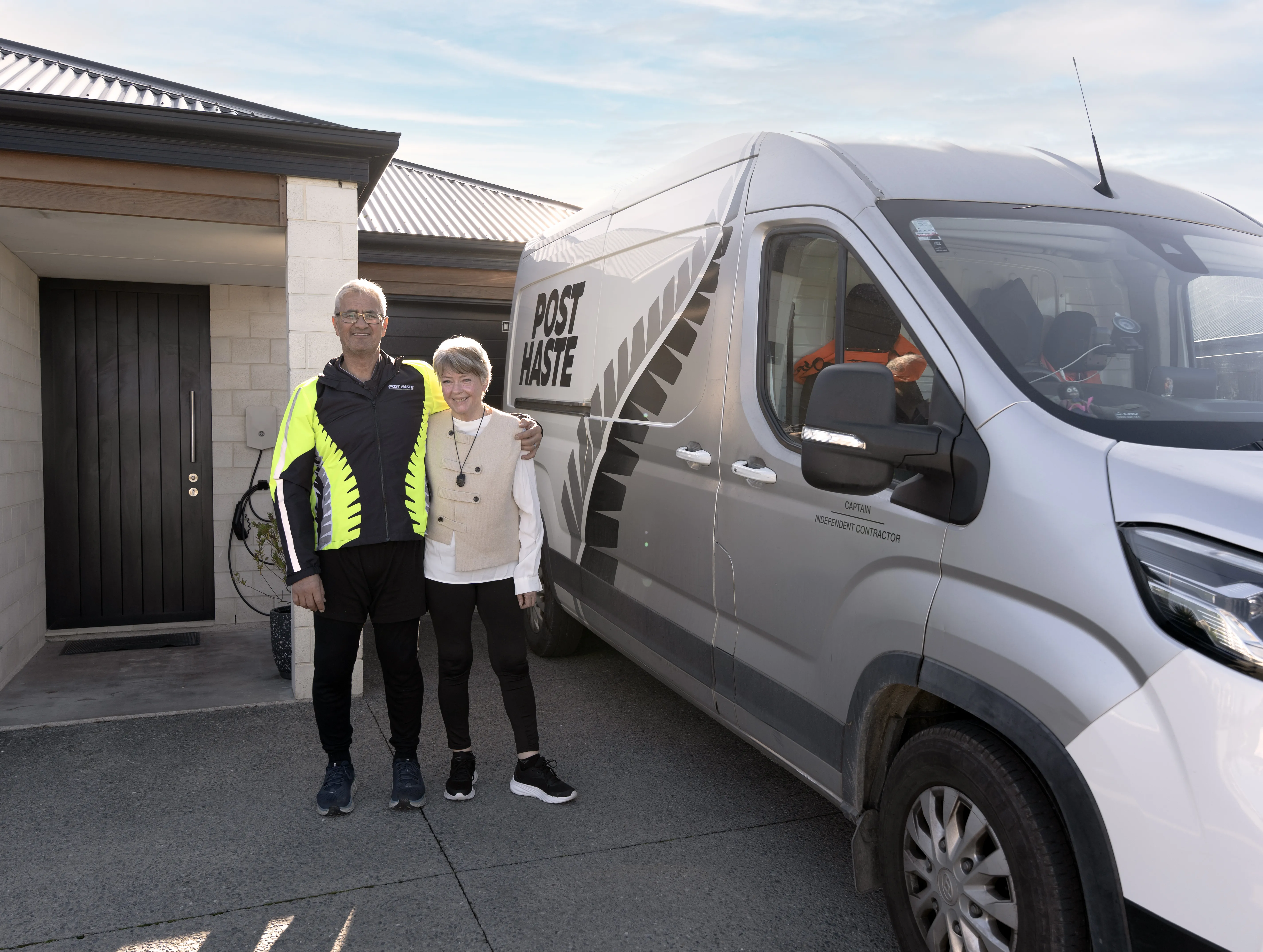
Three years on, Maurice and his wife Lisa have put over 36,000 kWh through their Evnex E2 home charger: the most of any E2 in New Zealand and the equivalent of almost 200,000 km driven. With solar panels, a home battery and scheduled overnight charging, their van is fully charged and ready every morning for its 170 km daily route.
You’d have to really hate saving money to go for the diesel option these days. And there’s no guarantee the diesel price won’t go higher, with Donald Trump telling Ukraine not to hit oil facilities while he’s hitting oil facilities.
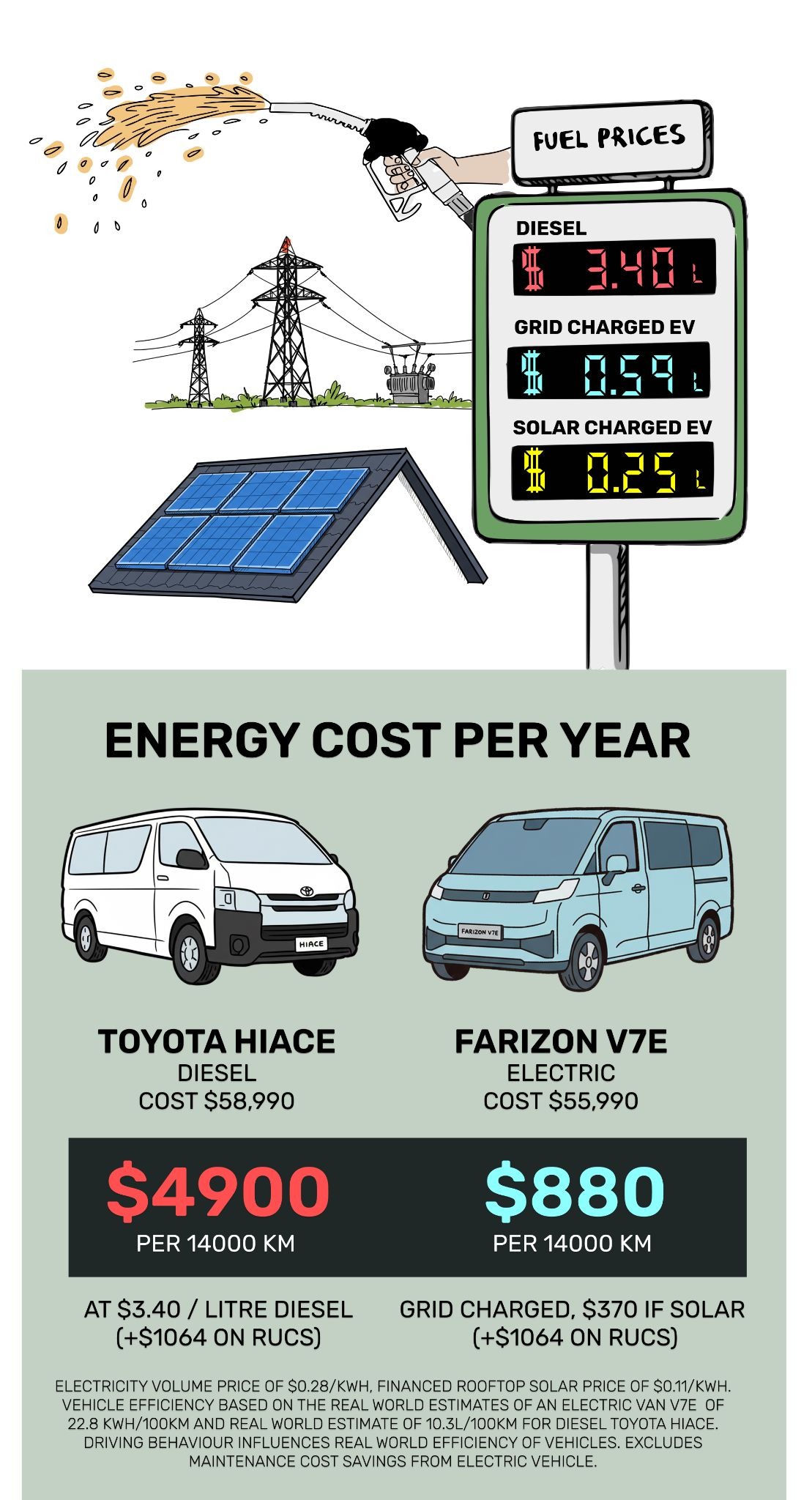
Using diesel at $3.40 a litre, this is what the difference in annual running costs looks like.
Evnex was also in the news recently after hitting 20,000 charger sales (as Driven Car Guide said, it sold its first unit in 2017 and it took 8 years to hit the 10,000 mark; the second 10,000 has taken just 9 months).
Here’s CEO Ed Harvey talking about the recent momentum.
She’s a big job
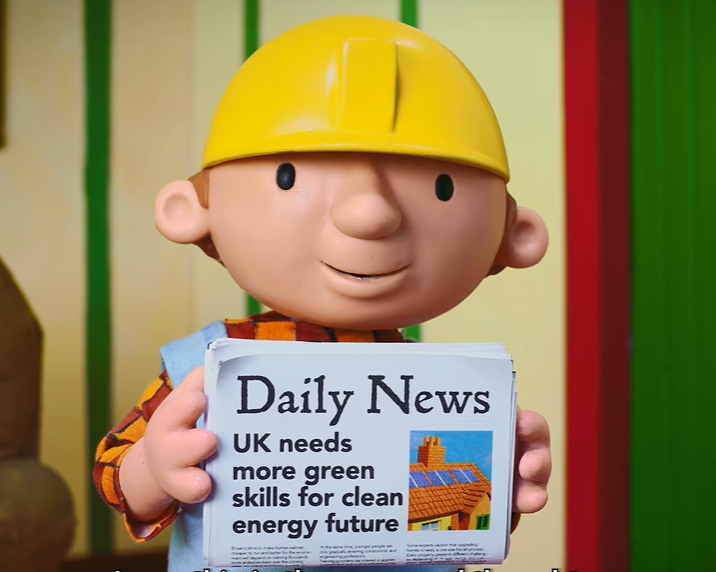
Last week, we had some research from E.On that showed plenty of young'uns think petrol cars are akin to landlines and that EVs are the future. This week, we’ve got some more E.On action, with Bob the Builder returning after a bit of a break to front a campaign focused on the need for more tradies to upskill.
Motivated by the growing role technologies such as solar panels and batteries can play in lowering bills and putting people in control of the energy they use, Bob enrols at E.ON Next’s Net Zero Training Academy to learn new green skills. The campaign shines a light on the progress needed to support the UK’s transition to clean power, with the government targeting a decarbonised electricity system by 2030. While the products needed to transform homes are already available, people working in the sector believe more needs to be done to ensure the workforce can roll them out across the country.
At a time of lacklustre growth and high unemployment, New Zealand is also short of solar installers and sparkies, but this is a pretty good problem to have. When there is high demand for something, the market will respond. And the Government and training orgs need to look ahead to what’s coming: not just for solar, but millions of batteries, hot water heat pumps and EV chargers.
While additional demand is creating a short-term constraint, many of these jobs could be filled in the short-term with skilled migrants. But it’s a massive job creation opportunity in the medium-to-long-term and all political parties should be embracing that and announce policies to support a bigger, well-trained workforce.
In Australia, they install around 300,000 solar systems a year. And now they’re installing even more batteries. They can meet that demand and meet it safely. It’s clearly possible to scale the workforce. But the Government over there had a clear plan to get there (and subsidies to drive demand).
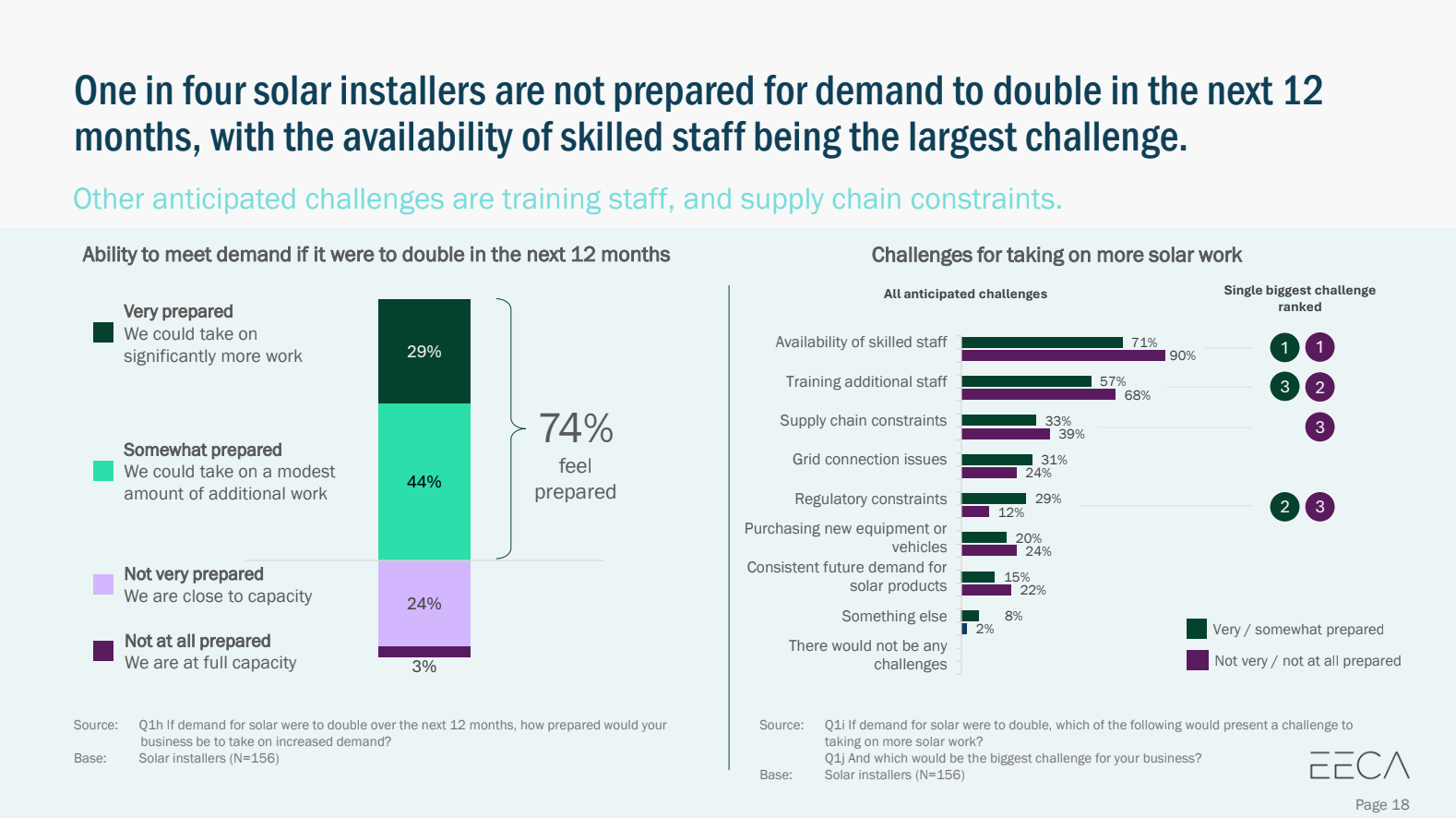
A recent EECA survey of solar installers showed that skilled staff was the biggest challenge but plenty of installers are ready to roll. It showed that three quarters of solar installers were very or somewhat prepared to handle a doubling of demand in the next 12 months.
Here’s what Rewiring is pushing for:
Roll out the pilots
Australia’s 2515 pilot attempted to electrify a postcode. And the lessons from that are set to be applied to Canberra, where, as politician and ex-Wallaby David Pocock explains, another pilot is rolling out.
The Australian Renewable Energy Agency (ARENA) has announced $8.2 million in funding for a major Canberra project that will test a simpler way for households to switch from gas to electricity, making homes more comfortable, efficient and cheaper to run. The project, led by clean energy service provider Electric Future, will work with up to 1,000 households across Canberra’s southern suburbs to trial a single digital platform that acts as a one-stop shop for home electrification. The project will also help households take advantage of technologies including electric vehicles, home batteries and rooftop solar.
ARENA CEO Darren Miller said Australians shouldn’t need to be energy experts to access the benefits of clean energy.
“For many households, the barrier to electrification is not just the technology. It can be knowing where to start, comparing products and quotes, finding trusted installers, navigating rebates and finance, managing upfront costs, and understanding which choices will deliver the best outcome for their home,” Mr Miller said.
No smoke on the water
We love to see ICE enthusiasts change their tune when they try an electric equivalent. It’s happening across a range of sectors, from light transport to massive mining machines. And 'it's happening faster than you think' in the boating world.
As Boating NZ writes, electrification is becoming an appealing prospect, especially considering the steep price rises for fuel this year.

The story points to ‘Adventure Boating Company’ Axopar, which “has challenged convention by creating boats that combine exceptional performance, drivability, purposeful Scandinavian design, and versatile functionality in a way that redefined modern boating.”
Political Power has gone local! Dr Nick Smith, mayor of Nelson and ex-National Party minister, is an early adopter when it comes to electric machines but, through his efforts with the council and his close involvement with the Ratepayer Assistance Scheme, he's also embracing one of Rewiring's core mantras: once you've electrified your own life, electrify someone else's life, too.
Read moreDownloadWhether it's the growing number of electric buses, new electric trains for the lower North Island and City Rail Link, or new electric ferries, we love seeing more electric transport options in our big cities. It's also good to see some of our smaller cities like Palmerston North, Timaru and Nelson going electric and, as is almost always the case, the drivers reckon it's better on electrons. At the Electrify Nelson expo, we spoke with one driver Lee about the city's electric buses. And he definitely wouldn't go back to diesel.
Read moreDownload