Don't listen to Old Man Gas. Ditch LNG. Support New Zealand-made energy!

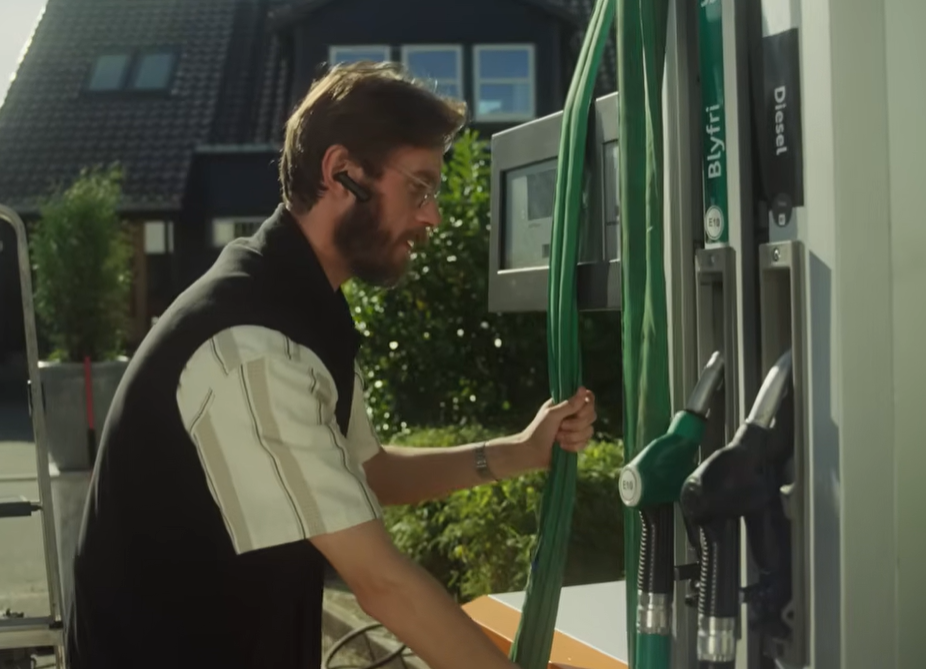

We're throwing a price parity party as BYD announces compelling deals for new electric cars (no need to add wings to save money); another impressive New Zealand marine business E-Stroke looks to retrofit recreational boats and shows the economics stack up; Australia gets creative with its excess solar and batteries that have been installed in a few months as part of the subsidy programme now rival our third biggest power station; New Plymouth District Council gets set to benefit from a big airport solar farm; how thousands of panels are being installed and cleaned with the help of robots; and Norwegian smart charging provider Zaptec tells the inspiring tale of a man on a home petrol pump mission.

Parity party!
The upfront costs of electric vehicles continue to drop and price parity with internal combustion vehicles is almost here. BYD has just announced the arrival of three new cars in the local market, with the Atto 1 going for under $30k (not quite as cheap as the MG3 or Suzuki Swift, slightly less than a Honda Jazz and a few thousand cheaper than a Toyota Yaris) and the Atto 2 small SUV with >400km of range going for under $40k.
The sticker price remains a barrier so having these come down should help to increase adoption rates and improve the lifetime cost comparisons.
On average, an EV charged with rooftop solar will save you almost $20,000 over the lifetime of the vehicle and charging via the grid will save you around $10,000. Those numbers factor in the higher upfront costs of EVs, but because electric vehicles are so much better at using energy to create motion than petrol or diesel vehicles, it makes them much cheaper to run and there's no competition when it comes to carbon emissions.
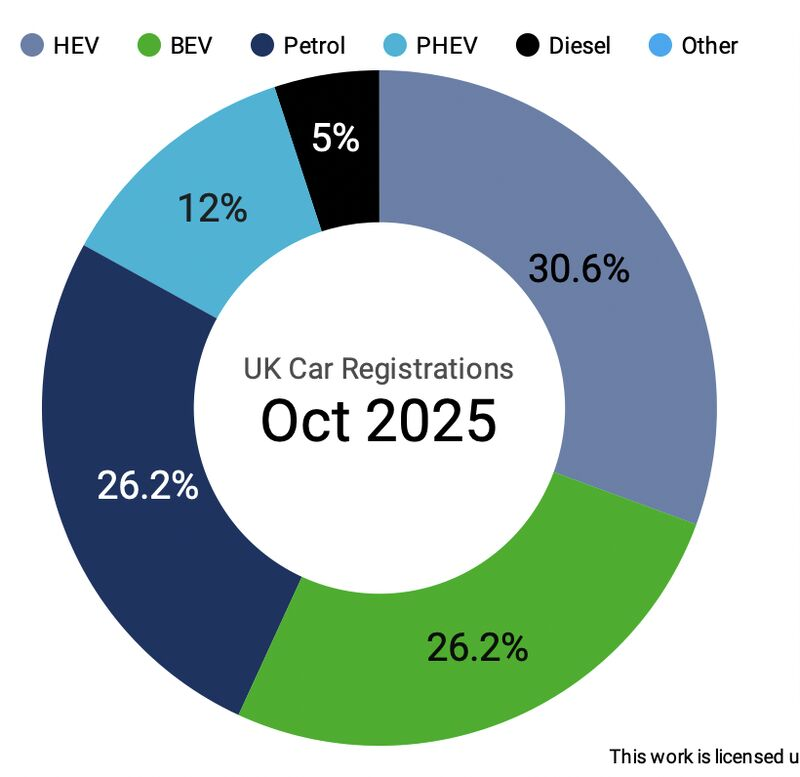
In the UK, EVs overtook petrol cars in October, with one in four new cars fully electric and sales of petrol and diesel cars down by a third.
We are seeing a gradual increase in sales in New Zealand after the big dipper of 2023 when the subsidy was removed (according to Stuff, overall, BEV registrations were up 28.5% in August compared to the same time last year), but the growth is pretty anaemic compared to some other markets.
Let’s hope these prices inspire a few more people to drive on electrons because plenty of surveys have shown that once you go electric, you’re unlikely to go back.
While we would advocate for everyone to go electric rather than put wings on your car to reduce costs, we do appreciate this excellent loophole exploitation campaign from Serial climate comedian Oli Frost.
Stroke on the water
New Zealand’s rich history of marine design and electricity innovation makes for a bloody good combo and there’s another business to add to the nautical mix: E-Stroke.
Converting old fossil fuel machines to electric versions is a growing industry across many different vehicle types - from Land Rovers to Hiluxes to rubbish trucks - and keen water skiers Jeff and Michael Smit decided to focus on recreational boats.
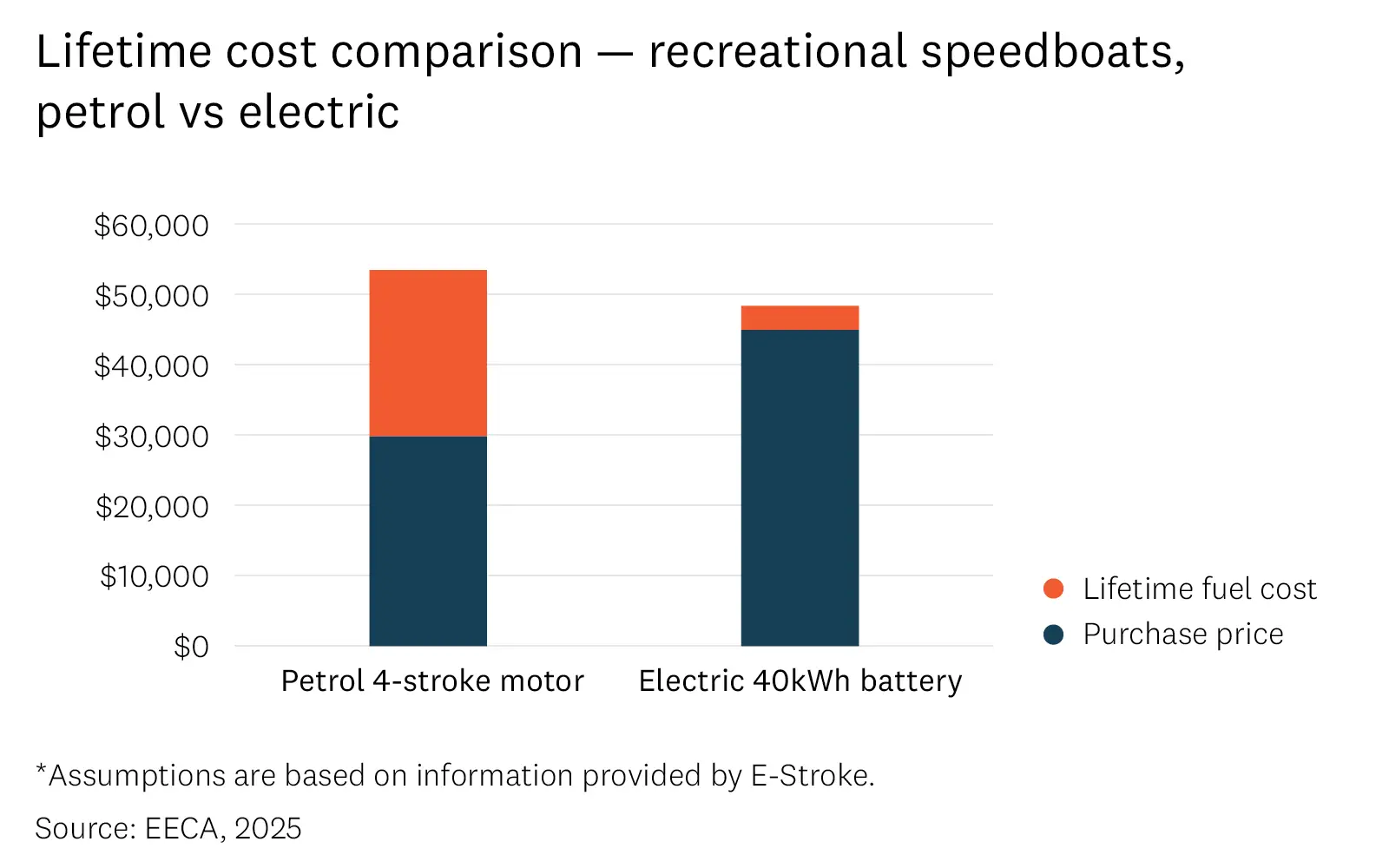
They’re the subject of a new EECA case study and, as it says, “they have proven it’s possible to convert a speedboat to run off battery power for roughly the same price as replacing a 4-stroke outboard".
The goal of the cousins is to “produce off-the-shelf, electric outboard kits that are affordable and accessible.
“Families keep boats for a long period of time and the hulls remain as they are, but the motors often fall apart. So you'll often see an older hull with a new motor,” says Michael.
With a price point around the $30,000 to $50,000 mark, E-Stroke's kits will be comparable in cost to buying a 4-stroke outboard motor and having it fitted to your boat.
This is a much more affordable option than buying an electric boat brand new. Often electric boats come with advanced technology like hydrofoils which help improve efficiency, but push the price point up.
"We’d like to produce a kit that a third party could put on. All the parts are readily accessible for that. And that comes back to not modifying it too much, not making it too bespoke, keeping it as standardised as we can and using original factory parts as much as we possibly can.”
Some for all
One of the criticisms of the electrification movement is that it’s inherently selfish and only benefits the wealthy who can afford to pay the higher upfront costs. In many cases that’s true, which is why we're working hard on fixing the equity issue by developing low-interest finance schemes and a solar for renters programme.
But Australia has shown that millions of homes generating cheap energy through rooftop solar can benefit everyone.
The Government has just announced a 'solar sharer' scheme, where every home - including those without solar - would get access to three hours of free power in the middle of day. Rather than see renewable electricity go to waste, it will benefit everyone - and provide an incentive to use it when it's cheap and reduce the strain on the grid at peak times.
While there is understandable debate about the policy and its effect of prices at other times of the day (not to mention the response from those who have invested their money in solar only to see it benefit others), this is a completely different narrative where rooftop solar is the hero and greater uptake is what's unlocking cheaper prices for whole communities.
The Government has also unlocked a huge amount of battery storage through its subsidy programme. There have been over 100,000 installs since July 1st and about 600MW has been deployed. That's the equivalent of households building the third largest power plant in New Zealand in four months.
Light it up
Just as Texas, a massive oil producing state, has fully embraced solar, Taranaki, our biggest gas producing region, is also increasingly looking to the sun, with the large airport solar farm consisting of almost 15,000 panels set to provide Council with cheaper electricity.

As RNZ reported, "around half of New Plymouth District Council's electricity - 6.2 gigawatt hours, about the same as 885 average four-person households - will come from the New Plymouth Airport solar farm from 1 November under a five-year deal with the council-owned airport company Papa Rererangi i Puketapu".
"Like every household, when electricity prices are rising, we shop around for the best deal,” says Council climate change response lead Greg Stephens. “The airport solar power is a great deal with a 20 percent saving on the general market rate and it's cleaner, cutting our direct emissions from our facilities and vehicles by about 10 percent, or 630 tonnes of CO2 equivalent each year.
"As well as keeping the lights on at the Festival of Lights [which will be the first to first to light up with 100 percent renewable electricity] and in our office spaces, electricity powers our core services such as street and traffic lights, keeps our water and wastewater pumping, charges our electric vehicle fleet, our pools, libraries and venues, including all those summer gigs at the Bowl of Brooklands."
From pool complexes run by Hutt City Council to Te Kaha stadium in Christchurch, the economically rational councils are increasingly moving away from gas and other fossil fuels to reduce the burden on ratepayers and looking to produce as much of their own energy as possible. As the story of Bordeaux shows, putting solar on as many public assets as possible - even those with a bit of heritage value - appears to be a good strategy.
Many robot hands make light work
Putting up panels on the roof and cleaning them is a job for humans. But when you’re talking about tens of thousands of them, some more assistance is required.
Sun Pure has developed robots to both install and clean panels on huge solar farms and the efficiencues are clear to see.
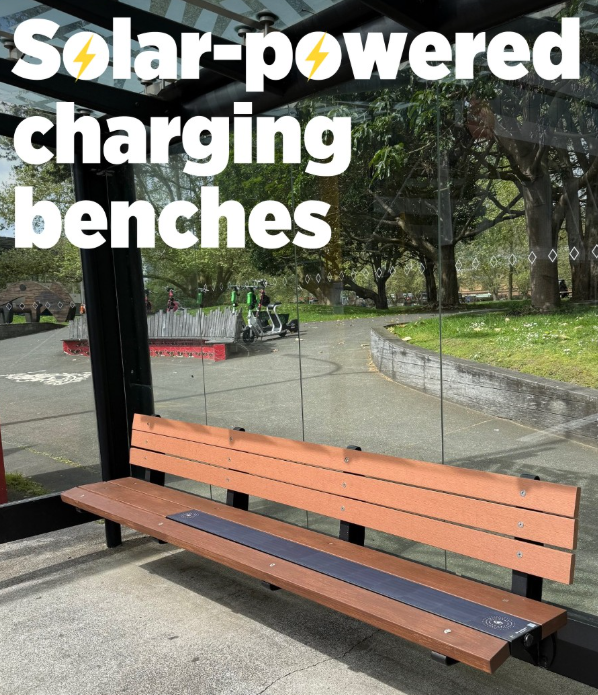
At a slightly smaller scale, solar is also being put to good use in Auckland with a trial using benches that can charge your devices and run lights at night.
‘Batteries are for toys’
Like our friend Old Man Gas, there are some who will continue to cling to old technology, despite the various drawbacks. Norwegian smart charging provider Zaptec tells the inspiring entrepreneurial tale of a man on a home petrol pump mission.
Political Power has gone local! Dr Nick Smith, mayor of Nelson and ex-National Party minister, is an early adopter when it comes to electric machines but, through his efforts with the council and his close involvement with the Ratepayer Assistance Scheme, he's also embracing one of Rewiring's core mantras: once you've electrified your own life, electrify someone else's life, too.
Read moreDownloadWhether it's the growing number of electric buses, new electric trains for the lower North Island and City Rail Link, or new electric ferries, we love seeing more electric transport options in our big cities. It's also good to see some of our smaller cities like Palmerston North, Timaru and Nelson going electric and, as is almost always the case, the drivers reckon it's better on electrons. At the Electrify Nelson expo, we spoke with one driver Lee about the city's electric buses. And he definitely wouldn't go back to diesel.
Read moreDownload