Operation Laser Kiwi: help us take New Zealand-made energy on the road


Contact's grid-scale battery at Glenbrook is switched on and the Prime Minister talks again about 'energy independence' at the opening; how steel mills and smelters here and overseas are embracing electrons; the electric wave is a massive job creation opportunity (while imported oil does bugger all on that front) and renewable projects are set to keep New South Wales out of recession; batteries have all but displaced gas for peaks in Queensland in just a couple of years, and solar and wind overtake gas for the first time globally; data shows sales of internal combustion cars peaked in 2017 but sales of EVs more than doubled between 2022 -2025; and anyone with a heat pump is making a killing.

Corner store
Contact’s first grid-scale battery in Glenbrook had a ribbon cutting and a visit from the Prime Minister this week.
As their post said: “We’re stoked to have our Glenbrook Ohurua Battery 1 sending electrons to the grid. This 100MW energy storage system can power the equivalent of 44,000 Kiwi households at peak demand. And it does so in a split second.”
Battery number two is now being built and it’s good to see more of this (even if it is unlikely to reduce household electricity bills).
At the opening, the Prime Minister once again brought up the idea of energy independence and said it is now a very key part of our national security.
“New Zealand's energy vulnerability is no longer just a theoretical risk … We are living with it each and every day - it's on full display in the Strait of Hormuz, and obviously more action is required.”
A new LNG import terminal is not the right kind of action, so we reckon there needs to be more action like big and small batteries to help with daily peaks, more action like a rapid solar, wind and geothermal roll out so we can use the water in the hydro lakes more effectively, more action like a coal and diesel backstop just in case, and more action like incentivising EVs and other electric machines that run on New Zealand-made energy.
Steeling ourselves
Contact’s big battery is situated close to New Zealand’s biggest steel plant. Steel is one of the most difficult sectors to electrify, but Glenbrook does have an electric arc furnace paid for in part by the now defunct GIDI fund (as it uses so much juice, it entered into an off-peak agreement with Contact so it doesn’t put as much pressure on the network).
Hayes Metals in Auckland runs a 1.3MVA electric smelter and takes a lot of Vector’s old electrical assets and upcycles them into high quality alloys.
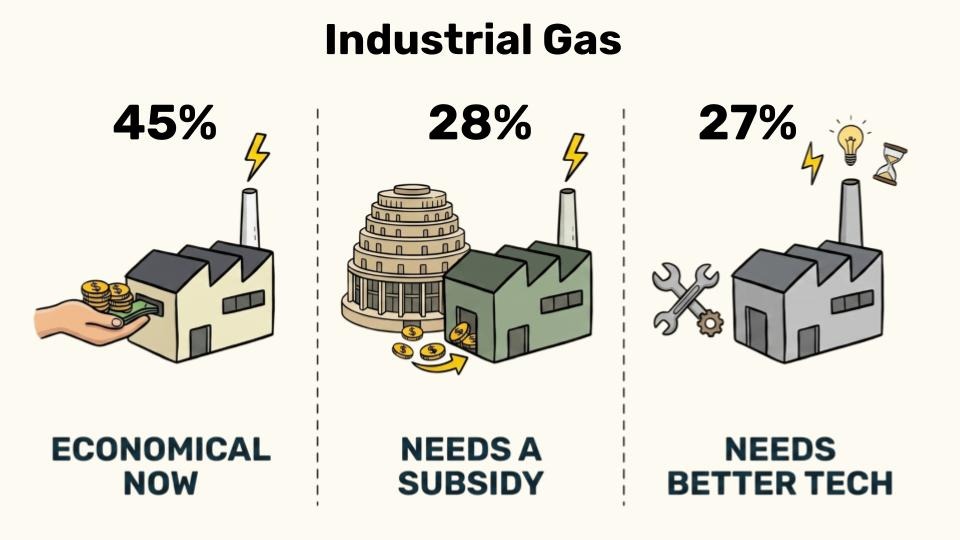
As our domestic gas runs lower than expected, we need to do all we can to transition those users to electricity. And if metal makers and smelters can get off the gas, it shows that there are options for lots of other businesses, but that sometimes government assistance may be required.
Overseas, there’s also a bit of action on the green steel front. Swedish company SSAB is getting set to build a new factory powered by renewables instead of coal.
The new plant is set to cost a massive 4.5 billion Euro, and it could reduce Sweden’s carbon emissions by 7%.
In Australia, a steel mill in Melbourne has switched on to ‘mostly green power’ with the help of a wind farm.
A steel mill on the industrial edge of Melbourne has become the first in Australia to draw more than half its power from renewable energy sources, marking a step forward in the push to clean up one of the world’s most carbon-intensive industries. Since activating a new energy supply deal on April 1, InfraBuild’s Laverton steel mill in Melbourne’s west has been contracting enough electricity from a wind farm to cover more than 50 per cent of the power it needs to melt scrap metal into molten steel.
Green growth
We often talk about New Zealand’s electric wave being a massive job creation moment - from solar installers and sparkies around your home, to grid scale renewable and battery builds that require big teams. That is certainly true when compared to imported fossil fuels, where, as Dr Saul Griffith says, “bugger-all jobs are created other than retail petrol station attendants”.
In Australia, Matt Kean, Chair of the Climate Change Authority, posted a story from the Sydney Morning Herald saying that renewables were the only thing keeping the New South Wales Economy out of recession.
The massive number of jobs, the incredible financial boost to small business and towns in regional areas, and the investment in the NSW economy all make an irrefutable argument for the renewable energy rollout.
The environmental, cost-of-living and technological benefits are also undeniable. Ask an EV owner (and some EVs are now much cheaper than petrol vehicles) if they enjoy paying a fraction of the cost than those who are subject to world oil prices, and I’m sure they will confirm their preference for clean cheap energy.
Increasingly, climate action is economic rationalism. We’ve been focusing on the economics for the past few years. Other groups are too.
Peaking interest
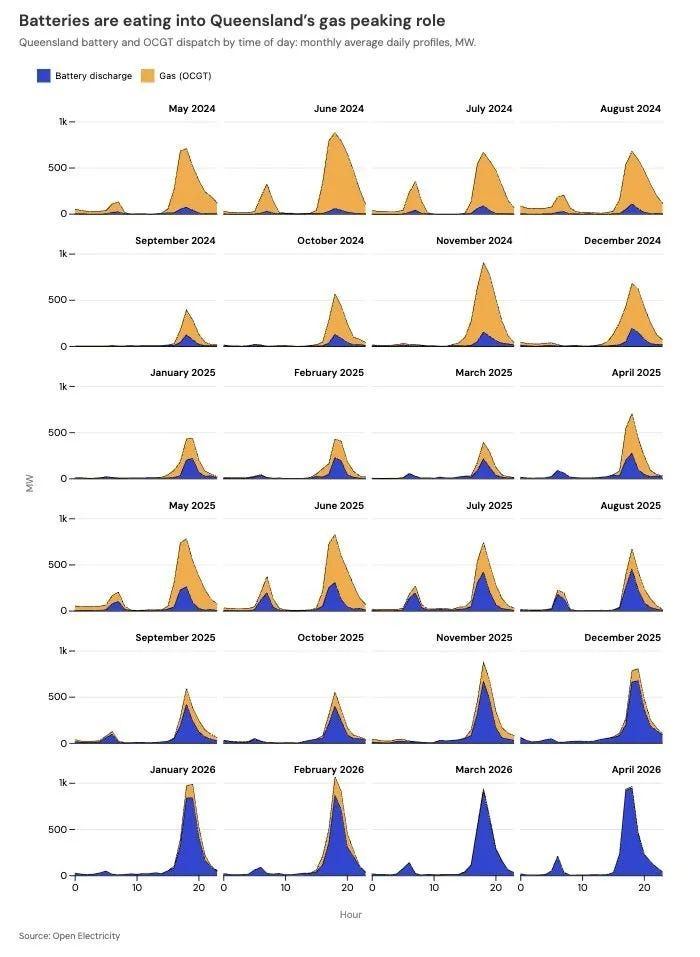
Staying in Australia, over 400,000 batteries have been installed in homes through the Government's subsidy scheme and, as the below graph shows, batteries big and small that can store cheap renewable or off-peak energy and then discharge it when it’s needed most have reduced the need for gas in Queensland over the past two years.
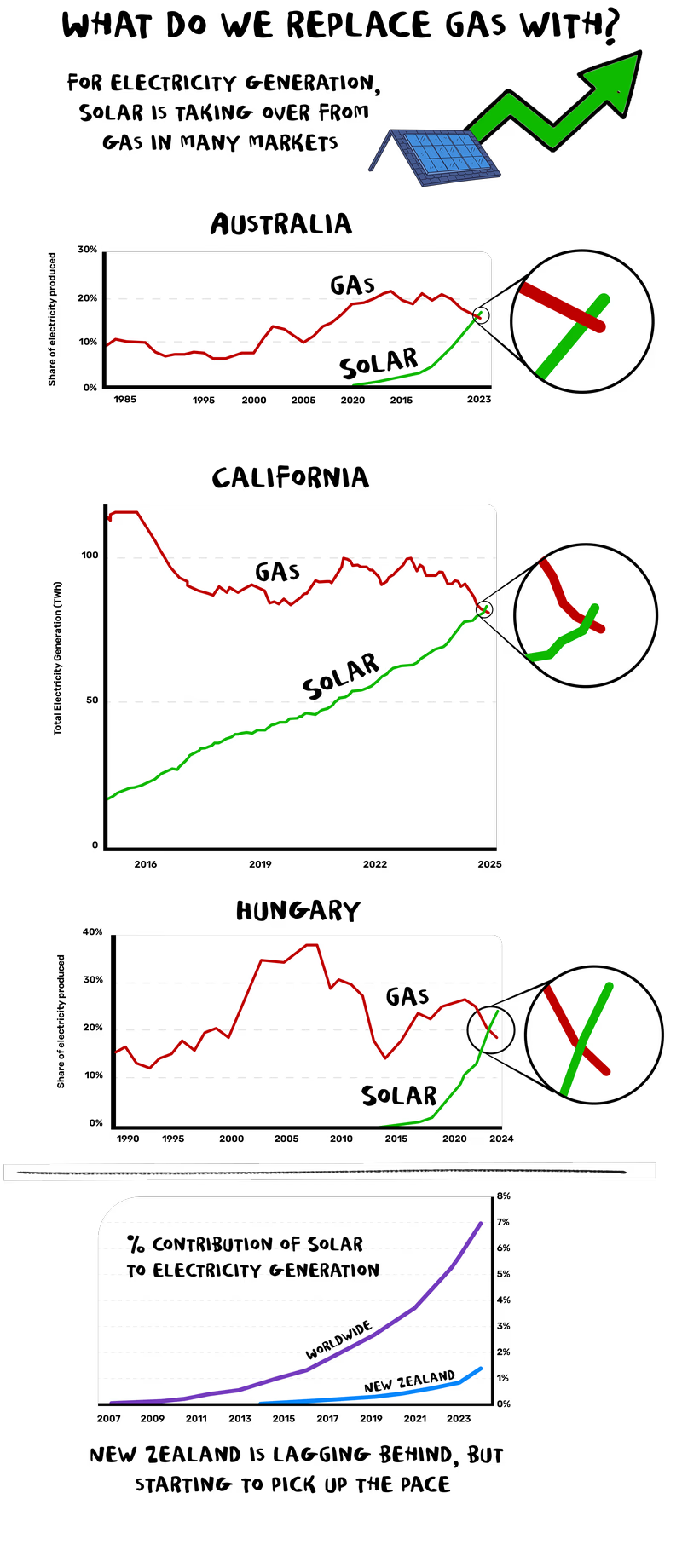
Last year, we showed in our explainer how solar was taking over from gas in a range of different markets.
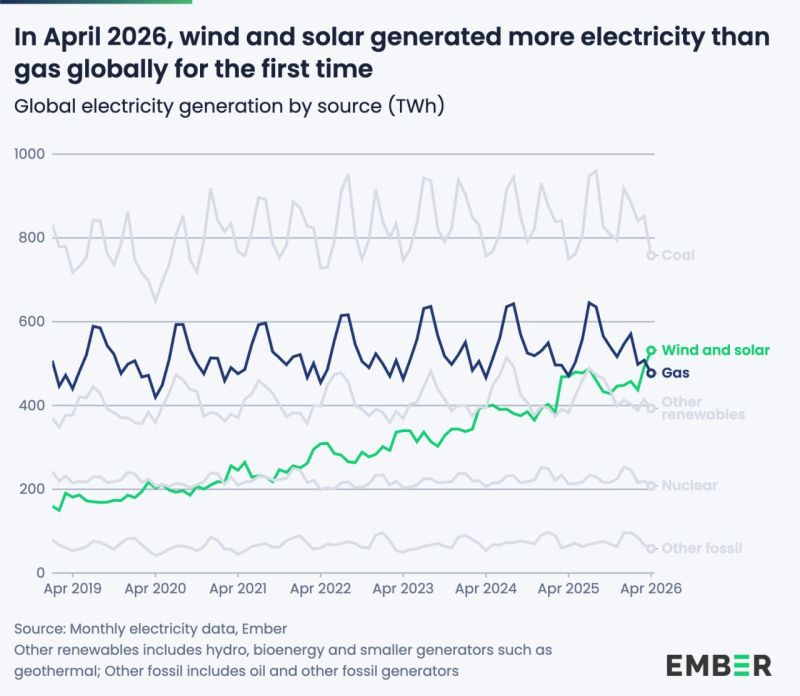
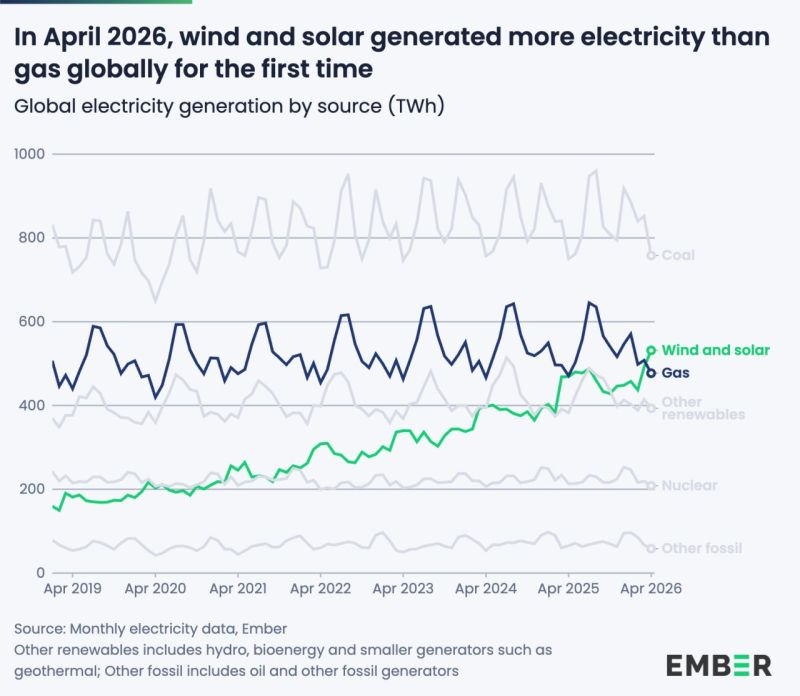
A recent Ember analysis shows that “wind and solar generated more electricity than gas globally for the first month ever in April 2026, according to data analysed by global energy think tank Ember. Together, wind and solar generated 22% of global electricity in April 2026, compared with 20% from gas.”
ICE cold
In New Zealand, we typically spend around $40m a day at the pump but increased prices as a result of the war have sent that to over $60 million per day.
As Saul Griffith wrote in his, in a piece titled the Iran war exposes our stupidity: “Australia spends approximately $165 million every single day on imported petroleum. That is $6.9 million an hour. It never stops. In 2022–23, total petroleum imports exceeded $60 billion. Diesel alone cost $33 billion — more than the combined export earnings of wheat and wool. We have no pricing power in the market and the obvious substitute beams from our skies in abundance.”
EV interest has increased significantly almost everywhere since the war broke out, but the writing has been on the wall for a while now and, as Our World in Data shows, internal combustion sales peaked in 2017.
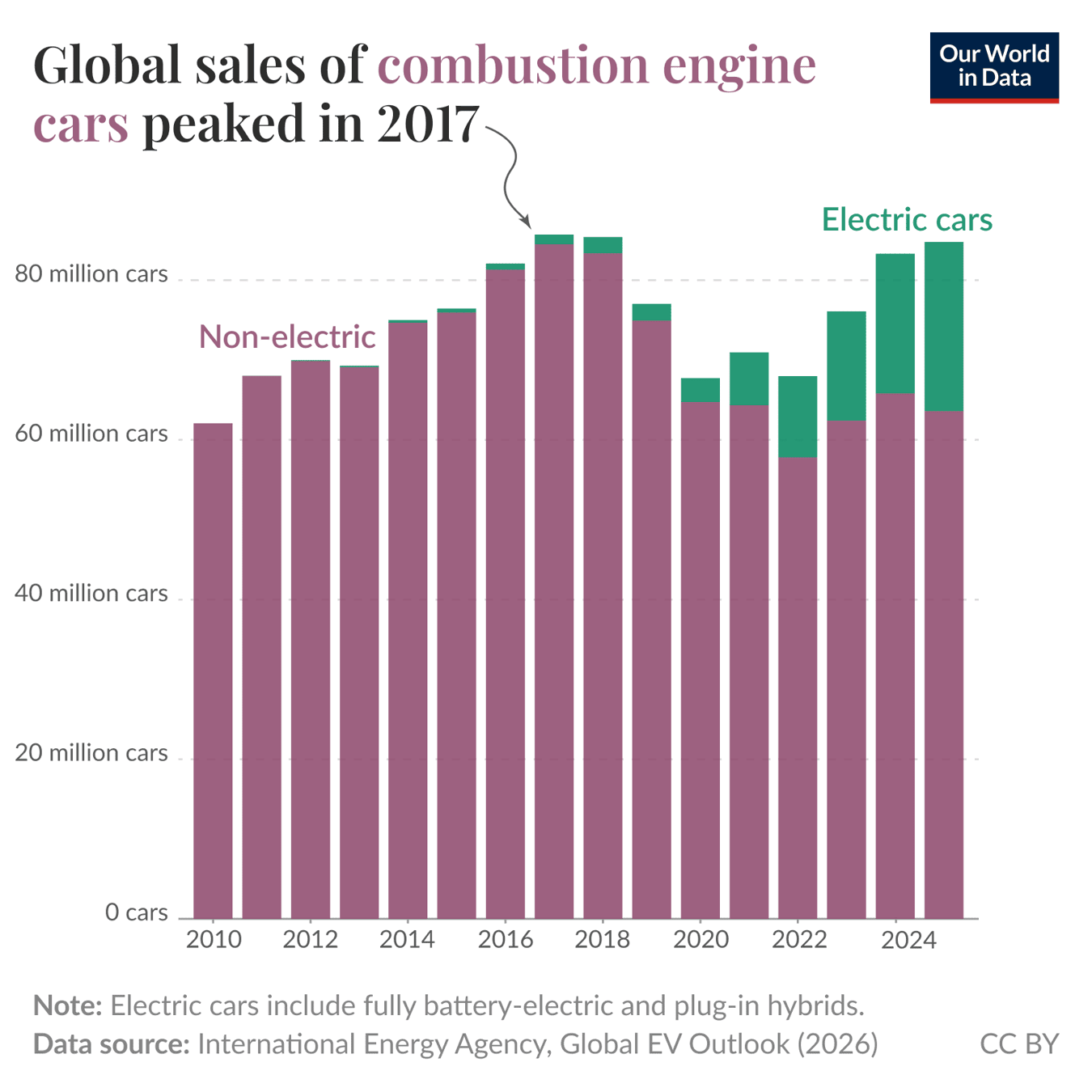
While we prefer to base success on the number of fully electric cars, a lot of international data - including this - includes plug-in hybrids. As it said:
“This transition has already started. In fact, global sales of combustion engine cars are well past their peak and are now falling. As you can see in the chart, global sales peaked in 2017. This is calculated based on data from the International Energy Agency. Bloomberg New Energy Finance also estimated this peak occurred around that time. Sales of electric cars, on the other hand, are growing quickly. They more than doubled in the three years from 2022 to 2025.
The sun has won
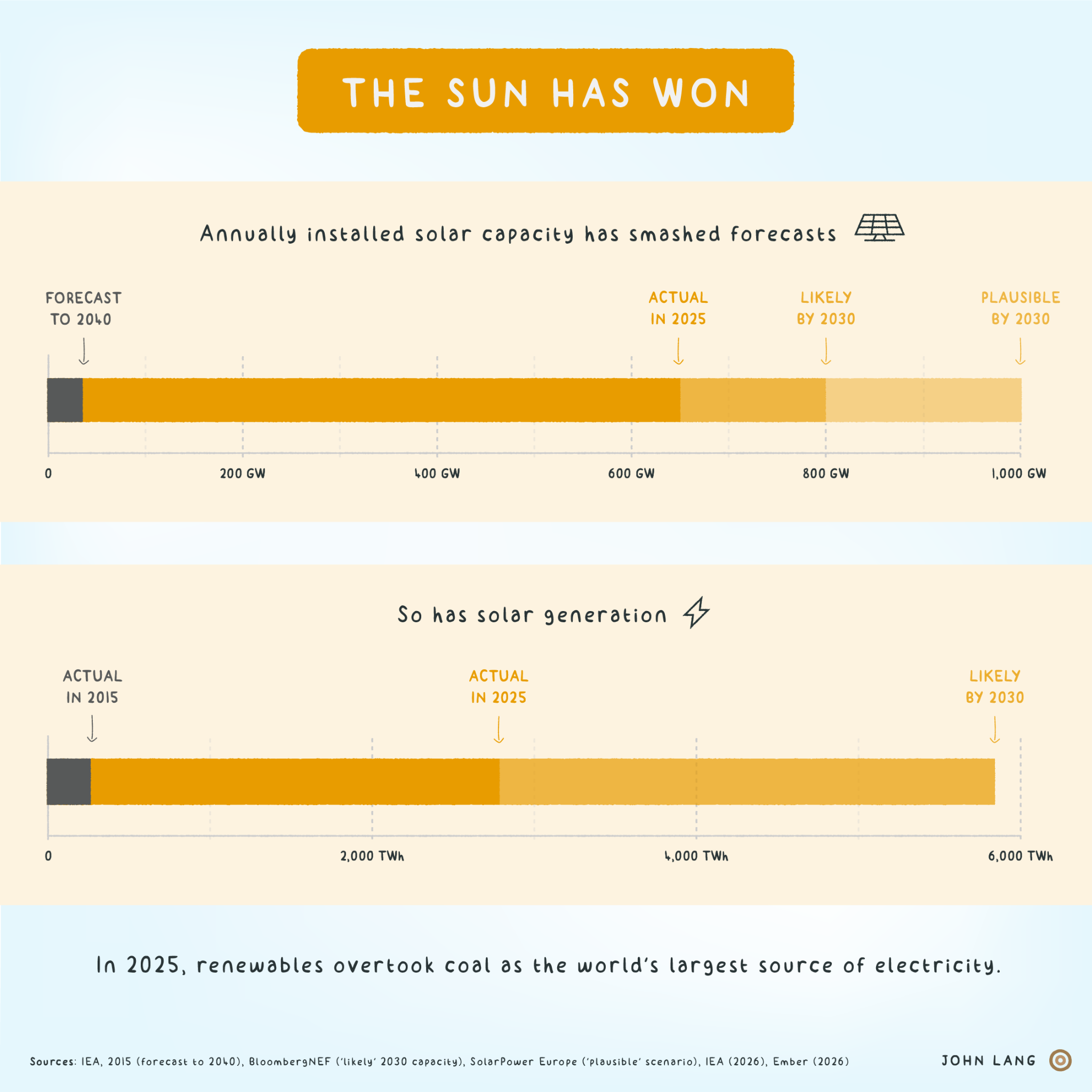
We love a good infographic and Kiwis in Climate founder John Lang has been pumping them out as part of his Climate Trunk series. We also love a bit of solar, and this one shows how solar power has "smashed forecasts".
Making a killing
Parents For Future UK has been running a comedy series aimed at promoting electric heating and its last one was pretty good. Its latest foray focuses on “a police interrogation” and “an unexpected confession”.
“It’s a light way into an important point. And working with Parents For Future and their network of comedy writers and performers, our Greener Homes initiative aims to tell compelling (or funny! 🎭) human stories about the benefits of electrification.”
"The sentiment around making the electricity market fairer and cheaper for customers is great, but there's still something missing." That's Rewiring Aotearoa CEO Mike Casey's summary of Act's energy policy announcement today.
Read moreDownloadACT will open electricity networks to competition, give New Zealanders more freedom to generate and sell power, and make monopoly lines companies prove consumers are getting value before loading more costs onto their power bills, says ACT spokesperson for Energy and Resources Simon Court.
Read moreDownloadACT is pledging to keep the gentailers whole and use market forces to curb the costs of lines management and increase solar repayment rates. Energy spokesperson Simon Court announced the party's electricity policy at Parliament on Friday afternoon.
Read moreDownload