Don't listen to Old Man Gas. Ditch LNG. Support New Zealand-made energy!


St John's electric emergency mobile shifts down south after a successful trial in Waikato (while hydrogen buses in Scotland get the axe); Hutt City Council and Nelson City Council embrace some big electric machines; battery health concerns are proven to be a non-issue by individual drivers doing big numbers and a big new study over 7,000 vehicles; what fuel waste looks like when you capture it; the solar demographic split; and Oli Frost releases a new kids' book focused on law firms.

Electric emergencies
When it comes to vehicles, the most important thing is that they need to be able to do the business and for St John, a one year trial of an electric ambulance in the Waikato appears to have gone very well.
As St John said:
In the last 12 months it:
⚡Responded to 500+ incidents
⚡Travelled 13,671km
⚡Reduced emissions by ~4 tonnes of CO₂
Most importantly, it maintained frontline performance and upheld patient care standards.
That is something that can’t be said for Aberdeen’s fleet of 25 hydrogen buses, which are currently on the market after experiencing a host of issues.
The ambulance has now headed down to Lyttelton, where its performance in colder and hillier conditions will be assessed (we will do our best to arrange a drag race with the electric fire truck at Christchurch Airport).
While an ambulance is a pretty specialised work vehicle, it makes increasing sense for businesses to go with EVs for their fleet cars, due to lower total cost of ownership, improved range and performance, and some sensible changes that have been made to charging guidance so work EVs can now be charged at home.
Businesses buy around 60% of the country's 150,000 or so new cars every year, so it’s also a great way to seed the second hand market.
Diggin’ it
Some of the most rapid progress in electrification is happening at the big end of town, with manufacturers releasing massive machines that do the same job as diesel, with much lower running and maintenance costs and much better conditions for workers.
Hutt City Council, a council we regularly praise for its approach to saving ratepayers money and reducing emissions, has opened a new heavy vehicle charging station at the Silverstream facility to run its electric Volvo loader.
The charging station is the first of its kind in New Zealand and it was brought to life with the help of Waste Management NZ (which runs 60 electric trucks in its fleet), Meridian and EECA.
As James Cozens commented on social: “You can tell when EVs are becoming mainstream when the Lego version is on sale at the Warehouse....'Details inspired by the real-world vehicle include the pretend charging socket' 😁 (P.S on my birthday list)”

Diggin’ it down south
Nelson City Council and Isaac Construction are trialling an electric digger as part of an electric roading crew and assessing its suitability in roading operations.
As part of the Bridge to Better programme, a call was put out to all designers under 13 to create a design for the digger and Ivy was chosen as the winner.
The digger - one of the many impressive machines brought into the country by our mates at ETrucks - is now decked out in Ivy's Monstera design and it will be doing much less polluting work on Bridge Street for the next 18 months.
Going the distance
We enjoy it when erroneous perspectives are proven wrong by reality and that’s often what we see when it comes to EVs and batteries.
This Ford Mustang Mach-E driver shows that EV battery degradation is often overblown. He's driven more than 316,000 miles with only 8% loss to his battery health.
There are quite a few Teslas with very high mileage too (kilometreage?), including one with almost 700,000km on the clock and no new battery needed.
While anecdotal stories are great, it's even better to have it proven across the board and a massive new EV study from Generational, which is a UK-based innovator in electric vehicle battery condition diagnostics, looked at more than 8,000 passenger cars and light commercial vehicles. The results show that the average battery State of Health (SoH) across all of those used vehicles involved stands at a robust 95.15% of capacity compared to new.
Blow up
It’s not just reliability and cost that’s appealing. Getting an EV is likely to be the biggest thing any household can do to reduce their emissions.
We often get asked about waste at Rewiring, but very people think about the waste they’re already creating by burning fuel. Electric waste from solar and batteries pales in comparison (and a lot of it is also reusable or recyclable).
A huge amount of material by weight goes into fuel tanks to run these internal combustion engines and then it just disappears into the sky as invisible particles, so it’s not seen in the same way as a big bin full of rubbish.
EV advocate John Reister decided to show what that looks like with some balloons.
A gas car traveling 60mph produces 45 pounds of carbon waste every hour. To put that in perspective: my entire family of four generates about 35 pounds of garbage in a week. I do not throw that garbage into my neighbor's yards.
In the market
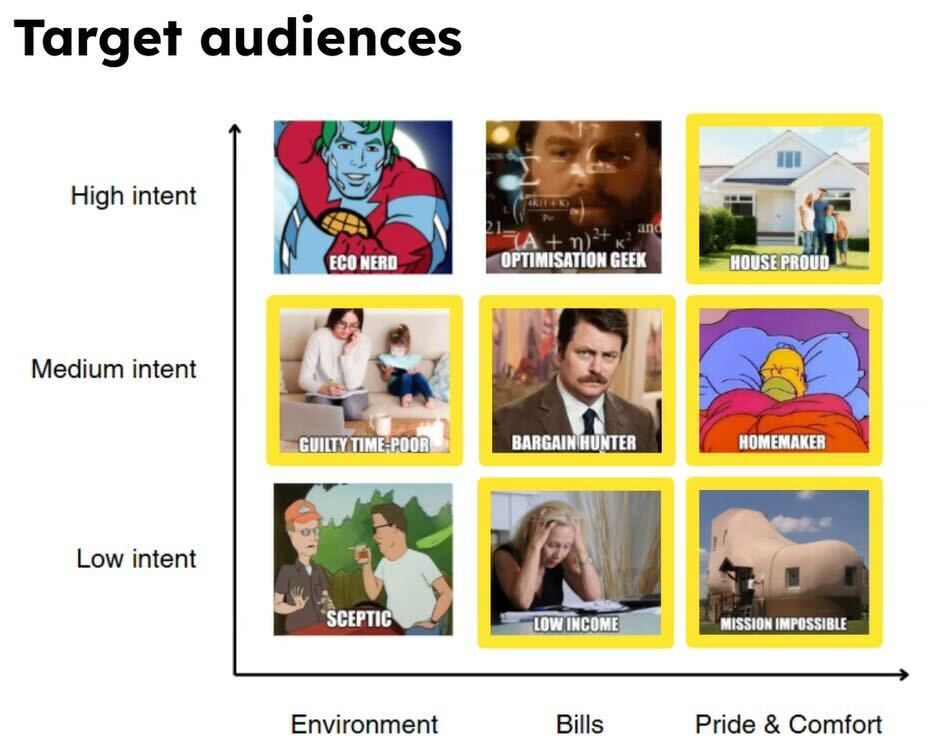
Solar continues to increase in popularity here and around the world, but it's not for everyone and we enjoyed this summary of different demographics.
Poking the Penguin
We love the work of Oli Frost, who regularly skewers the fossil fuel industry with clever campaigns. His latest effort is a new book called ‘why daddy’s law firm works with the nice oil men’.

“Between 2020 and 2024, London law firms facilitated $59.84 billion in fossil fuel transactions. Even though the world has already enough approved fossil fuel projects to go well beyond 1.5°C of warming.
He’s been dropping the book off to London law firms dressed as a penguin and you can have a gander at the book or order your copy here.

Political Power has gone local! Dr Nick Smith, mayor of Nelson and ex-National Party minister, is an early adopter when it comes to electric machines but, through his efforts with the council and his close involvement with the Ratepayer Assistance Scheme, he's also embracing one of Rewiring's core mantras: once you've electrified your own life, electrify someone else's life, too.
Read moreDownloadWhether it's the growing number of electric buses, new electric trains for the lower North Island and City Rail Link, or new electric ferries, we love seeing more electric transport options in our big cities. It's also good to see some of our smaller cities like Palmerston North, Timaru and Nelson going electric and, as is almost always the case, the drivers reckon it's better on electrons. At the Electrify Nelson expo, we spoke with one driver Lee about the city's electric buses. And he definitely wouldn't go back to diesel.
Read moreDownload