Don't listen to Old Man Gas. Ditch LNG. Support New Zealand-made energy!

.png)

A watershed moment for Rewiring as the RAS goes mainstream; Octopus Energy goes big on small batteries; 112 businesses with $1.5 trillion in revenue ask for electrification to go faster; how long it will take for all these EVs to change the total fleet; energy becomes a major focus of the factories of the future; and the Slate truck keeps it simple.

Fixing the finance
We’ll be marking June 25th down on the calendar as a watershed moment because it was the day long-term, low-interest loans for electric upgrades went mainstream.
National announced its Home Energy Fund (otherwise known as the Ratepayer Assistance Scheme) yesterday and Rewiring Aotearoa got a shout out from the Prime Minister and other ministers for our tireless advocacy on this policy.
We have been pushing this for a long time and access to finance was ranked as the most effective measure in our policy manifesto, so we’re very happy to see it announced. But, given it has been in front of the Government since last year and almost all of the parties, over 20 councils and all of our community groups support the scheme, we do have to ask why it took so long. The RAS could be put in place this term given the support it has across the political spectrum and that loans could start flowing sooner.
If we do have to wait, we're still hoping that this policy is seen as a baseline for the upcoming 'electric election' and that there will be a lot more policies helping drive adoption - and helping the lowest income homes access the savings.
Extra storage
Octopus Energy has just held its latest tech summit in the UK and it’s going big on small batteries.
The Octopus Nook Cube is a compact, shoebox-sized 2kWh battery that simply plugs into a standard socket, similar to the plug-in solar panels that the UK recently approved for use.
These batteries will be controlled through the Octopus app and extra units will be able to be added to increase storage up to 10.5kWh.
“For homeowners, Octopus is also launching Octopus Nook Collosus, a wall-mounted 5kWh battery, which can be stacked up to 30kWh for larger homes.”
Both battery systems are compatible with solar panels and come with a 12-year warranty. They will be available to Octopus customers in the UK, Germany, Italy, Spain and France from next year.
In New Zealand, Octopus and Aurora have partnered to pay customers who use their home battery or, in the future, their EV, during winter peaks. Every home with a battery basically removes themselves from peak, so they are being paid to use energy in their own home, in addition to any export rates.
In Arrowtown, customers who are part of the trial will be paid 70c KWh for using their own battery and the overall goal is to avoid expensive network upgrades.
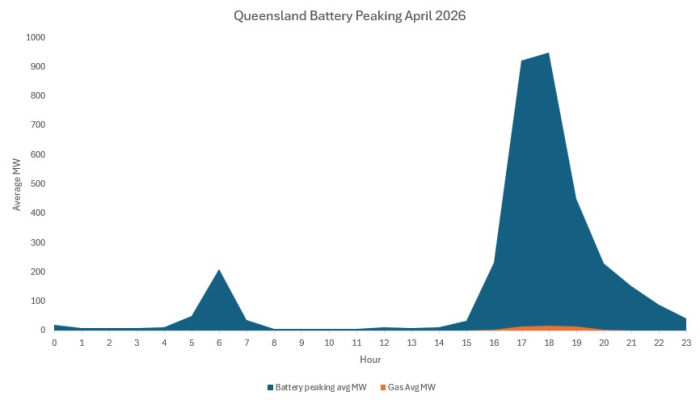
In Australia, batteries are gradually taking over from gas at peak times, as Harbour Asset Management showed in BusinessDesk.

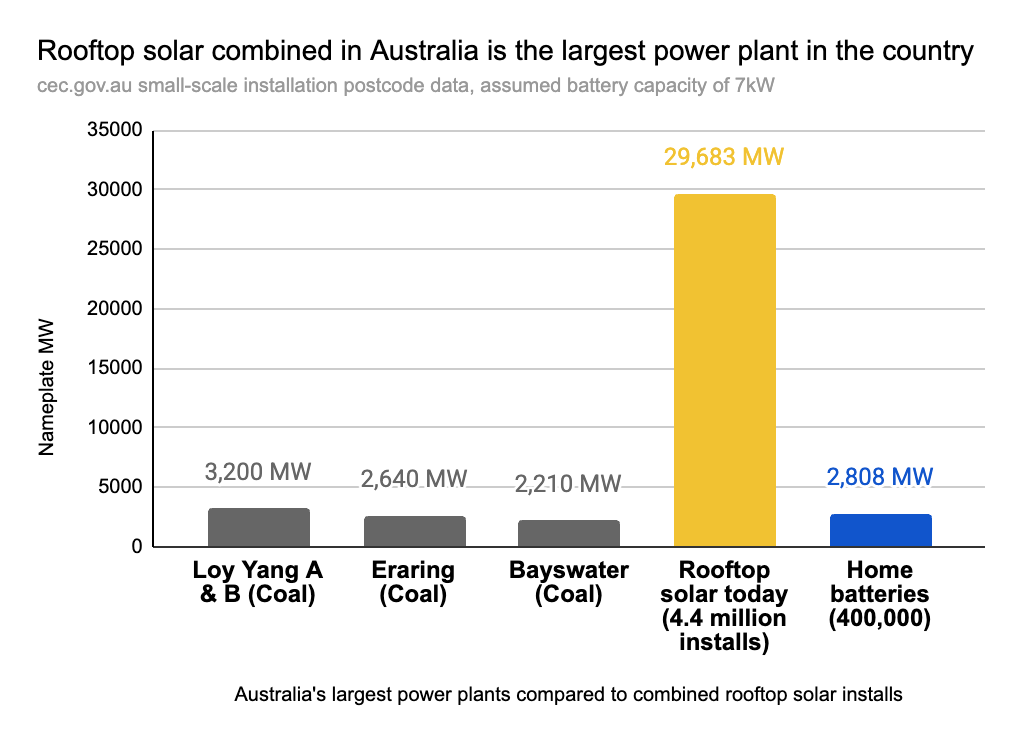
New Zealand has a magnificent battery in the form of our hydro lakes, but we would love to see an army of batteries in New Zealand that would add up to one of the biggest power plants in the country, as they now are in Australia.
‘The age of electricity is here’
Big businesses from around the world are asking for a faster shift to electrification. As the campaign from the We Mean Business Coalition suggests, it's is all about ‘Lower costs. More secure. Energy for all.’

“The movement aims to galvanise stakeholders to take action and raise ambition, calling on governments to put electrification at the centre of their energy policies by working together to achieve 35% electrification by 2035 globally - a target supported by the best available science from the IEA and IRENA - and recently put forward by the COP31 incoming Presidency.”
As Reuters reported, 112 businesses with $1.5 trillion in turnover said “exposure to fossil fuel-driven price shocks undermined competitiveness”.
"Continued reliance on volatile fuel markets exposes economies to disruptions that drive price spikes, destabilise supply chains and delay investment," said the statement.
Fleet of foot
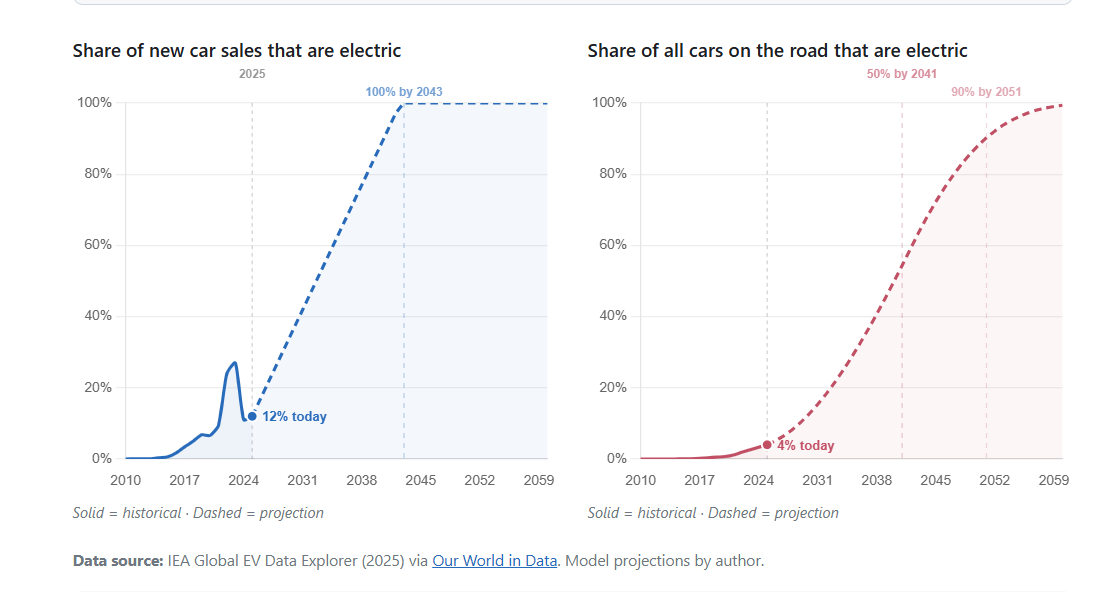
EV sales have taken off around the world after the fuel crisis - at different rates. But what does this mean for the transition? How long will it take to have an effect on the total number of EVs on the road? Hannah Ritchie From Our World in Data has you covered with this model.
Here’s what it looks like for New Zealand:
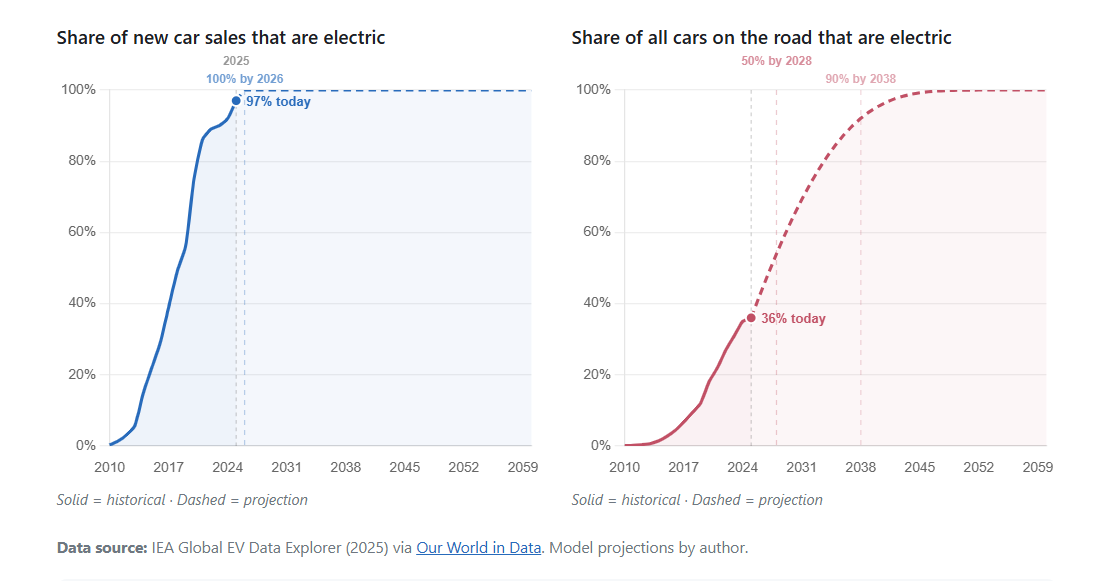
As a point of comparison, Norway, where almost 100% of new cars are now electric, around one third of the total fleet is electric.
Making change
Once we electrify the factories that make the stuff, we get rid of a lot of the emissions associated with electric tech. You also become more productive (if you could distill China’s industrial strategy, it’s to do more with less with electricity - and sell the world all the electrotech it needs to get off fuels).
The World Economic Forum has looked at the factories of the future and energy is a big part of it.
Keep it simple, stupid
We live in an age of constant addition. More features. More scale. Better performance. But what if people want a cheaper, simpler option? That’s what the Slate electric truck is betting on. It’s got no interactive screen, no self-driving and no fancy stuff and that means it’s about half the cost of a comparative new car.
It’s also modular, so customers can add what they want (and while we’d go for the electric option, there’s also a hybrid that has proven more popular).
Political Power has gone local! Dr Nick Smith, mayor of Nelson and ex-National Party minister, is an early adopter when it comes to electric machines but, through his efforts with the council and his close involvement with the Ratepayer Assistance Scheme, he's also embracing one of Rewiring's core mantras: once you've electrified your own life, electrify someone else's life, too.
Read moreDownloadWhether it's the growing number of electric buses, new electric trains for the lower North Island and City Rail Link, or new electric ferries, we love seeing more electric transport options in our big cities. It's also good to see some of our smaller cities like Palmerston North, Timaru and Nelson going electric and, as is almost always the case, the drivers reckon it's better on electrons. At the Electrify Nelson expo, we spoke with one driver Lee about the city's electric buses. And he definitely wouldn't go back to diesel.
Read moreDownload