Don't listen to Old Man Gas. Ditch LNG. Support New Zealand-made energy!

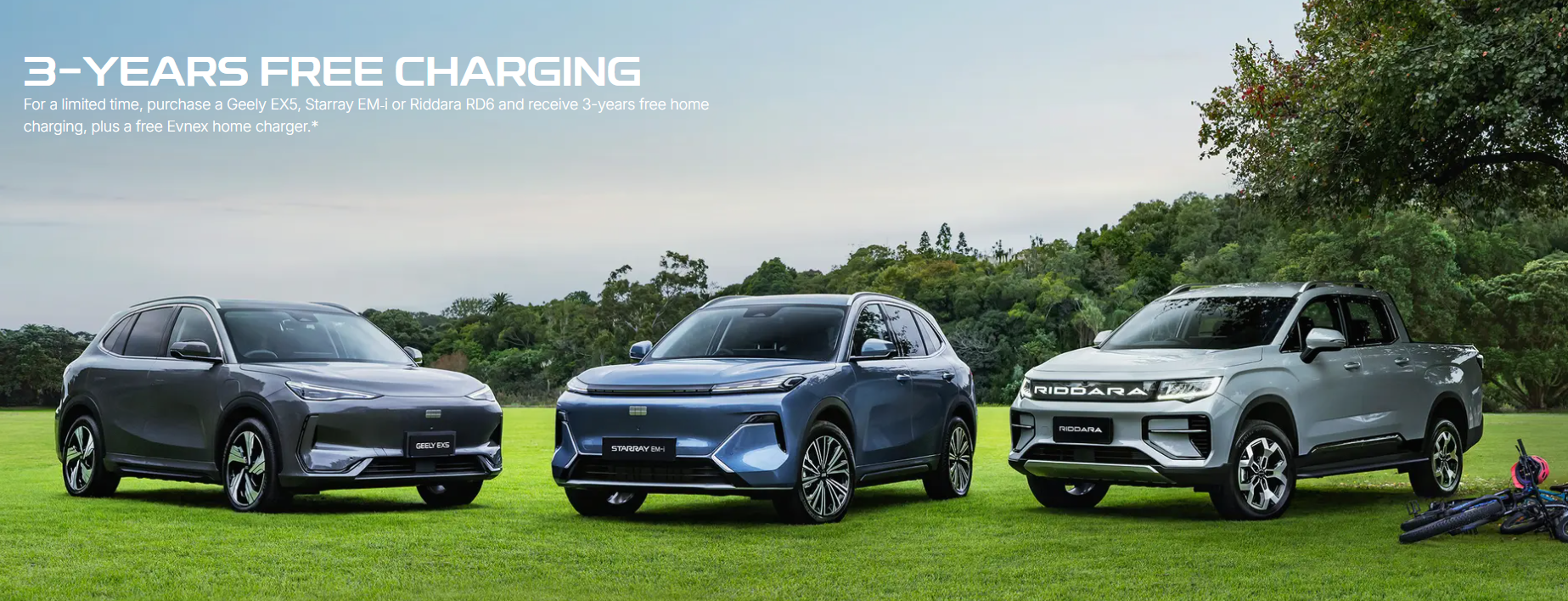

India looks to electric transport to clear the air; Geely tries to bridge the psychological gap with three years free charging deal; New Zealand still lagging behind on EV friendliness; remote resorts on Fiji get Future Energy to help them get off expensive diesel; Kiwibank adds a 'going electric' section to its sustainable business loans; a rundown of all the latest solar and electric innovation from a big exhibition; Beta offers an insight into its electric plane trial with Air New Zealand; and a compendium of electric world records.

Air India
India has taken a massive leap towards electrification and cleaner air, with Delhi hoping to electrify 30% of its transport fleet - from its ubiquitous rickshaws to its buses - by 2030.
Anyone who’s been there knows how pervasive the loud, smoky two- and three-wheelers are in urban areas and how much of a role they play when it comes to poor air quality. Delhi’s ambitious policies aim to phase out new fuel burning vehicles over the next few years.
Scooters and rickshaws – which largely run on petrol and compressed fossil gas – account for more than two-thirds of the tens of millions of vehicles on Delhi’s roads. Under the new policy, India’s capital will now issue new licence plates only to electric small trucks and three-wheelers, known as e-rickshaws, from 2027, and to e-scooters and electric motorbikes from 2028.
The city also plans to install 30,000 public chargers.
Vietnam also has tens of millions of motorbikes and mopeds. And from this month, some of them won’t be allowed on the main ring road in Hanoi unless they’re electric. Ho Chi Minh city could follow suit.
Hanoi has some of the world’s most polluted air and the Government has signalled a big shift towards electrification.
“A second phase, set to begin in January 2028, will expand the ban to a wider area and include all fossil-fuel two-wheelers, while also restricting some gasoline-powered cars."
While some in Vietnam are concerned they won’t be able to afford the switch, as Chris Nelder said in the 10th anniversary edition of the Energy Transition Show, one of the interesting things about the adoption of electric vehicles and solar is that developing nations are leading the charge. Many of them don't have climate policies; they’re doing it primarily for the economics - or the air quality.
China, which is by far the world’s biggest manufacturer of solar panels, batteries and electric gear, is sitting pretty right now and selling a lot of that gear to these developing nations. On its own turf, it’s also going hard on electrification and loud, smog filled cities are becoming a thing of the past.
As The Atlantic wrote a few years back, the big boom in micro EVs is something developed markets have missed out on, although here in New Zealand, we have recently been treated to one of the most impressive micro mobiles, the solar-powered Lightfoot scotter, which was developed by Dr Saul Griffith. Maybe we'll be seeing a few more of them in Asia soon.
The long and the short of it
Humans are short-term creatures and are often drawn to deals. That’s why some get excited about 6c off a litre of petrol, even though it's more like $2 off a litre if you charge an EV with solar. That's why we like Geely's new deal.
It’s unlikely any car brand would give away three years of fuel. But Geely is offering free charging for three years as well as an Evnex home charger and we reckon it’s a clever way to get more people over the line on an EV.
The three-years free home charging is based on an average annual distance of 15,000km per year and a power charge of $0.17 per kWh (based off Night electricity cost on a suitable EV Plan). This amount - plus the charger, not including installation - is taken off the purchase price. So what’s it worth?
The cost of charging an electric car on average grid rates at home is about $550/year. This assumes a vehicle efficiency of 18kWh/100km and an electricity price of $0.27/kWh. Electricity plans offer lower prices for charging at night (around $280/year), while public chargers can be $0.90/kWh ($1800/year).
We know from various evidence that the majority of charging is not done on public fast chargers. If we assume 15% done at fast chargers, 85% at home with half of that at night, the total cost per year is about $615. Let's make it $750 per year to offer fully free charging to new EV purchasers.
For an average EV in New Zealand today, over a 15 year vehicle operational lifetime the savings on fuel more than pay back the additional upfront cost compared to an equivalent petrol vehicle. They have crossed this tipping point. The problem is people don’t think in asset lifetimes, they think in the short term, and also in common vehicle ownership timelines. Even on these shorter timelines, EV savings can be significant, for example saving $1,000 per year on fuel costs alone (or over $2,000 in comparison to diesel), with more to be saved on maintenance costs.
We think schemes like this will help bridge a psychological gap between those who can do long-term energy calculations, and everyday people who want to pay less while driving their car.
While our EV sales numbers have increased recently and fully electric cars made up 20% of all new car sales in June, we are still a long way behind other markets. Compare the Market recently created an EV-friendly countries index to "identify which nations are leading the shift to electric vehicles and assessed 25 countries on EV charging accessibility, market share, costs per 100km in USD, government incentives, and proposed internal combustion engine (ICE) bans".
New Zealand was near the back of the pack and was even beaten by the UAE.
“New Zealand finishes 22nd overall in our index, with a score of 29.17, and is named our fourth-least EV-friendly country … When it comes to costs, New Zealand’s USD$32.97 per 100km puts it in the middle ranks of this factor, meaning its low ranking is driven by a lack of infrastructure, low adoption rates, and government policy.”
Island time
Many of the islands in the Pacific - and many of New Zealand’s own smaller islands - are reliant on diesel generation. That’s expensive at the best of times, but diesel went up by 80% after the war in the Middle East and that has made solar and batteries an even more appealing option.
Over in Fiji, three remote resorts have been insulated from any future price increases after New Zealand company Future Energy installed 2,000 solar panels and a 1.6 MWh battery system.
“The Yasawa Island Resorts (Paradise Cove, Blue Lagoon and Octopus Resort) were entirely dependent for energy generation on diesel shipped by barge in barrels. New Zealand energy company Future Energy had been working with them for over two years on a solar and battery transition built on a hard-nosed economic case. With a 2-to-3-year payback before tax incentives, the entire project has been funded out of operational cashflow, with savings flowing through from day one.”
Another good aspect to the project was that eight local electricians were hired and trained to manage the system, showing that renewable energy projects can create jobs.
Read more here.
Electric economics
Finance is such a crucial part of the electrification puzzle, whether it’s for your home or a big project for your business. And Kiwibank is getting specific about ‘going electric’ with an update to its Sustainable Business Loan.

These loans are offered at preferential rates for businesses purchasing or installing electric plant, machinery or equipment to replace fossil fuel powered alternatives, or for those upgrading industrial or commercial processes to electric.
Kiwibank says its Sustainable Business Loans have already supported businesses to electrify their fleets, and now they can electrify much more.
Solar progress
Thin and bendy ones. Plug-in ones. Very efficient ones with very long warranties. Coloured ones that can blend in with buildings. There’s so much innovation happening in the solar space (and the wider electrification space) that it’s hard to keep up. Lucky there's this video from a recent solar exhibition.
And if you want to hear from a plug-in solar enthusiast, check out the interview with Gunnar Friese on RNZ about the work he's doing - alongside Rewiring - to make it legal here.
Flight of fancy
We were watching Air New Zealand’s trial of the Beta electric plane with interest. And this clip offers a bit of an insight into that project.
Making history
We love seeing what electric stuff can do these days, but there’s a long history of electric innovation around the world and many of the achievements are listed in a compendium of Epic Electric World Records.
“In October 2025, the New Zealand Think Tank, Tiaki Institute, launched an electric record database that gives credit and recognition to people, organisations, inventors, and others regarding electricity, whether it is the world's largest battery or the fastest electric hypercar.”
In a very meta acknowledgement, the Tiaki Institute, which is run by Jeremy Webb, also claims to have set the world record for the first electric record database.
If there are any missing, you can even add your own
Political Power has gone local! Dr Nick Smith, mayor of Nelson and ex-National Party minister, is an early adopter when it comes to electric machines but, through his efforts with the council and his close involvement with the Ratepayer Assistance Scheme, he's also embracing one of Rewiring's core mantras: once you've electrified your own life, electrify someone else's life, too.
Read moreDownloadWhether it's the growing number of electric buses, new electric trains for the lower North Island and City Rail Link, or new electric ferries, we love seeing more electric transport options in our big cities. It's also good to see some of our smaller cities like Palmerston North, Timaru and Nelson going electric and, as is almost always the case, the drivers reckon it's better on electrons. At the Electrify Nelson expo, we spoke with one driver Lee about the city's electric buses. And he definitely wouldn't go back to diesel.
Read moreDownload