Don't listen to Old Man Gas. Ditch LNG. Support New Zealand-made energy!


A better electric building at Parliament and an innovative heating system in affordable Arrowtown housing development Tewa Banks; more Australian envy as Queensland landlords incentivised to put on solar to reduce bills for tenants; first Auckland, then Ireland, and now Vessev heads to Taupō; Octopus gives us a reminder that gas in homes is dumb and hydrogen is even dumber; and Alex Honnold's mission to give impoverished communities access to cheap solar energy.

Building capability
We’re all for more efficient buildings at Rewiring. But electrification is the efficiency we’ve always been looking for because electric machines require less energy to do the same jobs. We also need those buildings to produce and store as much of their own energy as possible. Doing that lowers bills, strengthens the energy system, slashes emissions and improves resilience.
In Wellington, there’s a more efficient building going up at Parliament right now and it’s hoping to get a Green Star 6 rating.

Marc Daalder from Newsroom was the first journo to get a tour and, whether it’s using structural timber instead of steel and concrete or installing solar, it’s in ‘world leadership territory.’
As he writes:
Overall, the building is expected to produce 89 percent less climate pollution over an estimated 60-year lifetime than a non-sustainable, industry standard comparator.
Some of those reductions can be achieved with a focus on energy efficiency, from better insulation to smaller windows to reduce heat loss. The building will also have solar panels, estimated to reduce peak power use by 52 percent, and is fully electric with the exception of backup diesel generators. The solar panels will complement those already on Parliament House, which on an average summer day generate enough electricity to power a home for two months.
At the smaller end of the scale, Tewa Banks in Arrowtown - which is being built by the Queenstown Lakes Housing Trust - is leading the way when it comes to heating.

“When you're building affordable housing, the purchase price is only part of the equation. What happens when the first power bill lands on the doormat matters just as much. At Tewa Banks in Arrowtown, all 68 homes are connected to a ground-source heating system – thought to be the first of its kind at this scale in the southern hemisphere.
Based on Britain's Kenna system, 58 bores drilled 120 metres deep tap into the earth's ambient temperature of around 12 degrees. From there, heat pumps in each home do the rest. The maths is simple: heating a room to 21 degrees when the ground is already 12 degrees takes far less energy than battling a minus-10 frost outside. Hot water costs roughly half the usual amount, and passive cooling through summer runs at about $70 a year.
We're tracking energy use across multiple homes as part of a case study, because what gets measured gets understood – and hopefully, replicated.”
Here's how they work:
We need to make sure our new buildings are built better, but we don’t build enough new buildings to reach our climate targets. That’s why it’s so important we also focus on retrofitting our existing housing stock and making that electric, too.
Raise the roof
The Rewiring team often looks over at Australia enviously. We covet their high rooftop solar uptake, we marvel at the way their battery subsidy rolled out energy infrastructure that’s equivalent to the size of our own Huntly power station in just a few months, and we embrace their idea of free electricity in the middle of the day.
All of this shows that there is a big customer-sized gap in New Zealand’s energy policy and there was a bit more inspiration from across the Tasman late last year after a scheme was announced in Queensland that incentivised landlords to put solar on their rentals to lower bills for tenants.
The $26 million "supercharged solar for renters" scheme will provide rebates of up to $3,500 to eligible landlords who install rooftop solar on their rental properties. The pre-election commitment from the LNP is estimated by the government to save 6,500 households around $700 on energy bills.
The Queenstown Electrification Accelerator team are working on a solar for renters scheme alongside a retailer and the aim is to benefit both sides of the equation. Tenants will get lower bills, landlords will get more rent, pay off the solar and ideally increase the value of their asset. Win-win!
Keep an eye out for some updates soon, and read more about the options currently available to those businesses that rent or lease here.
Top of the lake
Vessev has caught the attention of many with its beautiful hydrofoiling electric boat on the Auckland - Waiheke trip. It made its first international sale last year in Ireland and Taupō Hydrofoil Tours has also got in on the electric act, too.
After six years of owning and operating Taupō Water Sports, they’re gearing up for a new and exciting adventure with the VS–9.
Just like us, James and Laurel are always looking for better ways to do things. For them it's about offering something entirely new that showcases (and protects) the beauty of the lake.
We couldn’t wait to share the excitement, so we took a VS–9 down to Taupō to give the community a sneak peek and let James and Laurel take it for a spin, before their own VS–9 arrives next year.
Explosive experiments
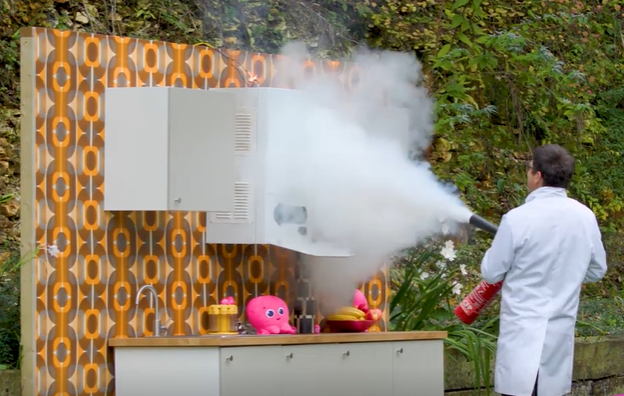
A friendly reminder that piping an explosive substance into your house can sometimes end in disaster. That disaster is likely to be bigger if you’re using hydrogen, which is more explosive and leakier than methane, as this experiment from Octopus Energy's future technologies guy Phil Steele shows.
Of course, electricity can be dangerous, but the risk is greatly reduced when combustion isn’t required. The gas industry continues to suggest that hydrogen could be a viable alternative to fossil gas and while added explosiveness is obviously a major issue, the primary issue is that it’s so much more expensive than using electricity in more efficient electric machines.
That goes for most vehicles, too, and there has been a large number of cancelled hydrogen projects in recent years as hydrogen has risen in price and battery technology has improved.
Speaking of cars and explosions, while there is plenty of media attention on EV fires (which are often more intense due to the batteries), Australian research shows that petrol and diesel cars are far more likely to catch fire.
New heights
Alex Honnold is one of the world’s best climbers. And, as this interview illustrates, he’s using his profile to raise awareness of renewables and help communities access to cheap solar energy.
What many people don’t know is that for more than a decade, Honnold has given a third of his annual income to charity. He is the founder of a nonprofit, the Honnold Foundation, which supports solar energy projects in impoverished communities. In 2023, it donated more than $3 million to such causes, and in recent years has supported over 200,000 beneficiaries across 25 countries.
Solar was an easy cause for Honnold to get behind. “I gravitated towards clean access, specifically solar power, because I believe energy access is a basic human need,” he explains. “There are almost a billion people on Earth that don’t have access to energy, and there are also something like a billion people on Earth living in poverty. Those groups are tightly linked.”
Solar energy, once accessed, isn’t just environmentally friendly. For much of the developing world, it’s also the cheapest, most efficient power source available.”
Political Power has gone local! Dr Nick Smith, mayor of Nelson and ex-National Party minister, is an early adopter when it comes to electric machines but, through his efforts with the council and his close involvement with the Ratepayer Assistance Scheme, he's also embracing one of Rewiring's core mantras: once you've electrified your own life, electrify someone else's life, too.
Read moreDownloadWhether it's the growing number of electric buses, new electric trains for the lower North Island and City Rail Link, or new electric ferries, we love seeing more electric transport options in our big cities. It's also good to see some of our smaller cities like Palmerston North, Timaru and Nelson going electric and, as is almost always the case, the drivers reckon it's better on electrons. At the Electrify Nelson expo, we spoke with one driver Lee about the city's electric buses. And he definitely wouldn't go back to diesel.
Read moreDownload