Don't listen to Old Man Gas. Ditch LNG. Support New Zealand-made energy!


It's time to show some interest in low-interest, long-term energy loans; looking enviously across the seas at Australia's energy push; an electric atmosphere beckons as the Special Olympics heads to the all-electric Parakiore indoors sports and swimming centre in Christchurch; EV Maritime's Michael Eaglen and Evnex's Ed Harvey share their views; Volkswagen follows the honey in its electric van; and climate comedian Oli Frost generously creates an ad campaign for French bank Société Générale.

Show some interest!
The biggest barrier to electrifying machines is the upfront capital cost and that’s why we’re so strongly advocating for long-term, low interest loans. We’ve just published an explainer on that topic and it’s a beefy boy that lays out our position on why they are needed, how they are different than green loans from the banks and what benefits it will offer households and the country as a whole.
Our policy director Dave Karl says these loans through the Ratepayer Assistance Scheme could be the energy equivalent of ACC or Kiwisaver. And it could be a global precedent that could solve some of the equity issues of electrification. Now we just need the Government to prioritise it.
Housing minister Chris Bishop said recently that "New Zealand’s future prosperity does not lie in selling houses to each other based on artificially inflated gains juiced by planning restrictions". New Zealand’s future prosperity also does not lie in continuing to import expensive fossil fuels when we could instead be running our more efficient machines on cheap, locally produced electrons.
So let's back the RAS and make that happen!
Staring enviously across the seas
We like to keep things positive at Rewiring, but it hasn’t been a great run of decisions lately in New Zealand, with the Government rejecting all the advice of the Climate Change Commission, loosening the clean car standard, advocating for a Liquified Natural Gas terminal and openly admitting that it won’t buy any offshore carbon credits to meet its Paris obligations.
Australia also has its problems, but it appeasrs to be going in a smarter direction.
In contrast to New Zealand's weak energy reforms that are likely to increase bills, the Solar Sharer scheme means that every home - including those without solar - would get access to three hours of free power in the middle of day. Rather than see renewable electricity go to waste, it will benefit everyone - and provide an incentive to use it when it's cheap and reduce the strain on the grid at peak times.
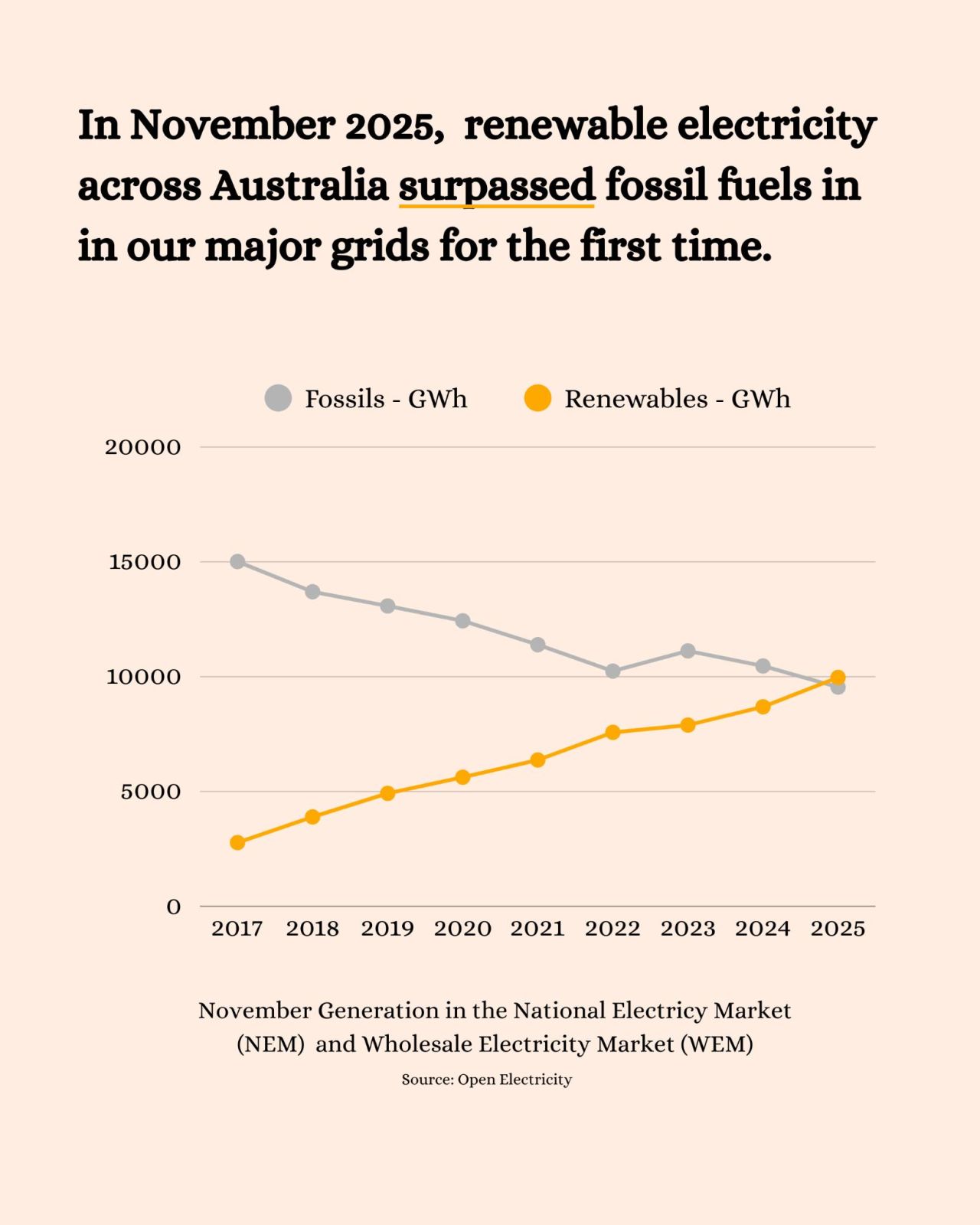
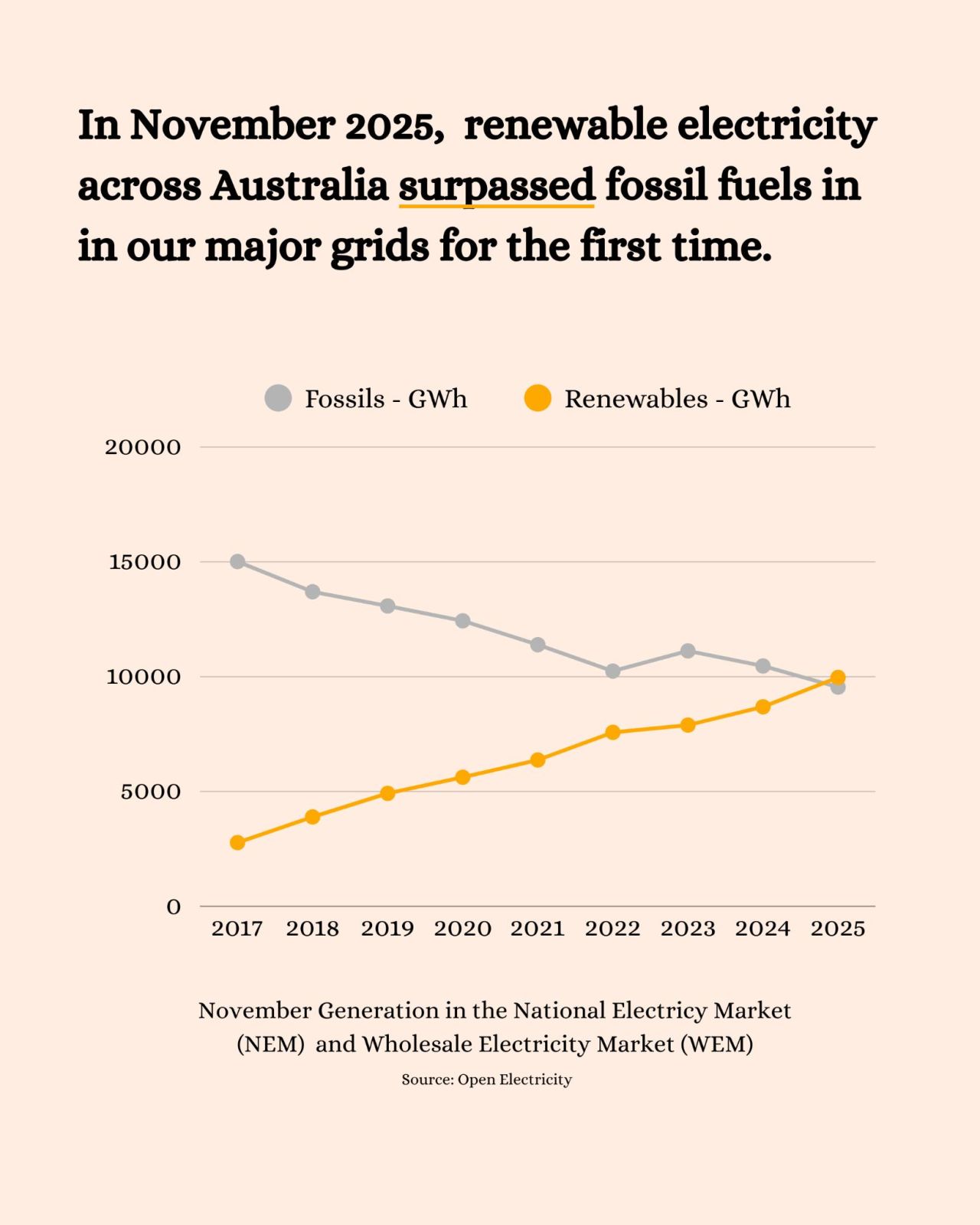
In October and November, there were also more renewables in the national grid than fossil fuels for the first time and there was around 4 x more renewable electricity than just ten years before (around 15% of that is from the over four million rooftops with solar).
Australia's emissions also had the biggest drop ever this year and renewables did the heavy lifting. Australia is much more reliant on coal for electricity than we are (and solar was a big part of getting themselves off it). But these renewables are also putting downward pressure on wholesale prices and, as we’ve seen in South Australia, that isattracting large businesses looking for reliable, cheap, clean energy.
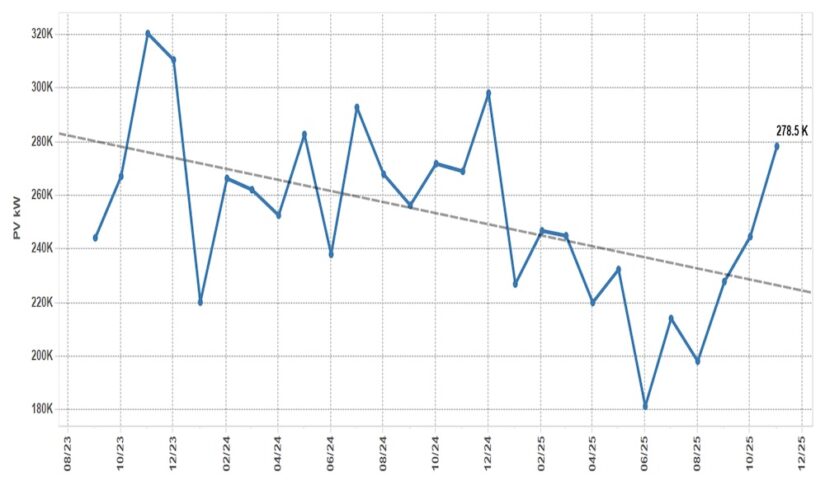
We often hear people say no-one will get solar when export rates drop, but even with low or no export revenue, people are still installing it there, and they’re largely doing it to avoid retail prices. Despite a shift in focus to storage after the battery subsidy was announced (almost 150,000 have been installed so far) and a dip since last year, installs are on the rise again.
Australia is even bringing back solar panel manufacturing.
At the big end of town, the economics of going electric are also stacking up for some of Australia’s miners. Gold miner Bellevue has powered its operation for over 100 hours powered solely by renewables. It’s one of the world's biggest off-grid set ups and has an average load of 12 MW.
An electric atmosphere
The Special Olympics are being hosted at Parakiore in Christchurch next week and the atmosphere will be electric, in more ways than one.
The new $500 million indoor sports and swimming facility is Australasia’s biggest and it’s also all-electric. As Christchurch City Council's head of facilities and property Bruce Rendall told us recently, choosing to use local electrons instead of burning molecules was about reducing emissions AND reducing the financial burden on ratepayers.
"We look at solutions that do both."
One of the most innovative features of the new facility is that it heats the water using wastewater, a heat exchanger and a heat pump. All of the council's facilities are increasingly looking to use renewable energy, he says, and while the main council building and art gallery have been heated using waste gas from landfill, that is coming to the end of its life soon and an electric replacement will be employed.
While large organisations like councils can negotiate good deals on power because they are such big users, he says it makes sense for public buildings to be generating their own energy and it is also looking at solar and battery solutions. The new library and pool facility in Hornby has over 600 panels installed, generates around one quarter of the energy it needs and could save around $90,000 each year, so it will be monitoring that project closely and seeing how it can improve the financials at its other facilities.
It opens to the public on December 17.
Just down the road, Te Kaha Stadium, which is set to open in April, is also fully electric, including the cooking, and it has set the roof up for solar. It's great to see Christchurch taking a leadership position.
Missed opportunities
Two good opinion pieces recently from a couple of local electric pioneers, EV Maritime’s Michael Eaglen and Evnex’s Ed Harvey.
Writing in the Herald about the future of ferry transport in Auckland and the opportunity New Zealand has to take a leadership position, Eaglen says:
Auckland Transport needs more ferries. It favours electric, but current funding structures make diesel vessels the only immediately available option.
Supporting AT with funding or enabling frameworks would allow it to deliver the solution which Auckland and its councillors expect – a world-class, cost-effective, zero-emission fleet – while New Zealand benefits economically, environmentally and strategically.
This isn’t about ideology – it is about the tools and decisions that deliver for the public and the country.
Like electric buses and cars, electric ferries cost more upfront. But over decades of operation, fuel and maintenance savings make them the better financial proposition. With more of the lifetime cost locked in early, electric ferries carry lower long-term risk. Diesel ferries burn close to a million litres annually; small price shifts swing costs, and large movements can be crippling.
In The Press, Harvey wrote that the weakening of the Clean Car Standard puts us in the slow lane.
As he wrote:
What really drives car purchasing decisions, though, is confidence. A vehicle is usually the second biggest purchase a family makes. When policies are stable, when standards are clear and when the Government signals long-term support for charging infrastructure, people are far more likely to make the jump.
When everything is being reversed or watered down, they hesitate, and that is exactly why we’ve seen EV sales figures drop in New Zealand over the past few years.
These signals matter to car brands, too. It might not just be a glut of high-emitting cars coming in, it could also be a lack of electric supply as the brands decide to take their business elsewhere.
Follow the honey
Volkswagen has come up with a clever way to show off its new ID Buzz electric van and is taking it on a ‘pollination tour’ of the North Island.
120,000 bees will travel in the “modern evolution of the iconic VW Type 2 Kombi, which in the 60s symbolised natural harmony, and helped transport a cultural revolution known as Flower Power."
Polly the Pollinator has been transformed into a fully functioning ‘bee hive,’ carrying not only two active colonies across the North Island, but also the spirit of the original Kombi and those same ideals into a new era.
Find out more about the tour here.
Burn a tree, hug a bunny
Oli Frost, the man behind climate comedy gems like We Wing Any Car and fake meditation app Oilwell, is back with another takedown of banking absurdity in France.
We went to Paris to launch a fake brand campaign for the bank Société GénéraleSociété Générale said they’d stop funding coal. But instead underwrote a $409 million a bond to the world’s largest private coal company (through one of their subsidiaries)
As he says,we listen to Mother nature, but sometimes you also have to listen to Aunty Spreadsheet.
Political Power has gone local! Dr Nick Smith, mayor of Nelson and ex-National Party minister, is an early adopter when it comes to electric machines but, through his efforts with the council and his close involvement with the Ratepayer Assistance Scheme, he's also embracing one of Rewiring's core mantras: once you've electrified your own life, electrify someone else's life, too.
Read moreDownloadWhether it's the growing number of electric buses, new electric trains for the lower North Island and City Rail Link, or new electric ferries, we love seeing more electric transport options in our big cities. It's also good to see some of our smaller cities like Palmerston North, Timaru and Nelson going electric and, as is almost always the case, the drivers reckon it's better on electrons. At the Electrify Nelson expo, we spoke with one driver Lee about the city's electric buses. And he definitely wouldn't go back to diesel.
Read moreDownload