Te Whakahiko i ngā Marae | the Electric Marae report


Cooking with cars at Fleet Days; 'the best petrol car has already been built, but EVs keep getting better; New York looks to improve air quality and reduce noise by electrifying its 20,000 food carts; Kea Aerospace announces a new facility to build its Atmos 2 solar-powered plane; 'green steel' gets closer with Glenbrook's electric arc furnace and local start-up Cullbeck setting up alongside; the pros and cons of replacing lithium with sodium in batteries; and 'aquavoltaics' could be a thing as a massive project in China combines an offshore solar farm with a fish farm.

Cheap as chips
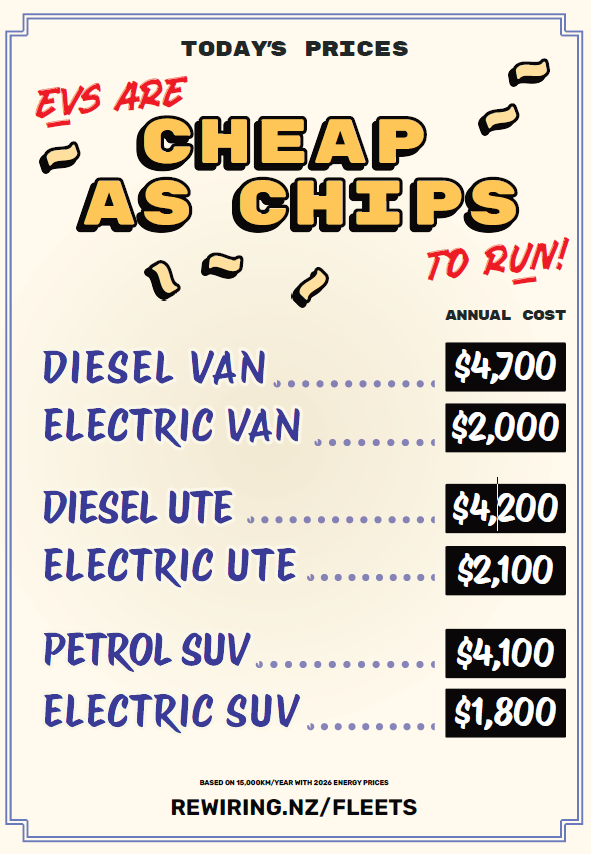
The Rewiring team was at Fleet Days this week to extol the virtues of running company cars on electrons. Everyone loves savings and everyone loves free chips, so we combined those two compelling things and hooked up an air fryer to a Geely EX5 and handed out hundreds of pottles to passersby.
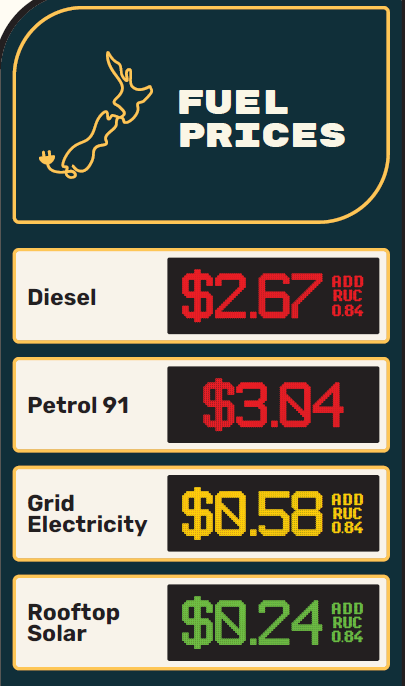
You can see some comparisons and learn from businesses that have already gone down this path here. Turns out EVs are cheap as chips to run - especially in a fuel crisis.
Being able to cook with your car is obviously not the main drawcard for businesses (although we did enjoy hearing from one employee who often plugged in the slow cooker to their company EV in the morning when they were off-site and had a nice warm meal waiting for them a few hours later), but it does show what’s possible with these modern machines - and they’re only getting better.
This headline from a long-time car reviewer Mack Hogan sums it up: “I’ve Seen More Improvement In Two Years Of Reviewing EVs Than I Did In A Decade Testing [Petrol] Cars”.
While fuel efficiency has improved over the past few decades, the gains are small now and, as he writes, the best gas car has already been built. Many modern petrol vehicles use old engines and, “as EVs rapidly improve in every key area, it's getting harder and harder to imagine a future for gasoline engines. They just can't keep up.”
Range. Charging speed. Public charging infrastructure. Cost. They've all improved.
"The most important improvement, though, hasn't been range, or charging specs, or infrastructure. It's choice. Back in 2024, there were not many EV options, and many of them weren't compelling. Today, though, you can get a polished electric option from almost any automaker."
Cart before the horse
Speaking of electric food, trucks and market stands have traditionally relied on dirty, noisy old generators to power cooking equipment, freezers and ventilators. That’s starting to change as mobile battery packs (and EVs) can be plugged in instead.
In New York, a pilot project has just kicked off to switch the city’s 20,000 licensed food carts to electricity in an effort to limit air and noise pollution.
“Shifting all of them to electric power would be the same as taking around 30,000 cars off the road annually, according to the city council, but costs and infrastructure challenges lie ahead."
One food truck owner who had been in the game for over 20 years said:
"All the smoke from the generator used to come inside the truck. It's really bad for our health. And sometimes when I was with a customer, I couldn't hear them because of the generator noise."
A range of other cities - like Hanoi and Delhi - are also banning small fuel-burning vehicles for similar smog-reducing reasons.
Flying close to the sun
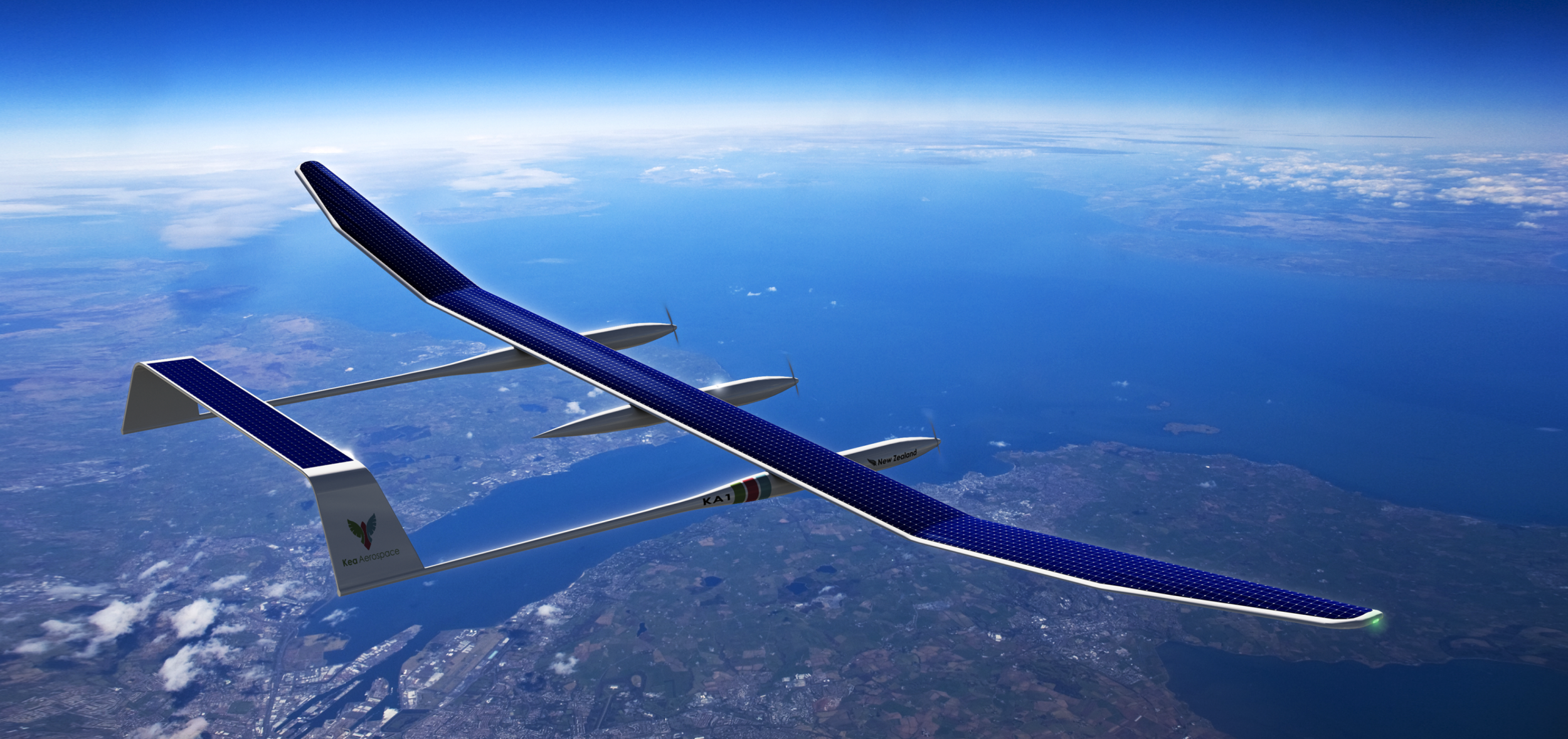
Kea Aerospace opened its new facility in Christchurch yesterday with an impressive laser display. The 3,000sqm space is designed to house a new solar-powered unmanned aircraft that will have a 35m wingspan, which is bigger than an Airbus A320.
The company is in the aerial photography and surveillance game (not the space lasers game - yet) and the combination of solar, light materials, energy efficiency and new battery technology means the aircraft can travel for long periods without stopping.
Keep an eye out for an interview with some of the main brains on our channels next week.
And in other electric aviation news, US company BETA recently brought one of its electric planes to New Zealand to see how it handled a busy schedule and it released a video this week showing a day in the life of its test pilot.
"If you don't push it to its limits, you won't see what the limiting factors are," says Hollis Munson.
Heavy metal
Over 80% of the ten million fossil fuel machines in New Zealand could be electrified economically today, but there are some sectors where that’s much harder or not yet possible. Aviation (as above) is one of them and steel making is another.
New Zealand Steel is in the process of commissioning its $300 million electric arc furnace - partially funded by the Government - at Glenbrook.
As BusinessDesk reported: “The steel and construction industry has set a new target to reduce steel-related emissions by at least 90% across the entire value chain by 2050. That is from a 2020 baseline year and includes a 30% reduction in direct and electricity-related emissions by 2030.”
There’s plenty of innovation happening in this space overseas as well, like this company in Sweden. And there's some happening here, too.
While hydrogen projects for transport are being canned all around the world (primarily because battery technology has improved so much and they are now a lot cheaper to run), New Zealand start-up Cullbeck has announced it will launch a demonstration site next to Glenbrook Steel Mill where it will produce green steel with hydrogen.
It received $20 million from local venture capital firms and, as RNZ said, it claims to “cut steelmaking from an eight-hour process down to two minutes.”
Martin Hacon explains how it all works in this interview with Caffeine.
Salt of the earth
We get a lot of questions about batteries at Rewiring. And we’ve had a few recently about sodium-ion batteries. As this story from Interesting Engineering explains, swapping lithium for one of the most common substances on Earth, sodium, has its pros and cons.
We cover the key advantages sodium-ion brings to the table: extreme cold performance, improved thermal safety, and a reliance on some of the most abundant materials on Earth reducing our dependence on costly and geopolitically sensitive resources like lithium and cobalt. But it's not all smooth sailing; we also explore the challenges holding sodium-ion back, from lower energy density to the ever-falling cost of lithium-ion. Rather than a head-to-head replacement, sodium-ion looks set to carve out its own space from grid-scale energy storage to short-range EVs and emerging markets as part of a broader, more diverse battery ecosystem.
Hydro power
No, not the kind we’re used to, but putting solar panels over water. It’s an appealing prospect, but does it stack up?
As is often the case, China is leading the world on this and it's recently completed a 'sea-sun integration project' off the coast that also includes fish farming (aquavoltaics?).
As Skander Garroum writes:
“2,934 steel platforms of 60 by 35 meters each, over 2.3 million modules, a 66 kV subsea cable, roughly $1.2 billion, fully grid-connected in December. It should produce 1.78 TWh a year, electricity for about 2.7 million urban residents, with fish farmed in the water underneath ... Here's where the industry actually stands, and the Dongying project marks the line precisely. It gets filed under floating solar, but it doesn't float; it's piled into shallow seabed, because structures that genuinely float and survive open-sea waves, salt, and ice are still at pilot scale (SolarDuck and RWE run one in the North Sea measured in megawatts, not gigawatts). Anyone selling you gigawatt-scale floating solar on the ocean today is selling a rendering.
Where floating solar genuinely lives is calm inland water … Add it up worldwide and trackers put cumulative floating capacity somewhere between 8 and 13 GW, depending on who counts what. Against more than two terawatts of total installed solar, that's under one percent. A niche.”
There are pros and cons to this particular niche.
“Panels over water run cooler and yield a few percent more. The shade cuts reservoir evaporation. And the underrated one: a dam already owns a grid connection and dispatchable hydro, so floating panels borrow the transmission and the hydro firms the solar … “[But] floats, anchors, and marine cabling add a 10-25% premium over ground-mount, maintenance arrives by boat, typhoons have shredded arrays before, and insurers remember.”
Rewiring Aotearoa's Matt Newman: "For marae, however, there aren't a huge amount of places where they could turn to unless they're engaging professional services around electrification. We know that that hasn't often been in the funding piece either. You know, funders will happily fund upgrades for marae, but they won't fund the due diligence that's necessary to support marae in making really good decisions for the long-term future."
Read moreDownloadRewiring Aotearoa CEO Mike Casey told Andrew Dickens plug-in solar is a simple process, which many countries including the US, UK, and places across Europe have made the most of. Labour's policy is similar but says changes to enable plug-in solar would be within 12 months of a government it leads taking office.
A shocking increase in the power bill for a marae that converted to solar energy has raised concerns about installers and regulation. The monthly power bill for Taranaki's Owae Marae has rocked to as much as $2000 a month, up from about $400. That's despite installing a solar system on its wharekai to save money. Matt Newman from Rewiring Aotearoa spoke to Lisa Owen about this issue and our new Electric Marae report.