The 'Electric Election': energy policies, side by side



Keeping up with the Joneses (in a good way) as Australia shifts towards sun and wind and away from fuels; New Zealand gets a good grade in terms of how electric our economy is, but we're well behind the leaders; batteries are booming (also in a good way) and eating into gas; how to get that 'wok hei' flavour with induction; a big electric barbie event gets set to break a Guinness World Record; Joby Aviation's historic electric test flights in New York; and what's old is new again with electric classic cars and even an electric museum.

Everybody needs good neighbours
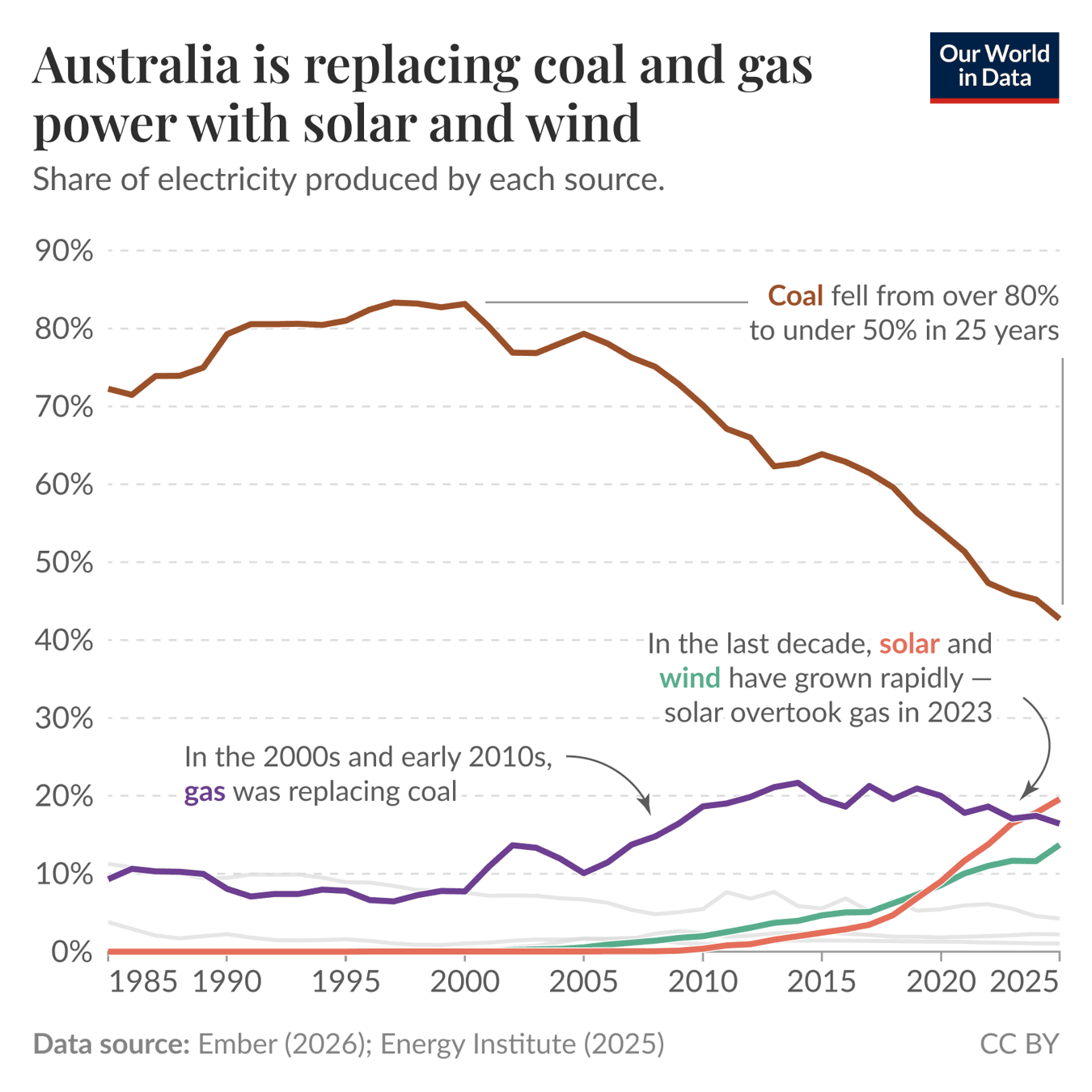
Keeping up with the Joneses is often seen as a bad thing, but not always. Our Aussie neighbours are doing some good things that we should be following and its shift away from coal and gas has been impressive, as this graph from Our World in Data shows.
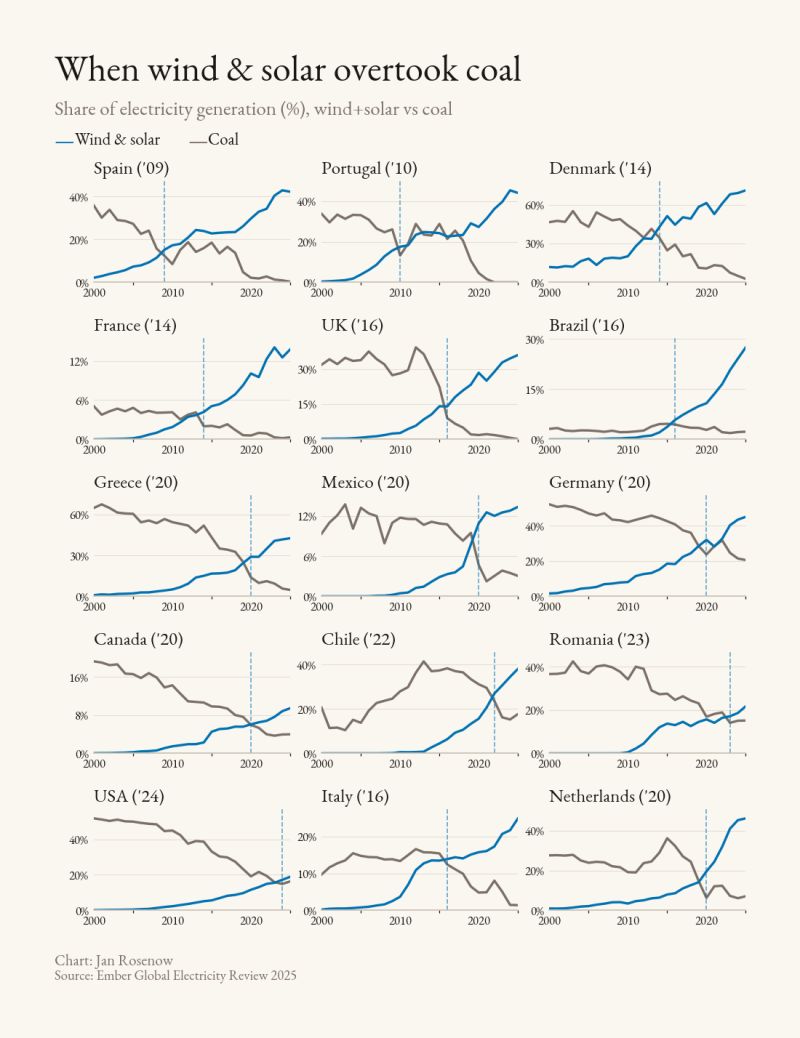
And this shift is being replicated in a number of countries, as Oxford Energy professor Jan Rosenow points out.
One area where we still beat Australia, however, is on how much of our economy is electrified.
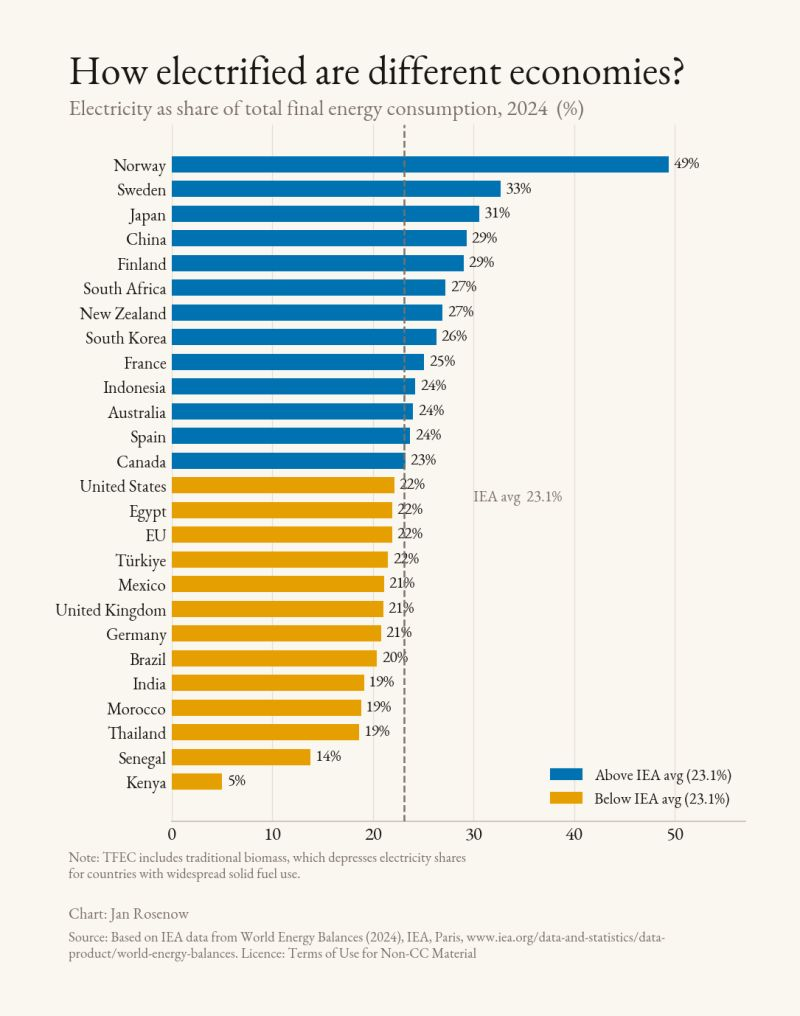
As Rosenow says: "Norway is out in front at 49%, helped by hydropower and steady electrification of transport and heat. Sweden follows at 33%, Japan at 31%, then China and Finland at 29%.The global average is 23%. A few large economies sit just below it. The United States and the EU at 22%, the United Kingdom and Germany at 21%. China at 29% is ahead of all of them. India at 19% will shape a lot of what happens next."
We’re working hard to get the number up and, as we have seen recently with exorbitant fuel prices, we know that an economy that runs on cheap, New Zealand-made energy will be much more productive.
West is best
We wrote about New Zealand’s big battery at Glenbrook recently and, as this ABC story shows, places that used to store coal are now being used to store electrons in Australia.
As the story says:
“One state in particular shows how the technology has become a major player in the grid. Across Western Australia's main electricity system, battery capacity has been added at a breathtaking speed and scale. Soon there will be about 14,000MWh of batteries coming online - enough to meet about three quarters of the typical demand for electricity from the state's main grid at any one time. WA energy minister Amber-Jade Sanderson said in the last quarter of 2025, there was more than 52 per cent of generation coming from renewables and storage and as a result, prices came down for industry. Batteries made solar power more valuable in the day and prices less extreme in the evening.
The explosive growth of batteries is also playing out on the East Coast, including at the site of the old Liddell coal-fired power station, which is now under demolition. Australia is now the third biggest market in the world for batteries. The battery boom is helping to push benchmark power prices down from July. Roman Loosen from US storage giant Fluence says lessons learned from places like WA will be taught around the world. Synergy boss Kurt Baker says time will tell whether the state has installed enough battery capacity or whether more may yet be required.
Where’s the ‘wok hei’?
Induction is proving popular in residential settings. Commercial kitchens are cottoning on as well, but there’s still some scepticism among chefs who seek a particular flavour that comes from fast, high-heat stir-frying. That’s changing as the tech gets better, as this demo shows.
Commercial kitchens are shifting toward efficiency, but flavour can't be the compromise. Chef Junda Khoo takes on the old belief that high-heat Asian cooking requires gas, using the Luus induction wok to hit true ‘wok hei’ temperatures.
We’ve seen a number of New Zealand restaurants move in this direction, with the likes of East in Auckland, Skyline in Queenstown and the Headwaters Ecolodge cooking with electrons instead of molecules.
Now we're cooking with ... cars?
Back to Australia, there’s an event coming up this weekend that's part of a bigger goal to break the Guinness World Record for the largest BBQ by attendance. That is currently 45,252 people set in Monterrey, Mexico. And the Aussies are pretty disappointed they don't hold any barbie-related records.
“Step one is June 7, 2026 at Zestiny Farm. A Guinness World Record attempt for the world's largest BBQ cooking lesson. 400 people, electric grills, certified organic produce, zero fossil fuels."
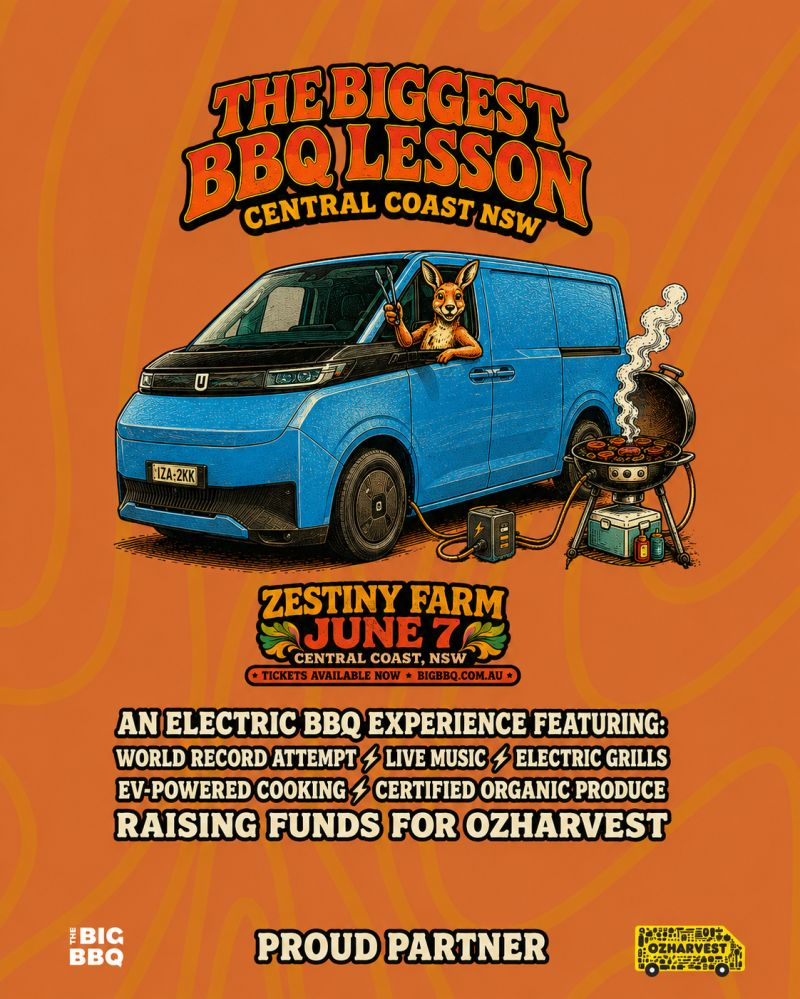
The organisers talked to Today about their big meaty plans.
Sky's the limit
We saw an electric plane in New Zealand's skies recently. A different company, Joby, recently conducted a historic test flight in New York with its electric helicopter.
The New York Times' aviation correspondent Niraj Choksi tagged along for a look and, as he says, "it’s extremely rare you see a new aircraft designed from scratch." And when you’re designing from scratch these days, you design electric.
What’s old is new again
Electrifying classic cars is a great way to give something old a new lease on life. There are a few companies doing it here like Watt Rods (although there are some onerous rules in place that make it way too expensive), some impressive Australian efforts and there’s this guy, Marc Davis, in Austin, Texas, who tech reporter Ashlee Vance went to visit.
But why stop at small stuff when you can electrify the big stuff, too. As this Everything Electric Tech episode outlines, the Museum of Science and Industry in Manchester is “one of the most extraordinary decarbonisation projects in the UK!”
This Victorian-era building, built on the site of Liverpool Road Station - the world's first passenger railway station, has replaced its ageing gas fired steam system with a cutting edge electric setup, all while keeping its incredible 19th century engines running for visitors to see.
'Twas the night before Chris-mas, and all through the house, all the voters were stirring, the pundits showing their nous … the election will soon be over, but the energy crisis won't, so we'll be there to pester whoever is in power about the need to run more of the economy on New Zealand-made energy; can Ethiopia's aggressive push for EVs work and how does New Zealand compare in terms of adoption rates?; a two-way charging trial from Genesis shows promise in Auckland, but there's still a way to go before it's mainstream; small electric vehicles are often overlooked when it comes to electrifying transport, but it's hard to miss this weird French one; a solar-powered cafe (and some electric coffee); and we endorse the political vandalism of Keith of All Trades.
Read moreDownloadPoliticians are being urged to adopt stronger electric vehicle incentives ahead of the election. Climate and energy advocacy group Rewiring Aotearoa is arguing that EVs are one of the most effective long-term solutions for rising transport and energy costs. They're promoting an EV Salary Boost proposal, which would allow workers to access EVs through pre-tax salary arrangements – similarly to already existing schemes in the UK and Australia. Policy and Government Relations Spokesperson Ngaio Neumegen told Kerre Woodham that even with the rising cost of power, it's still cheaper to run an EV than a car running on imported fuel.
A proposal that would let New Zealanders lease an electric car using their before-tax pay has not won a commitment from either National or Labour, with the 7 November election days away. Under the EV Salary Boost, put forward by Rewiring Aotearoa and Drive Electric, an employee would lease a new or used EV for three to five years. The payments would come out of their pay before tax, lowering the cost of running the car. The idea is based on Australia’s novated leasing system, though the groups say they are not proposing a direct copy.
Read moreDownload