Don't listen to Old Man Gas. Ditch LNG. Support New Zealand-made energy!


Ministry for Regulation review hits all the right notes while 'Seymour Solar' only just fits in the Crown limo; solar is more popular for low-income homes, which is why we're pushing for better access to finance; there was record electricity demand this week and the lights stayed on but homes will play a big role at peak time in the future; Santiago's electric bus crusade; some electric innovation captured in the forests of the Central North Island; Snow Planet looks to the sun to save money on energy; a Swiss hydro dam adds some extra generation in a unique way; and Toby knows watt's up when it comes to energy.

Solar stays on the agenda
As our head of policy Dave Karl told RNZ, "I think absolutely solar's day has come in New Zealand”.
We have had commitments from almost every party to finance electric upgrades through the Ratepayer Assistance Scheme and now the Ministry of Regulation has released a report with 15 recommendations to lower costs, complexity and waiting times for customers.
You can read all our full response to it here, and hear Mike Casey on RNZ here but, put simply, we endorse the proposed changes and were impressed with the way the Ministry went back to the start and looked at it from the everyday New Zealander's perspective.
For the announcement, generously hosted at James and Lynn Scott’s all-electric home in the Hutt, we decided to ship up the lifesize ‘Seymour Solar’ cardboard cut out that we had made to celebrate the announcement back in May.
Much mirth ensued as the Minister of Regulation carried his own likeness to the Crown limo and tried to stuff it in the back seat.
Share the love
It’s often thought that solar and EVs are playthings for the wealthy. That’s true right now in New Zealand, but at Rewiring, we see these two things as the biggest potential cost-saving win for low-income homes and, in Australia, a report from 2018 for Solar Citizens showed that solar is actually more popular in lower income homes.
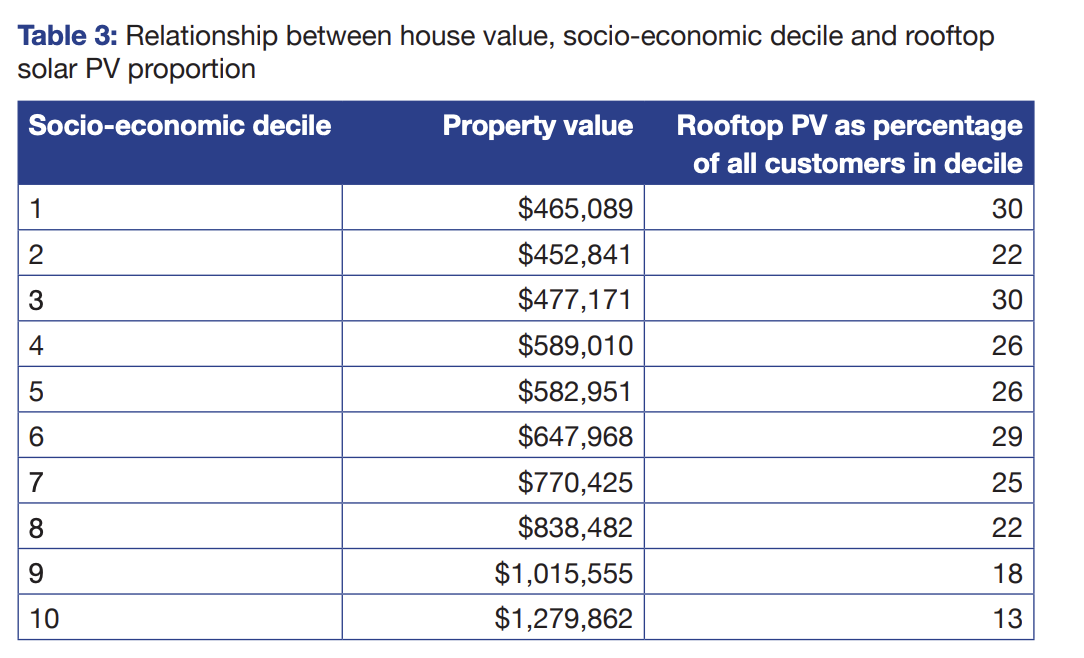
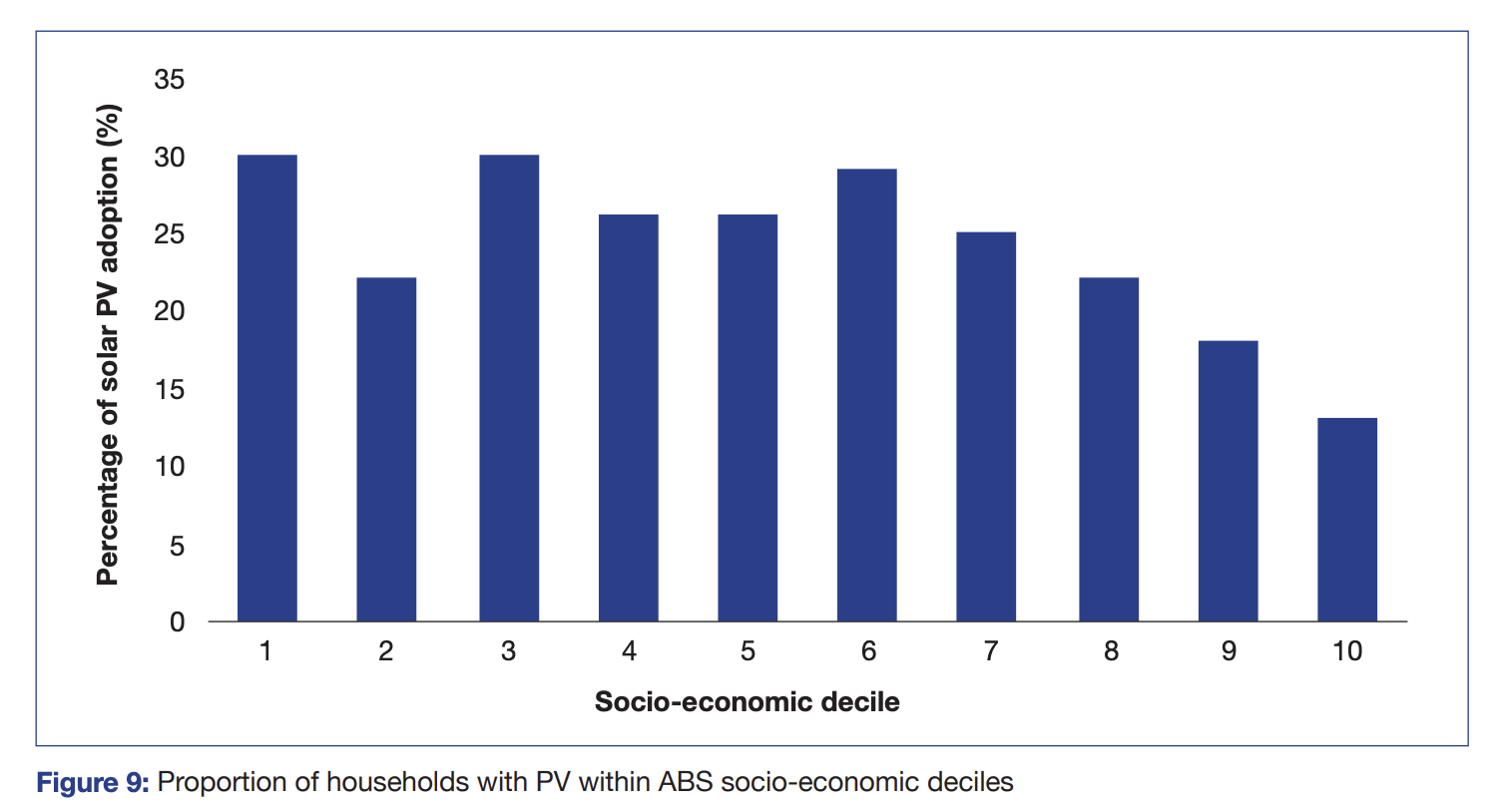
We reckon this could be because everyone in Australia knows that if you want low bills you get solar. It's an engrained narrative and the Government has also encouraged solar with subsidies and grants. The Government has almost discouraged it here, up until quite recently, and New Zealanders have historically got it for environmental or resilience reasons. But now the economics stack up here, too, and the whole point of the RAS is for more households to get finance so they can start saving.
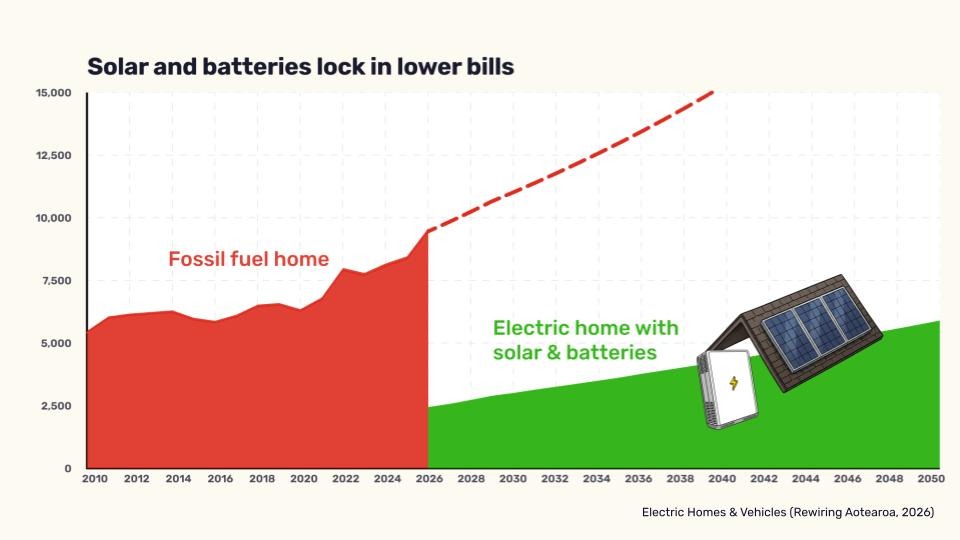
Solar and electrification offers greater price stability and that's important because, as we have seen recently, inflation is not experienced equally: those with fixed incomes spend more of their income on energy and transport as a proportion of their incomes and are less able to cope with energy price spikes, whereas wealthier homes are more able to absorb them.
Flow state
New Zealand reached a record this week, with its highest ever demand for electricity. Nothing really happened, which was great. The lights stayed on and the market responded.
Our system is designed to deal with these peaks and while our three big grid-scale batteries weren’t really needed and played more of a reserve role, we reckon homes (and cars) could play a big role in the future.
In Australia, a study of 20,000 homes showed those with solar and batteries imported 73% less power from the grid during peak evening hours compared to homes with solar alone.
During the evening peak (4 PM to 9 PM), homes with batteries averaged only 0.3 kW of grid imports, while homes without batteries averaged around 1.0 kW.
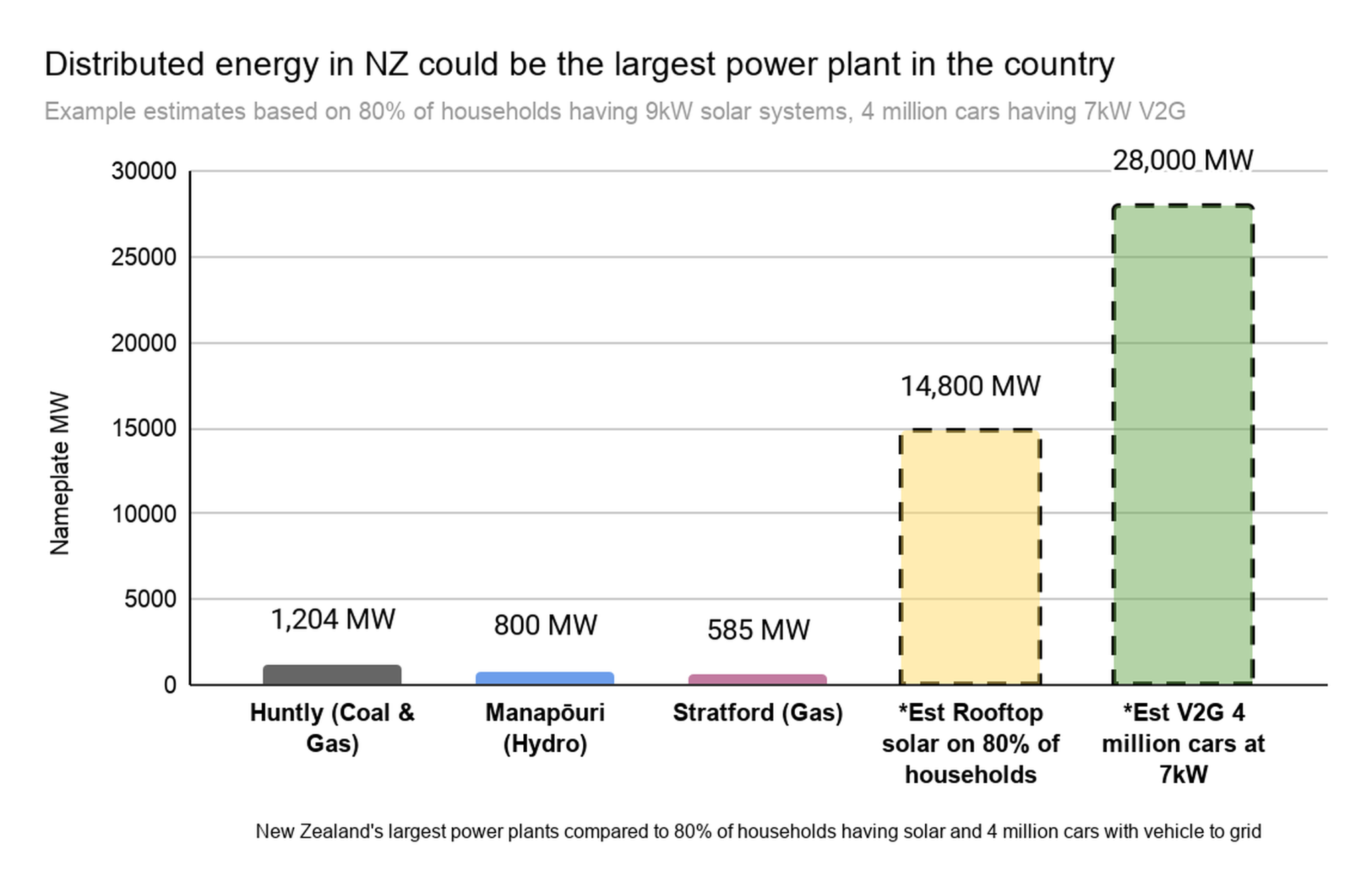
So far, Australia has deployed a huge amount of solar and around 500,000 batteries in 12 months with a 30% subsidy. That is equivalent to nearly half of all New Zealand’s power plants combined in output power. Soon they may not know peaks.

We could do the same, but there’s an added opportunity with two-way charging.
The wheels on the bus go bzz, bzz, bzz
We’ve got a good number of electric buses in New Zealand (the most are in Auckland and Wellington while Palmerston North and Timaru are fully electric) but check out Santiago! They have gone hard and now have the biggest electric fleet outside of China.
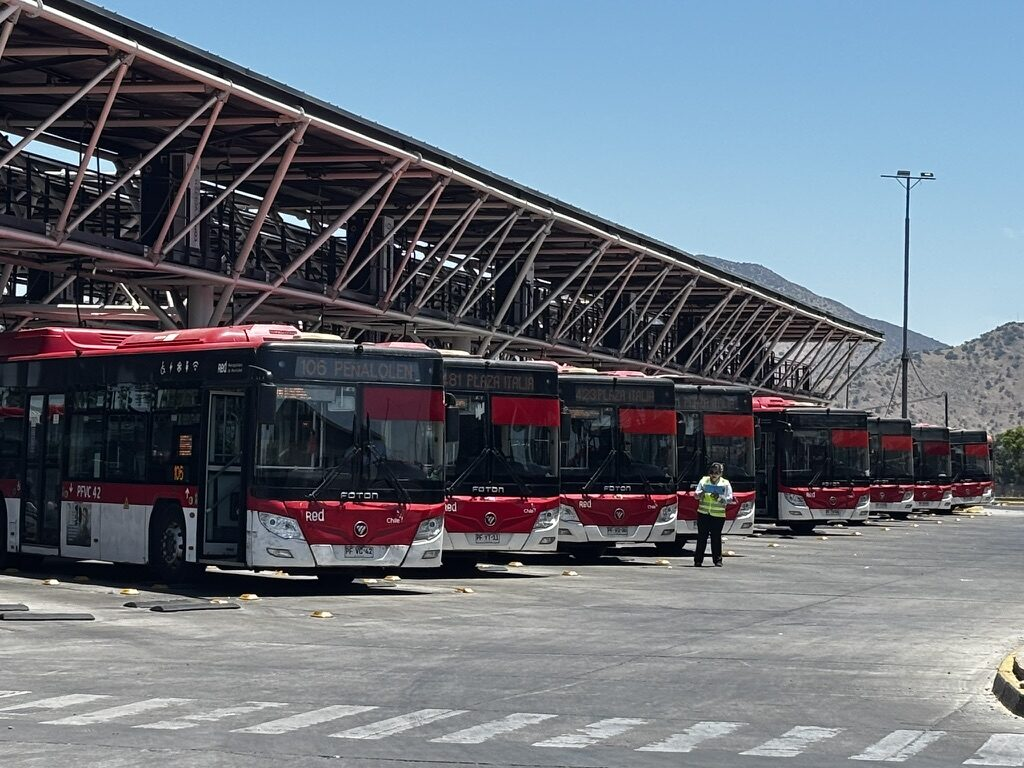
“Reflecting its commitment to sustainable urban mobility, by March 2026, 68 percent of the bus fleet is projected to be electrified. By then, the total fleet of e-buses will reach more than 4,400 buses, thanks to the planned addition of 1,800 new electric buses.”
“With a strong focus on charging, the Santiago transition also includes the development of 29 electroterminals. And, in the coming months, the number of electroterminals in Greater Santiago is expected to increase by 93%, growing from 29 to 56 facilities.“
Carbon capture
Speaking of big electric machines, we’ve covered the electric forestry innovation up in Rotorua before. And the Scania BEV electric logging truck completed "its first full forest load from the mighty Kaingaroa Forest to Pukepine Sawmill in Te Puke, Bay of Plenty, New Zealand".
As one of our electric community members said:
“I didn't think I would see this so soon. An electric log truck. This would be one of the hardest jobs in New Zealand that a truck can do and my husband drove one for 10 plus years. Very cool.
Price freeze
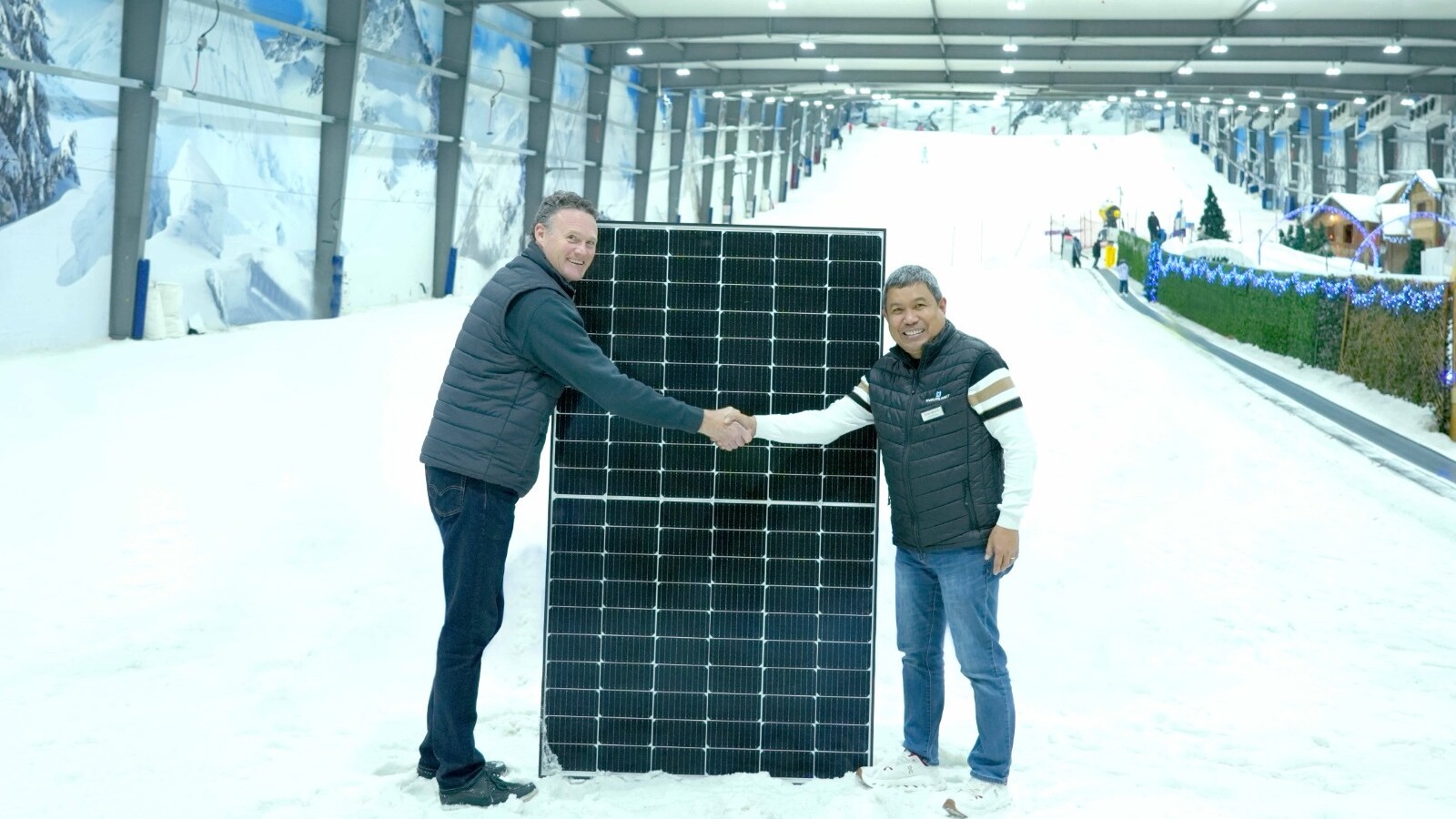
There's no business like snow business, but energy is expensive and that's where solar has come in for Snow Planet, which has cut its grid energy reliance by approximately 30 percent with a 1.05-megawatt solar installation.
Keeping Australasia’s only operating indoor ski venue cool takes energy. The Silverdale facility operates 24 hours a day, holding its 8,000 square metres of slope at a temperature of minus five degrees. To maintain constant ski-able levels of snow, Snowplanet has to produce another 80 cubic metres of fresh snow every week.
“The commercial logic is clean,” says Paul Makumbe, CEO of Sunergise. “The hottest summer days are when Snowplanet’s cooling demand peaks, which matches our maximum solar generation."
Dam straight!
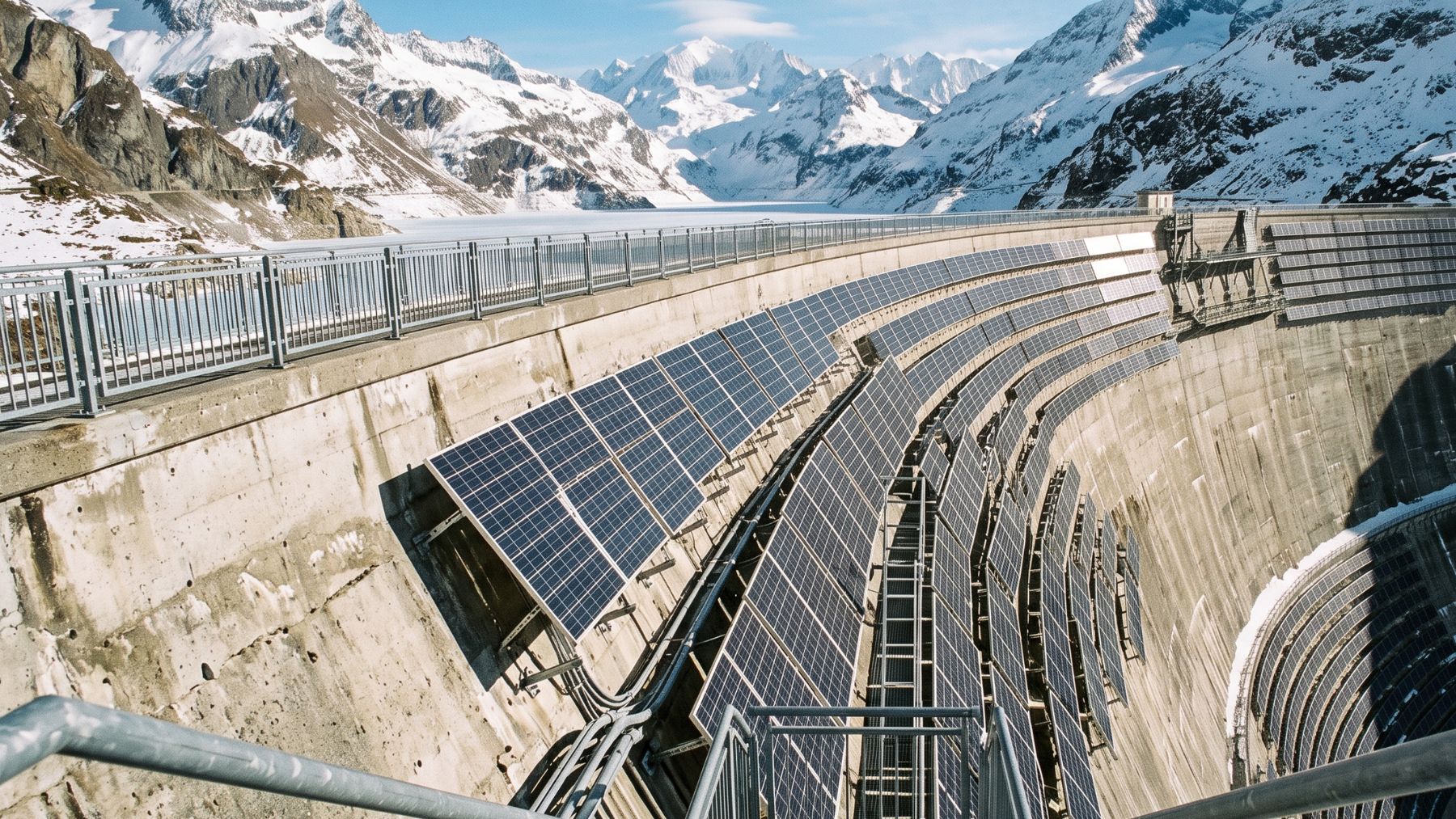
Up where the real snow is, there are also a few panels doing the business. As EcoPortal writes, “high in the Swiss Alps, on a concrete dam wall more than 8,000 feet above the sea, someone bolted thousands of solar panels to a place almost no one thought was worth it.”
The plant sits above the fog line, in thin, clear air that lets far more sunlight through. The higher you go, the stronger and cleaner the sunlight becomes. Cold actually helps, because solar panels work more efficiently when they are not baking in heat. And then there is the snow, which acts like a giant mirror, bouncing extra light up onto the panels from below. Scientists call it the albedo effect, and it can lift a mountain plant’s output well beyond anything possible in the valley. AlpinSolar makes about half of its power in winter, the exact season when the country is starved for electricity.
Toby for Prime Minister
As Mike Casey so beautifully sang, the children are our future and we’re onboard with pretty much all the answers given by Toby, the son of one of our own team members. But it was the answer to Question 2 that impressed us most.

Political Power has gone local! Dr Nick Smith, mayor of Nelson and ex-National Party minister, is an early adopter when it comes to electric machines but, through his efforts with the council and his close involvement with the Ratepayer Assistance Scheme, he's also embracing one of Rewiring's core mantras: once you've electrified your own life, electrify someone else's life, too.
Read moreDownloadWhether it's the growing number of electric buses, new electric trains for the lower North Island and City Rail Link, or new electric ferries, we love seeing more electric transport options in our big cities. It's also good to see some of our smaller cities like Palmerston North, Timaru and Nelson going electric and, as is almost always the case, the drivers reckon it's better on electrons. At the Electrify Nelson expo, we spoke with one driver Lee about the city's electric buses. And he definitely wouldn't go back to diesel.
Read moreDownload