Operation Laser Kiwi: help us take New Zealand-made energy on the road

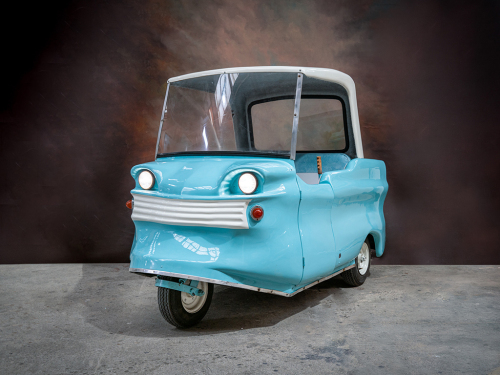

We definitely need to keep an lid on electricity prices, but the grid still provides savings and we need to focus on our fuels; geothermal could change everything in New Zealand and it's helping Iceland become a fruit and vege growing paradise; Devan Plastics looks to the sun for savings (and embraces floating panels); sparks fly as Master Electricians and BYD partner up, while electric vans and utes are now a competitive advantage for businesses; and a magnificent three-wheeled electric machine from the 1960s and an electric tractor from 1932.

Fight the fuels - and the electricity price rises
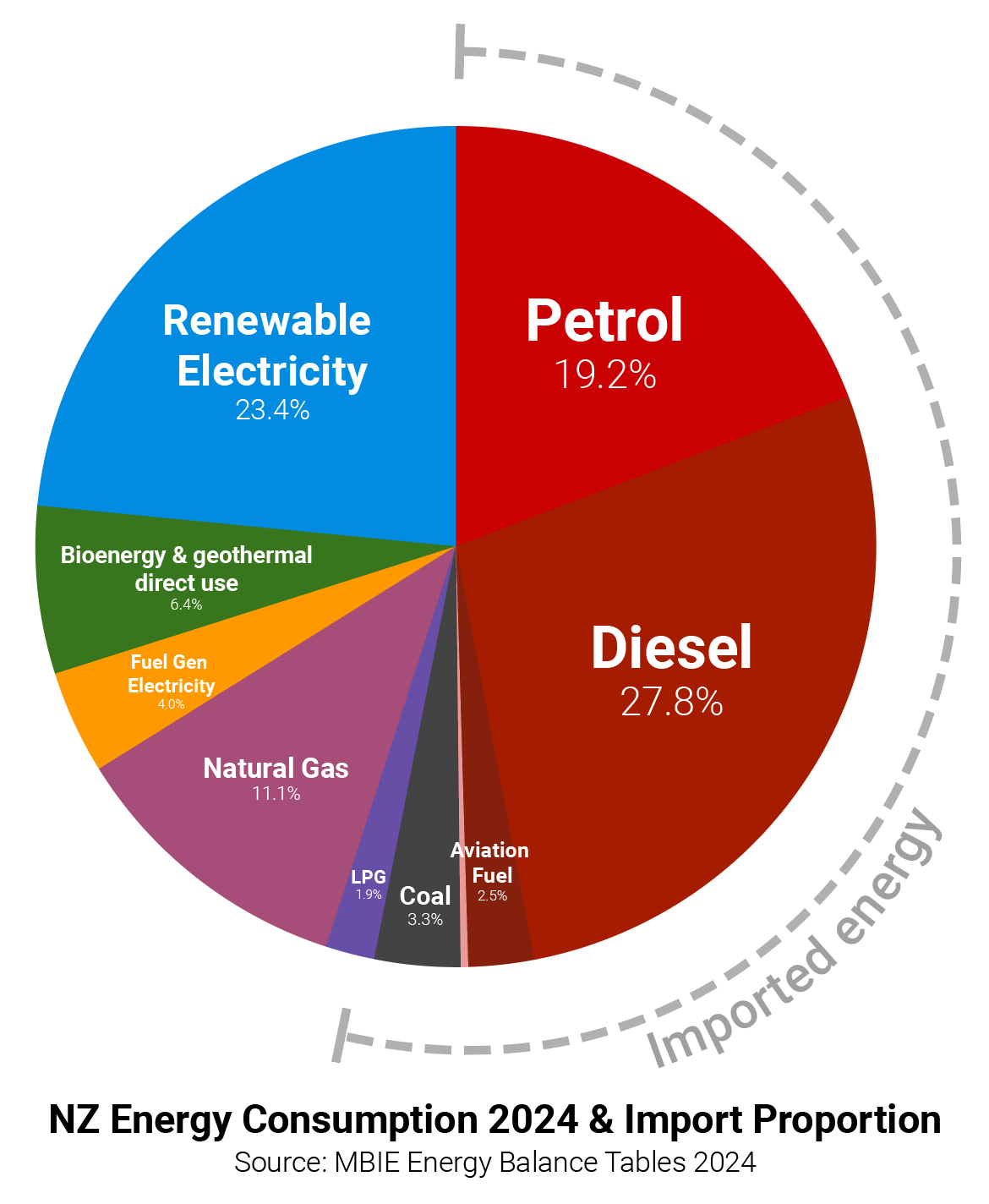
While there’s an understandable focus on the price of electricity at the moment - and increasing discontent from customers as they see big profits being announced by the gentailers at the same time as rising bills - it pays to take a step back and think about the bigger villain here: imported energy.
As we often point out, over half our total energy comes on ships and petrol was the biggest cause of inflation in the recent Stats NZ release.
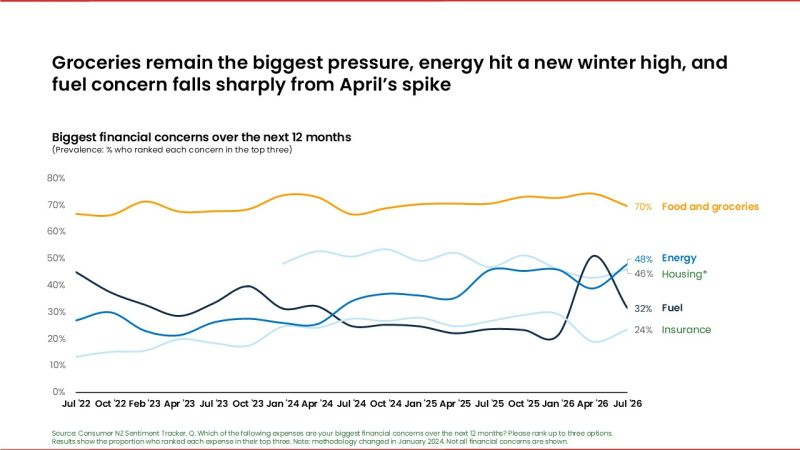
As Consumer’s sentiment tracker survey showed, while fuel was a big concern earlier in the year as a result of the war-related price spikes, we seem to have become slightly desensitised to them and are increasingly focused on electricity.
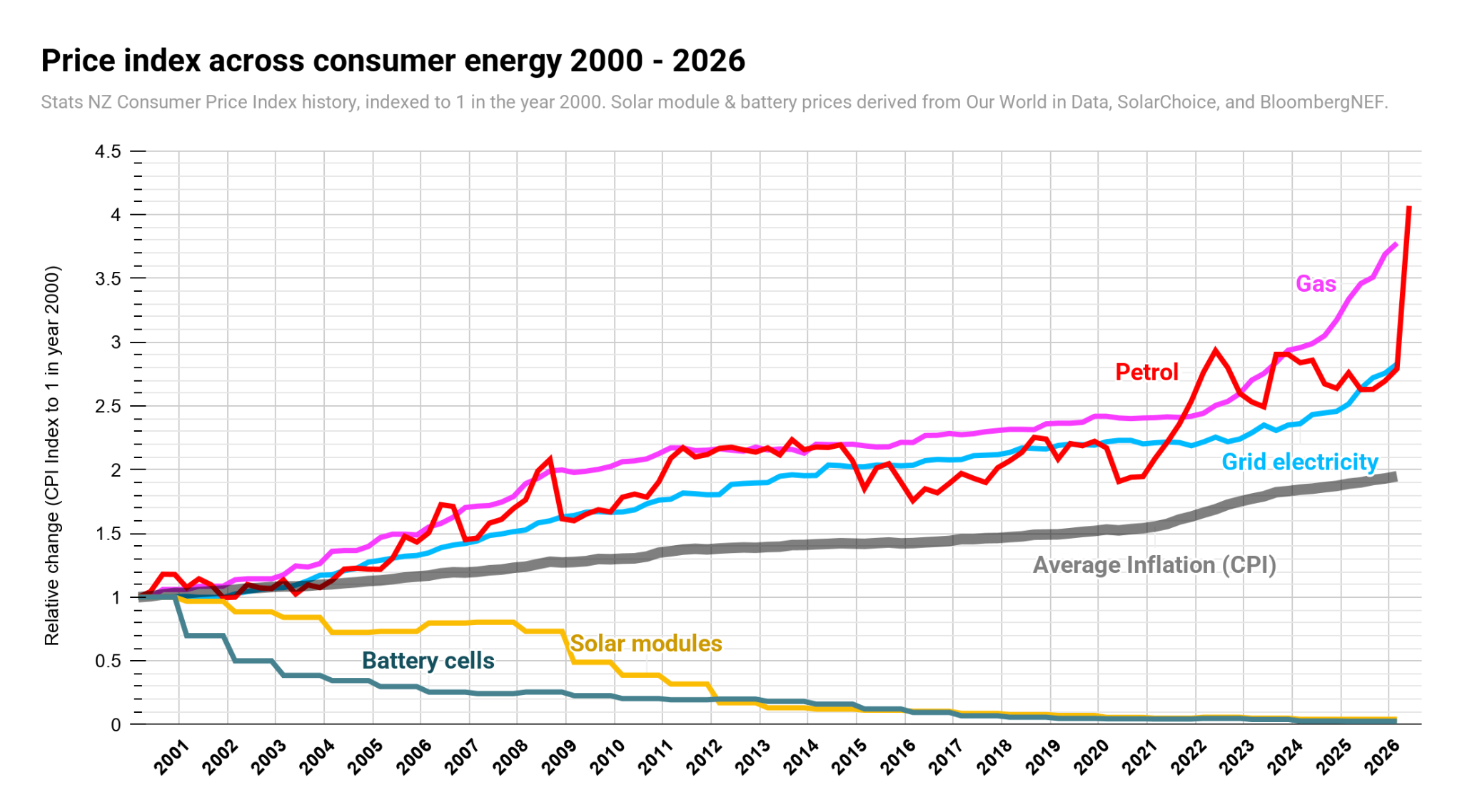
The price of grid electricity is also going up, but it’s a lot more stable than fuel and gas.
And, as our Electric Homes and Vehicles 2026 report shows, homes and cars running solely on the grid are still save a lot on bills in comparison to those running on fossil fuels.
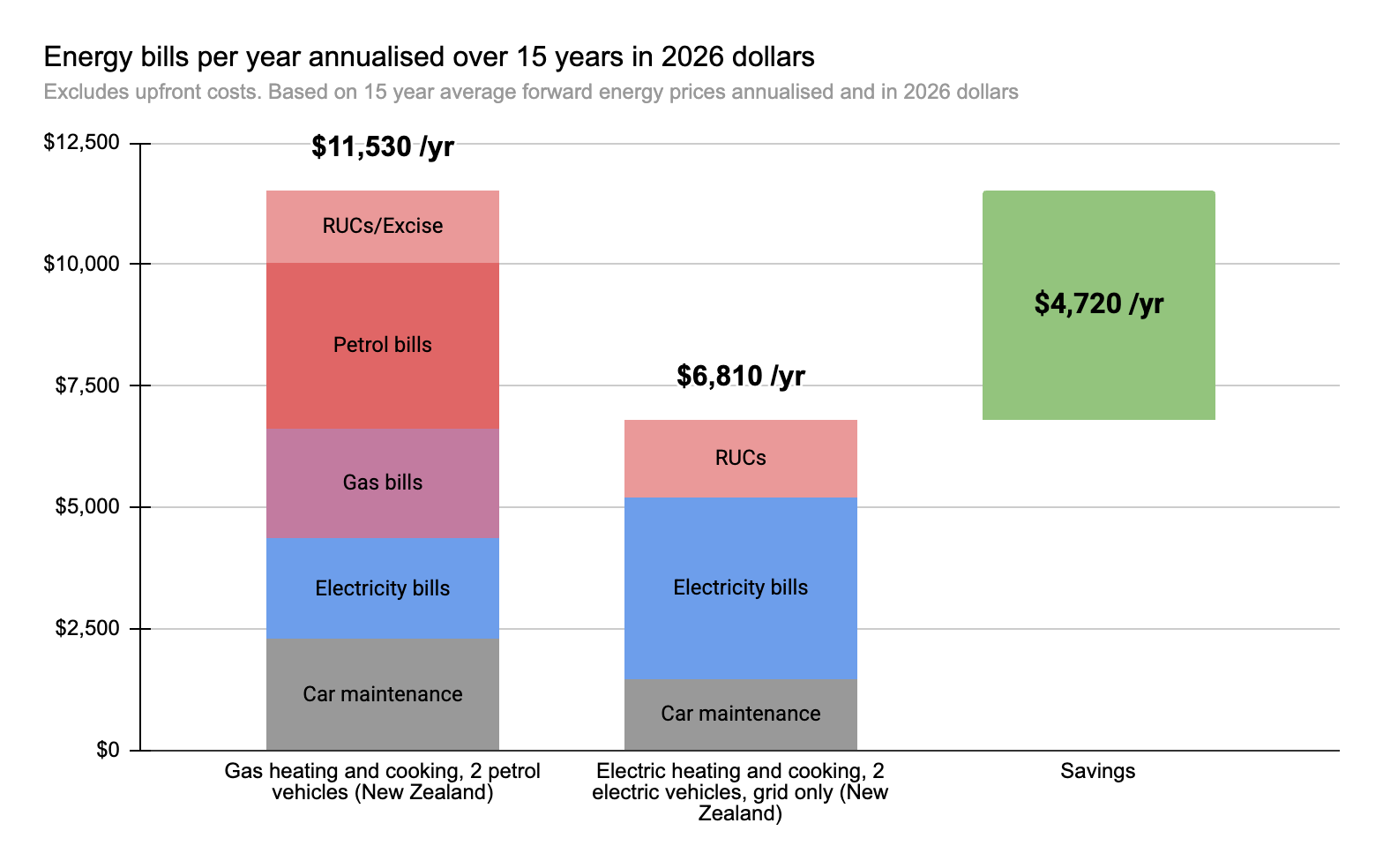
Adding solar means homes will save even more and it offers even greater price stability.
There is definitely room for improvement and we need to keep a lid on the price of electricity to make the most of the economic opportunity of electrification (like more renewable supply or lower infrastructure costs from embracing solar, batteries and two-way charging). But we also need to focus on the fuel.
Go deep
Geothermal is an increasingly important part of our electricity stack and Toby Manhire recently featured ex-National minister Tim Groser on his At Large podcast. He thinks supercritical geothermal could change everything.
Iceland, which, like New Zealand, relies heavily on hydro and geothermal, has some of the lowest electricity prices in the world. And it has also become a paradise for fruit and vegetable growing because it uses geothermal energy to grow them.
Tómas Ponzi grows tomatoes that are every bit as good as those from Italy. Outside, the temperature is just 12 degrees Celsius, but inside his greenhouse it is a pleasant 20 degrees — ideal conditions for this nightshade plant. The software developer now grows over 30 different varieties, and supplies top restaurants in Reykjavik.
The secret to his success lies buried deep in the earth. Here in Iceland, volcanoes and geysers bring heat from the earth's interior to the surface. Icelanders use this geothermal energy to heat their homes and, increasingly, greenhouses. This means they can produce more of their own food. Today, almost 70% of the tomatoes eaten in Iceland are also grown there. For cucumbers, the figure is almost 100 percent. This reduces the country’s dependence on vegetable imports from mainland Europe. The energy from the earth's interior can even be used to grow exotic fruits. The world's northernmost banana plantation can be found in Iceland.”
If we have some extra electrons, maybe we could even start to pump some of them through the fruit and veges to boost productivity.
Plastic fantastic
The Sustainable Business Network is doing some great work helping businesses electrify and sharing success stories. One of them is Devan Plastics, which, like an increasing number of businesses, decided to go solar to reduce power costs and has saved about $20,000 in the first year against an investment of $120,000.
Unfortunately, not all of those big rooftops are designed to handle the extra weight of panels.
“It discovered the roof of its Bay of Plenty factory that it shares with sister company Acquasol, could only carry a third of the panels it needed. It plans to meet the shortfall by buying renewable energy through an innovative arrangement with a commercial solar farm.”
“The business consumes about 80 per cent of the energy generated by its rooftop solar system. The system does not include battery storage. Any surplus power, usually generated at weekends when the factory is closed, is exported to the grid. The system supplies about 22 per cent of the business’s total electricity needs.”
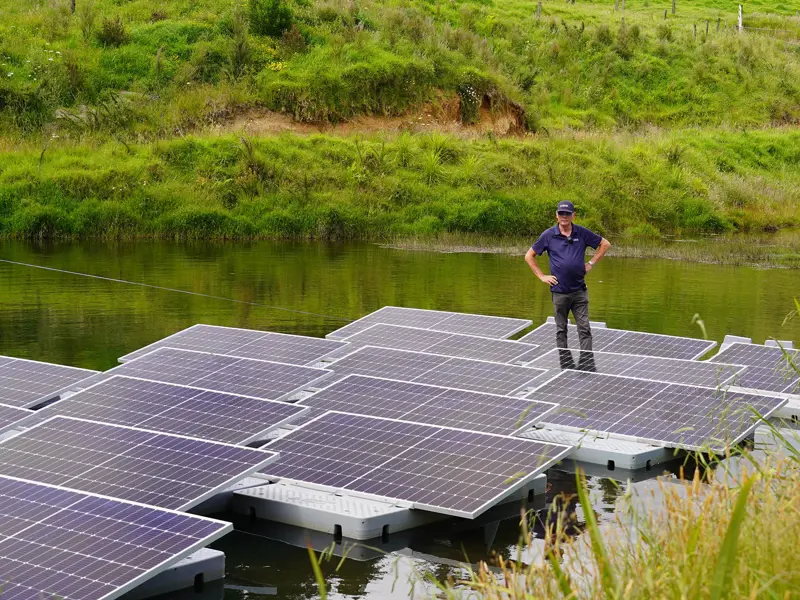
Interestingly, Aquasol also produces floating solar panels, which, while more expensive than rooftop or ground mount options, do have their advantages.
Sparks fly
If there’s any trade that’s going to embrace electric vehicles, you’d think it would be sparkies or those working in the electricity sector. Some of the gentailers and lines companies run a good chunk of their fleets on electrons now and Master Electricians has just partnered up with BYD to get a few more of them on the road.
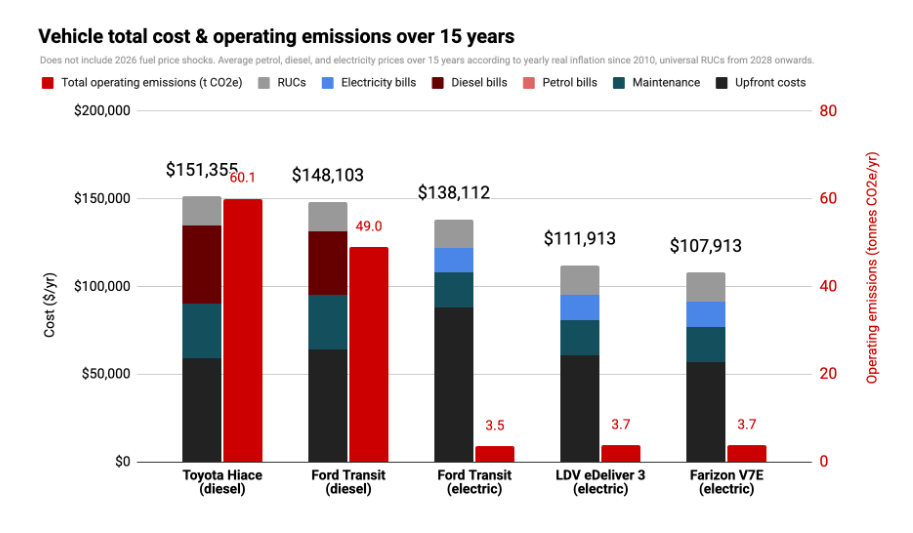
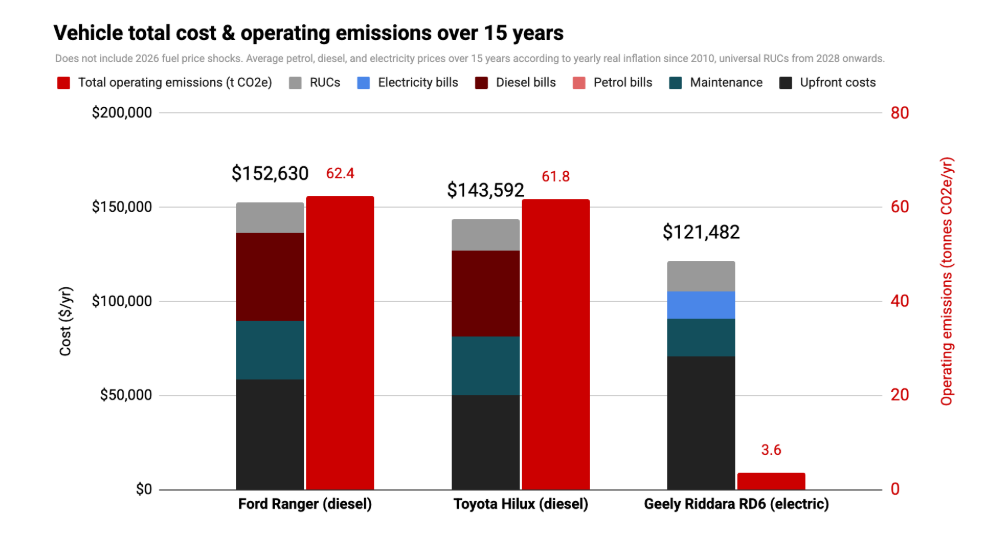
BYD only has the Shark plug-in hybrid (unfortunately, there don’t appear to be plans for a fully electric version). These have fairly small electric ranges, which are good for around town, but they still need fuel and come with higher maintenance costs than EVs. PHEVs are a better option than diesel, but there are an increasing number of fully electric utes and vans available and, as we showed in our Electric Homes and vehicles report, they can save tens of thousands over their lifetime.
The shining path
Over in the UK, Kerbo Charge (a name we think deserves some kind of award) is all about offering those without off-street parking a way to charge through a channel that gets put under the footpath. And it has tried to confront some of the main concerns with some clever content
Early electrics
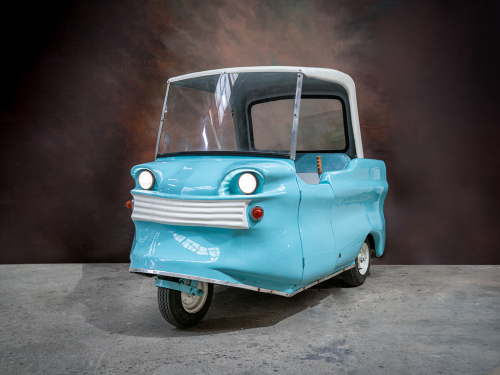
We’re always keeping an eye out for interesting electric machines (and Mike Casey is always looking to add to his collection) and there’s a good one up for auction at Webbs right now - if you have a spare $25-30,000.
As the listing says:
“An unusual and seldom-seen Electric Shopper FG-75, produced by the Electric Car Company of California, Long Beach. Introduced in 1960, the fibreglass-bodied FG-75 was marketed as a stylish two-person electric runabout decades before electric vehicles entered the mainstream. Finished in light blue with a white roof, this example retains its manufacturer's identification plate and California licence plate. It runs and drives, with working lights, and presents as a remarkable survivor from the formative years of practical electric motoring. It is understood to be the only New Zealand example.”
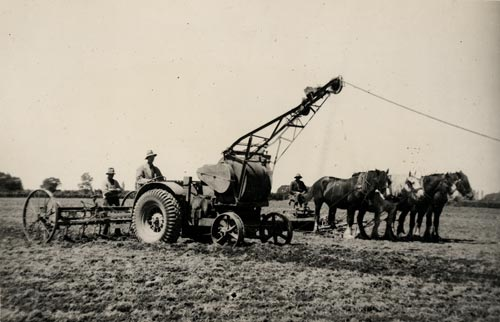
Going back even further, there was an electric tractor in New Zealand in 1932. Fergus Parks sent us an email and said:
“The Ashburton Electric Power Board had Herbert George Kemp design a ‘silent tractor’ that was powered from a large spool and crane arm to a centrally mounted power pole. So while the electric tractor imported in 2023 may have been the first wireless and driverless tractor imported to the country, its claim of being the first has long been beaten by a piece of Kiwi ingenuity from the 1930s.”
People installing solar power systems with batteries on their homes, hoping to avoid the disruption of a power cut, are being told to check with the installer that the battery can provide that protection.
Read moreDownloadKiwis are catching on to the benefits of solar panels - and demand's spiking ... But the industry warns we need about six thousand more trained electricians - across the country - to do the work. Rewiring Aotearoa Chief Executive, Mike Casey told Heather du Plessis-Allan he hopes interest will continue over time. He says oil shortages because of the Iran war is keeping demand high - with energy prices climbing. He says solar is the one reprieve Kiwis get.
Roger Robson-Williams owns 20% of New Zealand's electric tractor fleet. That sounds impressive, until you learn there are only five of them. But, like his fellow electric tractor enthusiast Mike Casey, he's on a mission to change that by providing a bit of inspiration and information.
Read moreDownload