Te Whakahiko i ngā Marae | the Electric Marae report


Two-way charging seen in the wild; sales of big electric rigs are growing rapidly (and more of them could helps address New Zealand's $12.1 billion energy blind spot); second-hand EVs are holding their value better than expected in Australia; the perils of Aqua ownership; and how to improve the disputes process in the wake of the SolarZero saga.

Plug and play
Rewiring’s head of policy, data and research Dave Karl has given us a glimpse of the future and it goes both ways.
The opportunity to put our cars to use and run our homes (or other people’s homes) as they sit idle - something they do for most of their life - is pretty big.
He explains how it works with the Geely EX5 and Sigenergy set-up in Wellington.
And this is what it would look like if all our cars could do it.
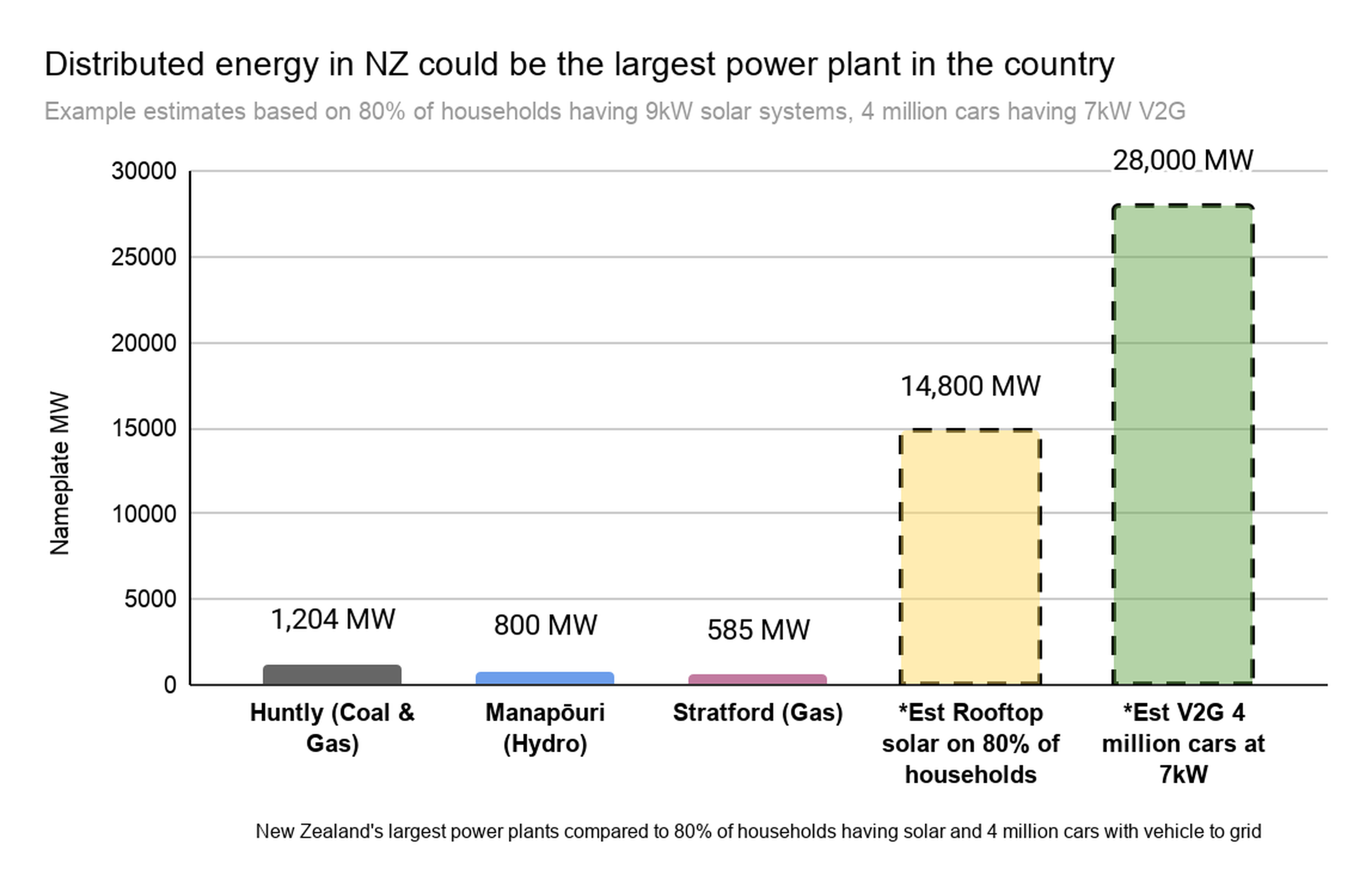
The opportunity to put our cars to use while we’re out and about is also pretty compelling. When you’ve got a big battery, you can run all kinds of things like, as Polestar demonstrated recently, a media tour in the middle of nowhere with no generators in sight.
Big rigs go electric
According to Bloomberg NEF. "Chinese e-truck sales jumped almost 80% in the first half from a year earlier … on pace to account for close to a third of all rigs sold this year, up from just 8% a couple of years ago.
"Diesel consumption in China will drop more than 10% this year, Sinopec Economics & Development Research Institute estimates, a shift that has helped Beijing navigate this year’s oil shock and limited price rises for global markets in turn — all while cutting emissions, even if coal still plays a major role in electricity generation.
New Zealand should be pushing hard in the EV direction and, as Kirsten Corson’s excellent piece in Newsroom explains, the lack of policy around supply, demand and infrastructure to get off fuel in New Zealand is a $12.1 billion blind spot.
Many young'uns think petrol cars are the transport equivalent of landlines. And how's this for a diesel burn from a 39 year old trucker:
“I don’t think anyone will switch back to diesel trucks. Nobody wants to return to a last-generation technology.”
One trucker Tobias Wagner was filmed taking one on a 900km journey.
A navigation buoy from the Juister Riff in the North Sea went missing and has turned up in Scandinavia. Now, it's Wagner's job to bring it back.
Tackling 900 kilometers, three countries and a ferry crossing — all in an electric truck. To make the trip work, Wagner has had to plan his route carefully. Weight, distance and road incline all affect the truck's range. Finding suitable overnight stops is also crucial, since not all truck parking areas have charging stations.
Many in his industry are still skeptical about electric trucks. But freight hauler Nanno Janssen has no doubt: e-trucks are the future. Sixty percent of his fleet already runs on electricity, and he plans to transition the remaining trucks in the coming years. Tobias Wagner is a believer, too. He regularly shares his experiences as "Elektrotrucker" on YouTube.
Petrol car hot potato.
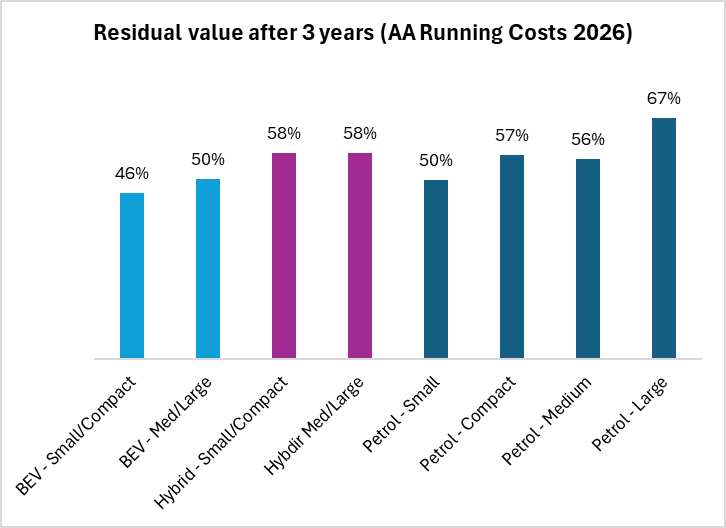
Over three years, according to the AA, most new cars approximately halve in value. If you’re buying for the long-run, this is not as much of an issue. EVs currently depreciate more than similar ICE cars and it has certainly been a barrier to uptake, but that’s primarily because of how fast the technology has improved, how far prices of new EVs have fallen, and various policy changes. But in Australia, as The Guardian reports, second-hand electric vehicles are holding their value because the demand has grown and some are wondering whether there is more risk in having something people don't want.
Instead, scenes like the Pickles auction are turning that anxiety on its head, forcing drivers grappling with high fuel prices to ask whether it could actually be petrol cars that pose the bigger secondhand valuation risk. The shift is evident in written-off vehicles, too.
Salvage EVs, with pre-accident values of up to $40,000, fetched substantially higher auction prices than comparable combustion models, the auction house says. Written-off EVs sold for spare parts and second-life batteries achieved 16% higher sale results than petrol equivalents, while repairable write-offs generated a huge 71% price premium.
Batteries are holding up (even with big kilometres) and batteries can also be re-used at the end of life.
As Tony Lyall explains, it's bad enough owning a Toyota Aqua. Now you have to pay heaps to use it.
Keeping them honest
There’s been a bit of attention on solar installs recently, and for the wrong reasons. Judging from the huge number of positive testimonials about the money people save and the increased engagement people have with energy, the vast bulk of people are happy, but, like any trade, there are issues, shoddy work and occasionally people left out of pocket.
Utilities Disputes commissioner and CEO Neil Mallon joined Nadine Higgins to talk about the growing problem, much of which stems from the SolarZero saga.
In The Post, commercial law professor Alex Sims also writes about the fallout from SolarZero and looks at ways the disputes process could be improved.
Utilities Disputes cannot deal with disputes where someone bought their system outright. A household that paid tens of thousands of dollars upfront gets less protection than one on a lease. Their options are the Disputes Tribunal or the courts, which are slower, harder and more expensive.
Underneath it all is a simple problem: New Zealand has no solar-specific standards for solar system sellers.
Australia has a better system. Installers there must be accredited under a scheme approved by the Clean Energy Regulator, now run by Solar Accreditation Australia. Retailers can join the voluntary New Energy Tech Consumer Code, which sets standards above the minimum in consumer law. But our cousins across the ditch are not perfect. One retailer, expelled from the code in December 2025, reportedly kept trading and is under investigation in several states, although none of the allegations has been tested in court.
The lesson is to emulate Australia’s approach but make the core parts mandatory: accredited installers, approved products, clear disclosure of long-term costs, and a dispute scheme covering all solar purchases. Disclosure is vital for subscriptions: customers should be told, in plain language, what happens if they move, sell, or the company fails.
Solar is good for households and the country, but people will only keep investing if they trust the market. The Commerce Commission should finish what it started, widen Utilities Disputes' reach, and the government should set proper standards for a rapidly growing industry.
Two-way charging seen in the wild; sales of big electric rigs are growing rapidly (and more of them could helps address New Zealand's $12.1 billion energy blind spot); second-hand EVs are holding their value better than expected in Australia; the perils of Aqua ownership; and how to improve the disputes process in the wake of the SolarZero saga.
Read moreDownloadAccording to a new poll from Talbot Mills, energy will be a major factor for almost three quarters of voters on November 7 and just 12% think spending $1 billion on an LNG import terminal is a good use of Government money.
Read moreDownload
