Don't listen to Old Man Gas. Ditch LNG. Support New Zealand-made energy!



The UK Government launches a campaign aimed at giving more people that 'electric feeling'; more electric public transport hits the waves, rails and roads; Australia anounces $25 million solar panel recycling scheme; Black Cap Daryl Mitchell embraces solar and tries to spread the message; and China's solar power made clear.

Electric feels
The UK Government has launched a campaign to show that now is the right time to buy an electric vehicle due to significant cost savings, compelling incentives, and an increasing number of charging stations.
The campaign focuses on the people who have already got that ‘electric feeling’.
“The evidence is clear: once drivers go electric, they don’t go back. The campaign taps into that reality with testimonials from real EV owners, explaining how the switch has transformed everyday driving for them – from the driveway to the high street. The push comes as the government has helped over 50,000 drivers buy an EV, saving them up to £3,750 ($8,500) in the process through the Electric Car Grant. This has supported record electric car sales in recent months, with 1 in 4 of all new car sales now electric.
These EV owners are also saving £1,400 ($3,200) a year on running costs in comparison to petrol.
New Zealand petrol prices are significantly higher than the global average, so there are plenty of savings on the table for those that go electric here, too. Added bonus: upgrading your fossil fuel vehicle is likely the biggest thing you can do to reduce your emissions.
Unfortunately, our adoption rates are lower than average despite highish incomes (as Vector’s Prageeth Jayathissa pointed out, the Vietnamese, who are 10 times poorer than the average New Zealander, have 40% share of car sales being electric). So let’s follow the lead of others and start using more homegrown energy to get around.
PT FTW
Public transport is good. Electric public transport is better and the second all-electric ferry from EV Maritime has hit Auckland waters (two hybrid ferries were also ordered).
Like the first one, AT1, it’s 24-metres long, takes 200-passengers and is made from carbon-fibre. Megawatt charging infrastructure is still being installed.
The new ferries arrive at the same time Auckland Transport ordered three new diesel ferries and Auckland Transport programme director of the low emissions ferry project Nathan Cammock spoke about why that was necessary on RNZ.
The fully electric City Rail Link is also getting closer to completion (although no specific opening dates have been announced, much to Hayden Donnell's chagrin) and it will double capacity for trains in Auckland.
The $5 billion project has taken over ten years, and it's the latest in a long journey of Auckland electrifying and modernising their rail lines, including Pukekohe, which got its electrified train line last year. One resident summed up the primary benefit well: "No more five to six buses. Just one train, woohoo."
Dunedin has also pushed the electric and a new contract for 37 electric buses. When the contract kicks in with Go Bus (which is part of Kinetic) in October, 61 of Dunedin’s 79 buses will be electric. All of Dunedin’s buses are expected to be electric by 2028.
Old gold
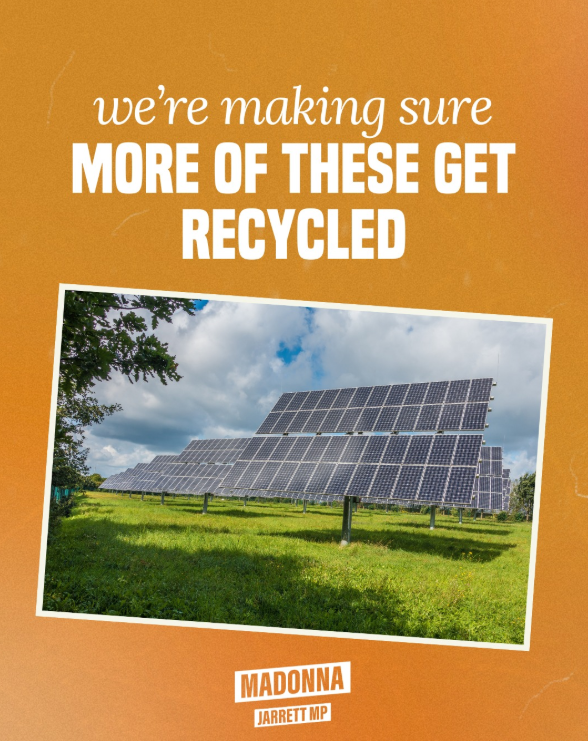
We often get asked about waste at Rewiring. And we always try to put things in perspective: burning stuff is massively wasteful and many of the things we need for electrification can be re-used or recycled. It's like comparing single use plastic bags to a backpack.
In Australia, a country where around 40% of homes now have solar, around one third of new installations are replacing older panels and a new scheme has been set up to recycle them (and eventually household batteries).
Environment minister Murray Watt said in a statement: “We think solar panels are made up of materials that are too valuable to throw out. These materials can be repurposed to support the clean energy transition and help reduce what we send to landfill, improving our natural environment."
The $25 million pilot programme will establish up to 100 collection sites across the country.
As Rewiring Australia's CEO Francis Vierboom said:
“Glass and metals like copper, lithium, iron, nickel and silver are great materials to recycle. The Aussie legends (like my father in law in Ararat) who were early adopters and put solar on their roof 15 years ago are starting to upgrade them now, and the increasing volume of panels that we need to do something with actually helps make recycling more economically viable.
In the long run, it means not only is the energy from renewables 'sustainable' in the sense that it doesn't burn fuels and load up the atmosphere with extra carbon - it can also be 'sustainable' in a raw materials sense and reduce the need to mine new raw materials. And the energy needed to recycle the scrap materials into new solar panels can be generated by... other solar panels!"
Mitch report
The neighbourhood effect can be powerful when it comes to influencing decisions. And the influencer effect can also be powerful so we’re always happy to see well-known New Zealanders pick up what Rewiring is putting down.
We’ve seen the Barrett brothers get behind Lightforce. And now Black Cap Daryl Mitchell is also onboard. Ecotricity’s case study says he decided to go solar for two main reasons: reducing his long-term energy costs and doing his part to shrink his climate footprint.
Now that his solar system is up and running, Daryl is excited about what sustainable generation means for his whānau and for New Zealand’s future.
As he puts it: “I think it’s really important, trying to generate power sustainably… Now as a Dad with kids, I’m just trying to prolong the amazing life that we have and, in the long term, make a big difference.”
Cricketers always hope for sun. Let's hope a few more of Mitchell's compatriots decide to make good use of the sun at home, too.
Sunning themselves
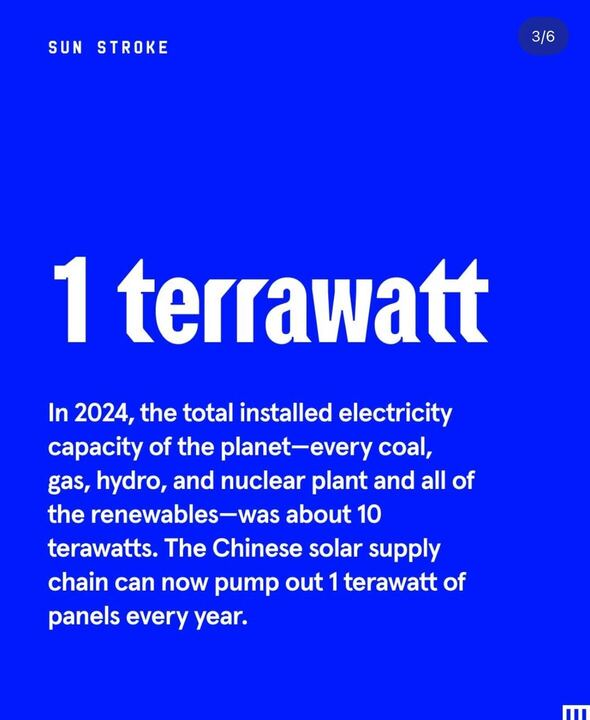
China has become the first ‘electrostate’. This stat shows how important solar has become in that equation and how important it is if we hope to reach our electrification ambitions.
Political Power has gone local! Dr Nick Smith, mayor of Nelson and ex-National Party minister, is an early adopter when it comes to electric machines but, through his efforts with the council and his close involvement with the Ratepayer Assistance Scheme, he's also embracing one of Rewiring's core mantras: once you've electrified your own life, electrify someone else's life, too.
Read moreDownloadWhether it's the growing number of electric buses, new electric trains for the lower North Island and City Rail Link, or new electric ferries, we love seeing more electric transport options in our big cities. It's also good to see some of our smaller cities like Palmerston North, Timaru and Nelson going electric and, as is almost always the case, the drivers reckon it's better on electrons. At the Electrify Nelson expo, we spoke with one driver Lee about the city's electric buses. And he definitely wouldn't go back to diesel.
Read moreDownload