EV Salary Boost: it's a pay rise you can drive!


Vessev keeps on flying with a $32 million funding round and more international orders; Golden Bay Fruit and Alsco look up to try and get a competitive advantage; there's a 96% approval rating among EV owners and the cops like their EVs too; Woolworths unveils a purpose-built charging hub at Penrose for its electric deliveries; Bev might take a bit of getting used to; desperate times call for clever measures in Cuba as three-wheeled solar powered scooters start collecting trash; and meet 'Electric Saul', an AI version of real Saul Griffith that offers electrification advice.

Taking flight
We’ve followed Vessev’s journey pretty closely and today it has announced a capital raise of US$19 million (NZ$32 million) that it will be using to keep electrifying the world’s waters.
From one boat operating in Auckland, to multiple boats set to take flight around the world, including in Tahoe, people are taking notice of these efficient, clean, quiet hydrofoiling electric boats.
As CEO Eric Laakmann told RNZ, the company has “58 staff in Auckland and was ramping up production of the VS-9, with the aim of building a boat every five weeks by 2027".
"We have orders on four different continents. Most of our customers are fleet operators, so they want fleets of these vessels operating their local market to really augment existing transportation systems.”
Laakmann said Australia was a particularly exciting market and the company had projects underway in Hobart, Perth and Sydney, with the vessels to be used as part of new transportation networks and the first boats due to be delivered into Australia next year.
Great to see a New Zealand company doing well in this space. Here’s an interview from the early days with CEO Eric Laakman.
Sun smart
Taking energy into your own hands is now a competitive advantage and smart businesses are looking up.
Golden Bay Fruit is one business putting its roof to work, with 3,000 panels being put up on the packhouse in Motueka. The company is used to putting sunlight to use to grow fruit, now it’s putting it to use to save money on electricity, which was its second biggest expense.
The Top of the South is one of the sunniest regions in New Zealand. It's what makes our fruit so sweet. Now that sunshine is doing double duty, powering the packhouse that washes, packs and ships our apples to the world.
Solar wasn't viable when we built this packhouse in 2019. The numbers didn't stack up. Seven years on, the technology improved, electricity prices rose, and our sustainability commitments got sharper. So we went back and looked again.
Just down the road, Alsco Uniforms in Nelson has also gone solar. As Lightforce wrote:
“A 40% reduction in grid consumption is more than a sustainability win for Alsco Uniforms, it's operational resilience. They've hedged against volatile energy markets and rising electricity costs while proving their commitment to clean energy across their Asia Pacific footprint. Every year energy prices climb, their solar system pays dividends.”
Over in Australia, the Small-scale Renewable Energy Scheme has just been expanded from 100 kilowatts to one megawatt so more businesses can run on the sun. While our neighbouring Government has a history of spending money to help their people get solar and batteries, it’s worked remarkably well and we’d love to see some more support like this in New Zealand.
You can hear Pic Picot speak at the Electrify Nelson expo next Saturday, and he will tell you all about the solar on roof of his factory.
Cop that!
92% of iPhone owners say they would buy another one. On Trip Advisor, the approval rate for the Louvre clocks in at 92%, the Statue of Liberty is 91%, Times Square is 83%, and Stonehenge is 78%. They’re pretty good rankings. But you know what tops them all: EVs! Research in New Zealand shows that 96% of EV owners would buy another one. And the numbers are similar overseas, including in the US.
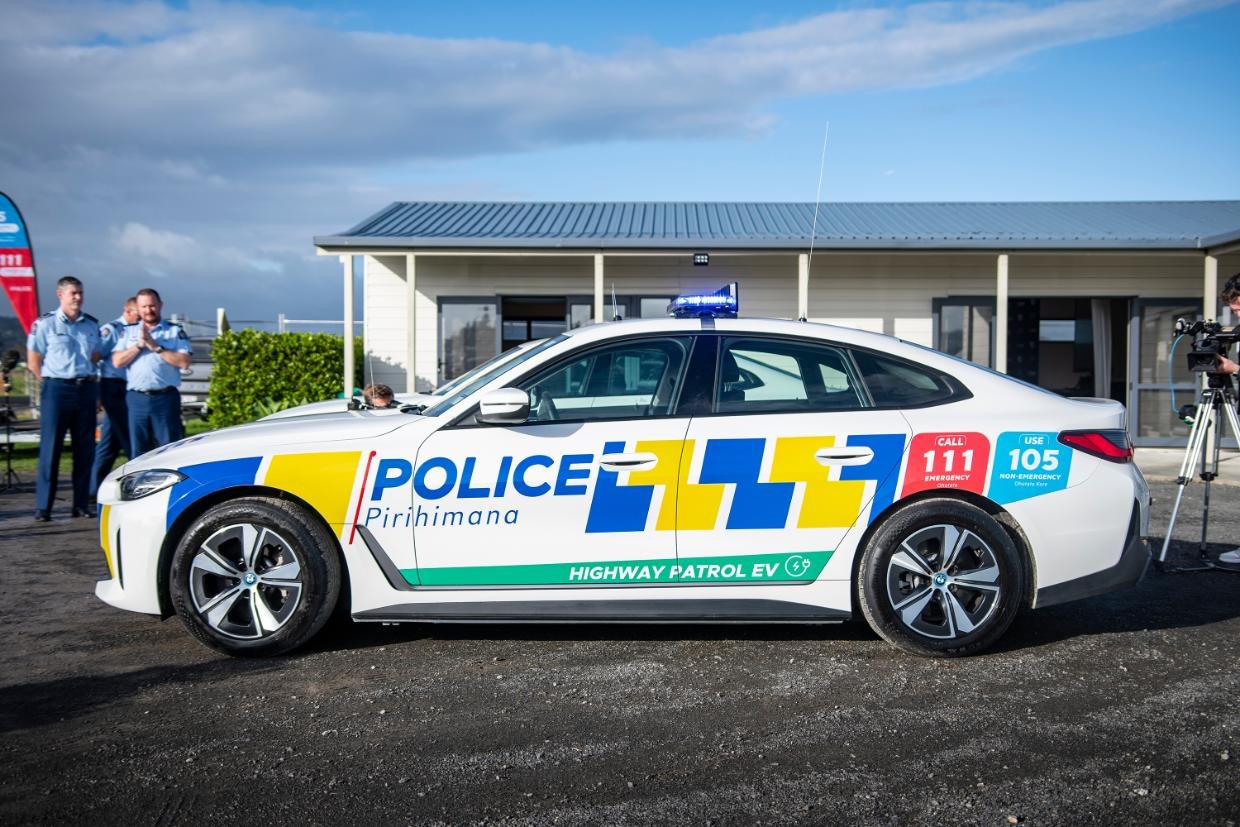
It turns out that the police are fans of EVs too and, as Stuff reports, NZ Police say its BMW i4 electric patrol cars have exceeded expectations.
The BMW i4s are primarily assigned to highway patrol duties rather than general frontline response, generally allowing officers to begin their shifts with a full charge and return before the need to recharge. New Zealand Police installed high-speed chargers at dedicated police facilities to support fast turnaround times for the i4 fleet.
"We generally get a range of about 450-460 kilometres real-world per charge, which is pretty good for us," said Acting National Fleet Manager Leighton Hamlin. "We plan on 500 kilometres per shift as the range that we want from our vehicle, so that can sometimes be a limiting factor when we push forward."
Some of its vehicles that need to be constantly on the move are more difficult to electrify, he says, but super fast charging is on the horizon and would mean EVs could fill up on electrons in about the same amount of time it takes to fill up with petrol. Cars with longer ranges also mean there is less need to stop.
Delivering the goods
Woolworths is also loving the electrons and it's just celebrated a facility upgrade in Auckland, with a purpose-built 15-bay fast-charging hub at the Penrose eStore.
It hopes to fully electrify all 42 delivery trucks operating out of Penrose.
“We’ve expanded from just 3 next-generation electric trucks last November to 27 this month, on track for 57 active nationwide by June next year”.
So far, the vehicles have done around 800,000 electric kilometres and are on track to pass one million by December 2026
Check out some other case studies of companies that have made the switch to electric here.
Bev? Who’s Bev?
While Toyota continues to celebrate its hydrogen cars (worst rental ever!), more and more people are betting on batteries. Toyota itself is belatedly coming to the party and its electric Hilux (with its relatively small battery) launched this year.
There are some fairly engrained perceptions and persistent myths about EVs, but they are gradually being eroded as more people experience the benefits of electric vehicles large and small. But, as this clip shows, the electric utes still take a bit of getting used to.
Desperate times, clever measures
Cuba's fuel supply has dried up as a result of the US blockade. There are regular blackouts and trash has been building up on the side of the road, but a new start-up is helping remove that rubbish with the help of three-wheeled solar powered scooters.
Electric Saul
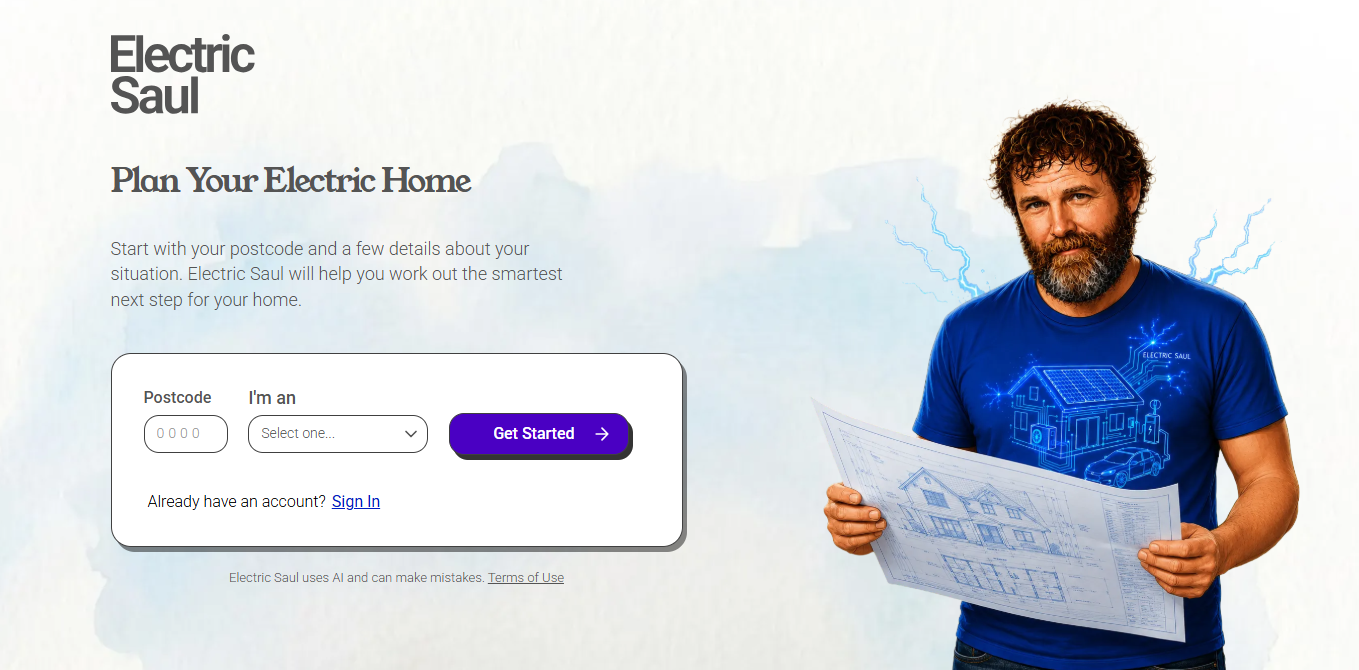
Real-life Saul Griffith is pretty impressive. But he is only one man. Now there’s Electric Saul, an AI-powered advice service that Rewiring Australia has just launched.
As CEO Francis Vierboom says:
No two homes are the same. Every household that's gone through the journey with us - or figured it out with the help of friends and family - has their own unique combination of challenges, priorities and things to work around. That makes it hard to scale up the kind of support we've been doing. You need some tricky expert answers every time. But you can't just hand someone a PDF with every answer. This is actually something the latest AI tools excel at - comprehending what *your* specific questions and plans are, and zooming in to the relevant advice a lot faster.
Try it out at electricsaul.com.
An ex-coal man embraces the sun; another New Zealand record is broken as two new solar farms come on stream; a new long range electric bus launches with cheap fares between Oamaru and Dunedin (and it wouldn't be economical with diesel); Ed Conway on how diesel is being used as a geopolitical weapon (and how our Powered From Within plan to electrify critical assets would reduce our reliance on fuel); will we be using cords to charge our cars in the future?; and oil is good (for salad).
Read moreDownloadCould solar panels and electric vehicles help New Zealand households save thousands on energy? Rewiring Aotearoa’s Mike Casey joins The Front Page to explain the potential savings from electrification, the upfront costs stopping people from making the switch, and how cheaper finance could help. Plus, would breaking up the big power companies lower bills, does New Zealand need an LNG terminal, and could we one day buy electricity directly from our neighbours?
Read moreDownloadA collection of our most influential leaders joined the NZ Herald's Future of New Zealand Debate, including Contact Energy CEO Mike Fuge and Rewiring Aotearoa CEO Mike Casey.
Read moreDownload