Don't listen to Old Man Gas. Ditch LNG. Support New Zealand-made energy!


In the last Electric Avenue of 2025, we look at the two biggest trends in the world of energy; the Government goes electric for its fancy fleet upgrade; Nick Offerman offers his services to a US campaign extolling the virtues of EVs; Australia shows what's possible in new homes when you add solar, batteries and smart tech; a start-up selling portable solar and battery systems that wants it to be as easy and common as wi-fi; and The Lines Company looks to put some solar on the roof of the Ōtorohanga Kiwi House.

Electric tidings
Thanks to all those who have dipped into our weekly round-ups this year. There’s so much good stuff happening in the energy scene, here and around the world, and it’s great to be able to bring some of the best bits to you and inspire a bit of optimism. May your holidays be electric.

The big trends
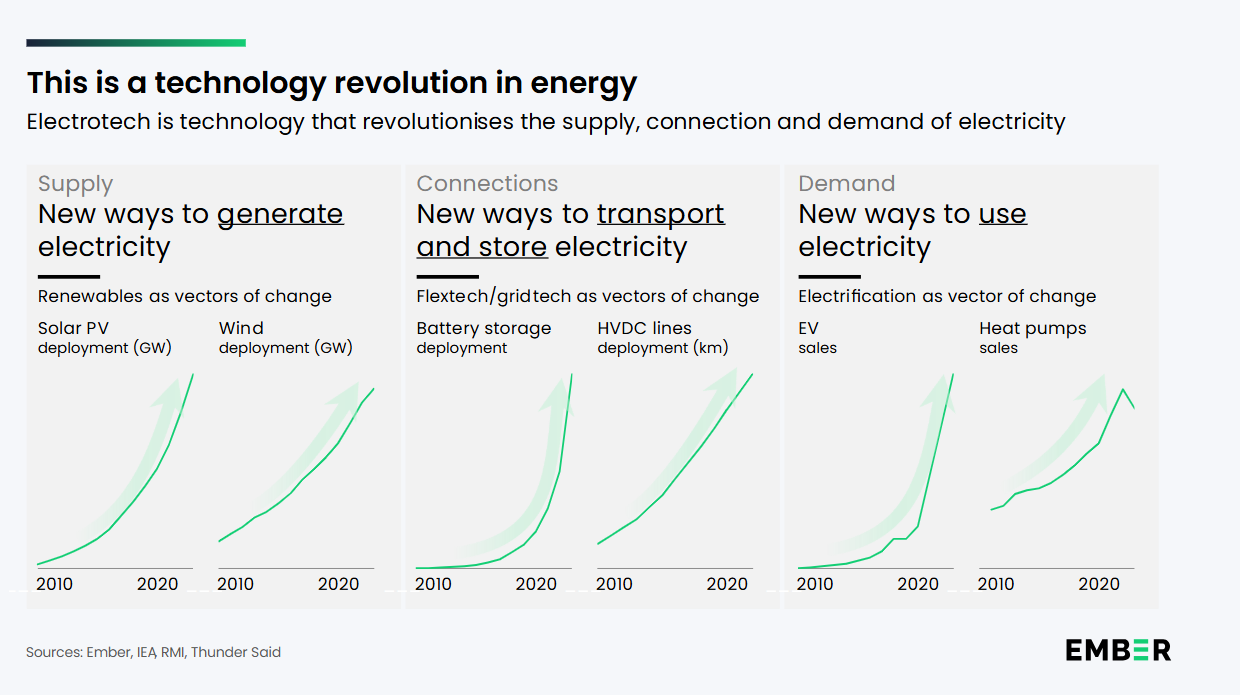
The growth of renewables around the world was the biggest trend of the year and, as energy consultancy Ember said in its end of year review:
Solar and wind not only kept pace with global electricity demand growth, they surpassed it across a sustained period for the first time, signalling that clean power is now steering the direction of the global energy system.
Solar gained momentum in regions once seen as peripheral, from Central Europe to Africa, while BRICS nations crossed a major milestone by generating more than half of global solar power. Rapid advances in battery technology and a decline in prices brought around-the-clock solar into credible, near-commercial reality, opening the door to fossil-free baseload power in sunny regions.
The rise of “electrotech” – solar, wind, batteries and electrified transport, heating and industry – became the dominant engine of global energy growth, led by China’s emergence as the world’s first electrostate. As AI and data centre demand grew, clean power and strong grids became the new competitive edge for modern economies.
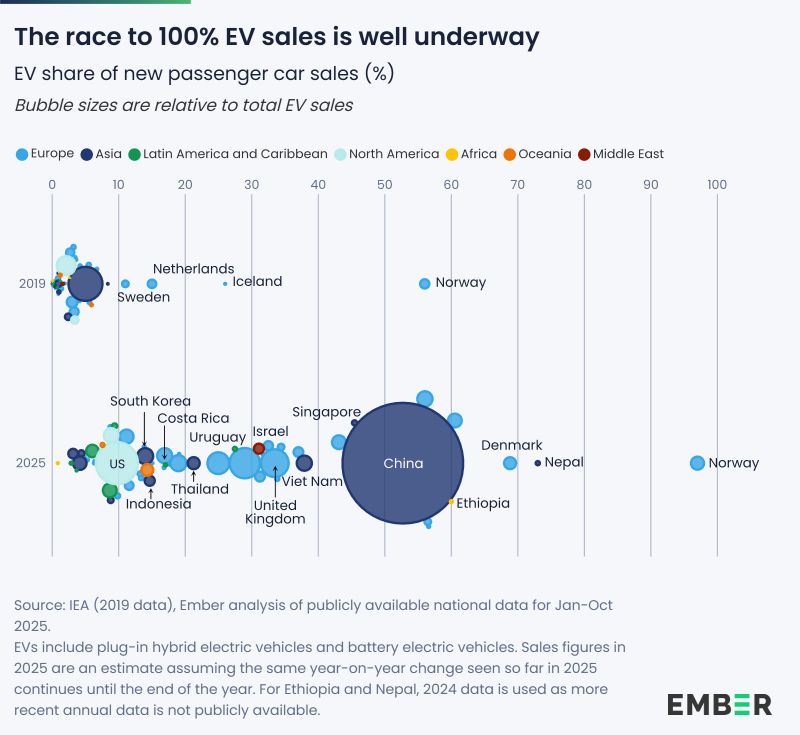
The other big trend was around EV adoption rates and over one quarter of all new cars sold were EVs this year (Ember’s analysis also includes plug in hybrids, which we don’t think should be included and probably won’t exist soon because full electric cars are now so good and getting cheaper).
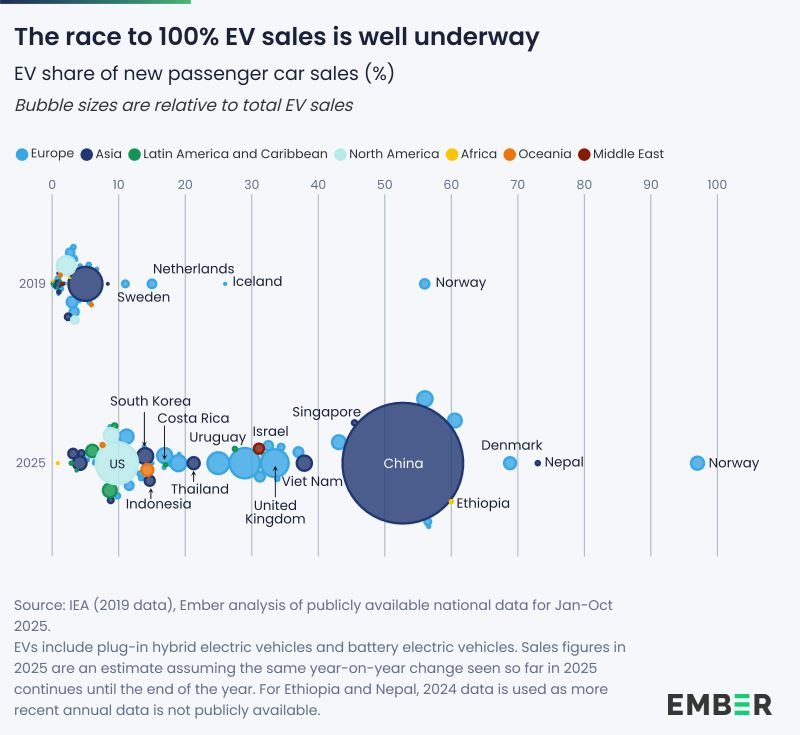
This is a major turning point. In 2025, the centre of gravity has moved. Emerging markets are no longer catching up, they are leading the shift to electric mobility. These countries see the strategic advantages of EVs, from cleaner air to reduced fossil fuel imports. The assumption that EV growth will stall outside Europe and China is already outdated. Emerging markets will shape the future of the global car market. The choices made now on charging infrastructure and early support will determine how fast this momentum continues.
Our view is that electric vehicles versus combustion vehicles is no longer just about climate, it's about industrial policy and the survival of industries through a technological paradigm shift.
The US and Japanese car makers are in a fight against industrial technology cost curves and thermodynamics. Chinese electric vehicles are already better quality and cheaper than these cars and even the Ford CEO has admitted this.
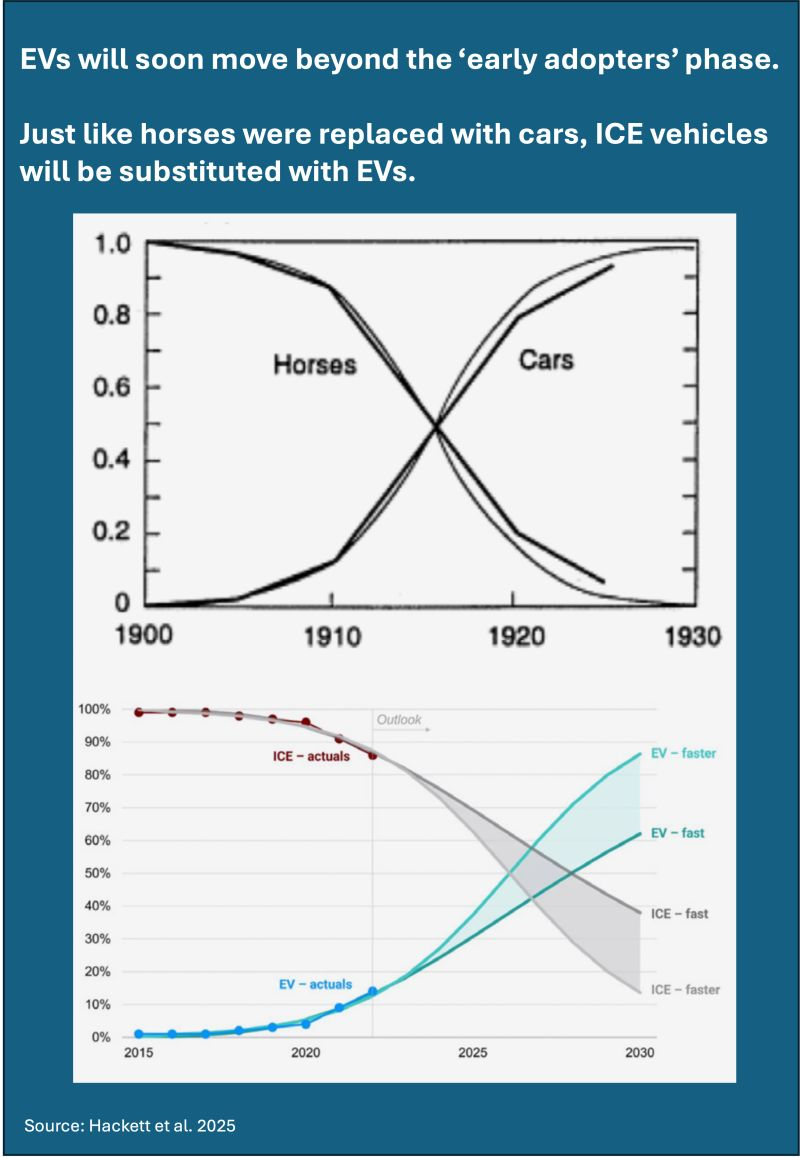
Petrol cars have had 100 years to have their costs come down and efficiency improve (and efficiency has improved a lot in the past 20 years), but they are already being beaten by electric cars early in their development. Economies of scale are going to keep driving down the cost of EVs and thermodynamics means they are already much cheaper to run.
Figuring out how to make EVs at scale with a profit margin is existential for all carmarkers in the world, and delaying getting started will only make it harder for their businesses to survive.
Policy does have a major impact on short-term EV sales, as we have seen in New Zealand, but the long-term trend is unavoidable and, as this comparison below shows, similar technological shifts have happened in the past.
Selling the sizzle
Over in the US, we were impressed with a recent campaign showing the many benefits of electric cars. Voiced by Nick Offerman, Electric For All features short clips covering topics like lower running and servicing costs, range, savings and charging.
They suggest the easiest way to save money on gas is to not buy gas; compare charging an EV to charging your phone overnight, "only the cord is much harder to lose"; and talk about how far an EV can go on one charge (“It can take to you work, school, soccer practice, grocery store, post office, and enough left over to visit your inlaws in the next county - but they don't need to know that”).
The website offers a range of handy information and is well worth a look for anyone that has questions.
Reach for the Crown
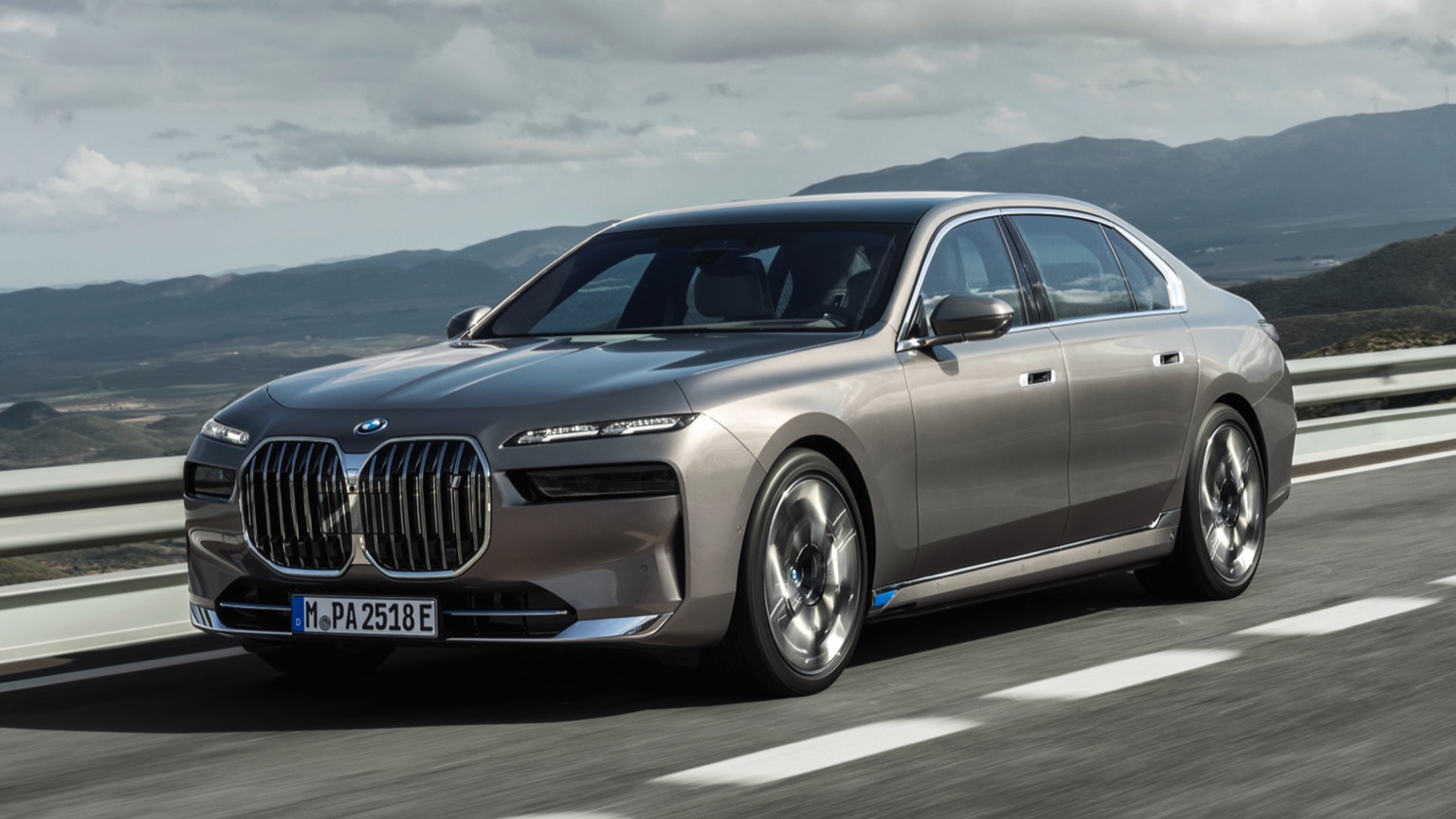
Speaking of EVs, the Government has gone electric and 20 older diesel vehicles will be replaced by 10 new electric BMWs that retail at $300,000 each (although apparently it got a bulk buy discount).
Even though the Government changed the procurement rules away from EVs/sustainability, it still went electric so we’re guessing this high profile decision was likely made on the basis of whole of life costs (and general 'mobile office' awesomeness).
The Government will also increase the number of class 2 smaller cars in the fleet. Let's hope they're electric too.
Home and hosed
If you want to see what the future could look like in New Zealand, Australia isn’t a bad option with all its rooftop solar and increasing amount of battery storage. And a new show called Future House looks at some of the families making the most of modern tech and saving bucketloads with the help of Amber.
When Michael and Helen Fox met with Matt Summerville, CEO of RenewCo Solar, the projections were clear: with their system optimised through Amber, they're looking at around $4,000 a year in earnings. That's not savings. That's income from their home energy system.
For the Fox family, who are building two dwellings on the same block to support their daughter with special needs, eliminating energy costs entirely means more resources available for what matters most. Each system includes a 48kW Sigenergy battery paired with REC Alpha Series solar panels.
Take it away
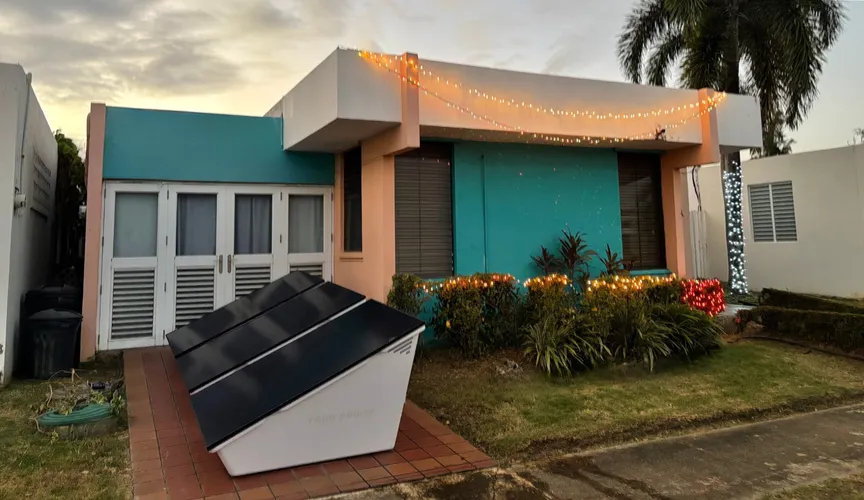
We’ve written a bit about the growth of plug-in solar around the world, with Europe leading the charge on that, but this portable solar and battery option from Raya Power could also be an option.
Meghan Wood, CEO of Raya Power, thinks solar and batteries should be as easy to install as a typical household appliance, durable enough to provide backup power for critical devices during storms and heat waves, and sophisticated enough to help lower everyday energy bills.
“Solar can give you a return on investment; it can give you resilience — and I want that to be as normal as getting Wi-Fi,” Wood said.
Electric kiwi
We’ve been celebrating the EDBs that are helping customers (and us) with our Up the Kilowahs! campaign and while the Lines Company doesn’t have any ticks yet, it does deserve a tick for what it’s doing to support the Ōtorohanga Kiwi House.
The Power it Forward initiative sees The Lines Company supplying solar panels and it’s asking locals to chip in to pay for the installation. This reduces costs for the Kiwi House and any excess solar energy also becomes credits that are redistributed to families struggling with power bills.
For $300, you can sponsor the installation of a solar panel and it comes with name recognition at the Kiwi House and a Family Pass as a thank you. The campaign is hoping to raise $36,000 and has so far got $2,400, so get a panel up on the roof here.
Political Power has gone local! Dr Nick Smith, mayor of Nelson and ex-National Party minister, is an early adopter when it comes to electric machines but, through his efforts with the council and his close involvement with the Ratepayer Assistance Scheme, he's also embracing one of Rewiring's core mantras: once you've electrified your own life, electrify someone else's life, too.
Read moreDownloadWhether it's the growing number of electric buses, new electric trains for the lower North Island and City Rail Link, or new electric ferries, we love seeing more electric transport options in our big cities. It's also good to see some of our smaller cities like Palmerston North, Timaru and Nelson going electric and, as is almost always the case, the drivers reckon it's better on electrons. At the Electrify Nelson expo, we spoke with one driver Lee about the city's electric buses. And he definitely wouldn't go back to diesel.
Read moreDownload