Don't listen to Old Man Gas. Ditch LNG. Support New Zealand-made energy!

.png)

The IEA's World Energy Outlook and the age of electricity; zero bills homes are not a dream; impressive Scandi EV adoption but it's happening elsewhere too; Aussie study shows there's no substitute for charging experience; Drive Electric releases home charging report; and Air NZ's electric plane starts testing.

Future tense
The IEA’s World Energy Outlook 2025 is out and there’s been a fair bit of coverage on the different scenarios put forward.
As it points out: there is no single storyline about the future of energy, which is why the World Energy Outlook presents multiple scenarios, none of which is a forecast. The framework presented in this Outlook is based on the latest and most comprehensive data on policies, technologies and markets, together with rigorous modelling. This allows readers to explore the implications of different choices and pathways.
It’s a bit grim on the emissions and geopolitical front, and energy security is at the forefront, but the bit that stood out for us was:
Electricity is at the heart of modern economies and electricity demand grows much faster than overall energy use in all scenarios. It rises by around 40% to 2035 in both the CPS and the STEPS, and by more than 50% in the NZE Scenario. Demand growth comes in varying proportions from appliances and air conditioners, advanced manufacturing and other light industries, electric mobility, data centres and electrified heating. Investors are reacting to this trend: spending on electricity supply and end-use electrification already accounts for half of today’s global energy investment. Rising electricity use means that electricity prices are becoming a key reference point for consumers and policy makers. For the moment, electricity accounts for only 21% of total final consumption globally, but it is the key source of energy for sectors accounting for over 40% of the global economy and the main source of energy for most households. This underscores the importance of secure and affordable electricity supply, and the economic and social costs of blackouts such as those seen in 2025 in Chile and the Iberian Peninsula.

Energy think tank Ember also released new data that showed “solar and wind have grown fast enough to meet ALL new electricity demand in the first three quarters of 2025, leaving fossil generation at a standstill. Ember forecasts that 2025 could be the first year since Covid-19 without a rise in fossil power.”

Home comforts
Electricity is more efficient for economies - and it’s also true in homes. Octopus has just launched its Zero Bills Home scheme in France, its fourth market, and, as this graph shows, the reason it works is because the price of the machines and materials needed to run an electric home has decreased so much.
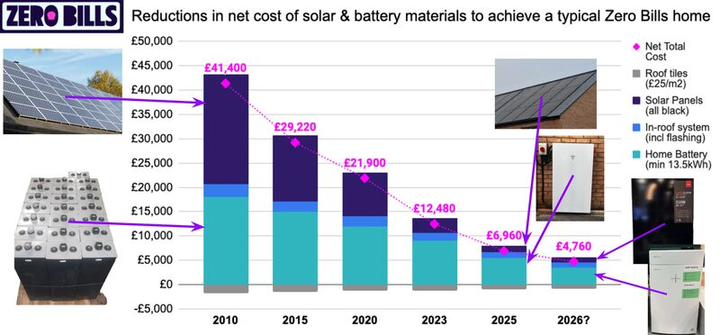
Nigel Banks, Zero Bills Director, Octopus Energy, said: “Not paying for home energy bills isn’t a futuristic vision – it’s something our customers around the world are living today."
Blue wave
Norway is often used as an example of a speedy transition to EVs. And the latest stats are in.
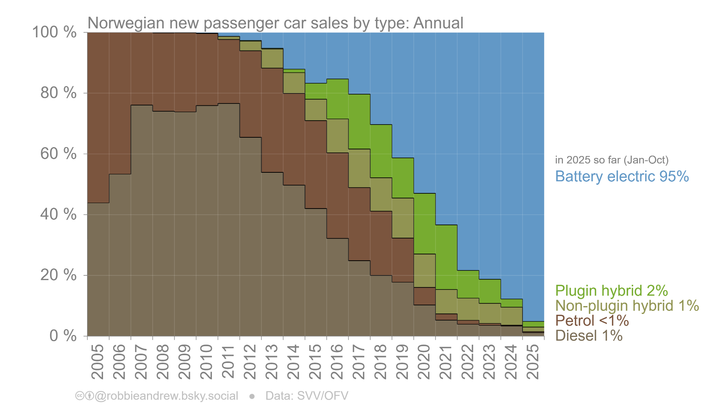
95% of all new cars in up to October 2025 were full battery electric. According to IEA, EVs reached 32% of the car fleet in 2024 and it looks like they were responsible for a similar share of vehicle kilometres travelled.
Denmark has also been going fast.
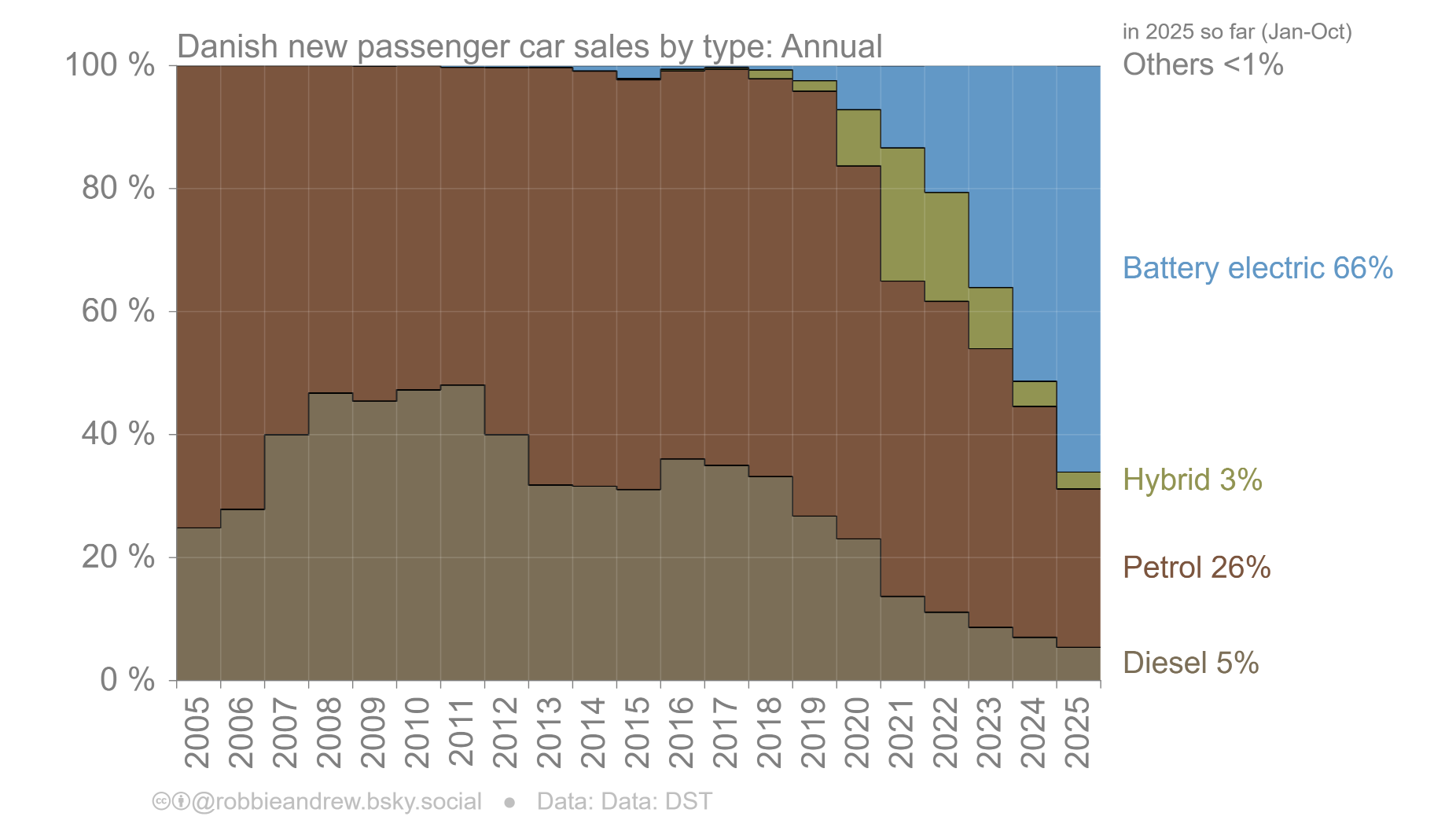
But it’s also incredible to see uptake taking off in the last three years in countries such as Indonesia (13%), Thailand (21%), Turkey (17%), and Uruguay (24%), which puts paid to the myth that 'only rich countries can do it'.
New Zealand has a lot of catching up to do, but we're here for it.
Check out more EV data here.
Electric habits
A study in Australia that tracked 643 Australian Teslas between November 2021 and March 2024 has shown that those with EVs quickly get over range anxiety and their charging habits evolve over time.
“Range anxiety is real at first, but it doesn't last. The research backs what many EV drivers already know: as you get comfortable with your car, you'll stop babying the battery and start optimising your charging around what actually saves you money. And with the right setup, you can enjoy massive fuel savings compared to a petrol car from day one.”
Fleet of foot
Speaking of charging, Drive Electric has released a new whitepaper on home charging for businesses.
“Switching to electric vehicles (EVs) is a smart move for businesses. The most effective and affordable way to power EVs is at employees’ homes. Home charging is safe, simple, and affordable. It reduces operating costs, increases vehicle availability and accelerates progress towards emissions targets, while delivering greater convenience and satisfaction for employees.”
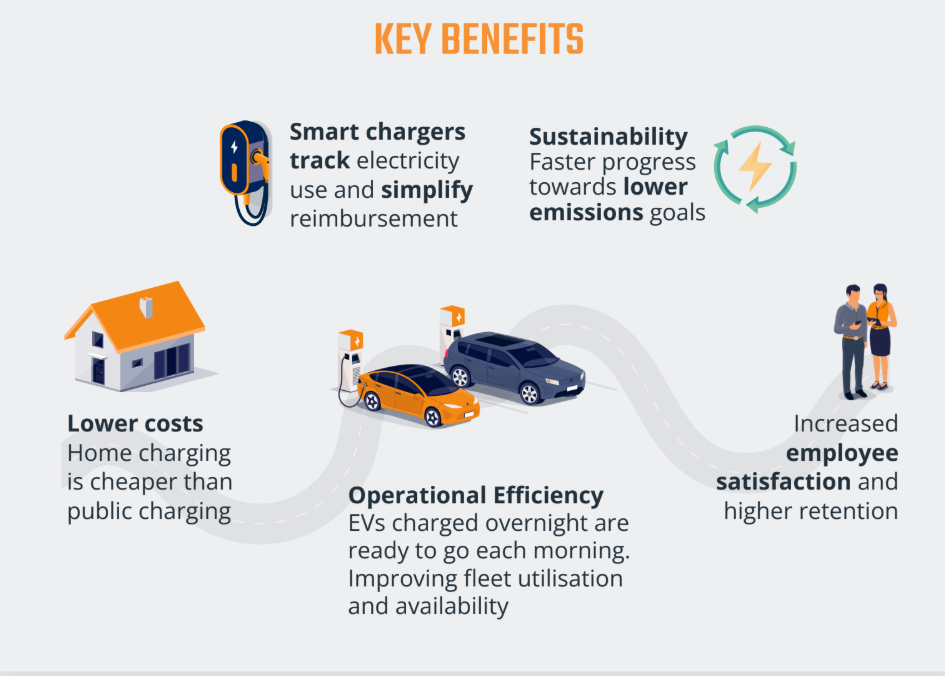
While there are still a few barriers (employees living in rental properties, lack of charging availability in dense urban areas, potential switchboard upgrades, unhelpful WorkSafe regulations), there are big benefits.
Based on average fleet usage patterns and cost differentials, most home charging installations achieve positive return on investment within 18–24 months, through reduced fuelling costs and operational expenses and potential insurance discounts for implemented safety measures.
Fly me to the moon
We’ve mentioned Air New Zealand’s new electric plane here before and it’s worth mentioning again as testing is underway with the Beta.
“A flight from Wellington to Blenheim would cost about $20 in energy cost. The motor is 97-98% efficient."
Political Power has gone local! Dr Nick Smith, mayor of Nelson and ex-National Party minister, is an early adopter when it comes to electric machines but, through his efforts with the council and his close involvement with the Ratepayer Assistance Scheme, he's also embracing one of Rewiring's core mantras: once you've electrified your own life, electrify someone else's life, too.
Read moreDownloadWhether it's the growing number of electric buses, new electric trains for the lower North Island and City Rail Link, or new electric ferries, we love seeing more electric transport options in our big cities. It's also good to see some of our smaller cities like Palmerston North, Timaru and Nelson going electric and, as is almost always the case, the drivers reckon it's better on electrons. At the Electrify Nelson expo, we spoke with one driver Lee about the city's electric buses. And he definitely wouldn't go back to diesel.
Read moreDownload